Table of Contents >> Show >> Hide
- First, what counts as “eye bags”?
- Why eye bags happen (and why your concealer isn’t the villain)
- How to get rid of eye bags: 17 tips and tricks
- Tip #1: Use a cool compress (the fastest “I have a meeting” fix)
- Tip #2: Rinse with cool water if allergies or irritation are involved
- Tip #3: Get consistent sleep (not “perfect” sleep)
- Tip #4: Sleep with your head slightly elevated
- Tip #5: Cut back on salty dinners (your under-eyes remember sodium)
- Tip #6: Be strategic about nighttime fluids and alcohol
- Tip #7: Treat allergies like the under-eye saboteur they are
- Tip #8: Stop rubbing your eyes (yes, even “just a little”)
- Tip #9: Check your eye-area products for irritation triggers
- Tip #10: Try a gentle “de-puff” massage (light pressure only)
- Tip #11: Use a caffeine eye product in the morning
- Tip #12: Add a retinoid/retinol carefully (nighttime, slow and steady)
- Tip #13: Hydrate the under-eye skin with barrier-friendly ingredients
- Tip #14: Wear sunscreen and sunglasses (future you will send a thank-you card)
- Tip #15: Use chilled tea bags as a budget-friendly compress
- Tip #16: Conceal smarter, not harder (makeup that doesn’t scream “I tried”)
- Tip #17: Consider in-office options if anatomy is the main factor
- When to see a clinician (don’t “DIY” these symptoms)
- Real-world experiences: what people notice when they actually try these tips (500-word add-on)
- Conclusion
If your under-eyes look like they packed for a weekend trip (and forgot to invite the rest of your face),
you’re not alone. “Eye bags” are incredibly commonand usually harmlessbut they can make you look tired
even when you’re feeling fine. The good news: you can often reduce under-eye puffiness with a mix of
quick fixes, smarter habits, and targeted skincare. The even better news: you don’t need to buy a drawer
full of tiny jars that cost more per ounce than fancy olive oil.
This guide breaks down what causes eye bags, what helps (and what’s mostly hype), and 17 practical tips
you can start using today. If you’ve tried “sleep more” already (rude), don’t worrywe’ve got plenty of
other options.
First, what counts as “eye bags”?
People say “eye bags,” but they often mean different things:
- Puffiness: soft swelling under the eyes, often worse in the morning.
- Volume loss (hollows/tear troughs): a dip that creates shadowing, which can look like a bag.
- Dark circles: pigment, visible blood vessels, or shadow from contour changes.
- Irritation/swelling: allergies, contact dermatitis, or eye inflammation can cause temporary puffiness.
A quick “which one am I dealing with?” check
- If it’s worst in the morning and improves after you’re upright: likely fluid retention.
- If it’s always there and runs in your family: often genetics and/or age-related tissue changes.
- If you see itching, redness, watery eyes: allergies or irritation may be the driver.
- If it’s mostly shadow (changes when you adjust lighting): hollows and contour changes may be the main issue.
Why eye bags happen (and why your concealer isn’t the villain)
Under-eye skin is thin, delicate, and prone to showing every life choice you made after 9 p.m. Eye bags can
happen when the support structures around the eyelids weaken with age, when fluid pools under the eyes,
or when inflammation (like allergies) causes swelling. Lifestyle factorssleep, salt, alcohol, smoking,
rubbing your eyes, and even certain medicationscan make puffiness more noticeable.
Translation: eye bags aren’t a moral failing. They’re biology plus modern life plus gravity doing what gravity does.
How to get rid of eye bags: 17 tips and tricks
Tip #1: Use a cool compress (the fastest “I have a meeting” fix)
Cold helps temporarily tighten blood vessels and reduce swelling. Wet a clean washcloth with cool water,
wring it out, and gently press it under and around your eyes for a few minutes. If you’re using a gel mask,
keep it coldnot freezingand follow the instructions. Bonus: it feels like a mini vacation for your face.
Tip #2: Rinse with cool water if allergies or irritation are involved
If puffiness comes with watery eyes, crusting, or seasonal itchiness, cool water can feel soothing.
Splashing gently or using a clean compress can help you feel less puffy and more human. If your eyes are
irritated, skip anything “spicy” (like fragranced products) near the eye area for a bit.
Tip #3: Get consistent sleep (not “perfect” sleep)
You’ve heard it, but the detail matters: consistency helps. Aim for a steady schedule and enough sleep for your body.
Even if you can’t control everything (hello, deadlines), try to keep your wake time stable. When you’re sleep-deprived,
swelling and dark circles can look more pronouncedlike your face is live-tweeting your bedtime.
Tip #4: Sleep with your head slightly elevated
If fluid pooling is your main issue, head elevation can help reduce morning puffiness. Try an extra pillow
or a gentle wedge. You’re not trying to sleep upright like a vampire in a historical dramajust slightly raised
so fluid is less likely to camp out under your eyes overnight.
Tip #5: Cut back on salty dinners (your under-eyes remember sodium)
Salt encourages fluid retention, and the under-eye area is a frequent “storage location.” If you notice
puffiness after takeout, salty snacks, or restaurant meals, experiment: reduce sodium at dinner for a week
and see what changes. A realistic swap: choose one lower-sodium meal and keep the rest of your life intact.
Tip #6: Be strategic about nighttime fluids and alcohol
Drinking a lot right before bed can contribute to morning puffiness for some people. Alcohol can also make
fluid retention and dehydration more noticeable (funny how it does that). You don’t have to become a water minimalist
just try finishing most fluids earlier in the evening and keeping alcohol occasional if puffiness is a recurring problem.
Tip #7: Treat allergies like the under-eye saboteur they are
Allergies can cause swelling around the eyesand rubbing makes it worse. If your puffiness comes with itchiness,
sneezing, or watery eyes, consider allergy strategies: reducing exposure (dust, pollen, pet dander), using doctor- or
pharmacist-recommended antihistamines, and trying allergy eye drops when appropriate. If symptoms persist, ask a clinician
what’s safest for you.
Tip #8: Stop rubbing your eyes (yes, even “just a little”)
Rubbing can irritate delicate skin, worsen inflammation, and make swelling more stubborn. If you rub because your eyes feel dry
or itchy, solve the cause instead: artificial tears (if recommended), allergy management, and a humidifier in dry seasons.
If you need to remove makeup, use a gentle remover and pressdon’t drag.
Tip #9: Check your eye-area products for irritation triggers
Fragrance, harsh exfoliants, and strong actives too close to the eye can cause irritation that looks like puffiness.
If you recently added a new eye cream, retinoid, or brightening serum and suddenly look swollen, pause it for a week.
Reintroduce slowly and keep “active” products farther from the lash line unless your clinician recommends otherwise.
Tip #10: Try a gentle “de-puff” massage (light pressure only)
A soft, brief massage can help move fluidthink feather-light, not kneading dough. Use your ring finger and tap from the inner
corner outward, or glide with a tiny amount of moisturizer so you don’t tug skin. If you’re using a roller or gua sha tool,
keep it clean and go gentle. The goal is “encourage drainage,” not “remodel my face.”
Tip #11: Use a caffeine eye product in the morning
Caffeine is popular in eye products because it can temporarily reduce the look of puffiness by constricting blood vessels.
Look for a fragrance-free formula and apply a small amountmore isn’t better, it’s just stickier. Store it in the fridge for an
extra cooling effect (and to feel like you have your life together).
Tip #12: Add a retinoid/retinol carefully (nighttime, slow and steady)
Retinoids and retinol can help with fine lines and texture over time, which may make the under-eye area look smoother and firmer.
But the eye area is sensitive, so start slowly: a tiny amount 2–3 nights per week, moisturize on top, and increase only if tolerated.
If you get dryness, stinging, or peeling, scale back. This is a marathon, not a sprint.
Tip #13: Hydrate the under-eye skin with barrier-friendly ingredients
Dehydrated under-eye skin can exaggerate creases and shadows. Look for gentle hydrators like hyaluronic acid and glycerin, plus barrier supporters like
ceramides. Apply on slightly damp skin, then seal with moisturizer. Hydration won’t “erase” anatomical eye bags, but it can make the area look fresher and
makeup sit better.
Tip #14: Wear sunscreen and sunglasses (future you will send a thank-you card)
Sun damage can worsen skin thinning and discoloration, which can make under-eye darkness and texture more noticeable.
Use a broad-spectrum sunscreen that doesn’t sting, and consider sunglasses to protect the eye area. If sunscreen irritates your eyes,
test mineral formulas or ask a dermatologist for recommendations.
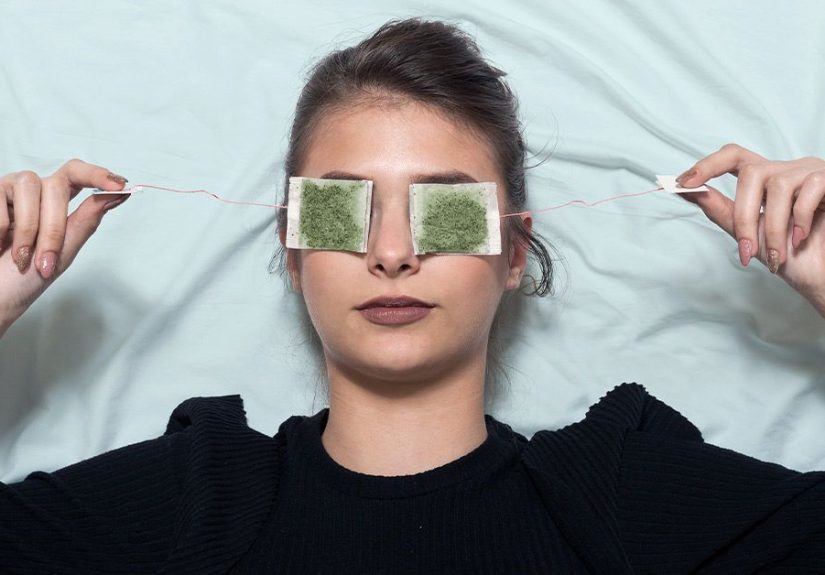
Tip #15: Use chilled tea bags as a budget-friendly compress
Cooled green or black tea bags are a classic for a reason: they’re cold, gently soothing, and contain caffeine and antioxidants.
Brew, cool, then refrigerate them. Place over closed eyes for about 10–15 minutes. Make sure they’re not dripping hot (obviously),
and use clean, freshly brewed bags to avoid irritation.
Tip #16: Conceal smarter, not harder (makeup that doesn’t scream “I tried”)
If your main concern is how eye bags look on camera, makeup can help immediately. For shadowy hollows, a peachy corrector can neutralize blue-purple tones,
followed by a small amount of concealer only where you need it. Set lightlytoo much powder can emphasize texture. And remember:
light from above makes bags look worse, so adjust your lighting before you declare defeat.
Tip #17: Consider in-office options if anatomy is the main factor
If you have persistent under-eye bags due to fat protrusion, loose skin, or significant hollowness, topical fixes can only do so much.
A dermatologist, oculoplastic surgeon, or plastic surgeon may discuss options like laser resurfacing, chemical peels (for discoloration),
radiofrequency or microneedling (for texture), fillers for tear trough hollows, or lower blepharoplasty for structural under-eye bags.
These can be effectivebut they come with risks and require an experienced, qualified provider.
When to see a clinician (don’t “DIY” these symptoms)
Most eye bags are a cosmetic concern. But seek medical advice if swelling is sudden, painful, one-sided, accompanied by redness, fever,
vision changes, significant itching, or doesn’t improve. Persistent puffiness can sometimes be linked to allergies, infection, medication reactions,
or other medical conditions that deserve proper evaluation.
Real-world experiences: what people notice when they actually try these tips (500-word add-on)
The most common experience people report is that the “fast fixes” workbut only temporarily. A cool compress can noticeably reduce puffiness in minutes,
especially if your eye bags are mostly fluid-related. People often describe it as the under-eye equivalent of turning the brightness down on their face:
you still look like you, just less like you pulled an all-nighter with your laptop and a questionable snack choice.
The next big “aha” moment is usually sodium. Many folks don’t realize how closely their under-eye puffiness tracks with salty dinners until they test it.
The pattern often looks like this: restaurant meal at night, wake up puffy, blame sleep, repeat. When they swap even a couple of dinners per week for a
lower-sodium option (or just skip the saltiest side), the morning swelling often becomes less dramatic. It’s not magicit’s fluid balance. The most
practical version of this isn’t “never eat fries again,” but “maybe don’t do fries + ramen + pickles at 10 p.m.” (Your under-eyes would like to negotiate.)
People who deal with allergies tend to notice that eye bags are less about “tiredness” and more about inflammation. When they get serious about allergy
managementclean bedding, fewer dust triggers, appropriate antihistamines, and not rubbing their eyesthe puffiness often calms down in a way that no
eye patch could ever achieve. A lot of them also realize their “eye bag days” overlap with high-pollen mornings or time spent around pets. Once you spot the
pattern, you can treat the cause instead of endlessly rotating through creams.
Skincare changes are usually slower, and that’s where people get impatient. Caffeine eye products often give a subtle morning improvement, but it’s not a
permanent fix. Retinol (or a gentle retinoid) is where people tend to see longer-term changessmoother texture, slightly firmer-looking skin, and makeup that
sits betterafter several weeks of consistent use. The most common mistake is going too hard too fast and ending up with dryness or irritation, which can make
puffiness and creases look worse. The people who succeed treat it like training for a 5K: small, consistent steps, and rest days when needed.
Finally, a lot of people have the “this is anatomical” realization. If under-eye bags are genetic or caused by structural changes, lifestyle and skincare can
improve the look, but they won’t always erase it. That can actually feel freeingbecause it shifts the goal from “perfectly flat under-eyes forever” to
“less puffy, brighter, healthier skin, and a plan for special occasions.” For some, that’s enough. For others, it’s when a consult about in-office options
becomes worth itespecially if they want a longer-lasting change and understand the tradeoffs.
Conclusion
Getting rid of eye bags is usually about matching the fix to the cause. If yours are fluid-related, cold compresses, better sleep habits, less sodium,
and head elevation can help quickly. If allergies or irritation are involved, treating inflammation (and quitting the eye-rubbing habit) can be a game changer.
And if anatomy is the main driver, professional treatments may offer the biggest difference. Start with the simplest steps, track what changes your puffiness,
and remember: your face isn’t “failing”it’s just reacting to life.