Table of Contents >> Show >> Hide
- Why this Lemkin + Norton conversation matters in 2025/2026
- The AI-native CRO: four shifts you can’t ignore
- AI agents vs. “AI features”: what’s actually new?
- What changes in the GTM org chart
- From tool sprawl to a hub-and-agents architecture
- Seven high-leverage AI plays for Sales + GTM in 2025/2026
- 1) Account research that doesn’t feel like a term paper
- 2) Personalization at scale (without turning into inbox spam)
- 3) Meeting follow-up that actually gets sent
- 4) Pipeline hygiene on autopilot (with human QA)
- 5) Call coaching and enablement that isn’t just a score
- 6) Deal desk acceleration (pricing, proposals, approvals)
- 7) Customer expansion that feels like service, not upsell
- The risks: hallucinations, “workslop,” and trust
- A practical 30-day “first agent” plan (so you don’t get stuck in pilot purgatory)
- Predictions for 2026: where Sales + GTM is heading next
- Conclusion: the Monday-morning checklist
- Field Notes: of Hands-On Experience with AI Sales + GTM
- References
- SEO Tags
If you work in sales or go-to-market (GTM) right now, you’ve probably felt it: the old playbook is getting wobbly, like a folding chair at a backyard barbecue.
The buyer is busier, inboxes are meaner, budgets are pickier, and everybody suddenly “has AI” (including your toaster, allegedly).
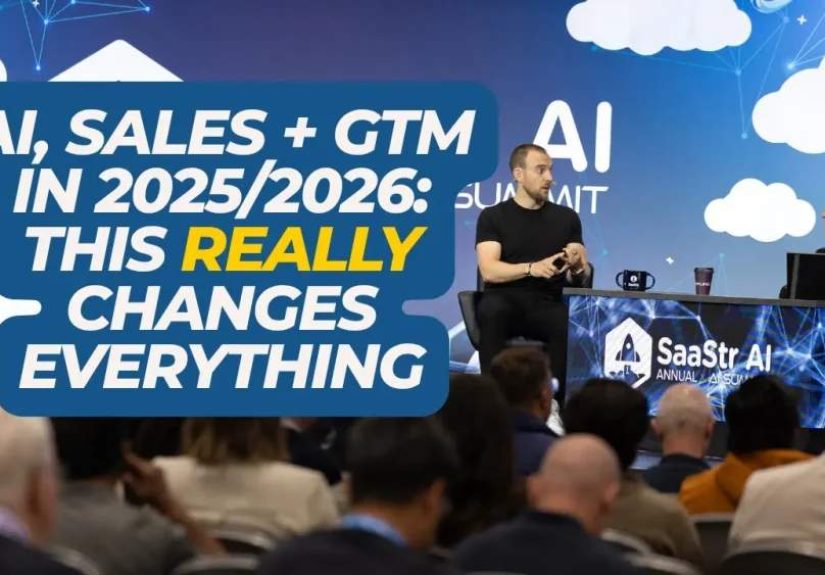
Then along comes a refreshingly direct conversation between SaaStr founder Jason Lemkin and Owner CRO Kyle Nortonand it lands because it’s not about shiny demos.
It’s about what changes when AI stops being a feature and starts acting like a teammate.
The big idea isn’t “AI will help you write emails faster.” (Congratsyour prospects can also tell it was written faster.)
The big idea is that AI is turning sales orgs into hybrid systems: humans plus agents, process plus automation, creativity plus consistency.
And once you see GTM as a system, you stop chasing gimmicks and start building leverage.
Why this Lemkin + Norton conversation matters in 2025/2026
Lemkin and Norton’s discussion gained traction because it frames AI as an operating change, not a productivity hack.
In the SaaStr ecosystem, this isn’t theoretical: they’ve talked openly about deploying agents across GTM workflows and about what it takes to make them work in productionnot just in a demo environment.[1]
Norton is operating inside a real-world, high-volume SMB motion at Owner (a vertical SaaS company serving independent restaurants), where efficiency and consistency aren’t nice-to-havesthey’re survival traits.[2]
Owner’s context is especially revealing: SMB buyers can be skeptical, time-poor, and allergic to complexity.
That makes it a strong stress test for AI in sales: if agent-assisted workflows can improve speed-to-lead, follow-up quality, and pipeline hygiene there, they can often translate elsewherewith the right guardrails.[1]
The AI-native CRO: four shifts you can’t ignore
1) “AI curiosity” becomes a job requirement (not a personality trait)
One of the sharpest takeaways is cultural: revenue leaders can’t treat AI like a side quest.
When teams aren’t experimenting, they don’t learn what’s realand they don’t learn fast enough to compete.
The practical point: you don’t need everyone to become an AI engineer, but you do need everyone to build “AI reps” into their daily workflow the same way they built CRMs into their day a decade ago.[1]
2) The hybrid org is arriving faster than most comp plans can handle
The near-term shape is a 50/50 world: humans plus AI agents working the same funnel.
That changes management.
You’re not only coaching callsyou’re coaching systems: prompts, routing rules, QA checklists, data hygiene, and “what the agent should do when it’s unsure.”[1]
3) AI widens the gap between top performers and the middle
AI is a lever. Put a lever in the hands of someone strong and trained, and you’ll see outsized output.
Put it in the hands of someone who won’t use it well, and it becomes a fancy paperweight.
In sales terms: the best reps get faster at research, crisper at follow-up, and more consistent at pipeline management, while average performance becomes easier to spotand harder to justify.[1]
4) “Selling time” becomes the new KPIand it can jump dramatically
Administrative drag has been the silent quota killer forever: logging notes, updating fields, chasing internal approvals, reformatting decks, rewriting follow-ups, and doing “CRM yoga” to make dashboards look alive.
Agent-assisted automation can reclaim that time.
Salesforce’s research points in the same direction: teams adopting AI report higher likelihood of revenue growth than those that don’t, suggesting the productivity lift can translate into outcomes when implemented well.[3]
AI agents vs. “AI features”: what’s actually new?
In 2023–2024, most sales AI looked like assistive features: summaries, suggested replies, and “here’s a call score.”
Helpful, sure. But it still left humans doing the glue workcopying, pasting, updating, routing, and remembering.
Agentic AI is different because it’s designed to complete multi-step work toward a goal: gather context, decide next steps, take actions in tools, and confirm results.
Gartner has emphasized that many “agentic” claims are hype, and that projects can fail when costs and outcomes don’t pencil outespecially when teams skip the hard work of integration and governance.[4]
Translation: an agent isn’t magic; it’s software that needs training, boundaries, and accountability.
Think of AI agents like new hires who never sleep. They can be wildly useful, but only if you:
(a) give them clean data, (b) define what “good” looks like, (c) review their work, and (d) keep them from doing anything adventurous with your brand voice.
What changes in the GTM org chart
The SDR role becomes less about volume and more about orchestration
The “spray-and-pray” SDR era is fading. AI can do a lot of the first-pass work: researching accounts, drafting variants, sequencing follow-ups, and even routing replies.
That doesn’t eliminate humans; it changes the human role.
The future SDR is more like a producer: setting up plays, reviewing quality, handling nuance, and stepping in when the deal requires judgment.
“Mid-pack” roles feel the squeeze first
One of the spiciest claims from the Lemkin + Norton world is that agents can already outperform the average rep for certain tasks, even if they’re not beating true top performers.[5]
If your org has relied on a wide middle doing semi-repetitive work, you’ll likely see pressure there firstunless you upskill those roles into higher judgment work (discovery depth, deal strategy, complex negotiations, multi-threading).
RevOps becomes the power center
If you deploy agents, RevOps stops being “the team that fixes Salesforce fields when the dashboard breaks.”
RevOps becomes a systems engineering function: owning data quality, workflow design, tooling governance, and measurement.
In other words: RevOps becomes how you scale “good sales” without hiring 30 more people just to copy notes into the CRM.
From tool sprawl to a hub-and-agents architecture
The modern GTM stack is at risk of becoming a junk drawer: ten tools, nine logins, eight “single sources of truth,” and one very tired admin.
The more agentic you go, the more you need a real hubbecause autonomous workflows need a reliable system of record.
In the SaaStr discussion, Salesforce is positioned as that hub: when many agents are running, you need one place where pipeline truth lives.[5]
Meanwhile, major platforms are baking AI into core seller workflows.
Microsoft’s Copilot in Dynamics 365 Sales, for example, focuses on helping sellers catch up on records, prep for meetings, and reduce manual logging through AI assistance.[6]
LinkedIn is also pushing AI-powered account insights inside Sales Navigator to speed research and enable more relevant outreach.[7]
The direction is clear: fewer “AI add-ons,” more AI embedded in the daily surface area where reps already work.
Seven high-leverage AI plays for Sales + GTM in 2025/2026
1) Account research that doesn’t feel like a term paper
Great outreach starts with relevance. AI can compile a fast account brief:
the customer’s business model, likely pain points, recent changes, hiring signals, and how your product maps to outcomes.
The trick is not to be creepybe useful. “Noticed you hired a VP of RevOps” is fine.
“I saw your dog’s birthday post and sensed pipeline friction” is… less fine.
2) Personalization at scale (without turning into inbox spam)
AI can draft multiple versions of a message tailored to different personas (CFO, sales leader, ops lead).
But the goal isn’t volume. It’s relevance plus restraint.
Compliance matters here: if you’re running outbound email, follow the FTC’s CAN-SPAM guidance (truthful headers/subject lines, clear opt-out, etc.).[8]
If you’re using auto-dialed texts or prerecorded voice, you also need to respect consumer consent rules (and how consent can be revoked).[9]
3) Meeting follow-up that actually gets sent
Post-call momentum often dies in the gap between “great conversation” and “email sent two days later.”
AI can generate structured follow-up notes and summaries to reduce that lag.
Microsoft’s sales-focused Copilot capabilities highlight exactly this: compressing the time from meeting to documented next steps and CRM updates.[6]
4) Pipeline hygiene on autopilot (with human QA)
AI can suggest next steps, flag stalled deals, detect missing stakeholders, and recommend “ask” language based on the stage.
But it should also be trained to escalate uncertainty: when it can’t confidently infer stage or close date, it should ask the rep (or the manager) instead of guessing.
This is how you prevent the classic “forecast is a mood” problem.
5) Call coaching and enablement that isn’t just a score
Conversation intelligence is evolving from “your talk ratio was 63%” to “here are the three objections you didn’t answer, and here’s a better path next time.”
The win is consistency: new reps ramp faster, best practices spread, and managers spend less time hunting for examples.
Just don’t let AI coaching replace human coaching; it should be the assistant, not the boss.
6) Deal desk acceleration (pricing, proposals, approvals)
AI can draft proposals, summarize security questionnaires, and pre-fill deal docs.
The best implementations don’t remove scrutiny; they remove drudgery.
Humans still own pricing judgment and risk, but AI can reduce the time it takes to move a deal from “yes” to “signed.”
7) Customer expansion that feels like service, not upsell
On the post-sale side, AI can identify adoption gaps, surface usage signals, and recommend “value check-in” messages.
When done well, expansion becomes a natural outcome of better customer outcomes.
When done poorly, it becomes an aggressive reminder that the customer has an inbox and you have a quota.
Choose wisely.
The risks: hallucinations, “workslop,” and trust
AI can absolutely help sellers move faster. It can also help them move faster in the wrong direction.
Harvard Business Review has published research suggesting productivity gains can come with motivational and behavioral side effectsand that bad AI use can create low-value output at scale (“workslop”).[10]
In sales, that looks like: generic emails, fake-sounding personalization, bloated decks, and “follow-ups” that say nothing.
The antidote is governance plus craftsmanship.
NIST’s AI Risk Management Framework is a solid lens here: treat AI deployment like a risk-managed system, not a toy.
Define risks (accuracy, bias, privacy, security), measure them, and put controls in place.[11]
And privacy isn’t optional.
If you operate in jurisdictions with strict privacy rights (like California), understand consumer rights and business obligations under frameworks like the CCPA.[12]
Even when you’re not legally required, respecting customer data is simply good business in a world where trust is increasingly scarce.
A practical 30-day “first agent” plan (so you don’t get stuck in pilot purgatory)
One of the most actionable themes from the SaaStr material is that revenue leaders should personally build and deploy their first agentbecause it forces you to understand the data, the workflow, and the failure modes.[5]
Here’s a pragmatic version you can run without becoming a full-time prompt monk:
Week 1: Pick one painful workflow
- Choose a workflow that “breaks your heart” (e.g., slow lead response, messy CRM notes, inconsistent follow-up).[5]
- Define success in measurable terms (minutes saved, response rate, meeting set rate, CRM completeness).
- Document the current process in plain language (no flowchart Olympics required).
Week 2: Build guardrails and data inputs
- Decide what data the agent can access (CRM fields, call notes, website, product docs).
- Write “do not” rules (no pricing promises, no legal claims, no sending without opt-out language where applicable).
- Create a QA checklist a human can run in 60 seconds.
Week 3: Run daily reviews (yes, daily)
- Have the agent produce outputs; review them every day; correct errors; refine prompts/rules.
- Track a small scoreboard: accuracy, usefulness, time saved, and “would I send this?” rate.
- If it fails, don’t blame the model firstcheck the data and instructions.
Week 4: Integrate and scale carefully
- Connect the agent to the tools reps already use (CRM, email client, calendar) so adoption is frictionless.
- Roll out to a pilot group, then expand with training and clear expectations.
- Keep a human-in-the-loop for anything customer-facing until quality is consistently high.
Predictions for 2026: where Sales + GTM is heading next
More autonomy, but only where the data is clean
Agents will handle more multi-step workbut the organizations that win will be the ones that treat data quality like oxygen.
Dirty CRM data doesn’t just hurt forecasts; it confuses agents and multiplies mistakes.
Comp and career paths will change
As output per seller rises, organizations will ask for more: higher quotas, tighter specialization, more focus on deal strategy, and better execution.
The highest performers will likely be rewarded because they can multiply themselves with AI.
Meanwhile, roles that stay purely repetitive will be pressured to evolve.
Trust becomes a competitive advantage
If everyone can generate “good enough” messaging, differentiation shifts to:
real expertise, authentic insights, measurable customer outcomes, and respecting privacy and consent.
In 2026, being “AI-powered” won’t be impressive. Being “reliably helpful” will.
Conclusion: the Monday-morning checklist
AI isn’t “coming to sales.” It’s already sitting in the passenger seat, fiddling with the radio, and asking why your CRM is missing close dates.
The winners in 2025/2026 won’t be the teams with the most tools.
They’ll be the teams with the cleanest systems, the best training habits, and the strongest taste in what “good” looks like.
- Pick one workflow that wastes selling time and fix it with an agent.
- Make AI usage normal (curiosity, experimentation, and shared learnings).
- Centralize your truth in a real system of record (and keep it clean).
- Govern customer-facing AI with privacy, compliance, and QA guardrails.
- Invest in your top performersAI makes great reps even greater.
Field Notes: of Hands-On Experience with AI Sales + GTM
Here’s what “going AI-native” actually feels like on the groundbased on patterns teams keep reporting when they move past the hype and into real GTM execution.
First, the excitement is real. The first time an agent turns a messy call transcript into crisp next steps, logs them to the right CRM record, and drafts a follow-up email that doesn’t sound like a robot auditioning for community theater, you’ll feel like you just found an extra day in the week.
That’s the honeymoon.
Then comes the part nobody posts on LinkedIn: the awkward middle.
You realize your CRM isn’t “a database,” it’s a junk closet.
Fields are inconsistent, naming is chaotic, and half your pipeline lives in someone’s heador worse, a sticky note.
The agent doesn’t fail because it’s stupid; it fails because it’s being fed a diet of mystery meat.
This is where teams either quit (“AI doesn’t work”) or level up (“we need to fix the system”).
Next, you discover that prompting is not the jobreviewing is.
The real unlock is a simple daily loop: run the workflow, spot the mistakes, correct them, and tighten the rules.
Most teams see quality jump when they add two things:
(1) a short “definition of done” checklist (tone, accuracy, next steps, compliance), and
(2) a rule that the agent must ask a human when confidence is low instead of guessing.
Suddenly, you’re not chasing perfection; you’re managing risk.
You also learn quickly that AI doesn’t remove the need for leadershipit increases it.
Reps will copy/paste whatever makes their day easier, even if it’s mediocre.
So you have to set taste and standards: show examples of great outreach, ban lazy templates, and reward reps who use AI to be more relevant, not more spammy.
The best teams build a small library of “approved” message patterns, objection responses, and discovery promptsthen let AI remix within guardrails.
The biggest surprise for many leaders is that AI changes coaching dynamics.
You spend less time correcting note-taking and more time sharpening judgment:
“What should we ask next?” “Who else needs to be in the room?” “What’s the real business case?”
In other words, AI clears the weeds so you can coach the game.
And when that happens, the GTM team starts to feel less like a collection of individuals and more like a coordinated machinestill human, still creative, but finally consistent.
References
- SaaStr: “AI, Sales + GTM in 2025/2026: This Changes Everything” (session summary and takeaways).
- Owner: Series C materials and company resources describing product focus and $1B valuation context.
- Salesforce: State of Sales research (AI adoption and revenue outcomes).
- Gartner (via reputable reporting): agentic AI project risk and “agent washing” concerns; forecasted adoption trends.
- SaaStr: “The Present and Future of AI in Sales and GTM” (Top takeaways on agents, training, and GTM structure).
- Microsoft Learn: Copilot in Dynamics 365 Sales and sales-focused Copilot features for meeting/CRM workflows.
- LinkedIn: Sales Navigator feature descriptions including AI-powered account insights.
- FTC: CAN-SPAM Act compliance guidance for commercial email.
- FCC: TCPA-related guidance on consent and revocation (robocalls/robotexts).
- Harvard Business Review: research and commentary on productivity side effects and low-value AI output risks.
- NIST: AI Risk Management Framework (trustworthiness and risk controls).
- California Department of Justice: CCPA overview of consumer privacy rights and business obligations.