Table of Contents >> Show >> Hide
- Understanding Deadpool’s Look Before You Draw
- What You’ll Need to Draw Deadpool
- Step-by-Step: How to Draw Deadpool
- Step 1: Start with a Gesture Stick Figure
- Step 2: Block In Basic Shapes for the Body
- Step 3: Refine the Anatomy
- Step 4: Draw the Head and Mask
- Step 5: Sketch the Torso, Straps, and Utility Belt
- Step 6: Add Arms, Gloves, and Katanas
- Step 7: Draw Legs, Boots, and Fabric Folds
- Step 8: Clean Up and Ink Your Drawing
- Step 9: Add Shadows and Highlights
- Step 10: Color Your Deadpool Drawing
- Adding Backgrounds and Extra Personality
- Common Mistakes When Drawing Deadpool (and How to Fix Them)
- Extra : Practical Experiences and Tips for Drawing Deadpool
- Conclusion
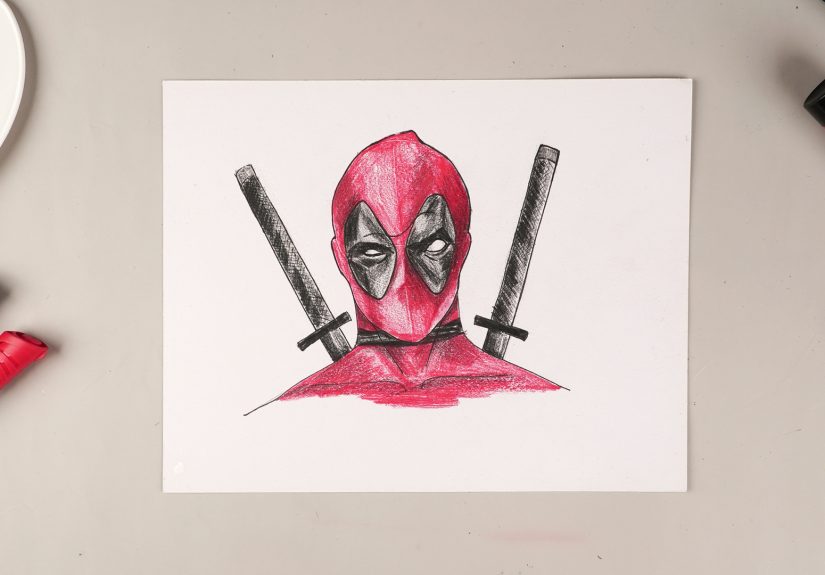
Deadpool is the guy in the Marvel universe who talks to the audience, breaks the fourth wall, and still somehow manages to look incredibly cool while doing it. No surprise that artists of all levels want to learn how to draw Deadpool – mask, katanas, pouches, and all. The good news? You don’t need mutant powers to pull it off. With a few simple shapes, some basic anatomy, and a bit of patience, you can draw your own Merc with a Mouth step by step.
This guide walks you through how to draw Deadpool from rough sketch to finished, comic-style illustration. We’ll break his costume into easy-to-understand parts, show you how to pose him, and give tips for inking and coloring so your drawing looks like it leapt off a comic book page. Think of this as your personal mini art class, minus the homework.
Understanding Deadpool’s Look Before You Draw
Before you start drawing, it helps to understand what makes Deadpool instantly recognizable. Artists who design comic characters often think in terms of big, simple shapes and clear silhouettes so the character stands out even at a distance. Deadpool is no exception.
- Color scheme: Primarily deep red with strong black panels on the mask, around the eyes, along the sides of the torso, and often on the shoulders and gloves. The high-contrast colors make him pop on the page.
- Full-body suit: A tight tactical bodysuit that shows the underlying anatomy. That means your drawing should suggest muscles and structure underneath the fabric, not a loose hoodie and sweatpants.
- Mask and eyes: Red mask, black “tear-drop” or oval shapes around the eyes, and white eye shapes inside. The eyes have no pupils, which is classic superhero style and makes his expressions exaggerated and cartoony.
- Utility gear: Chest straps, a utility belt with pouches, thigh straps, and weapon holsters (especially the twin sword sheaths on his back). These details scream “Deadpool” even in a silhouette.
- Weapons: Usually two katanas on his back and sometimes pistols, knives, or grenades. You can simplify these if you’re a beginner, or go full detail mode if you’re comfortable.
- Overall attitude: Deadpool’s pose and body language are almost as important as the costume. He’s rarely stiff or formal think relaxed, cocky, mid-joke, or mid-action.
Keeping these key traits in mind will help you design a drawing that feels like Deadpool, even if your style is more cartoonish, chibi, or semi-realistic.
What You’ll Need to Draw Deadpool
You don’t need fancy gear to draw Deadpool, just a few basics:
- Pencil (HB or 2B is great for sketching)
- Eraser (a kneaded eraser is helpful for lightening lines)
- Drawing paper or sketchbook
- Fineliner, technical pen, or inking pen (for outlines)
- Colored pencils, markers, or digital brushes for red, black, gray, and small metallic details
If you’re working digitally, create a few layers: one for construction lines, one for clean line art, and one or more for colors and shadows.
Step-by-Step: How to Draw Deadpool
Below is an easy step-by-step approach. You can imagine each step as a “picture” or panel in a tutorial: rough sketch, cleaned-up lines, then color and shading.
Step 1: Start with a Gesture Stick Figure
Begin with a very simple stick figure to capture the pose. Don’t worry about details yet.
- Draw an oval or small circle for the head.
- Sketch a line down for the spine.
- Add lines for shoulders and hips, then lines for arms and legs.
- Think about Deadpool’s attitude: maybe he’s standing with one hip popped, giving a thumbs-up, or holding a katana over his shoulder.
This gesture sketch should be loose and dynamic. If the stick figure looks stiff, your finished Deadpool will too. Tilt the shoulders, bend the knees, and shift the weight onto one leg to create more movement.
Step 2: Block In Basic Shapes for the Body
Once the gesture feels good, turn your stick figure into a simple mannequin.
- Use an oval for the ribcage and a slightly tilted block or cylinder for the pelvis.
- Turn arms and legs into cylinders or long “sausages.”
- Use simple wedges or boxes for hands and feet.
- Keep the proportions roughly heroic: usually about 7–8 head heights tall for a comic-style adult figure.
This is where you check proportions. If the arms are too short, or the legs look stubby, adjust now before adding details.
Step 3: Refine the Anatomy
Deadpool is usually drawn as a lean but muscular mercenary. You don’t need to know every muscle, but a basic sense of anatomy helps.
- Round out the chest, shoulders, and upper arms with soft muscle shapes.
- Add slight curves at the thighs and calves to avoid stick-like legs.
- Keep the waist narrower than the shoulders for a classic superhero silhouette.
Use light lines and don’t obsess over perfect anatomy. The costume and shadows will cover a lot of small imperfections later.
Step 4: Draw the Head and Mask
Now focus on Deadpool’s iconic mask.
- Turn the head circle into a vertical egg shape, slightly narrower at the chin.
- Lightly sketch a vertical center line and a horizontal eye line to guide the features.
- Draw large black eye patches: two long, curved shapes that slope slightly downward toward the center for a mischievous or annoyed look.
- Inside each black shape, add a smaller white eye area. The exact shape can change his expression (narrow for angry, wide for surprised, etc.).
- Indicate slight folds on the mask where it hugs the nose and brow, but keep it simple for now.
Because his eyes are stylized, you can exaggerate them slightly. That’s part of Deadpool’s charm and helps sell his over-the-top reactions.
Step 5: Sketch the Torso, Straps, and Utility Belt
Deadpool’s torso design combines a superhero bodysuit with tactical gear.
- Divide the torso with a subtle line down the middle to keep the chest symmetrical.
- Draw the suit panels: black areas usually run along the sides of his ribcage and up toward the shoulders.
- Add shoulder straps that cross his chest or run straight down, connecting to his utility belt or sword harness.
- Draw a thick utility belt around his waist, with a circular or rectangular buckle in the center.
- Add a few pouches along the belt; they can be simple rectangles with flaps.
Don’t overload the belt with tiny details. A few well-placed pouches suggest all the gadgets and ammo without cluttering the drawing.
Step 6: Add Arms, Gloves, and Katanas
Deadpool’s arms and weapons help show his personality and action-ready pose.
- Refine the upper arms and forearms, following the cylinder shapes you sketched earlier.
- Draw gloves that reach partway up the forearm, usually with a seam or band near the wrist.
- For hands, start with a simple mitten shape, then divide it into fingers. A thumbs-up, sword grip, or casual “peace” sign can add attitude.
- On his back, sketch two angled rectangles for sword sheaths, crossing behind his shoulders.
- From each sheath, draw the handles of his katanas. Keep them slightly thicker at the guard.
If you’re new to drawing hands or swords, keep them slightly simplified. You can add more detail with practice.
Step 7: Draw Legs, Boots, and Fabric Folds
The legs complete the heroic stance.
- Follow your earlier cylinder shapes to refine thighs and calves.
- Add straps or holsters around one or both thighs if you want to include extra weapon details.
- Draw boots with a slight heel and segmentation around the ankle or shin.
- Add a few fabric folds at the knees and where the legs bend, especially at the back of the knees and around the ankles.
Fabric folds look best when they follow the movement and tension of the body. Fewer, well-placed folds look cleaner than a tangle of random lines.
Step 8: Clean Up and Ink Your Drawing
Now it’s time to make your Deadpool drawing crisp and ready for color.
- Go over your best lines with a darker pencil or pen, using confident, smooth strokes.
- Vary the line thickness (thicker outer contour, thinner interior details) to create a dynamic comic-book feel.
- Erase the construction lines underneath once the ink is dry.
Inking gives your drawing that bold, finished look you see in comics and graphic novels. Take your time here rushing can lead to shaky lines.
Step 9: Add Shadows and Highlights
Shading turns a flat drawing into a three-dimensional figure.
- Choose a light source direction (for example, from the top left).
- Darken areas opposite the light: under the chin, beneath the pectorals, inside the arm pits, and along the sides of the torso.
- Add shadows under the utility belt, under the folds of the fabric, and on the side of the legs away from the light.
- Use cross-hatching or blocky shadow shapes for a more graphic comic style.
You can also leave thin white “rims” of highlight along the edges facing the light, especially on the mask and shoulders, to give a slick, polished look.
Step 10: Color Your Deadpool Drawing
Finally, bring Deadpool to life with color.
- Fill the main bodysuit with a rich red. You can use a slightly darker red in shadow areas.
- Color the black suit panels, eye patches, gloves, and boots in deep gray or black, leaving a few areas lighter to show shine.
- Use dark brown or gray for leather straps and pouches.
- Color metal parts (katana blades, buckles) in light gray with a couple of sharp white highlights.
- Leave the eye shapes inside the black patches white, with a light gray at the edges if you want subtle dimension.
If you’re working digitally, try adding a soft gradient behind Deadpool or a simple halftone-dot background for extra comic-book flair.
Adding Backgrounds and Extra Personality
Once you’ve drawn a basic standing Deadpool, you can start experimenting with more dynamic scenes.
- Action poses: Try a running leap, a mid-air flip, or a dramatic sword swing. Start with the same gesture-stick-figure approach, then build the body on top.
- Humorous situations: Deadpool is famous for his humor, so play with it. Maybe he’s holding a sketchbook critiquing your drawing or popping a speech bubble that says, “You forgot a pouch.”
- Simple backgrounds: Add suggestion of a rooftop, a city skyline, or a smoky battlefield with just a few shapes and silhouettes behind him.
You don’t need a full, detailed background for every drawing. Even a gradient or a single prop (like a chimichanga cart) can set the mood.
Common Mistakes When Drawing Deadpool (and How to Fix Them)
Everyone makes mistakes while learning to draw. Here are a few frequent issues and quick fixes:
- Stiff poses: If Deadpool looks like a mannequin, go back to the gesture stage. Add more curves to the spine and vary the angles of shoulders and hips.
- Uneven eyes: Use light guidelines across the face to keep both eye patches aligned. Compare the shapes’ sizes and angles before inking.
- Overcomplicated details: Too many tiny lines can make the drawing messy. Focus on the big shapes and only add key details (a few pouches, clear straps, simple folds).
- Flat colors: If the drawing looks flat, add shadows on one side and highlights on the opposite side. Even a few simple shadow shapes can improve depth.
- Proportion issues: If the head is too big or legs too short, lightly measure your figure in “head heights.” Adjust with an eraser before inking.
Remember: every professional comic artist has sketchbooks full of awkward early drawings. Mistakes are evidence that you’re practicing, not proof that you’re bad.
Extra : Practical Experiences and Tips for Drawing Deadpool
Artists who regularly draw characters like Deadpool tend to pick up a few practical tricks that make the process smoother and more fun. You can borrow these habits to level up your own sketches without years of trial and error.
1. Start small and repeat the pose. Instead of trying to create one “perfect” Deadpool drawing right away, many artists warm up with tiny thumbnail sketches. These are palm-sized doodles where you test different poses: Deadpool leaning on his sword, jumping off a ledge, or shrugging with a speech bubble. Because thumbnails are so small, you don’t feel pressured to add details. Once you find a pose you like, you can redraw it larger and more refined.
2. Use references not to copy, but to understand. Looking at official images, fan art, and even cosplay photos of Deadpool can teach you a lot about how the suit folds, where the straps sit, and how the colors are balanced. Instead of tracing, try this exercise: glance at a reference for 20–30 seconds, then hide it and redraw what you remember. This trains you to notice the main shapes rather than getting lost in tiny details.
3. Practice the mask separately. Deadpool’s mask and eyes carry a lot of his expression. Some artists fill a whole page with different mask expressions: angry, bored, smug, confused, excited. The overall shape of the head stays similar, but the eye patches and white eye shapes change. Tilt them, stretch them, or narrow them for quick emotional shifts. Doing mask-only studies makes it easier to express emotion when you go back to full-body drawings.
4. Break the suit into layers of complexity. One practical approach is to think of Deadpool’s design in three passes:
- Base layer: A simple bodysuit with no details, just the red areas and basic anatomy.
- Panel layer: Add the black mask patches, torso side panels, and any two-tone areas on the gloves and boots.
- Gear layer: Draw the belt, pouches, straps, and weapons last.
If you run out of time or want a simpler style, you can stop after the panel layer and still have a recognizable Deadpool. If you’re aiming for a more detailed comic look, you can go all the way to the gear layer and beyond.
5. Experiment with style variations. Many artists enjoy drawing multiple versions of the same character. With Deadpool, you can try:
- Chibi Deadpool: Big head, tiny body, simplified details. Great for stickers and quick doodles.
- Cartoon style: Thicker outlines, fewer folds, exaggerated expressions.
- Semi-realistic: More attention to anatomy and lighting, detailed textures on the suit, and realistic weapons.
By pushing the design in different directions, you learn what details are truly essential and which ones you can bend or simplify while still keeping the character recognizable.
6. Use Deadpool as a practice model for storytelling. Because he’s such a loud, expressive character, he’s perfect for practice in visual storytelling. Try drawing a mini-sequence of three frames: in the first, Deadpool looks at a blank page; in the second, he struggles to draw himself; in the third, he proudly holds up a hilariously bad version. As you play with these scenarios, you’re training your ability to communicate emotion and narrative through poses and staging crucial skills for comics and illustration.
7. Be patient with your progress. It’s easy to compare your first Deadpool sketch to polished comic covers or concept art and feel discouraged. But those finished pieces usually sit on top of countless rough attempts. Instead of judging your ability by a single drawing, think about trends: after ten Deadpools, do your proportions look better? Are your lines steadier? Are your poses less stiff? That’s what matters. The more you draw him, the easier those mask shapes, suit panels, and action poses will become.
In the end, learning how to draw Deadpool is about more than copying a costume. It’s about capturing his energy, humor, and motion using simple shapes, confident lines, and clear contrasts. If you stick with it, you’ll not only have a great Deadpool drawing you’ll have stronger drawing skills overall, ready for any comic character you want to tackle next.
Conclusion
Drawing Deadpool might look intimidating at first, but once you break him down into simple steps from gesture and basic shapes to mask, suit panels, gear, and color he becomes surprisingly approachable. Start with loose sketches, refine your anatomy, add his trademark mask and gear, then finish with bold inks and dramatic shading. Whether you keep things simple and cartoony or push toward a detailed comic-book look, the key is practice, patience, and a willingness to keep drawing even when a pose doesn’t work out the first time.
So grab your pencil, imagine Deadpool standing behind you giving sarcastic commentary, and start sketching. Every new drawing is another step toward a version of Deadpool that looks like it could star in his own panel jokes, katanas, and all.