Table of Contents >> Show >> Hide
- Why Cook Rice with Chicken Broth Instead of Water?
- Before You Start: Pick the Right Rice
- What You Will Need
- How to Cook Rice with Chicken Broth: 10 Steps
- Step 1: Measure Your Rice Carefully
- Step 2: Match the Right Amount of Chicken Broth to Your Rice
- Step 3: Rinse the Rice if You Want Fluffier Grains
- Step 4: Heat a Little Butter or Oil in the Pot
- Step 5: Toast the Rice for Better Flavor
- Step 6: Pour in the Chicken Broth and Season Smartly
- Step 7: Bring It to a Boil, Then Lower the Heat
- Step 8: Cover the Pot and Resist the Urge to Peek
- Step 9: Let the Rice Rest Off the Heat
- Step 10: Fluff, Taste, and Serve
- Common Mistakes When Cooking Rice with Chicken Broth
- Easy Flavor Variations
- How to Store and Reheat It Safely
- Frequently Asked Questions
- Real Kitchen Experiences: What Cooking Rice with Chicken Broth Teaches You
- Final Thoughts
Rice is one of those foods that looks hilariously simple until it turns into a pot of sadness. Too mushy, too dry, too sticky, too bland. It has a real talent for humbling confident home cooks. But here is the good news: cooking rice with chicken broth is one of the easiest ways to make it taste richer, warmer, and more dinner-worthy without doing culinary gymnastics in your kitchen.
Instead of using plain water, chicken broth adds savory depth, a gentle meaty note, and the kind of flavor that makes people ask, “Wait, what did you put in this?” The answer is not magic. It is broth. Beautiful, golden, flavorful broth.
In this guide, you will learn exactly how to cook rice with chicken broth in 10 clear steps, plus how to avoid the common mistakes that turn a promising side dish into rice glue. Whether you are making a weeknight side, a base for chicken bowls, or a smarter version of plain white rice, this method will help you get fluffy, flavorful results.
Why Cook Rice with Chicken Broth Instead of Water?
If you have ever tasted rice that seemed to have the personality of a beige sock, chicken broth can fix that fast. It gives the grains more character, which is especially helpful when rice is part of a simple meal.
Cooking rice with chicken broth can:
- Boost savory flavor without extra effort
- Make side dishes feel more complete
- Pair beautifully with roasted chicken, vegetables, grilled meats, and casseroles
- Help plain rice taste more like a deliberate dish and less like an afterthought
Low-sodium chicken broth is usually the smartest choice because it lets you control the salt level. Regular broth can be delicious, but it can also push your rice from “well seasoned” to “who salted this with a shovel?” pretty quickly.
Before You Start: Pick the Right Rice
You can cook many kinds of rice with chicken broth, but the exact amount of liquid and cooking time depends on the type. Long-grain white rice is the easiest place to start because it cooks evenly and usually turns out fluffy. Jasmine and basmati work beautifully too, though they often need a little less liquid. Brown rice can also be cooked in broth, but it takes longer and usually needs more liquid.
That is why the best rule is this: use the package directions as your first checkpoint, then swap in chicken broth for the water. If the package gives a rice-to-water ratio, use that same ratio with broth.
What You Will Need
- 1 cup uncooked rice
- Chicken broth, based on your rice type
- 1 tablespoon butter or olive oil, optional but recommended
- Pinch of salt, only if needed
- Black pepper, optional
- A saucepan or pot with a tight-fitting lid
- A fork for fluffing
If you want extra flavor, keep diced onion, garlic, parsley, or a bay leaf nearby. Those small additions can make your rice taste like it has been trying much harder than it actually has.
How to Cook Rice with Chicken Broth: 10 Steps
Step 1: Measure Your Rice Carefully
Start by measuring the rice instead of eyeballing it like a kitchen outlaw. Rice is one of those ingredients that rewards precision. One cup of uncooked rice typically makes about three cups cooked, depending on the variety.
If you are feeding a family, double the recipe. Just make sure your pot is large enough to let the grains expand without boiling over like a starchy volcano.
Step 2: Match the Right Amount of Chicken Broth to Your Rice
This is the part that matters most. Different rice varieties absorb liquid differently. For many long-grain white rice recipes, you will use roughly 1 1/2 to 2 cups of chicken broth per 1 cup of rice. Jasmine or basmati often need less, while brown rice usually needs more and takes longer.
If your package says 1 cup rice to 1 1/2 cups water, use 1 1/2 cups broth. If it says 2 cups water, use 2 cups broth. Do not assume one universal ratio fits every bag, because rice has opinions.
Step 3: Rinse the Rice if You Want Fluffier Grains
Rinsing rice removes excess surface starch, which can make the finished rice sticky or gummy. Put the rice in a fine-mesh strainer or bowl, run it under cool water, and swish it around until the water looks much less cloudy.
This step is especially helpful for long-grain rice, jasmine rice, and basmati rice. If you want distinct grains instead of a soft clump, rinsing is worth the extra minute.
Step 4: Heat a Little Butter or Oil in the Pot
This step is optional, but it is the kind of optional that usually makes dinner better. Add butter or olive oil to your pot over medium heat. If you want to build more flavor, toss in a little chopped onion or garlic and cook until softened.
Now your rice is not just rice. It is becoming a side dish with ambition.
Step 5: Toast the Rice for Better Flavor
Add the rinsed, drained rice to the pot and stir it for 1 to 3 minutes. You are not trying to brown it deeply. You just want the grains lightly coated in fat and a bit fragrant.
Toasting the rice adds a nuttier flavor and can help keep the grains more separate after cooking. It is a small move with a big payoff, especially when cooking rice with chicken broth because the broth flavor clings beautifully to warm, lightly toasted rice.
Step 6: Pour in the Chicken Broth and Season Smartly
Add the measured chicken broth to the pot. If your broth is cold, that is fine, but warm broth can help things come together faster. Add only a small pinch of salt if you are using low-sodium broth. If your broth is regular or salted, taste first before adding anything else.
This is also when you can add black pepper, a bay leaf, a small pat of butter, or herbs. Keep it simple, though. The point is to support the rice, not turn the pot into a confused soup.
Step 7: Bring It to a Boil, Then Lower the Heat
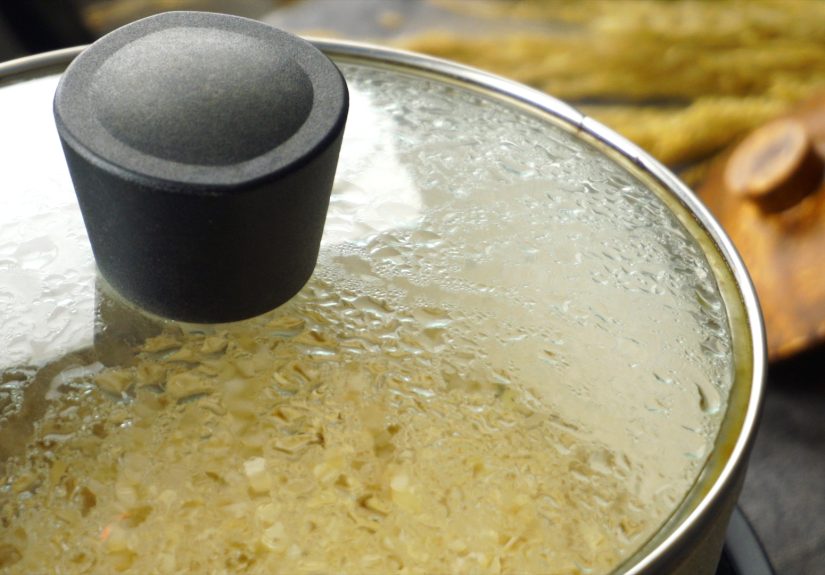
Bring the broth and rice to a gentle boil over medium-high heat. Once it starts bubbling, stir once, reduce the heat to low, and cover the pot with a tight-fitting lid.
This is the big transition moment. High heat gets things moving, but low heat is what actually cooks the rice evenly. If the heat stays too high, the bottom may scorch before the grains finish steaming.
Step 8: Cover the Pot and Resist the Urge to Peek
Yes, the rice is in there. No, it does not need your supervision every 45 seconds.
Leave the lid on while the rice simmers. Long-grain white rice often takes around 15 to 20 minutes, depending on the variety and the amount of liquid. Brown rice takes longer, often 35 to 45 minutes or more. Every time you lift the lid, steam escapes, and that steam is part of what cooks the rice.
If you keep checking, you are basically sabotaging your own dinner.
Step 9: Let the Rice Rest Off the Heat
Once the liquid is absorbed, remove the pot from the heat and let it sit, covered, for 5 to 10 minutes. This rest time helps the moisture redistribute and lets the rice finish steaming gently.
This is the difference between rice that is merely cooked and rice that feels fluffy, tender, and finished. Skip this step, and you may end up with a wetter top and a denser bottom.
Step 10: Fluff, Taste, and Serve
Take off the lid and fluff the rice gently with a fork. Taste it. Add a tiny bit more salt, black pepper, chopped parsley, or a squeeze of lemon if you want to brighten the flavor.
At this point, your rice should be savory, aromatic, and ready to go with almost anything. Serve it with roasted chicken, sautéed vegetables, grilled shrimp, pork chops, or spoon it under saucy dishes that need a good landing pad.
Common Mistakes When Cooking Rice with Chicken Broth
Using the Wrong Liquid Ratio
This is mistake number one, and it causes most rice disasters. Too much broth makes mushy rice. Too little can leave the center hard. Use your rice package as your guide, and remember that different rice types behave differently.
Adding Too Much Salt
Chicken broth already brings seasoning. If you add salt automatically, the rice can become overly salty fast. Use low-sodium broth when possible, then season after tasting.
Cooking on Heat That Is Too High
A roaring boil is great for pasta, less great for rice. After the initial boil, turn the heat down low so the grains can absorb the broth slowly and evenly.
Skipping the Rest Time
Rice needs a few quiet minutes after cooking. Think of it as a spa break for starch. Letting it rest improves texture more than most people realize.
Stirring Too Much
Once the lid is on, leave it alone. Constant stirring can break grains and create a sticky texture, which is not what most people want in broth-cooked rice.
Easy Flavor Variations
Once you know the basic method, you can make the rice more interesting without making it complicated.
- Garlic rice: Sauté minced garlic in butter before adding the rice.
- Herb rice: Stir in parsley, thyme, or chives at the end.
- Lemon chicken broth rice: Add lemon zest and a little juice after fluffing.
- Onion rice: Cook diced onion in oil until soft before toasting the rice.
- Pilaf-style rice: Toast the rice more deeply and add a little celery or shallot.
Chicken broth rice is also a great foundation for casserole recipes, burrito bowls, meal-prep lunches, and skillet dinners.
How to Store and Reheat It Safely
Cooked rice should not hang out at room temperature for hours like it paid rent. Cool leftovers promptly and refrigerate them within 2 hours. Store the rice in a shallow, covered container so it cools faster.
To reheat, add a splash of broth or water, cover loosely, and warm until hot all the way through. This helps bring back moisture and prevents dry, tired leftovers.
Frequently Asked Questions
Can I use chicken stock instead of chicken broth?
Yes. Chicken stock usually has a slightly richer mouthfeel, while broth can taste lighter and more seasoned. Either works well for cooking rice.
Can I use bouillon?
Yes, but mix it carefully and watch the salt level. Bouillon can be intense. If you use it, taste before adding any extra salt.
Can I cook rice with chicken broth in a rice cooker?
Absolutely. Use the machine’s recommended rice-to-liquid ratio, substitute broth for water, and choose low-sodium broth if possible. Let the rice rest a few minutes after the cooker switches off before fluffing.
What is the best rice for chicken broth?
Long-grain white rice is the easiest and most versatile. Jasmine and basmati are excellent if you want more fragrance. Brown rice works too if you do not mind a longer cook time.
Real Kitchen Experiences: What Cooking Rice with Chicken Broth Teaches You
The first time many people cook rice with chicken broth, they expect fireworks. Trumpets. Choirs. A sudden standing ovation from the dinner table. What actually happens is quieter but better: dinner simply tastes more complete.
That is one of the most useful things about this method. It does not turn rice into a completely different food. It turns it into a more satisfying version of itself. And in real life, that matters. On busy weeknights, most of us are not looking for a 19-step side dish with three pans and a tiny garnish placed with tweezers. We are looking for food that tastes good, feels comforting, and does not leave the kitchen looking like a reality-show elimination round.
Cooking rice with chicken broth also teaches you something important about small upgrades. A lot of home cooking is not about fancy techniques. It is about smart substitutions. Swap water for broth, and suddenly your rice works harder. Toast the grains for two minutes, and the flavor deepens. Add onion first, and now the whole meal smells like someone planned ahead. These are not dramatic moves, but they stack up fast.
Another experience many home cooks have is learning that rice rewards patience more than panic. The instinct to lift the lid, stir the pot, and investigate every bubble is strong. But the best batches usually happen when you trust the process. Simmer low. Keep the lid on. Let it rest. Fluff at the end. Rice is almost annoyingly good at proving that less interference can lead to better results.
There is also a practical lesson in using broth: taste matters, but balance matters too. Rich broth can make rice deeply savory, but too much salt can throw the whole dish off. That is why low-sodium broth becomes a kind of weeknight hero. It gives you flavor without boxing you into a salt corner. Then you can finish the rice how you want, whether that means herbs, butter, pepper, lemon, or nothing at all.
Over time, this method becomes one of those reliable kitchen habits you stop thinking about. You start making rice with chicken broth for roast chicken, then for grain bowls, then for soups, casseroles, and quick lunches. Eventually, plain water starts to feel like the backup singer instead of the star. Not bad, just not as memorable.
And maybe that is the best real-life takeaway. Cooking rice with chicken broth is not flashy. It is useful. It is a small technique that makes everyday meals taste more intentional, more comforting, and more like home. That is the kind of cooking habit worth keeping.
Final Thoughts
If you have been wondering how to cook rice with chicken broth, the answer is refreshingly simple: use the right rice, match the correct liquid ratio, cook gently, and let the rice rest before fluffing. That is the whole game.
The broth adds rich, savory flavor without extra complexity, which makes this one of the easiest ways to upgrade a basic side dish. Once you get comfortable with the method, you can branch out with garlic, herbs, onion, lemon, or pilaf-style variations. But even the plain version is a huge step up from bland rice cooked in water.
In other words, this is not just rice. It is rice that showed up dressed properly.