Table of Contents >> Show >> Hide
- Bottom Round Roast 101
- The “Don’t Mess This Up” Rules
- Method 1: Oven Roast for Sliceable Roast Beef (Reverse Sear)
- Method 2: Classic Oven-Braised Bottom Round Pot Roast
- Method 3: Slow Cooker Bottom Round Roast (Easy Mode)
- Method 4: Pressure Cooker / Instant Pot Bottom Round (Fast Braise)
- Method 5: Sous Vide Bottom Round (Precision Tenderness)
- Flavor Ideas That Actually Work With Bottom Round
- Common Problems (and How to Fix Them)
- Serving and Leftovers
- Conclusion: Your Best Bottom Round Roast Plan
- Real-Life Experiences Cooking Bottom Round Roast (500-ish Words of “I’ve Been There”)
Bottom round roast is the underdog of the beef case: affordable, lean, and quietly judging you from its plastic-wrapped throne. Cook it the wrong way and it’ll chew back. Cook it the right way and it’s gloriousthin, rosy slices for sandwiches, or fork-tender pot roast that makes you look like you own a cast-iron Dutch oven and your life is together.
This guide breaks down exactly how to cook bottom round roast so it comes out tender and flavorful, with multiple methods depending on whether you want sliceable roast beef, braised pot roast, slow-cooker ease, pressure-cooker speed, or sous vide “I planned this” energy (even if you didn’t).
Bottom Round Roast 101
What it is (and why it can get tough)
Bottom round roast comes from the “round” (the rear leg) of the cow. That area does a lot of work, so it’s lean and made of long muscle fibers with less marbling than cuts like ribeye or chuck. Less fat means less built-in forgiveness. Translation: bottom round loves gentle heat, smart seasoning, and being sliced thin across the grain.
Two personalities in one roast
- Sliceable roast beef: Cook low and slow to a controlled internal temp, then sear for crust. You’ll get tender slices (not shreddy).
- Pot roast / braised: Cook covered with liquid for hours until collagen softens and the meat turns fork-tender.
Picking the roast
- Size: A 2.5–4 lb roast is beginner-friendly. Bigger is fine; it just takes longer.
- Shape matters: More even thickness = more even cooking. If it’s oddly lumpy, consider tying with kitchen twine.
- Look for some fat: Bottom round is lean, but any visible fat cap or slight marbling helps.
The “Don’t Mess This Up” Rules
- Use a thermometer. Bottom round is not the cut to freestyle with vibes.
- Salt early if you can. A dry brine (salt ahead of time) boosts flavor and helps the roast stay juicier.
- Don’t overcook sliceable roast beef. Past medium, bottom round trends toward “beef-flavored shoelace.”
- Always slice against the grain. This is the difference between “tender” and “why is my jaw tired?”
Method 1: Oven Roast for Sliceable Roast Beef (Reverse Sear)
Best for
Deli-style slices, French dip, roast beef sandwiches, meal prep, and feeling like a competent adult.
What you’ll need
- Bottom round roast (2.5–4 lb)
- Kosher salt + black pepper
- Optional flavor crew: garlic powder, onion powder, smoked paprika, dried thyme/rosemary
- Oil (neutral or olive oil)
- Wire rack + rimmed baking sheet (or roasting pan)
- Instant-read thermometer or probe thermometer
Step-by-step
- Dry brine (recommended): Pat the roast dry. Salt it generously on all sides (about 1/2 to 1 tsp kosher salt per pound). Place it uncovered on a rack in the fridge for at least 4 hoursovernight is even better.
- Season: Before cooking, add pepper and any other seasonings you like. If you dry-brined, go easy on extra salt. Rub with a thin sheen of oil to help spices stick.
- Preheat low: Heat the oven to 225°F (or 250°F if your oven runs cool or you’re impatient-but-responsible). Put the roast on a rack so air can circulate.
- Roast until your target temp: Insert a thermometer into the thickest part. Roast until it’s about 10–15°F below your final doneness target (because carryover heat and the final sear will raise it). For many people, that means pulling around 115–120°F for medium-rare-ish slicing.
- Rest strategically: Rest the roast 15–25 minutes. This pause helps the temperature settle and gives you more control so the sear doesn’t overshoot your doneness.
- Sear hard: Crank the oven to 500°F and blast the roast 6–10 minutes, or sear it in a very hot skillet (all sides) for a deep brown crust.
- Rest again (short): 5–10 minutes is usually enough after the sear.
- Slice thin against the grain: Aim for thin slicesespecially if you cooked it lean and pink. Thin slicing is tenderness.
Internal temperature guide (and the safety note you should actually read)
Doneness temperatures vary by preference, but food safety guidance for whole-muscle beef roasts is also important. For the most conservative approach, follow USDA guidance for beef roasts.
- Rare: 120–125°F (bright red center)
- Medium-rare: 130–135°F (warm red/pink)
- Medium: 140–145°F (more pink, less juicy)
- Medium-well: 150–155°F (little pink; bottom round will be noticeably drier)
Food safety: Government food-safety guidance for steaks/chops/roasts is 145°F with a 3-minute rest. If you’re cooking for someone pregnant, older, immunocompromised, or you simply want maximum safety margin, cook to that standard. If you prefer a pinker roast beef slice, you’re choosing a lower final temperatureuse best handling practices, buy good-quality meat, and consider sous vide (Method 5) for precise time/temperature control.
Why reverse sear works so well for bottom round
Bottom round is lean, so you want to avoid blasting it at high heat for a long time (which creates a thick gray “overcooked band”). Low oven heat cooks more evenly from edge to center, then a quick, high-heat sear builds flavor without overcooking the interior. It’s the best of both worlds: tender slices + real browning.
Pro slicing tips (a.k.a. how delis get away with it)
- Find the grain first: Look for the direction of the muscle fibers and slice perpendicular to them.
- Go thinner than you think: Bottom round shines when sliced thin, especially for sandwiches.
- Chill for ultra-thin slices: Refrigerate 30–60 minutes after cooking, then slice. Colder meat is easier to cut thin.
Method 2: Classic Oven-Braised Bottom Round Pot Roast
Best for
Fork-tender comfort food with gravy, carrots, potatoes, and a kitchen that smells like you deserve applause.
Why braising makes lean beef feel rich
Braising is slow cooking in a covered pot with a little liquid. Over time, connective tissue breaks down into gelatin, which enriches the sauce and makes the meat feel tendereven if the cut is lean.
Step-by-step
- Preheat: Set oven to 300–325°F.
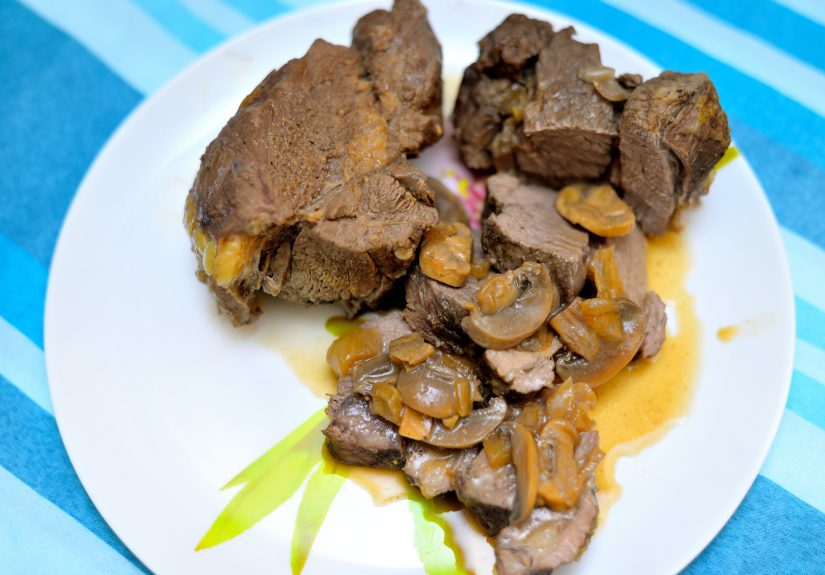
- Season + sear: Salt and pepper the roast. Sear in a hot Dutch oven with oil until deeply browned on all sides. Browning is flavordon’t rush it.
- Build the base: Sauté onions (and optional garlic, tomato paste, mushrooms) in the same pot. Deglaze with broth, wine, cider, or a splash of vinegarscrape up the browned bits.
- Add liquid (but don’t drown it): Add enough to come about 1/3 to 1/2 up the sides of the roast. Add herbs (thyme/rosemary), bay leaf, and optional Worcestershire or soy sauce for depth.
- Cover + braise: Put the lid on and braise in the oven for 3–4 hours, turning once halfway if you remember. It’s done when a fork slides in easily and the meat pulls apart without a wrestling match.
- Add vegetables (optional timing): Add potatoes/carrots in the last 60–90 minutes so they don’t dissolve into baby food.
- Finish the sauce: Remove roast and veg. Reduce the liquid on the stovetop for stronger flavor. Thicken with a cornstarch slurry or a flour-butter paste if you want gravy.
How to know it’s done
For pot roast, tenderness is the real finish line. If it’s still tough, it usually needs more timenot more heat. Keep braising until it relaxes.
Method 3: Slow Cooker Bottom Round Roast (Easy Mode)
Best for
Busy days, “set it and forget it,” and coming home to dinner like you’re starring in a commercial.
Slow cooker rules that save your roast
- Thaw the meat first. Slow cookers heat gently; starting from frozen can keep meat too long in unsafe temperature ranges.
- Use less liquid than you think. Slow cookers don’t evaporate much. Too much liquid can make bland, watery results.
- Sear if possible. It’s optional, but it dramatically upgrades flavor.
Simple slow cooker plan
- Season roast with salt and pepper.
- (Optional) Sear on the stovetop for 3–4 minutes per side.
- Add sliced onions to the bottom of the slow cooker, then the roast.
- Add 1/2 to 1 cup beef broth (plus Worcestershire/soy sauce if you like), garlic, and herbs.
- Cook on Low 8–10 hours (or High 4–6, but Low is usually better for texture).
- Rest 10 minutes, slice against the grain, and spoon the cooking juices over the top.
Method 4: Pressure Cooker / Instant Pot Bottom Round (Fast Braise)
Best for
When you want pot roast tenderness without waiting half a daybecause time is fake but hunger is real.
Fast braise blueprint
- Season roast; use Sauté mode to sear all sides until browned.
- Sauté onions/garlic; deglaze with broth (scrape the browned bitsthis prevents burn warnings and tastes great).
- Add herbs and 1–1.5 cups liquid total.
- Pressure cook on High: about 60–80 minutes for a 3–4 lb roast (time varies by thickness).
- Natural release 10–15 minutes, then quick release.
- If it’s not tender, pressure cook 10–15 minutes more. Meat doesn’t care about your schedule.
Method 5: Sous Vide Bottom Round (Precision Tenderness)
Best for
Ultra-tender, sliceable roast beef with very even donenessespecially helpful for lean cuts like round.
How sous vide helps a lean roast
Sous vide cooks the meat at a precise temperature in a water bath, so you can hold it at a perfect “pink” temperature long enough to tenderize without overcooking. Then you finish with a quick sear for flavor.
Suggested time/temperature ranges
- Sliceable, medium-rare style: 131–135°F for 18–30 hours
- More traditional, slightly firmer slice: 138–142°F for 12–24 hours
- Shreddable, pot-roast-ish texture: 150–155°F for 18–36 hours
Simple sous vide steps
- Season roast (salt, pepper, garlic, herbs). Bag it with a little oil or butter if you want.
- Cook in the water bath at your chosen temp/time.
- Remove, pat very dry (this is key), then sear hard in a hot skillet or 500°F oven for a few minutes to brown the exterior.
- Slice thin against the grain.
Flavor Ideas That Actually Work With Bottom Round
Seasoning blends
- Classic deli: salt, pepper, garlic powder, onion powder
- Herby roast: rosemary, thyme, garlic, lemon zest
- BBQ-ish: smoked paprika, mustard powder, brown sugar (light), black pepper
Umami boosters (for braises and slow cooker)
- Worcestershire sauce
- Soy sauce (a little goes a long way)
- Tomato paste (browned briefly with onions)
- Mushrooms (fresh or dried)
Common Problems (and How to Fix Them)
“My roast is tough.”
- If you cooked it like sliceable roast beef: you may have sliced with the grain or cooked too far past medium.
- If you braised it: it probably needs more time. Tough-to-tender is a time transformation.
“It’s dry.”
- For sliceable roast: stop at a lower internal temp next time and sear quickly.
- For reheating: warm slices gently in gravy or broth instead of nuking them into sadness.
“It tastes bland.”
- Salt earlier (dry brine).
- Sear harder (browning = flavor).
- Reduce your braising liquid into a sauce, or add an umami booster.
Serving and Leftovers
- Sandwiches: pile thin slices on a toasted roll with horseradish mayo and caramelized onions.
- French dip: warm sliced roast in au jus, then dip like you mean it.
- Leftover magic: chop for tacos, stir into fried rice, or simmer in gravy for open-faced sandwiches.
Conclusion: Your Best Bottom Round Roast Plan
If you want sliceable roast beef, go low-and-slow with a thermometer and finish with a fast sear. If you want comfort-food tenderness, braise it (oven, slow cooker, or pressure cooker) until it gives up and becomes delicious. No matter the method, remember the holy trio: salt early, don’t overcook, and slice against the grain.
Real-Life Experiences Cooking Bottom Round Roast (500-ish Words of “I’ve Been There”)
The first time I cooked bottom round roast, I treated it like a fancy cut. I blasted it at a high temperature, pulled it out when it “looked done,” and proudly carved thick slices like I was auditioning for a holiday commercial. The result? It tasted fine… for about three chews. Then it turned into a jaw workout that made me wonder if I should start charging admission.
Here’s what I learned the practical way: bottom round isn’t difficultit’s honest. It tells you exactly what it needs, and it does not accept excuses. The biggest upgrade was using a thermometer. Once I started cooking to temperature instead of time, everything got easier. I stopped guessing, stopped overcooking, and stopped doing that thing where you cut into the roast five times “just to check” (which is basically a hobby for some of us).
The second life-changing moment was discovering how powerful thin slicing is. Even when the roast is cooked beautifully, thick slices can feel chewier because you’re biting through longer muscle fibers. The first time I sliced it properly against the grainthin, almost deli-styleit was like someone swapped my roast when I wasn’t looking. Same meat. Totally different experience. If you’re making sandwiches, chilling the roast for a bit before slicing makes it even easier to get those tidy, thin pieces that stack like a dream.
I also learned that “resting” is less about superstition and more about control. If you reverse sear, resting before the final sear is a cheat code for not overshooting your doneness. It gives you a buffer so you can build a crust without accidentally turning your medium-rare plans into medium-well reality. (And yes, I have done that. More than once. We move forward.)
On the braising side, my biggest mistake was thinking “more liquid = more moist.” Slow cookers and covered braises don’t evaporate much, so too much liquid can dilute flavor. Now I use less liquid, sear more aggressively, and finish by reducing the cooking juices into a sauce. That final reduction step is where the “wow” lives. Add a splash of Worcestershire or a tiny bit of soy sauce, and suddenly it tastes like you had a plan all along.
Bottom round roast has become one of my favorite “quiet flex” dinners. It’s not expensive, it’s not trendy, and it won’t win a popularity contest against ribeye. But when you cook it thoughtfullygentle heat, good seasoning, smart slicingit delivers big flavor and serious value. And honestly, the best part is watching someone take a bite and say, “Wait… this is bottom round?”