Table of Contents >> Show >> Hide
- Why Boil Sweet Potatoes Instead of Baking?
- Pick the Right Sweet Potatoes (Yes, It Matters)
- Prep Work: Whole, Peeled, or Cubed?
- What You Need
- How to Boil Sweet Potatoes (Step-by-Step)
- Sweet Potato Boiling Time Chart
- How to Tell When Sweet Potatoes Are Done
- Pro Tips for Better Boiled Sweet Potatoes
- How to Mash Boiled Sweet Potatoes Without Turning Them Watery
- Make-Ahead, Storage, and Reheating
- Troubleshooting: Common Boiling Problems (and Fixes)
- Nutrition Notes (Quick, Practical, Not a Lecture)
- Easy Ways to Use Boiled Sweet Potatoes
- Real-Life Boiling Experiences and Lessons (About )
- Conclusion
Boiling sweet potatoes sounds like the culinary equivalent of doing your taxes: practical, slightly boring, and definitely not something people brag about on social media.
But here’s the twistwhen you do it right, boiled sweet potatoes turn into a weeknight superhero. They mash like a dream, blend into soups without drama,
and give casseroles that silky “how is this so good?” texture without needing a million extra steps.
This guide walks you through exactly how to boil sweet potatoes (whole or cut), how long it takes, how to avoid watery results,
and how to turn your boiled spuds into meals you’ll actually look forward to eating.
Why Boil Sweet Potatoes Instead of Baking?
Boiling is the “fast lane” method when your end goal is mashing, puréeing, meal-prepping, or using sweet potatoes in a recipe
(think: pies, casseroles, soups, gnocchi-style mash, or baby food). It’s also easier to control textureespecially if you want tender-but-not-mushy cubes
for salads and bowls.
The trade-off: boiling can wash away some water-soluble nutrients into the cooking water. The upside: moist cooking can help preserve certain antioxidants,
and many people find boiled sweet potatoes gentler and less drying than baked ones. If you want the best of both worlds, boil for tenderness and finish later
with a quick roast or sauté for flavor.
Pick the Right Sweet Potatoes (Yes, It Matters)
When boiling, choose sweet potatoes that are firm, heavy for their size, and free of soft spots or deep wrinkles.
Small-to-medium potatoes cook faster and more evenly than giant “football” ones.
Sweet potato vs. yam (the quick clarification)
In many U.S. grocery stores, orange-fleshed sweet potatoes are labeled “yams,” but true yams are a different plant with rougher skin and a starchier texture.
For boiling, the common U.S. “yam” is still a sweet potatoso you’re in the right place.
Prep Work: Whole, Peeled, or Cubed?
Your prep choice changes the cook time and the final texture. Use this simple decision guide:
- Boil whole (skin on): Best for easy peeling later, and great when you want fluffy mash or purée.
- Boil peeled & cubed: Fastest method; ideal for casseroles, soups, quick mashes, and meal prep.
- Boil sliced/diced: Helpful for soups and stews, or when you want quick tenderness with less overcooking.
Do you have to peel sweet potatoes before boiling?
Nope. You can boil with the skin on or off. The skin adds fiber and can help the potato hold together. If you don’t love the texture of the peel,
boil whole with the skin on and peel aftermany cooks find it slips off more easily once the potato cools slightly.
What You Need
- Sweet potatoes
- Large pot or Dutch oven
- Cold water
- Salt (optional, but highly recommended)
- Knife + cutting board (if cubing)
- Vegetable peeler (optional)
- Colander
Optional add-ons for flavor (not required, but nice): a bay leaf, a smashed garlic clove, or a pinch of cinnamon for certain recipes.
Keep it simple if you’re boiling sweet potatoes for multiple uses during the week.
How to Boil Sweet Potatoes (Step-by-Step)
Method 1: Boil Whole Sweet Potatoes (Skin On or Off)
- Scrub and rinse. Wash the sweet potatoes under cool water and scrub the skins well (even if you plan to peel later).
- Place in a pot and cover with cold water. Put sweet potatoes in a large pot and add enough water to cover them by at least 1 inch.
Starting in cold water helps the inside and outside cook more evenly. - Salt the water (optional but smart). Add a generous pinch of salt. It seasons the potato from the inside out.
- Bring to a boil, then reduce to a steady simmer. Once boiling, lower the heat so the water bubbles gently.
A furious rolling boil can bash the potatoes around and make the edges mealy. - Cook until fork-tender. Depending on size, whole sweet potatoes typically take about 20–50 minutes.
Start checking around the 20-minute mark for smaller ones. - Test doneness. Slide a fork or paring knife into the thickest part. If it glides in with little resistance, you’re done.
- Drain and cool. Drain in a colander. Let them cool until comfortable to handle. Peel if desired.
Method 2: Boil Cubed Sweet Potatoes (Fast + Meal-Prep Friendly)
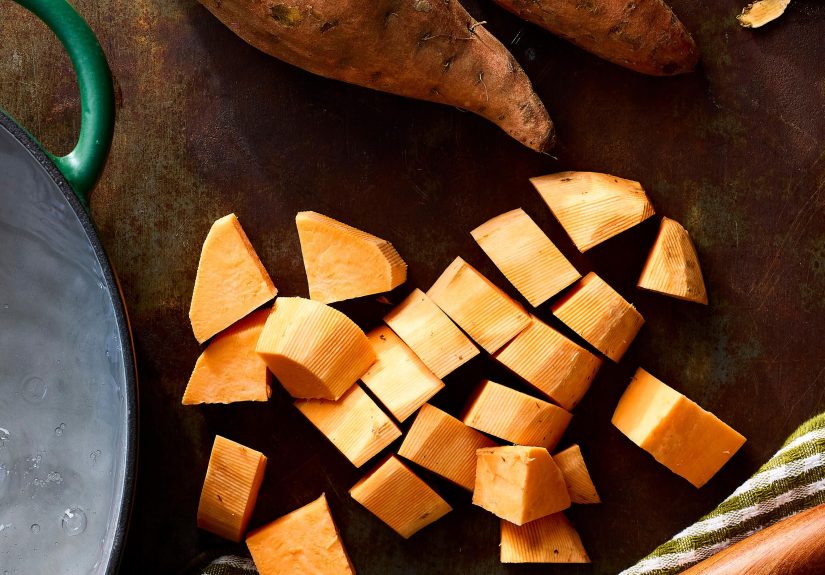
- Peel (optional) and cut evenly. Cut into 1-inch cubes for reliable cooking.
- Cover with cold water. Add cubes to a pot and cover with water by 1 inch.
- Salt the water. A pinch (or two) makes a difference.
- Bring to a boil, then simmer. Reduce to a gentle boil to avoid broken, ragged cubes.
- Boil until tender. For 1-inch cubes, plan on about 12–15 minutes. Smaller dice can take 7–12 minutes.
- Drain well. Drain, then let the cubes sit in the colander for a minute to steam off excess moisture.
Method 3: Boil Sweet Potatoes for Soups and Stews
If you’re adding sweet potatoes to soups, you can either boil them separately or simmer them directly in the soup base.
Keep pieces similar in size (think 3/4-inch chunks) so they soften evenly without turning into accidental purée.
Sweet Potato Boiling Time Chart
Cook times vary by size, cut, and variety. Use this chart as a starting point, then rely on the fork test to be sure.
| Sweet Potato Cut | Typical Time | Best For |
|---|---|---|
| Small dice (1/2-inch) | 7–12 minutes | Quick soups, speedy meal prep |
| Cubes (1-inch) | 12–15 minutes | Casseroles, bowls, salads, mashing |
| Larger chunks (1.5–2 inches) | 15–25 minutes | Rustic mash, stews |
| Whole (small–medium) | 20–30 minutes | Peel-after boiling, mash, purée |
| Whole (large) | 30–50 minutes | Big batches, holiday prep |
How to Tell When Sweet Potatoes Are Done
The best tool is a fork (and the bravery to actually use it). Sweet potatoes are done when:
- A fork slides in easily with minimal resistance.
- A paring knife pierces the thickest part smoothly.
- For cubes: the edges look slightly rounded, and the cube can be cut cleanly with a spoon.
Texture targets (so you don’t accidentally make baby food)
- For salads/bowls: tender, but still holds its shape (pull them a minute earlier).
- For mashing: very tenderno “crunch” in the center at all.
- For soups: tender enough to bite through, unless you want it to melt into the broth.
Pro Tips for Better Boiled Sweet Potatoes
1) Don’t skip the salt (unless your doctor told you to)
Sweet potatoes taste sweeter and more “complete” when the cooking water is salted. You’re not trying to make seawater
just enough to gently season the potato.
2) Simmer, don’t destroy
A roaring boil can make cubes break apart and turn the water cloudy and starchy. Keep it at a steady, gentle boil for cleaner texture.
3) Cut pieces evenly
The biggest cause of uneven results is uneven cutting. If half your cubes are tiny and half are huge, you’ll end up with a mix of mush and crunch.
(That is not a fun texture contrast. That is a kitchen argument.)
4) Steam-dry after draining (the anti-watery trick)
After draining, let the sweet potatoes sit in the colander for 1–2 minutes so excess water evaporates.
For ultra-dry mash: return them to the warm pot over low heat for 30–60 seconds, stirring gently.
How to Mash Boiled Sweet Potatoes Without Turning Them Watery
Boiled sweet potatoes are naturally moist, which is greatuntil your mash turns into “sweet potato soup.”
Here’s the fix:
- Drain thoroughly.
- Steam-dry in the colander for 1–2 minutes.
- Return to the pot for a brief low-heat dry-off (optional but powerful).
- Mash, then add fats (butter, olive oil) and dairy (milk, Greek yogurt) gradually.
- Season with salt at the end, tasting as you go.
If you’re making a sweet potato casserole or pie filling, you can also let the boiled potatoes cool slightly before mashing.
That extra minute helps moisture redistribute instead of pooling.
Make-Ahead, Storage, and Reheating
Can you boil sweet potatoes ahead of time?
Absolutely. Boiled sweet potatoes are meal-prep gold. Cool them quickly, then store in an airtight container.
- Refrigerator: up to about 5 days (cool completely before sealing).
- Freezer: mash or cubes can freeze well for longer storage; thaw overnight and reheat gently.
Best reheating methods
- Microwave: fastestcover loosely to prevent drying.
- Stovetop: warm with a splash of water or milk if mashed.
- Oven: spread cubes on a sheet pan for a drier, slightly roasted vibe.
Troubleshooting: Common Boiling Problems (and Fixes)
Problem: My sweet potatoes are still hard after 20 minutes
Likely causes: very large potatoes, big chunks, or the water never returned to a simmer after you added them.
Fix: keep simmering and test every 5 minutes. For next time, cut into smaller, evenly sized pieces.
Problem: They’re mushy and falling apart
Likely causes: overcooking, tiny pieces, or too vigorous a boil.
Fix: drain immediately, then use them for mash, soup thickener, or a quick purée.
Next time: simmer gently and start checking early.
Problem: My mash tastes bland
Likely causes: unsalted cooking water and under-seasoning at the end.
Fix: add salt, a bit of butter/olive oil, and a squeeze of citrus (lemon or orange) to brighten.
Also try cinnamon or smoked paprika depending on whether you’re going sweet or savory.
Problem: They taste watery
Likely causes: not draining long enough or mashing immediately without steam-drying.
Fix: steam-dry, then mash. If already mashed, warm it in a pot over low heat to evaporate extra moisture.
Nutrition Notes (Quick, Practical, Not a Lecture)
Sweet potatoes bring fiber, potassium, and beta-carotene (the orange pigment tied to vitamin A activity).
Leaving the skin on adds extra fiber. Boiling can move some nutrients into the water, but moist cooking can also help protect certain antioxidants
and may lead to a slower blood-sugar rise compared with some dry-heat methods. If you want better beta-carotene absorption, pair your boiled sweet potatoes
with a little healthy fat (like olive oil, avocado, or a pat of butter).
Easy Ways to Use Boiled Sweet Potatoes
1) Simple buttery cubes
Toss drained cubes with butter (or olive oil), salt, pepper, and a pinch of cinnamon or smoked paprika.
It’s the easiest “side dish that tastes like you tried.”
2) Fast mashed sweet potatoes
Mash boiled sweet potatoes with butter, salt, and a splash of milk. Want it fancy? Add garlic and chives for savory,
or maple and cinnamon for sweet.
3) Soup shortcut
Blend boiled sweet potatoes into broth with sautéed onions and spices for a creamy soup without heavy cream.
4) Meal-prep bowls
Use tender-but-firm cubes in grain bowls with black beans, corn, greens, and a lime-yogurt sauce.
Real-Life Boiling Experiences and Lessons (About )
If you’ve ever boiled sweet potatoes and thought, “Why does this feel like it should be easier?”welcome to the club.
Most “boiling disappointments” come from small, fixable details that don’t sound important until they ruin dinner.
Here are the most common real-life scenarios people run into, plus what actually helps.
Holiday prep chaos: A lot of people boil sweet potatoes for casseroles because it’s fast and you can do it ahead.
The classic mistake is boiling peeled cubes until they’re practically dissolving, then wondering why the casserole filling turns loose and watery.
The fix is surprisingly simple: drain like you mean it, then let the potatoes sit for a minute to steam off extra moisture.
If you’re mashing, give them a short “dry-off” back in the warm pot before you add butter or milk. That one minute can be the difference between
creamy and soupy.
Meal prep that stays appetizing: People often want boiled sweet potato cubes that hold their shape for salads and bowls.
Here’s the lesson: don’t boil them until they’re fully “mash-ready.” Pull them when a fork goes in easily but the cube still looks like a cube.
Then cool them quicklyspread on a plate or sheet pan so steam escapes. If you dump hot cubes straight into a sealed container,
they keep steaming and can cross the line into mush by the time lunch rolls around.
The “why are some pieces raw?” problem: This happens when the cuts aren’t even. One big chunk can take twice as long as a smaller one.
A practical habit: cut lengthwise slices first, stack them, then cut into similar cubeslike you’re trying to impress a cooking show judge
who only scores geometry.
Skin-on success stories: Many cooks discover that boiling whole sweet potatoes with the skin on makes peeling easier afterward.
Once they’re cooked and slightly cooled, the skin often loosens and can be rubbed off or peeled with minimal effort.
This is especially handy when you’re making a large batch for mash, pie filling, or baby food and don’t want to spend 15 minutes peeling
rock-hard raw sweet potatoes.
Flavor surprises: Boiled sweet potatoes can taste “flat” if the water isn’t salted.
People sometimes assume sweet means it doesn’t need seasoningthen they add a mountain of toppings to compensate.
Salting the water and finishing with a little fat (butter or olive oil) makes the natural sweetness taste more sweet, not less.
For savory meals, a pinch of smoked paprika or cumin after boiling can turn basic cubes into something you’d happily eat twice.
The best mindset shift: Boiling sweet potatoes isn’t about strict minutesit’s about the fork test.
Sweet potatoes vary in size, density, and variety. The timer gets you close; the fork tells the truth.
Check early, adjust as needed, and remember: if you overcook them, you didn’t failyou just accidentally started making mashed sweet potatoes.
Conclusion
Once you know the basicscut evenly, simmer gently, salt the water, and drain wellboiling sweet potatoes becomes one of the easiest ways to set yourself up
for quick meals all week. Whether you’re boiling whole sweet potatoes for effortless peeling or cubing them for meal prep, the method is simple,
forgiving, and wildly useful. And if anyone tries to shame you for boiling instead of roasting, just smile politely… while you finish dinner
30 minutes sooner.