Table of Contents >> Show >> Hide
- Why Email Interviews Still Work
- How to Administer an Email Interview in 9 Steps
- Step 1: Define the Interview Goal Before You Draft Anything
- Step 2: Research the Person and Choose the Right Angle
- Step 3: Write a Clear, Professional Invitation Email
- Step 4: Set Expectations Up Front (Format, Deadline, and Ground Rules)
- Step 5: Build Smart Questions (And Put Them in the Right Order)
- Step 6: Make the Email Easy to Answer
- Step 7: Follow Up Without Becoming “That Person”
- Step 8: Verify, Clarify, and Keep a Clean Record
- Step 9: Close the Loop Professionally
- Common Email Interview Mistakes to Avoid
- Experience-Based Lessons from Real Email Interviews (Extended Section)
- Conclusion
Email interviews are the quiet overachievers of modern communication. They do not have the drama of a live Zoom call, the awkwardness of phone lag, or the “Can you hear me now?” chaos of a bad headset. But when done well, an email interview can produce thoughtful answers, cleaner quotes, better documentation, and a smoother process for everyone involved.
Whether you are a journalist, blogger, researcher, podcaster, marketer, or hiring manager running a written screening interview, the same fundamentals apply: be clear, be organized, be ethical, and make it easy for the other person to respond. In other words, do not send a wall of text and hope for magic.
This guide walks you through 9 practical steps to administer an email interview professionally, plus real-world experience-based lessons at the end so you can avoid the mistakes that make inboxes go cold.
Why Email Interviews Still Work
A good email interview gives both sides something valuable: time. The interviewer gets a written record, and the interviewee gets a chance to think before responding. That often leads to more accurate, more complete answersespecially for technical, sensitive, or detail-heavy topics.
It also helps with scheduling across time zones, busy calendars, and different working styles. If you structure your questions correctly and set clear expectations, email interviews can be more efficient than live interviews and easier to edit for clarity later.
How to Administer an Email Interview in 9 Steps
Step 1: Define the Interview Goal Before You Draft Anything
Before you write your first email, decide what the interview is actually for. This sounds obvious, but this is where many people go wrong. “I just want to ask a few questions” is not a goal. It is a vibe.
Get specific:
- What is the final output? (article, blog post, hiring screen, case study, profile, research summary)
- What do you need from the person? (quotes, facts, examples, opinions, stories, credentials)
- What is your deadline?
- How many questions can they reasonably answer?
Write a one-sentence internal goal statement, such as: “I need 5 quotable answers and one example story for a feature on remote hiring.” That one sentence will keep your outreach focused and your questions useful.
If this is a hiring-related email interview, also decide in advance which competencies you are evaluating (for example: communication, judgment, technical knowledge, problem-solving). That makes your process fairer and easier to score later.
Step 2: Research the Person and Choose the Right Angle
Email interviews fail fast when your questions look generic. People can smell copy-paste outreach from two inboxes away.
Before contacting someone, spend a few minutes learning who they are and why they are a fit. Then tailor your angle. Mention something specific: a recent project, a published article, a conference talk, or a role relevant to your topic.
This step does two things:
- It improves your response rate because your email feels real.
- It improves answer quality because your questions are sharper.
Example: Instead of asking, “Can you share tips on leadership?” ask, “You led a cross-functional team through a major product launch last year. What communication habit helped your team move quickly without burning out?”
That second version invites a story, not a textbook definition.
Step 3: Write a Clear, Professional Invitation Email
Your first message should be easy to scan and easy to trust. Use a meaningful subject line, a polite greeting, a short explanation of who you are, why you are reaching out, and what you are asking for.
A strong invitation email includes:
- A clear subject line
- A brief introduction (who you are)
- Why you chose them specifically
- What the interview is for
- How long it will take (or how many questions)
- Your deadline
- A polite sign-off and contact information
Keep the tone professional but friendly. If you are too casual, you risk sounding sloppy. If you are too formal, you can sound robotic. The sweet spot is respectful and direct.
Example subject lines:
- Interview Request: 5 Questions for a Feature on Email Communication
- Quick Email Interview Request for [Publication/Project Name]
- [Deadline Friday] Interview Request on Remote Team Hiring
Pro tip: Put the deadline in the subject line only if it is real. Fake urgency is a fast way to get ignored.
Step 4: Set Expectations Up Front (Format, Deadline, and Ground Rules)
This is the step that separates a smooth email interview from a messy one.
Be explicit about the logistics:
- How many questions you are sending
- When you need responses
- Whether short answers or detailed answers are preferred
- Whether follow-up questions may be needed
- How the answers will be used (published article, internal report, hiring evaluation, etc.)
If the interview is for media, content, or public-facing publication, clarify attribution expectations early. Do not assume the other person understands how quoting works. If you need responses “on the record,” say so politely. If you need permission to publish their name, title, or company, state that clearly.
Also, avoid vague deadlines like “ASAP.” Use a real date and time. Example: “Would you be able to reply by Thursday, March 6, at 5:00 PM ET?” Real deadlines get real answers.
Important: Never promise something you cannot guarantee (like full quote approval before publication) unless that is truly your process. Clear expectations build trust. Fuzzy promises create email drama later.
Step 5: Build Smart Questions (And Put Them in the Right Order)
This is where the quality of your email interview is won or lost.
Good email interview questions are:
- Specific
- Open-ended
- Easy to understand
- Focused on one idea at a time
- Arranged in a logical order
Avoid giant, multi-part questions like this:
“Can you talk about your career journey, leadership style, biggest challenge, future plans, and how AI is changing your industry?”
That is not one question. That is five questions wearing a trench coat.
Instead, break them apart and sequence them:
- Start with an easy context question.
- Move into your main topic.
- Ask for an example or story.
- Ask a practical or forward-looking question.
- Close with a final “anything else” prompt.
Example 5-question email interview set:
- What is your current role, and what part of your work is most relevant to this topic?
- What is one mistake people commonly make when conducting interviews by email?
- Can you share a real example where an email interview worked especially well (or badly)?
- What is one habit that improves response quality from interviewees?
- Is there anything you wish more interviewers understood before they hit send?
If you are running a hiring email interview, ask the same job-related questions to every candidate and use the same scoring criteria. That keeps your process more consistent and fair.
Step 6: Make the Email Easy to Answer
Even great questions can get ignored if your email is hard to read.
Use formatting that reduces friction:
- Keep your intro short
- Use numbered questions
- Use line breaks (no giant blocks of text)
- Bold key logistics (deadline, number of questions)
- Use plain language instead of jargon
Numbered questions are especially useful because they make it easy for the interviewee to reply inline. You can even invite them to answer beneath each question.
Helpful line to include:
“Feel free to reply directly under each numbered question for convenience.”
Also, if you are sending attachments, ask yourself whether they are necessary. In many cases, putting the questions directly in the email body gets faster replies than attaching a document. Attachments add one more thing for people to open, download, and forget.
Keep your language plain and clear. The goal is understanding, not impressing someone with vocabulary gymnastics.
Step 7: Follow Up Without Becoming “That Person”
Sometimes people do not reply because they are busy. Sometimes they meant to reply. Sometimes your email got buried under twelve “quick check-ins” and a calendar invite nobody remembers accepting.
A follow-up is normal. Nagging is not.
Use this simple follow-up rhythm:
- Non-urgent requests: wait about 5–10 business days before following up
- Urgent requests: follow up sooner, but stay polite and specific
- Team rule of thumb: acknowledge within 24 hours when possible, even if the full answer comes later
Your follow-up should be short and easy to act on. Do not rewrite the entire original email. Just remind them of the request and deadline.
Example follow-up email:
Hi [Name],
Just following up on my email interview request below. I know you are busy. If you are available, I would still love your perspective on [topic]. A reply by [date/time] would be wonderful, but if timing does not work, no worries at all.
Thank you,
[Your Name]
That tone is respectful, professional, and much more effective than “Checking in again!!!” (three exclamation points never improved an interview).
Step 8: Verify, Clarify, and Keep a Clean Record
Email interviews give you a built-in written record, which is a huge advantage. Use it well.
Before publishing, quoting, or evaluating responses:
- Check names, titles, dates, and factual claims
- Watch for ambiguous wording
- Follow up for clarification if something is unclear
- Keep the original email thread archived
If you are using quotes publicly, do not “clean up” wording so much that you change the meaning. Light edits for grammar or length may be fine depending on your process, but accuracy and context come first.
If you are using email interviews for hiring, save responses in a consistent format and score them against your pre-defined criteria. Do not grade one person on “vibe” and another on detail. Use the same rubric for everyone.
Also, if you promised a follow-up or correction check for facts, do it. Reliability is not glamorous, but it is what gets people to reply to you again.
Step 9: Close the Loop Professionally
The interview is not over when you receive answers. The final step is closing the interaction with professionalism.
At minimum:
- Thank them for their time
- Confirm receipt of their answers
- Tell them what happens next (publication timeline, next round, internal review, etc.)
If the interview is for a public piece, send a courtesy note when it is published. If the interview is for hiring, let candidates know the next step and timeline whenever possible. Silence after someone took time to answer your questions is a trust-killer.
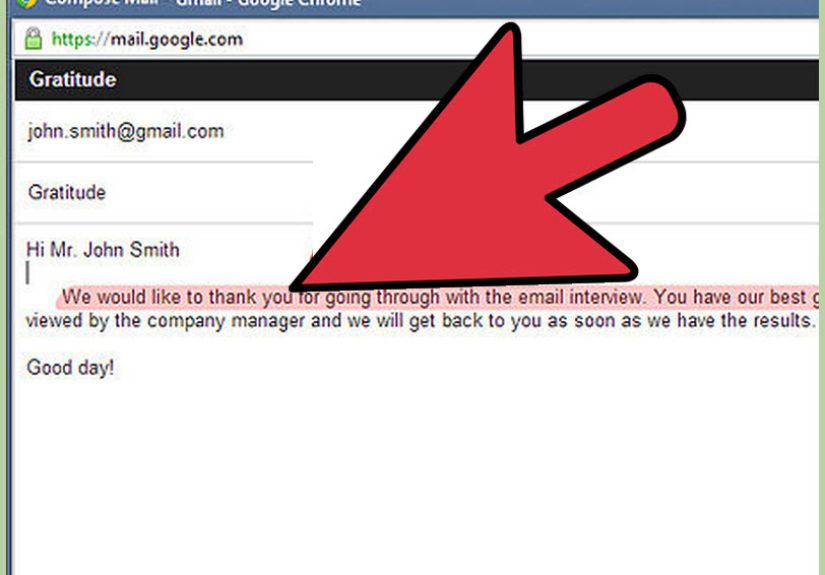
A simple thank-you email can make a big difference:
Thank you for the thoughtful responses. They were incredibly helpful. I appreciate the detail and examples. I’ll follow up by [date] with the next steps / publication status.
Professional closure is part of administering an email interview well. It is also how you build a reputation that makes future interviews easier.
Common Email Interview Mistakes to Avoid
- Sending too many questions: If it looks like homework, people postpone it.
- Using vague deadlines: “Whenever you can” often means “never.”
- Asking double or triple questions: You will get half-answers.
- Being unclear about usage: Always explain how the answers will be used.
- Forgetting tone: Professional and friendly wins. Casual chaos loses.
- Ignoring legal and ethical boundaries: Especially important for hiring and public-facing interviews.
- Not following up: One polite follow-up often rescues a good interview.
Experience-Based Lessons from Real Email Interviews (Extended Section)
One of the biggest lessons from administering email interviews is that clarity beats cleverness every time. Many interviewers spend too much effort trying to sound polished and not enough effort making the request easy to answer. In practice, the emails that get the best responses are usually the simplest ones: clear subject line, brief intro, why you chose the person, what you need, when you need it, and a thank-you. Fancy language does not increase response rates. Clear structure does.
Another common pattern: the first answer is often not the best answer. This is especially true when your topic is complex or personal. People tend to reply quickly with a safe summary. If you ask one thoughtful follow-upsomething like, “That’s helpful. Could you share a specific example?”the quality improves dramatically. The best quotes and strongest insights often come in the second round, not the first. That is why building follow-up time into your process matters.
In hiring-style email interviews, consistency is everything. A lot of teams unintentionally create unfair processes by asking different questions depending on what “feels interesting” about each candidate. It sounds flexible, but it makes comparison messy and introduces bias. The better approach is to create a small set of standard questions, score them using the same rubric, and then reserve optional follow-ups for clarification. Candidates notice when your process feels organized, and that professionalism improves your employer brand too.
For journalists, bloggers, and content creators, one of the most useful habits is to explain the process like the other person has never been interviewed beforebecause many people have not. Telling someone whether their comments are on the record, how much of the interview might be used, whether follow-up questions are likely, and when the piece is expected to run can reduce anxiety and improve trust. People give better answers when they know what is happening.
A practical lesson that saves time: numbered questions and inline replies are magic. When interviewees respond under each numbered prompt, you spend less time matching answers to questions later. It also makes follow-up easier because you can reference question numbers directly. This small formatting choice can cut editing time significantly, especially when you are managing multiple interviews at once.
Timing also matters more than most people think. Sending interview requests late Friday evening and expecting a Monday morning answer is a classic mistake. Even strong contacts can miss your message if it arrives outside working hours and gets buried. If your request is important, send it during a normal business window, and if it is urgent, acknowledge the urgency without sounding demanding. Respectful urgency works. Pressure usually backfires.
Finally, the biggest long-term lesson is this: every email interview is also a relationship test. The person you are interviewing is quietly judging whether you are organized, fair, and trustworthy. If you are, they are much more likely to respond quickly next time, refer you to someone else, or give you better insights in the future. If you are sloppy, they may still answer oncebut probably not twice. Treat each email interview like the start of a professional relationship, not a one-time transaction, and your results will improve over time.
Conclusion
Administering an email interview well is not complicated, but it does require intention. The formula is simple: define your goal, research the person, send a clear request, ask better questions, make the email easy to answer, follow up politely, verify carefully, and close the loop professionally.
If you follow these 9 steps, your email interviews will feel less like inbox roulette and more like a reliable system. You will get stronger answers, fewer misunderstandings, and a much better reputation with the people you interview.