Table of Contents >> Show >> Hide
- Why Face Painting Beats a Mask (Most of the Time)
- The Golden Rule: Use Products Meant for Skin (Not Craft Time)
- Patch Test Like a Responsible Halloween Legend
- Hygiene and “Germ Math”: Keep the Fun, Lose the Funk
- Prep the Skin So Paint Goes On Smooth (and Comes Off Without Drama)
- Face Paint Designs That Look Fancy but Paint Fast
- How to Manage the Line (and Your Sanity)
- When to Skip Face Paint (and What to Do Instead)
- Removal: The Finale That Determines Whether Tomorrow Is Peaceful
- Troubleshooting: Common Face-Paint Problems (Solved)
- Conclusion: Make It Fun, Make It Safe, Make the Memories
- My 500-Word Face-Painting Field Notes (Because Halloween Is My Jam)
Some people live for the candy. Some people live for the spooky movies. Me? I live for the moment a kid looks in the mirror,
gasps dramatically, and announces, “I AM NOW A TIGER/WITCH/SUPERHERO/GLITTERY NIGHTMARE CREATURE.” Halloween is my jam, and
face painting is the spoon I eat it with.
If you’ve ever hosted a Halloween get-together or set up a “painting station” before trick-or-treating, you know this truth:
face paint is the fastest way to turn regular kids into full-costume legends. It’s also the fastest way to create chaos if you
wing it with questionable products, sticky tools, and a time plan that assumes children can “wait their turn calmly.”
(Narrator: they cannot.)
This guide is the sweet spot: fun enough to feel like Halloween, practical enough to keep it safe, and detailed enough that you
won’t end the night googling “why is my child’s face still green.” We’ll talk smart product choices, allergy and irritation
prevention, hygiene, simple designs that look impressive even when you’re painting at the speed of a pit crew, and easy removal.
Why Face Painting Beats a Mask (Most of the Time)
Let’s give face paint its flowers. When done right, it’s comfy, expressive, and doesn’t block vision the way many masks do.
Masks can slip, fog up, and turn kids into tiny bumper cars around porch steps. Face paint keeps their view clearer, which is
not just convenientit’s safer when there are crowds, stairs, and dusk happening all at once.
Another win: face paint is customizable. Your kid can be a vampire and have rainbow lightning bolts because Halloween
is not a documentary. It’s a vibe.
The key phrase there is “done right.” That means using skin-safe products, planning for hygiene, and accepting that children
will request a design change precisely three seconds before you’re finished.
The Golden Rule: Use Products Meant for Skin (Not Craft Time)
Halloween tempts people to treat makeup like art supplies. Resist that urge. The safest path is choosing face paints and makeup
labeled for cosmetic use and following the directions. “Non-toxic” is not the same as “made for faces.” Craft paints, markers,
and glitters may be non-toxic in the sense that they won’t poison you, but they can still irritate skin, stain, or cause a
reactionespecially on kids.
What to look for when buying face paint
- Cosmetic-grade, skin-safe labeling: Choose products intended for use on skin (especially for children).
- Clear ingredient list and instructions: If the label is vague or missing basics, skip it.
- Smell check: If it smells “off,” harsh, or rotten, toss it. Makeup can be contaminated like any other product.
- Eye-area guidance: If it says “not for use near eyes,” believe iteven if the box photo is living a lie.
Glitter: the tiny party guest who won’t leave
Glitter is magical… and also a known troublemaker near eyes. If you’re adding sparkle, choose cosmetic glitter or products made
for the face. Keep anything gritty away from eyelids and lash lines. For glow effects, consider face-safe shimmer creams or
highlighters instead of loose glitter.
Patch Test Like a Responsible Halloween Legend
Patch testing is the simplest way to reduce the chance of irritation or allergic reactions. You’re basically asking the skin,
“Are we cool with this?” before you commit to a full-face masterpiece.
A realistic patch-test plan for Halloween week
- Pick a test spot: Inner forearm or elbow crease works well.
- Apply a small dab: Use the same product and thickness you’ll use on the face.
- Wait and watch: Ideally 24–48 hours. If you see redness, itching, swelling, or bumps, don’t use it.
- When in doubt: If your child has very sensitive skin, eczema flares, or a history of reactions, consider skipping face paint or keeping it minimal.
If a reaction happens, wash the product off gently, apply a cool compress, and avoid reapplying. For severe swelling, trouble
breathing, or widespread hives, seek urgent medical help. (Rare, but always worth stating plainly.)
Hygiene and “Germ Math”: Keep the Fun, Lose the Funk
Face painting is basically a tiny makeup studio in your living room. And like any makeup situation, cleanliness matters.
Sharing makeup or using dirty tools can spread bacteria and viruses, especially around the eyes and nose where kids touch
constantly.
Set up a clean face-paint station
- Handwashing: Yours and theirs. Start clean, stay cleaner.
- One sponge per kid: Use disposable wedges or cut sponges into individual pieces and toss after.
- No double-dipping: Scrape product onto a palette, then load the sponge/brush from the palette.
- Separate eye tools: If you’re doing detail near eyes (carefully), use clean brushes and avoid sharing products.
- Keep lids closed: Open containers invite dust, crumbs, and the mysterious glitter of unknown origin.
Brush cleaning, simplified
For home use on Halloween night, wash brushes with gentle soap and warm water, rinse thoroughly, and let them air dry fully.
If you paint faces often, consider a small rotation of brushes so you can swap clean ones quickly.
If a child has pink eye, a cold sore, an active rash, or broken skin on the face, it’s smart to skip face painting. Your art
is not worth somebody else’s infection.
Prep the Skin So Paint Goes On Smooth (and Comes Off Without Drama)
Face paint sticks best to clean, dry skin. Lotions can make paint slide. That said, very dry or eczema-prone skin may benefit
from a light, fragrance-free moisturizer applied earlier in the daythen gently cleansed before painting.
Quick prep checklist
- Wash face with a mild cleanser and pat dry.
- Tie back hair; add a headband if needed.
- Keep wipes or a damp cloth nearby for quick fixes.
- Do a mini “design consult” with the kid (and get them to agree to iton recordlike a tiny contract).
Face Paint Designs That Look Fancy but Paint Fast
The secret to looking like a face-paint wizard isn’t talent. It’s strategy. You want designs with big shapes, clear contrast,
and a few “wow” lines. Here are crowd-pleasers that work even when the line is forming behind you.
1) The Classic Cat (aka “Speed Mode Cute”)
- Base: Light nose triangle and two cheek circles.
- Details: Three whiskers per side, eyeliner-like top line (not too close to the eye), and a tiny lip line.
- Upgrade: Add a forehead heart or a starburst for “magical cat.”
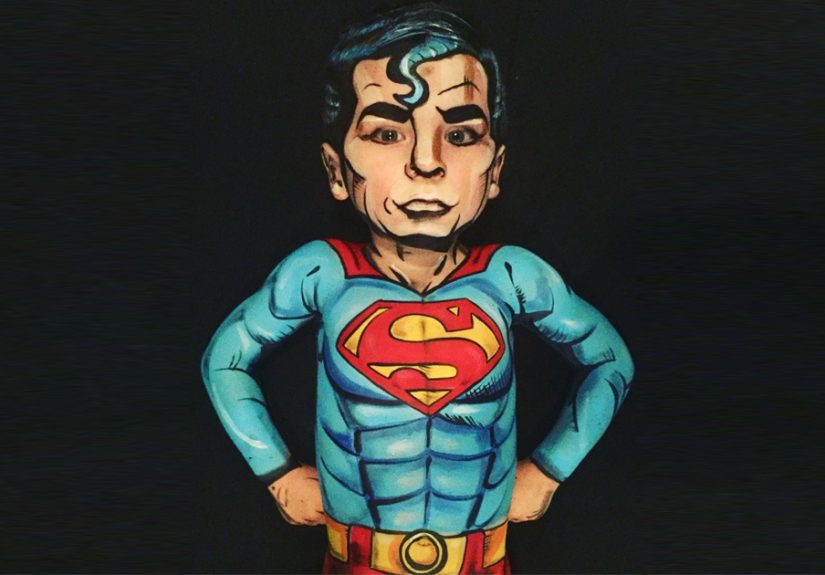
2) Superhero Mask (aka “Minimal Paint, Maximum Identity”)
- Base: A simple mask shape across the eyes and temples (leave a safe margin from eyelids).
- Details: Add a lightning bolt, initials, or a cheek emblem.
- Upgrade: Outline with a darker color for instant polish.
3) Skeleton Mouth (aka “Kids Love Spooky Teeth”)
- Base: White around mouth and cheeks.
- Details: Black lines for teeth and cracks (keep it stylized, not scary-gory).
- Upgrade: Add a few black shadows under cheekbones for depth.
4) Butterfly (aka “The Most Requested Design in Human History”)
- Base: Two wings across cheeks and temples in one bright color.
- Details: Dots along the wing edges and a simple body down the nose bridge (light touch).
- Upgrade: Add a second color near the center for dimension.
5) Pumpkin Cheeks (aka “Adorable and Impossible to Mess Up”)
- Base: Orange cheek circles.
- Details: Black triangle eyes or a smile on one cheek; green stem on the forehead.
- Upgrade: Add curved lines to mimic pumpkin ridges.
Pro-tip: If you only have time for one “wow” detail, make it symmetrical dots. Dots are the cheat code of face painting. They
hide shaky lines, add sparkle without glitter, and make kids feel fancy.
How to Manage the Line (and Your Sanity)
If you’re painting multiple kids, you need a system. Otherwise you’ll end up painting a half-zombie, half-butterfly while
someone cries because they wanted “a dragon unicorn but also a firefighter.”
Line-management tactics that actually work
- Offer a menu: 6–8 designs max. Kids choose faster when options are limited.
- Use a timer: Aim for 3–5 minutes per face for big groups.
- Start with fast wins: Do the youngest kids first, then the “I can wait” older kids.
- Set expectations: “If you pick butterfly, it’s the butterfly on the posterno custom add-ons.”
- Have a helper: One person cleans hands, handles sponges, and keeps hair out of paint-zone.
When to Skip Face Paint (and What to Do Instead)
Face painting is fun, but there are times it’s smarter to pass. If a child has broken skin, a fresh facial rash, active pink
eye, a cold sore, or is currently reacting to something else, skip it. Also consider skipping or minimizing face paint for
kids with frequent eczema flaresespecially if the paint will cover large areas.
Easy alternatives
- Temporary tattoos made for skin (follow directions, avoid irritated areas).
- Hair chalk or colored hair spray (use carefully and avoid eyes).
- Props that don’t poke: headbands, hats, capes, soft accessories.
- Sticker “cheek decals” that are cosmetic-grade and easy to remove.
Removal: The Finale That Determines Whether Tomorrow Is Peaceful
The goal isn’t just to remove the paintit’s to remove it without scrubbing the skin like you’re sanding a deck.
Follow the product’s removal instructions when possible. In general, start gentle and build up only if needed.
A gentle removal routine
- Loosen first: Use lukewarm water and a mild cleanser, or a gentle oil-based remover if the paint is stubborn.
- Wipe softly: Use a soft washcloth. Press and lift rather than rub aggressively.
- Second cleanse: Wash again with mild cleanser to remove residue.
- Moisturize: A fragrance-free moisturizer helps calm skin after makeup.
Avoid harsh solvents or random household “hacks” that aren’t meant for skin. And be extra gentle around the eyeskid skin is
delicate, and tired kids are not known for their patience.
Troubleshooting: Common Face-Paint Problems (Solved)
Problem: The paint cracks or flakes
Usually this is from applying too thickly, painting over oily lotion, or letting the kid make extreme facial expressions
(which, let’s be honest, is unavoidable). Fix it by using thinner layers and letting each layer dry for a few seconds.
Problem: The color looks dull
Some paints need a slightly damp brush or sponge for best pigment payoff. Load color in layers, then outline with a darker
shade for instant contrast.
Problem: A kid says it “itches”
Stop and check. Mild itch can be dryness, too much product, or irritation. If the skin looks red or swollen, remove the paint.
Better to pivot to a hat and cape than power through.
Problem: The paint won’t come off
Don’t escalate to scrubbing. Try a gentle oil-based remover or a little petroleum jelly to loosen stubborn pigments, then
cleanse again. Patience beats friction.
Conclusion: Make It Fun, Make It Safe, Make the Memories
Face painting is one of those Halloween traditions that feels like pure magic: a few colors, a few lines, and suddenly a kid
becomes the character they’ve been imagining for weeks. The best part isn’t the “perfect” designit’s the confidence boost
when they see themselves transformed.
Keep it joyful and low-stress: use cosmetic-grade products, patch test when you can, stay hygienic, keep paint away from eyes
unless it’s intended for that area, and remove gently at the end of the night. Then enjoy the real Halloween reward: a kid who
feels awesome, a costume that comes together, and a memory that sticks around longer than the last stubborn fleck of black
eyeliner.
My 500-Word Face-Painting Field Notes (Because Halloween Is My Jam)
I learned early that face painting is less like “painting a portrait” and more like “running a tiny theater where the actors
don’t sit still and the director is a four-year-old who changes the script mid-scene.” The first year I set up a face-paint
station, I assumed I’d have leisurely time: a calm line, gentle music, maybe a small applause break between each masterpiece.
What I got instead was a swirl of excitement, costume capes in my paint water, and one kid who requested “a scary but cute
skeleton unicorn”which is how I discovered that Halloween is the one day a year where creative contradictions are law.
My biggest win was ditching the idea that every face needs a full-face base. Full bases take time, take product, and take
patiencethree things that disappear quickly when kids are buzzing with candy-level energy. Now I aim for “high impact, low
coverage.” A superhero mask shape, two cheek designs, a forehead icon, or a dramatic set of whiskers can read from ten feet
away, which is the real Halloween lighting test.
My second win was the “menu.” I used to ask kids what they wanted, like I was taking a restaurant order. Bad move. The options
became infinite, and I ended up negotiating design terms like a tiny peace treaty. Now I put out a simple poster with eight
designs. The kids feel like they’re choosing, I feel like I’m not painting a hyper-realistic dragon in under three minutes,
and everyone wins. Occasionally someone still asks for something wild, but the menu gives me a gentle escape hatch:
“That’s an advanced designlet’s do the lightning superhero today.”
Hygiene is the quiet hero of the whole operation. I keep it simple: one sponge per kid, palette scraping instead of
double-dipping, and a quick handwash routine that I present as part of the “magic.” Kids actually like rules when you call
them secret artist rules. I also learned to keep anything sparkly away from eyesbecause glitter has the uncanny ability to
travel like it has a boarding pass. You think you applied it to a cheekbone, and somehow it shows up in someone’s hairline,
a dog’s fur, andmysteriouslyon your own elbow.
The best moments happen in the mirror. Kids don’t just see paint; they see a version of themselves that’s braver, sillier, or
more powerful. That’s the part that hooks me every time. Halloween is my jam, and face painting is my favorite verse: messy,
joyful, and absolutely worth it.