Table of Contents >> Show >> Hide
- What makes eating so weird when you have the flu?
- The golden rules of a good flu diet
- What to eat when you have the flu
- What to drink when you have the flu
- What foods and drinks to avoid when you have the flu
- A simple one-day flu meal plan
- Can you “feed a fever” or should you barely eat?
- When to call a doctor instead of arguing with a cracker
- Flu diet mistakes people make all the time
- Real-life experiences: what a flu diet often looks like in practice
- Final thoughts
When the flu hits, your appetite usually packs a suitcase and leaves town. One minute you’re a functioning adult with groceries and opinions, and the next you’re staring at a cracker like it’s an advanced life decision. If that sounds familiar, welcome to the extremely unglamorous club of influenza recovery.
A smart flu diet will not magically karate-chop the virus out of your body. But it can help you stay hydrated, protect your energy, soothe an irritated throat, settle a touchy stomach, and make the whole miserable experience slightly less dramatic. And frankly, during flu season, “slightly less dramatic” is a win.
The goal is simple: give your body fluids, easy nutrition, and a break from foods that make nausea, congestion, reflux, or fatigue feel worse. You do not need a trendy cleanse, a mystery supplement, or soup blessed by a wellness influencer. You need practical food, enough liquids, and a little common sense.
What makes eating so weird when you have the flu?
Influenza is a respiratory illness, but it can affect your whole body. Fever increases fluid loss. Congestion can dull your sense of taste. Sore throat makes swallowing annoying. Body aches and exhaustion make cooking feel like an Olympic event. And in some cases, especially in children, the flu can come with nausea, vomiting, or diarrhea too.
That means your usual balanced plate may not be realistic for a day or two. This is not the time to chase perfection. The best flu diet is less about “superfoods” and more about choosing foods you can actually tolerate. Think of it as strategic eating while your body does repair work in sweatpants.
The golden rules of a good flu diet
1. Hydration comes first
If you can only do one thing well while you have the flu, make it drinking fluids. Fever, sweating, fast breathing, vomiting, and diarrhea can all increase your risk of dehydration. Even if food sounds awful, fluids still matter.
Water is great, but it is not the only option. Broth, electrolyte drinks, diluted juice, ice pops, herbal tea, and clear soups can all help. If your stomach is uneasy, tiny sips every few minutes may go down more easily than one giant glass. Your job is not to chug heroically. Your job is to keep fluids coming in.
2. Eat small amounts more often
A huge meal can feel brutal when you have a fever or nausea. Instead of trying to eat breakfast, lunch, and dinner like it is a normal Tuesday, aim for small portions every couple of hours. Half a banana, a few crackers, a cup of soup, some applesauce, or a piece of toast absolutely counts.
3. Choose easy-to-digest foods
When the flu makes your stomach sensitive, bland foods are your friends. They are not exciting, but neither is vomiting, so bland wins. Soft textures, mild flavors, and lower-fat foods tend to sit better than spicy or greasy options.
4. Don’t force food when you feel too nauseated
If you feel actively nauseated, focus on liquids first. Once your stomach settles, start with something small and simple. Forcing a full meal when your body is loudly objecting usually backfires. Recovery is not a speed-eating contest.
5. Food supports recovery, but it is not a substitute for medical care
A flu diet can help you feel better, but it cannot replace rest, symptom management, or medical treatment when needed. If you are at higher risk for complications, or your symptoms are severe, contact a healthcare professional. Prescription antiviral medicines may help most when started early.
What to eat when you have the flu
Broth-based soups
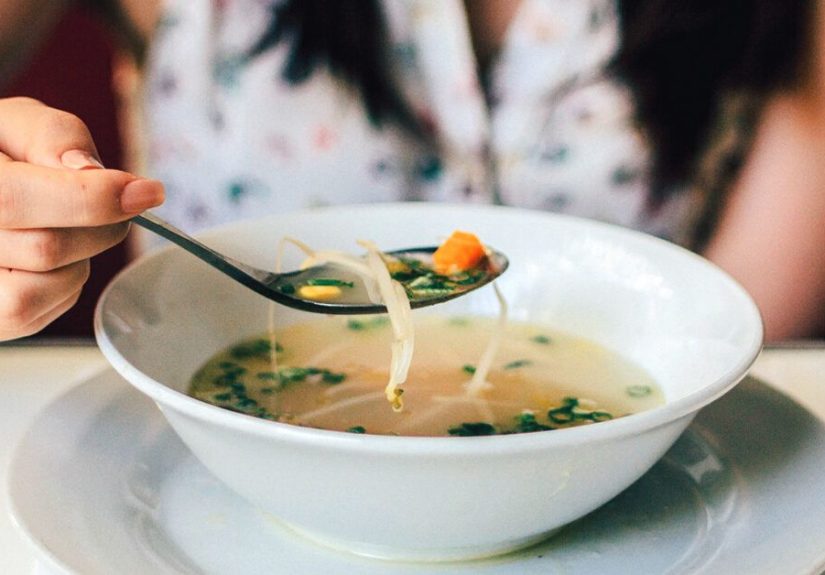
Chicken soup has been hyped for generations, and honestly, it deserves some of the praise. Broth-based soups provide fluid, sodium, warmth, and easy calories in one bowl. They are especially helpful when you have congestion, a sore throat, or no appetite for solid food.
Chicken noodle soup is the classic comfort-food MVP, but turkey soup, vegetable broth, miso broth, rice soup, and light bean soup can work too. Choose something mild rather than rich and creamy if your stomach is fragile.
Toast, crackers, rice, noodles, and oatmeal
These simple carbohydrates are easy on the stomach and usually easy to nibble. Dry toast, saltine crackers, plain rice, plain noodles, cream of wheat, and oatmeal can give you gentle fuel when heavier foods sound impossible.
This is also why “sick food” often looks suspiciously beige. Beige is not glamorous, but beige is dependable.
Bananas, applesauce, melon, and other soft fruits
Soft fruits can add hydration, natural carbohydrates, and a little potassium without demanding much chewing. Bananas and applesauce are classics because they are mild and usually well tolerated. Melon, canned peaches, or pears may also work if fresh fruit feels too acidic or fibrous.
If you have diarrhea or vomiting, mild fruits may be more comfortable than raw berries, pineapple, or citrus.
Mashed potatoes and other soft comfort foods
Mashed potatoes, baked potatoes, plain sweet potatoes, and soft cooked cereals can be helpful once you feel ready for something more filling. They are gentle, warm, and usually easy to eat even when your throat hurts or your energy is low.
Eggs, yogurt, and soft protein foods
Once your appetite starts creeping back, a little protein can help you feel steadier. Scrambled eggs, poached eggs, Greek yogurt, cottage cheese, tofu, or shredded chicken are all reasonable choices if they sit well for you.
Here is the key nuance: dairy does not automatically need to be banished. Some people feel fine with yogurt or milk when they are sick. Others find dairy too heavy or notice it worsens nausea. Let your own stomach vote.
Smoothies, if you can tolerate them
If chewing feels like hard labor, a smoothie can help. Blend fruit with yogurt or milk if tolerated, or use a dairy-free base if that feels better. Keep it simple. A flu smoothie should not contain seventeen powders, four seeds, and your entire freezer drawer.
If you are congested and cold drinks bother your throat, skip the smoothie and choose warm foods instead.
Ice pops, gelatin, and cold soft foods
When a sore throat makes swallowing miserable, cold soft foods can be a relief. Ice pops, gelatin, and chilled applesauce can help you get in fluids and calories with less irritation. They are not a full meal, but they are useful tools, especially on rough days.
What to drink when you have the flu
Best choices
- Water
- Electrolyte drinks
- Broth or clear soup
- Warm tea
- Diluted juice if tolerated
- Ice chips or ice pops
If vomiting or diarrhea is part of the picture, drinks with electrolytes may be especially helpful. If a sports drink tastes too sweet, dilute it with water. If plain water sounds boring, use a straw, sip warm liquids, or rotate beverages. Hydration is more likely to happen when the drink is actually appealing to you.
A quick hydration reality check
You are probably getting enough fluid if your mouth is not extremely dry, you are urinating regularly, and your urine is pale yellow rather than dark and concentrated. If you stop peeing much, feel dizzy when standing, or cannot keep liquids down, that is a problem, not a personality trait.
What foods and drinks to avoid when you have the flu
Alcohol
Alcohol is a bad wingman during the flu. It can worsen dehydration, interfere with rest, and make recovery harder. The hot toddy may sound cozy, but this is one time your body would really prefer water.
Too much caffeine
Coffee, energy drinks, and heavily caffeinated sodas can be irritating when you are dehydrated, shaky, or nauseated. A small amount of caffeine may be fine for some adults, especially if a headache is brewing, but this is not the moment to power through your illness with a triple espresso and blind optimism.
Greasy, fried, or very fatty foods
Burgers, fries, heavy takeout, and ultra-rich foods can feel rough on an already upset stomach. They may worsen nausea, reflux, or that “why did I do this to myself?” feeling that tends to arrive about twenty minutes later.
Spicy foods
Spicy meals may irritate a sore throat, trigger coughing, or worsen nausea and diarrhea. If you normally love hot sauce, this may be emotionally difficult news. Your taste buds can reunite with jalapeños after your fever does its dramatic exit.
Very acidic foods when your throat or stomach is irritated
Citrus juice, tomato-heavy dishes, and vinegar-forward foods can sting if your throat is raw or your stomach is sensitive. They are not evil, but they are not always comfortable during active flu symptoms.
Huge meals
Even healthy food can feel wrong if the portion is too large. One giant meal may leave you more nauseated and tired than several small snacks. Recovery is usually smoother when you graze instead of feast.
Foods that personally make you feel worse
This sounds obvious, but it matters. If dairy makes you queasy, skip it. If cold drinks trigger coughing, choose warm ones. If plain toast is all you can manage for six hours, start there. The best flu diet is not about winning points for nutrition purity. It is about tolerable nourishment.
A simple one-day flu meal plan
If you want a practical example, here is a gentle flu-friendly eating day:
- Morning: Warm tea or water, plain oatmeal, and half a banana
- Mid-morning: Ice pop or diluted electrolyte drink
- Lunch: Chicken noodle soup with a few crackers
- Afternoon: Applesauce, toast, or yogurt if tolerated
- Dinner: Rice, mashed potatoes, or noodles with a little shredded chicken or scrambled egg
- Evening: Broth, warm tea, or water before bed
If that still feels like too much, scale it down. Half-portions are still portions. A cup of broth still counts. Recovery meals are not judged by Instagram.
Can you “feed a fever” or should you barely eat?
Let’s retire the old myth that you should starve a fever. When you have the flu, your body still needs energy and fluids. The smarter approach is to eat when you can, keep portions manageable, and prioritize hydration when food sounds impossible.
In other words: don’t force a full roast chicken dinner, but don’t treat your body like it should run on fumes either. Gentle fuel helps.
When to call a doctor instead of arguing with a cracker
Diet helps support recovery, but certain symptoms need medical attention. Seek urgent care if you have trouble breathing, chest pain, confusion, severe weakness, signs of dehydration, seizures, or symptoms that improve and then suddenly get worse again. If you are vomiting so much that you cannot keep liquids down, that is also a strong reason to contact a medical professional.
Be especially cautious if you are pregnant, older, immunocompromised, very young, or living with chronic conditions such as asthma, heart disease, diabetes, or kidney disease. These groups have a higher risk of complications from influenza.
Flu diet mistakes people make all the time
Mistake #1: Waiting too long to drink
People often wait until they feel obviously dehydrated before paying attention. Start early. Once fever and fatigue show up, steady fluids matter.
Mistake #2: Forcing “healthy” foods that are too hard to tolerate
A giant raw kale salad may be nutritionally impressive, but it is not the hero of flu week. Soft, warm, simple foods are usually the better call.
Mistake #3: Assuming you need to avoid every dairy product
Some people feel better cutting back temporarily. Others tolerate yogurt just fine. This is one of those “listen to your body” situations, not a universal rule carved into soup bowls.
Mistake #4: Using alcohol as a home remedy
No, whiskey is not medicine. That is a plot twist from another century.
Mistake #5: Thinking food alone can fix the flu
Nutrition supports recovery, but rest, fluids, symptom care, and timely medical help are still the big players.
Real-life experiences: what a flu diet often looks like in practice
One of the most common experiences people describe with the flu is that their appetite disappears long before their symptoms do. Day one may start with fever, chills, body aches, and the sincere belief that standing up is now an advanced athletic skill. On that day, a full meal often sounds ridiculous. What actually works is usually something small and repeatable: warm broth, a sports drink, water, and maybe a piece of toast. It is not exciting, but it is manageable, and manageable is exactly what flu recovery needs.
Another very typical experience happens when people try to eat like nothing is wrong. They feel hungry for five minutes, order greasy takeout, and then regret every life choice by the third bite. A better pattern is to test the waters with something plain first. Rice, oatmeal, crackers, applesauce, mashed potatoes, and soup may seem boring, but they are often the foods people can keep down without making nausea or reflux worse. The lesson is simple: during the flu, comfort beats ambition.
Many people also notice that their “best” flu food changes from hour to hour. In the morning, warm tea may feel perfect for a sore throat. By afternoon, only cold applesauce or an ice pop sounds tolerable. Later, once the fever eases a little, scrambled eggs or noodles may suddenly seem possible. This is normal. Flu eating is flexible eating. There is no prize for consistency when your body is just trying to get through the day.
Parents often describe another pattern: children with the flu may refuse solid food but will accept small sips, ice chips, or popsicles. That still matters. Flu recovery does not always begin with a plate; sometimes it begins with tiny amounts of fluid and patience. Adults are not so different, even if they would prefer to think otherwise.
Finally, one of the most reassuring experiences during recovery is the slow return of appetite. First you can finish a cup of soup. Then you want toast instead of just staring at it. Then, suddenly, real hunger shows up again. That is usually a sign you are turning the corner. The smartest move at that stage is to keep building gently rather than celebrating with spicy wings and iced coffee. Your comeback meal should not become your plot twist.
Final thoughts
The best flu diet is not fancy. It is practical, gentle, and realistic. Drink often, eat small amounts, choose easy foods, and avoid anything that makes your symptoms worse. Soup, toast, rice, oatmeal, bananas, applesauce, eggs, and electrolyte drinks may not sound thrilling, but they do a very good job when your body is busy fighting influenza.
Above all, give yourself permission to simplify. When you have the flu, your nutritional mission is not to eat perfectly. It is to stay hydrated, tolerate enough fuel to support recovery, and know when symptoms have crossed the line from miserable to medically important.