Table of Contents >> Show >> Hide
- Why Old Technology Looks So Weird to Modern Eyes
- 28 Incredible (and Now Odd-Looking) Technologies
- 1) Pneumatic Tube Mail Networks
- 2) The Iron Lung
- 3) Vacuum Tubes (The Glowing Heart of Early Electronics)
- 4) Rotary Dial Telephones
- 5) Operator Switchboards
- 6) Telegraph Keys and Sounders
- 7) Slide Rules
- 8) Mechanical Adding Machines
- 9) Punched Cards for Data Processing
- 10) Hollerith Tabulating Machines
- 11) Paper Tape Storage (and Readers)
- 12) Cylinder Phonographs
- 13) Horn Gramophones and Victrola-Style Players
- 14) Reel-to-Reel Tape Recorders
- 15) 8-Track Cartridges
- 16) Compact Cassettes (and the Era of the Pencil Fix)
- 17) Answering Machines
- 18) Cathode Ray Tube (CRT) Televisions
- 19) Early “TV Glasses” and Vision Gadgets
- 20) Overhead Projectors
- 21) Filmstrip and Slide Projectors
- 22) Mimeograph Machines
- 23) Carbon Paper (Instant Copies, No Electricity Required)
- 24) Typewriters
- 25) Floppy Disks
- 26) Dot-Matrix Printers
- 27) Pagers (Bleep, Then Panic)
- 28) The “Brick” Era of Mobile Phones (and Early Cellphone Culture)
- What These Retro Gadgets Still Teach Us
- of Real-World “Retro Tech” Experiences (Yes, You’ve Lived This)
- Conclusion
Time has a hilarious way of turning “state-of-the-art” into “why is that shaped like a suitcase with feelings?” The tech that once felt futuristiclife-changing, evencan look downright strange once the world moves on. Not because people were less smart back then, but because they were solving real problems with the materials, power sources, and design instincts available at the time.
This list is a tour through brilliant, practical, occasionally awkward inventions that powered homes, offices, hospitals, and entire citiesthen got replaced by smaller, faster, quieter, or simply less intimidating versions. Along the way, you’ll see a pattern: the past wasn’t “low-tech.” It was just high-effort.
Why Old Technology Looks So Weird to Modern Eyes
Modern devices hide complexity behind glass and software. Older machines had to wear their mechanics on the outside: dials, levers, gears, tubes, belts, cartridges, paper rolls, and entire cabinets dedicated to a single task. Add in safety limitations, bulky power requirements, and early user-interface experiments, and you get inventions that are simultaneously ingenious and a little bit “props department for a sci-fi movie.”
Let’s meet 28 examples of “it worked, it mattered, and yes… it looks odd today.”
28 Incredible (and Now Odd-Looking) Technologies
1) Pneumatic Tube Mail Networks
Imagine sending a letter through the city like it’s a bank drive-thruexcept underground, pressurized, and at scale. Pneumatic tube systems moved mail in major U.S. cities for decades, with canisters whooshing through pipes like caffeinated torpedoes. It’s brilliant logistics… that also looks like industrial plumbing got a promotion.[1]
2) The Iron Lung
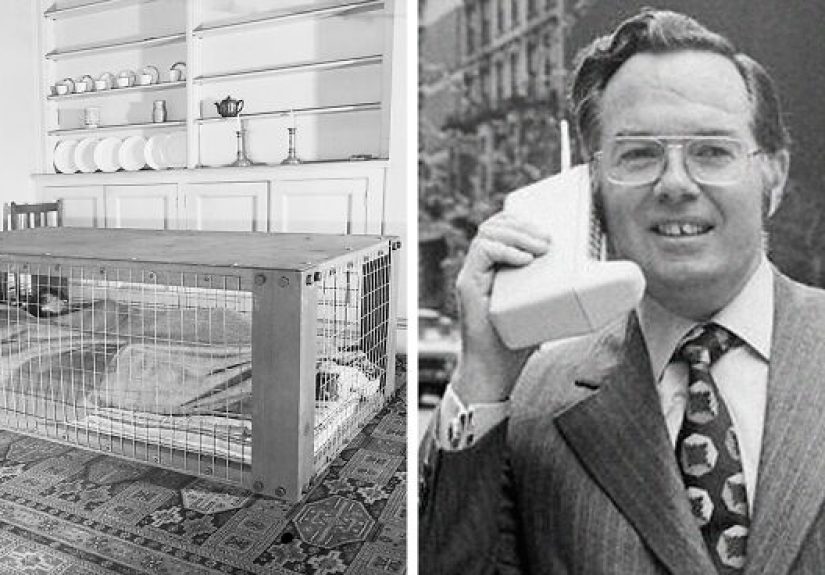
Few devices are as visually shocking as a full-body metal cylinder built to help a person breathe. During polio outbreaks, negative-pressure ventilators (“iron lungs”) were lifesaving, but their size and form factor feel surreal todaylike a submarine bunk that decided to become medical equipment. The weirdness is the point: it was the engineering that made survival possible.[2]
3) Vacuum Tubes (The Glowing Heart of Early Electronics)
Before microchips, electronics leaned on vacuum tubeshot, fragile components that could amplify signals and make radio and early computing practical. They look like scientific lightbulbs having an identity crisis. The payoff was enormous: amplification made “wireless telephony” and modern broadcast-era audio possible.[3]
4) Rotary Dial Telephones
Modern phones don’t ask you to “spin to win.” Rotary dials made calling tactile: put a finger in a hole, rotate, wait for it to return, repeat. It’s charming until you need to dial a long number and realize you’ve invented cardio. Still, the design was durable, intuitive (for the time), and oddly satisfying.[4]
5) Operator Switchboards
Human-powered networking: operators manually plugged cables into switchboards to connect calls. The boards look like patch-panel cityscapes, and the job demanded speed, accuracy, and social grace (plus the ability to not scream when someone said “Can you connect me to… the future?”). It’s a reminder that “automation” used to be a person with quick hands.
6) Telegraph Keys and Sounders
Tap-tap-tap: the telegraph turned electricity into near-instant long-distance messaging. The equipment looks almost toy-likekeys, clicks, and a rhythm of dots and dashesyet it stitched together continents of communication long before smartphones made “typing” optional. Nationwide lines transformed news, commerce, and coordination in the United States.[5]
7) Slide Rules
Engineers once did serious calculations using sliding scales and logarithmsno batteries, no boot-up, no “update available.” Slide rules were the everyday math machine for generations, and they look like minimalist rulers that secretly know calculus. Their long reign ended when electronic calculators got cheap and portable, but for decades this was the tool of builders, scientists, and navigators.[6]
8) Mechanical Adding Machines
Before spreadsheets, offices relied on clacking mechanical calculators that added columns with levers and gears. They look like typewriters that got into accounting, and they sounded like productivity. The “odd” part today is how physical math used to beyour total wasn’t a number, it was a small performance.
9) Punched Cards for Data Processing
Data used to live on cardboard. Patterns of holes stored information for tabulating and early computing, and entire workflows revolved around stacks of cards that could be dropped, mixed, and instantly turn your week into a tragic sorting documentary. Punched cards dominated early data processing and office automation for decades.[7]
10) Hollerith Tabulating Machines
The U.S. Census needed speed, and Herman Hollerith’s system delivered: punched cards plus electromechanical tabulators that could count and sort faster than humans. The machines look like steampunk furniture with a statistics degree. Their success helped kickstart the business lineage that eventually became IBM.[8]
11) Paper Tape Storage (and Readers)
Like punched cards’ long, skinny cousin, paper tape encoded data with holes in a continuous strip. It’s both clever and fragileyour “file” could literally tear. It looks odd today because we’re used to invisible storage; back then, information had a physical body you could fold, spill, and accidentally feed to the cat.
12) Cylinder Phonographs
Early recorded sound came on wax cylinders and machines that played them mechanically. The result feels magical even nowsound captured and replayed but the hardware looks like a musical instrument invented by a watchmaker. The cylinder era was a key chapter in American recorded-audio history, with materials and formats that feel wonderfully alien to streaming culture.[9]
13) Horn Gramophones and Victrola-Style Players
Why the giant horn? Because amplification was physical. The horn projected sound into the room without electronics, turning music into architecture. Today it looks like your record player is trying to impersonate a flowerbut it was smart acoustics, not decoration.
14) Reel-to-Reel Tape Recorders
Two big spools, visible tape, and a sense of ceremony: reel-to-reel machines look “serious” because they wereused in studios and broadcasting. They also made editing a literal cut-and-splice task, which means “undo” was a razor blade and confidence. Great sound, dramatic ergonomics.
15) 8-Track Cartridges
The 8-track was a bold idea: portable(ish) music in a chunky cartridge, popular in cars and living rooms. The cartridges look like plastic bricks with ambition, but they were a real milestone in consumer audio. A 1960s-era 8-track recorder shows how industry consortia pushed the format forward during its peak years.[10]
16) Compact Cassettes (and the Era of the Pencil Fix)
Cassettes shrank tape into a pocketable formatand introduced the universal ritual of rescuing spilled tape with a pencil. They look quaint now, but they were revolutionary: mixtapes, portability, and the first taste of “your playlist, your rules,” minus the algorithm.
17) Answering Machines
Before voicemail lived in the cloud, it lived in a box on your deskoften recording onto tape. Answering machines look odd today because they’re an appliance dedicated to missed calls, a problem modern phones quietly solved. Their history also reminds us adoption wasn’t inevitable; cultural norms and network rules shaped how fast the tech spread.[11]
18) Cathode Ray Tube (CRT) Televisions
Old TVs weren’t “screens,” they were furniture. The CRT needed depth for the tube, so sets came in big wooden cabinets that look like a 1950s living room swallowed a spaceship component. The picture could be greatespecially for the erabut the footprint was unapologetically massive.
19) Early “TV Glasses” and Vision Gadgets
The desire for wearable displays is not new. Decades before modern VR headsets, inventors tried spectacles and viewing contraptions that promised portable cinema or enhanced sight. Many look like “goggles for a very specific problem,” whichhonestlywas exactly the point.[12]
20) Overhead Projectors
The overhead projector was the office/classroom workhorse: transparent sheets, bright lamp, and the unmistakable hum of “someone is about to explain something.” It looks odd now because it’s a whole machine for what a laptop does casually. But it was fast, reusable, and weirdly empoweringinstant visuals without a print shop.[13]
21) Filmstrip and Slide Projectors
Education and training once arrived as filmstrips: sequential frames with a beep telling you when to advance. The projectors look like mechanical patience testers, but they were a scalable way to teach before video streaming made “pause” and “rewind” effortless.
22) Mimeograph Machines
Before photocopiers were everywhere, mimeographs duplicated documents using stencils and ink. They were affordable, common in schools and offices, and came with that unforgettable “freshly duplicated paper” smell. Today they look odd because they’re messy and mechanicalbut they democratized small-scale publishing.[14]
23) Carbon Paper (Instant Copies, No Electricity Required)
Carbon paper made duplicates by pressurelike analog “CC.” It’s strange to remember that copying a document could be a physical sandwich of sheets. The upside: it was immediate. The downside: one misalignment and your “copy” becomes modern art, titled Unreadable but Confident.
24) Typewriters
Typewriters were the productivity engines of the 20th century. They look odd today because they’re loud, unforgiving, and impossible to “backspace” without leaving evidence. But they’re also elegant: direct input, no distractions, and a physical relationship with writing that modern keyboards only imitate.
25) Floppy Disks
The floppy disk is iconic precisely because it now feels absurd: a thin magnetic disk in a jacket, carrying “your entire paper” in a few megabytes (or less). Early floppies started larger and held far less than our phones cache without thinking. Yet for years they were the standard for moving software and files around.[15]
26) Dot-Matrix Printers
If you’ve ever heard a dot-matrix printer, you remember it. These printers hammered ink ribbons to create letters from tiny dots. They look odd now because they’re noisy and industrial, but they were reliable for multipart forms, invoices, and anything that needed physical copies with carbonless paper.
27) Pagers (Bleep, Then Panic)
Pagers were minimalism with consequences: you got a beep, a number, and the duty to find a phone and respond like your life was an action movie. They look odd today because they’re “mobile messaging” with almost no message. But they were crucial in medicine, service work, and fast coordinationand they lasted longer than many people remember.[16]
28) The “Brick” Era of Mobile Phones (and Early Cellphone Culture)
Early mobile phones were big, heavy, and proudly visibletechnology as a status symbol and a shoulder workout. They look odd now because we expect pocket devices, but the transformation from bulky hardware to modern smartphones was a genuine engineering saga, shaped by networks, batteries, and miniaturization. The early history of the cellphone era highlights how quickly “huge breakthrough” becomes “why is it so large?”[17]
What These Retro Gadgets Still Teach Us
A lot of “weird” design is just honest engineering: when components are big, heat is real, and interfaces are physical, your product can’t hide behind a glossy slab of glass. The older technologies on this list also expose how much innovation is about systemsnot just devices. Mail tubes needed infrastructure. Punched cards needed workflows. Switchboards needed trained people. Tech doesn’t land in a vacuum; it lands in offices, hospitals, classrooms, and cities.
And here’s the best part: the past keeps coming back. We still love “retro tech” aesthetics. We still argue about formats. We still build new tools that look weird at firstuntil they become normal, invisible, and eventually hilarious again.
of Real-World “Retro Tech” Experiences (Yes, You’ve Lived This)
Even if you’ve never owned a pneumatic tube canister or personally negotiated with a mimeograph stencil, you’ve probably had at least one “wait, how did people live like this?” moment with older technologyoften in the most inconvenient way possible. Maybe it was visiting a relative and encountering a rotary phone, where the first call attempt ended in confusion because you dialed “9” and then had to stand there patiently while the dial returned like it was thinking about its choices. Or maybe it was hearing a dot-matrix printer start up and realizing that, yes, your office once sounded like a tiny robot woodpecker trying to meet a deadline.
Museums make these encounters feel charming: you see a vacuum tube radio glowing softly behind glass, and it looks like a cozy artifact from a calmer era. Then you remember that in real life those tubes ran hot, devices failed dramatically, and repairs were not a matter of “restart the app” but “replace the part and pray.” The same goes for early audio. A cylinder phonograph is delightful until you imagine storing your music library as fragile cylinders and trying to keep dust, heat, and clumsy elbows from turning your favorite song into a scratchy ghost. The romance is realbut it comes with maintenance.
The most relatable retro experience might be the floppy disk story, because it contains every ingredient of human comedy: limited capacity, high confidence, and sudden betrayal. You save your school project (all 1.44 MB of it), label the disk with a marker like a responsible adult, and thenat the worst possible momentthe disk refuses to read. Modern cloud storage has its own headaches, but at least it usually doesn’t fail because you set your backpack down too aggressively.
Older office tech also created social rituals. Overhead projectors meant someone had to write on transparencies, which meant someone always smudged the ink. Fax machines meant waiting by the device like you were expecting an important telegram from 1861. Pagers meant your pocket could suddenly scream at you in public, forcing a split-second decision: ignore it and risk consequences, or sprint to the nearest phone like you’re in a medical drama. Even answering machines had etiquettehow long to let it ring, whether to leave a message, whether to re-record the outgoing greeting when you were in a mood.
The punchline is that these experiences weren’t “primitive.” They were the daily interface of modern life at the time. And if you zoom out, the lesson is comforting: today’s tech will look odd someday, too. Future humans will probably stare at our current gadgets and ask why we carried glass rectangles everywhere, why we charged everything nightly, and why we let notifications interrupt us like tiny digital pagers with opinions. The cycle continuesand honestly, that’s part of the fun.
Conclusion
The past didn’t lack innovationit had different constraints. These 28 technologies look strange today because we’ve learned how to shrink, simplify, automate, and hide complexity. But the core idea is the same: solve a problem, make life easier, and push society forward one weird-looking device at a time.