Table of Contents >> Show >> Hide
- Why Millennials Still Claim FernGully Like a Childhood Birthright
- The Plot, in Case Your VHS Tape Got Eaten by the VCR
- The “Dark Details” That Make FernGully Hit Harder as an Adult
- Hexxus, Toxic Love, and the Art of Making Pollution Weirdly Iconic
- Not-So-Subtle Environmentalismand Why That’s the Point
- Behind the Scenes: An Upstart Feature With Big Ambitions
- What a G-Rated Movie Was Allowed to Do in 1992
- Why FernGully Still Matters Now
- Final Thoughts
- Millennial Experiences: of “Wait, This Was a Kids’ Movie?”
If you grew up in the ’90s, there’s a decent chance FernGully: The Last Rainforest lives in your brain the way glitter lives in a carpet:
forever, inexplicably, and occasionally getting in your eye when you least expect it. On the surface, it’s a bright, musical, G-rated animated movie
about tiny rainforest fairies and talking animals. Under the surface? It’s a surprisingly intense eco-fable where “industry” is basically a boss monster,
pollution has a voice (and charisma), and the forest is constantly one bad decision away from becoming a cautionary slideshow.
That’s why FernGully became a millennial touchstone. It wasn’t just prettythough the hand-painted backgrounds are still jaw-droppingit was
emotionally specific in a way kids could feel without having the vocabulary. The movie didn’t merely say, “Nature good.” It showed how fragile “good”
can be when something loud, shiny, and profit-driven rolls in with blades and exhaust. And it did it with jokes, bops, and a villain who makes toxic
sludge look like it should have its own Vegas residency.
Why Millennials Still Claim FernGully Like a Childhood Birthright
Released in 1992, FernGully hit at the exact moment many millennials were forming their earliest “the world is bigger than my backyard” ideas.
The film’s premise is simple enough for kids: the rainforest is magical, it’s home, and it’s threatened. But the emotional experience is layered:
wonder, fear, guilt, and that particular brand of childhood dread that comes from realizing adults can be wrong on purpose.
Also, the movie wasn’t a Disney releaseyet it carries a “big animation” confidence that made it feel like it belonged on the same shelf as the classics.
That combination (underdog energy + high craft + an environmental message) helped it stick around through home video, reruns, and the kind of nostalgia
that shows up whenever someone posts “remember this?” and half the internet answers, “YES, and I’m still not okay.”
The Plot, in Case Your VHS Tape Got Eaten by the VCR
The story drops us into an Australian rainforest where fairies live in a hidden ecosystem called FernGully. Our heroine, Crysta, is curious, brave,
and allergic to staying in her laneso naturally she stumbles upon something the community treats like a myth: a human.
That human is Zak, a teenage logger working near the forest. In a chaotic first encounter, Crysta accidentally shrinks him down to fairy size. (It’s a
meet-cute, if your love language is “oops, I changed your molecular scale.”) As Zak gets a close-up look at the rainforest’s beautyand the destruction
his job enableshe starts to question everything. Meanwhile, the logging operation does more than knock down trees: it disrupts an ancient seal,
releasing Hexxus, a sinister spirit of pollution and decay.
So the movie becomes a race: can Crysta, Zak, and their allies stop the logging machine and contain Hexxus before the forest is permanently damaged?
It’s a fairy tale structure with modern teeth: the “dragon” is literally industrial extraction, and the “curse” is what happens when you treat living
systems like disposable resources.
The “Dark Details” That Make FernGully Hit Harder as an Adult
1) The movie isn’t shy about eco-horrorit just dresses it in color
Lots of kids’ movies flirt with danger, but FernGully does something more unsettling: it treats environmental destruction as a slow-motion
catastrophe that feels inevitable unless someone intervenes. Trees are marked, land is cleared, and the forest’s “invisible” magic is suddenly very
visibleand very vulnerable. The threat isn’t a misunderstood creature or a temporary storm. It’s a system with momentum.
Watching as an adult, you realize how blunt the metaphor is: the rainforest isn’t “attacked” by a singular villain at first; it’s dismantled by a
business operation that treats the forest like a problem to solve. That’s scarier than a one-off monster because it resembles real life.
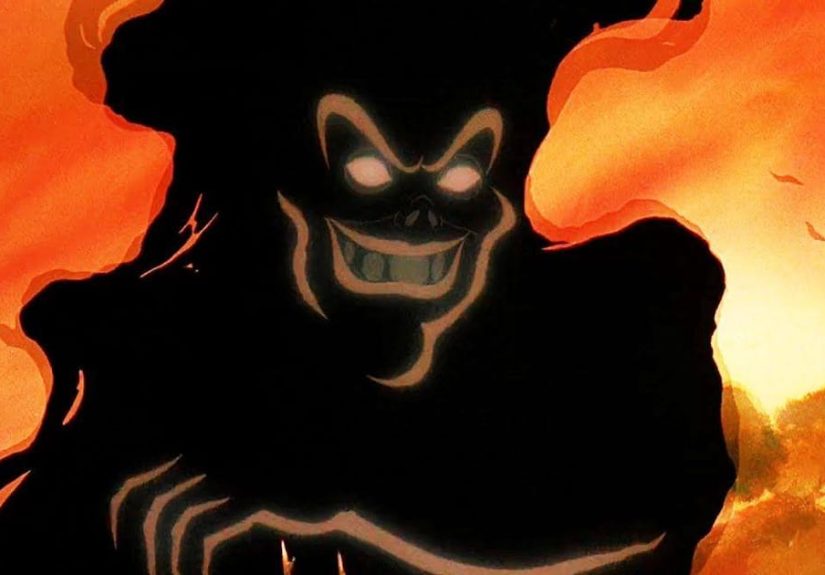
2) Hexxus is basically a nightmare in a one-liner suit
Hexxus isn’t evil because he’s lonely or misunderstood. He’s evil because he loves what he represents: extraction, pollution, and the giddy thrill of
turning living things into waste. That clarity makes him unforgettableand weirdly “adult.” The performance (and the writing around him) leans into
seduction and spectacle, like the movie wants you to understand why destruction can be tempting: it’s loud, it’s easy, it’s instantly gratifying.
That’s the dark trick: Hexxus isn’t portrayed as boring. He’s portrayed as charismatic, funny, and theatrical. For a kid, that’s confusing. For an adult,
it’s a sharp observation about how harmful systems sell themselves.
3) The logging machine feels like a slasher villainjust with gears
The Leveler (the giant logging machine) is animated like a predator: massive, unstoppable, and indifferent. It doesn’t need personality to be terrifying.
Its whole “character” is consequence. When it moves, the forest loses. The camera language treats it like an oncoming force of fate, which is exactly how
industrial destruction can feel from the ground.
As a kid, you fear it because it’s big and loud. As an adult, you fear it because it looks like a symbol of scalehow quickly “progress” can erase what
took centuries to grow.
4) Even the comedy has an edge
The film’s humor isn’t soft and cuddly all the time. It’s fast, chaotic, and sometimes a little unhingedespecially in the character of Batty Koda,
a bat who’s been experimented on by humans. That detail alone is darker than many people remember: the movie suggests a world where “science” can be cruel,
where animals get treated like equipment, and where trauma gets played for laughs because that’s what a kids’ movie could “get away with.”
The result is a tonal cocktail that feels very millennial in hindsight: comedy as a coping mechanism, high energy covering real dread, jokes that land
differently at 30 than they did at 8.
Hexxus, Toxic Love, and the Art of Making Pollution Weirdly Iconic
Let’s be honest: Hexxus didn’t just scare kidshe imprinted on them. Part of that is voice performance and character design, but part of it is how the
movie frames pollution as something alive. Hexxus grows stronger with smoke, sludge, and waste, turning environmental harm into fuel. That’s a darkly
effective idea for young viewers because it makes the abstract suddenly personal: you can’t “ignore” pollution if it can sing at you.
The villain musical number (often remembered even by people who forgot half the plot) is one of those scenes that reveals how daring the film really is.
It’s campy, theatrical, and a little too grown-up in placeswithout being explicit. The movie essentially says, “Yes, this is a kids’ story, but we’re
going to show you why destruction can be seductive.” That’s a sophisticated lesson wrapped in a show tune.
Not-So-Subtle Environmentalismand Why That’s the Point
Critics have described the film as preachy for decades, and sure: the message is not hiding. But the movie’s core argument isn’t “feel bad, kid.”
It’s “look closely.” The rainforest isn’t just a generic green backdrop. It’s a community, a web, a place with texture. The film’s visuals linger on
patterns, light, and movement, making nature feel specific and valuableso the threat feels specific and personal.
And here’s the thing: subtlety is overrated when the stakes are deforestation. FernGully arrived in a period when environmentalism had entered
mainstream pop culture in a louder way. The film didn’t invent eco-anxiety, but it gave many kids their first story-based encounter with it. In that sense,
it functions like a children’s “Silent Spring”: not a scientific report, but an emotional awakening.
Behind the Scenes: An Upstart Feature With Big Ambitions
Part of FernGully’s staying power comes from the craft. This wasn’t a tiny TV special. The film’s animation was built with a level of care that
still shows on modern screens, and the creative team famously leaned on real-world inspirationsketching, researching, and trying to capture a rainforest
that felt magical without inventing everything from scratch.
The production story also adds a spicy layer of Hollywood drama. The film emerged during the Disney Renaissance, when big studios were reasserting
dominance in feature animation. FernGully wasn’t Disney, but it was competing for attention in the same eraand it benefited from bold casting.
Robin Williams voicing Batty Koda gave the movie pop-culture electricity, but it also put the film in the orbit of bigger studio politics at the time.
What’s especially wild to revisit now is how handmade it all was. This was a pre-digital pipeline where art existed physically, in volumepaint,
paper, and cels that had to be produced, managed, stored, and shipped. The labor is part of the texture of the movie. You can feel the human hands in it,
which fits the theme: living things matter because they’re made, not manufactured.
What a G-Rated Movie Was Allowed to Do in 1992
The modern kids’ movie ecosystem is often more carefully focus-grouped, more polished, and sometimes less willing to be genuinely scary. In 1992,
FernGully could be weird. It could be musical and frightening in the same minute. It could put a seductive pollution monster in a family film and
trust that kids would process it emotionally even if they couldn’t intellectualize it.
That’s why the “dark details” don’t feel accidental. They feel purposeful: the movie wants young viewers to sense danger, not just understand it.
It wants them to feel the difference between a thriving ecosystem and a damaged one. It wants them to recognize that harm isn’t always dramatic.
Sometimes it’s incremental, mechanical, and wrapped in “normal.”
Why FernGully Still Matters Now
If you rewatch FernGully today, you might laugh at the very ’90s comedy beats and the earnestness of the messaging. Then, five minutes later,
you’ll realize the film’s fears aged like prophecy. The movie isn’t just about “saving trees.” It’s about how quickly a living system can be pushed into
crisisand how easy it is for people to pretend it’s not their problem until it is.
The best compliment you can give FernGully is that it treats kids like future adults. It offers wonder, but it doesn’t lie about consequence.
It says: you can love the beauty of the world and still be scared for it. That mix of awe and anxiety is basically the millennial climate-era origin story.
Final Thoughts
FernGully: The Last Rainforest endures because it’s more than nostalgia. It’s a beautifully made, oddly daring animated feature that slipped some
genuinely heavy ideas into a package that kids could absorb. Its darkness isn’t there for shock value; it’s there because the threat is realeven if the
fairies aren’t. And maybe that’s why people still talk about it: not just because Hexxus is iconic, but because the movie taught a generation to notice
what gets lost when we stop paying attention.
Millennial Experiences: of “Wait, This Was a Kids’ Movie?”
For a lot of millennials, FernGully isn’t remembered as “a film I watched.” It’s remembered as “a feeling I had.” You know the one: sitting too
close to the TV, probably on a carpet that had survived at least one spilled Capri Sun, watching a rainforest glow with colorand then watching that glow
get threatened by something loud and metal. It’s one of those childhood viewing experiences where you didn’t fully understand the message, but you
understood the mood. The movie basically taught a generation that beauty can be endangered, and that realization sticks.
The rewatch experience is its own rite of passage. As kids, many viewers latched onto the fun parts: Batty’s chaotic energy, the fast jokes, the musical
numbers, the vibe of tiny characters having huge opinions. As adults, you suddenly notice the background story your younger brain filed away as “too much
information.” You notice the machinery. You notice the way the forest reacts. You notice how the human characters treat the land like a blank space
instead of a home. And if you’re honest, you might feel a little weird about how early the movie introduced you to the concept of “people will wreck
something beautiful if it pays well.”
Then there’s Hexxus. Millennials tend to talk about him the way people talk about an intense teacher from middle school: slightly terrified, slightly
impressed, and still quoting the vibe decades later. The villain musical number is a whole shared cultural bookmarkbecause it’s catchy, because it’s
theatrical, and because it’s startlingly bold for a children’s movie. Not in a graphic way, but in an “oh, this is definitely written with grown-ups in
the room” way. It’s the kind of scene that makes you realize how much kids’ media used to flirt with the edge of discomfort, trusting young audiences to
handle emotional intensity as long as it came with humor and rhythm.
Plenty of millennials also connect FernGully to their earliest “environmental conscience” memories. Maybe it was the first time you heard the idea
that forests could disappear. Maybe it was the first time you saw pollution framed as more than “trash on the ground.” Or maybe it was the first time you
noticed that adults could disagree about what matters. Even if you didn’t become an activist, the film planted a seed: nature isn’t just sceneryit’s
alive, interconnected, and vulnerable.
And finally, there’s the nostalgia texture: the unmistakable “VHS era” warmth, the slightly offbeat humor, the earnestness that wasn’t afraid of being
earnest. Millennials often describe loving FernGully the way they love certain childhood booksbecause it feels like a time capsule of how stories
used to talk to kids. Not with endless winking irony, but with a sincere belief that kids can handle big ideas, as long as you give them wonder along the way.