Table of Contents >> Show >> Hide
- Quick Snapshot: What Charlotte’s Locks No. 268 Is (and What It Isn’t)
- The Color Story: Why This Orange Feels Different
- Where Charlotte’s Locks Looks Incredible
- Best Color Pairings: How to Make Charlotte’s Locks Look Expensive
- Pick the Right Finish: The Secret to Loving It Long-Term
- Primer & Undercoat: Don’t Skip the Boring Part (It’s How You Win)
- Sampling Like a Pro: How to Test Without Getting Tricked by Lighting
- How It Feels in Real Homes: Specific Use Ideas
- Is It Worth the Splurge? A Practical Take on Premium Paint
- Want the Look, Not the Price? Closest-Color Alternatives
- FAQ
- Conclusion: Orange, But Make It Design
- of Real-World “Experience” With Charlotte’s Locks (What It’s Like to Live With It)
If you’ve ever looked at a room full of tasteful neutrals and thought, “Nice… but where’s the personality?” then
Farrow & Ball Charlotte’s Locks No. 268 is about to become your new bad influence.
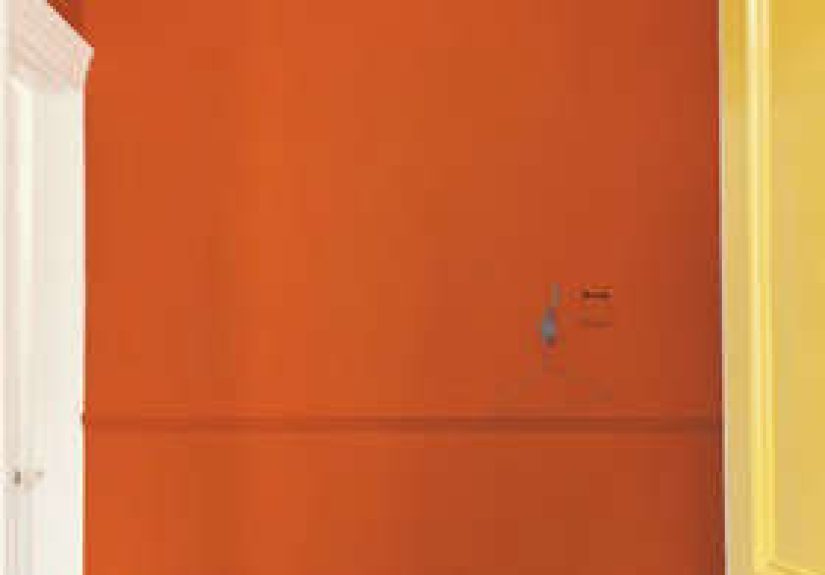
It’s a deep, dramatic orange with a playful late-’70s attitudebold enough to feel like a statement,
but curated enough to still read “designer did this on purpose.”
This guide breaks down what Charlotte’s Locks really looks like in real homes, where it shines (sometimes literally),
how to pick the right finish, and how to avoid the classic orange-paint panic spiral (“Why does it look like a traffic cone at noon?”).
Let’s make this color work for younot against you.
Quick Snapshot: What Charlotte’s Locks No. 268 Is (and What It Isn’t)
- Color family: deep, playful orange with a rich, retro vibe
- Design personality: confident, warm, energetic; best used with intention
- Named for/inspired by: the flame-red hair of Farrow & Ball’s Head of Creative
- Best “wow” uses: small spaces, ceilings, doors, built-ins, furniture, accent walls
- High-contrast friends: crisp whites, inky blues, near-black shades
- Not ideal for: people who want “barely there” color, or anyone allergic to compliments
The Color Story: Why This Orange Feels Different
Orange can be tricky. Too bright and it screams “kids’ playroom” (even if you don’t have kids). Too muted and it becomes
“pumpkin spice latte wall” (no judgment, but… judgment). Charlotte’s Locks lands in a sweet spot: it’s bold, but grounded.
Farrow & Ball describes it as a deep and dramatic orange with a playful late 1970s look,
which is a polite way of saying: it’s fun, and it knows it.
What gives it that designer depth is how it behaves in different lighting. In soft daylight, it can lean warm and inviting;
in stronger light, it gets punchiermore “sunlit terracotta meets tangerine.” The result is a color that feels alive,
not flat. Think: the glow of a good candle, but in paint form.
Where Charlotte’s Locks Looks Incredible
1) Small Rooms That Need Big Energy
Charlotte’s Locks is famously “spectacular in small areas,” because intense color in a compact space can feel intentional,
like a jewel box rather than a color accident. Powder rooms, vestibules, reading nooks, and the inside of a pantry door
are all prime territory. If your home has a tiny space that currently feels like a hallway to nowhere, this paint can turn it into a moment.
2) Living Rooms (Yes, Really)
Orange on living room walls sounds like a leapuntil you see it done well. In one featured home, walls in Charlotte’s Locks
wrapped a living space in warmth and drama, balanced by natural texture underfoot so the room still felt livable.
The takeaway: pair the color with grounded materials (sisal, oak, linen, vintage brass) and it becomes inviting instead of loud.
3) Ceilings for People Who Are Done Being Subtle
If you want an “I hired a designer” look without hiring a designer, paint a ceiling.
Charlotte’s Locks overhead can read cheerful and unexpectedespecially when the walls are calmer.
Bonus: a ceiling color can make a room feel taller or more defined, depending on where you stop the paint line.
4) Doors, Trim, and Built-Ins
This is where Charlotte’s Locks becomes dangerously easy to love. A front door in this shade can be the visual equivalent
of a great handshakememorable, confident, and slightly charming. Interior doors and trim work too, especially if the surrounding walls are neutral.
And built-ins? A bookcase interior painted Charlotte’s Locks turns shelves into a curated display, even if the “collection” is 70% paperbacks and 30% random candles.
5) Furniture Makeovers That Look Custom
Charlotte’s Locks on a side table, dresser, or chair frame gives you that lacquered, boutique vibeespecially in a glossier finish.
It’s a smart move if you want color, but you’re not ready to commit an entire room to orange. Start small, get brave later.
Best Color Pairings: How to Make Charlotte’s Locks Look Expensive
The easiest way to make a strong color feel sophisticated is contrast. Farrow & Ball specifically suggests using
Charlotte’s Locks with All White or with the deep archival shade Black Blue for a sharp, stylish edge.
Translation: crisp white makes it pop cleanly; deep blue makes it feel tailored and dramatic.
Three reliable palettes
- Gallery Contrast: Charlotte’s Locks + crisp white (All White / Strong White) + light oak + black accents
- Moody & Modern: Charlotte’s Locks + deep navy/inky tones (Black Blue / similar) + aged brass + warm neutrals
- Retro Cool: Charlotte’s Locks + creamy off-whites + olive/green notes + walnut (think late-’60s/’70s done intentionally)
Pro styling tip: let one element “calm it down”
If the paint feels loud, your fix is rarely “change the paint.” It’s usually “change the supporting cast.”
Add texture (woven shades, natural rugs), introduce matte black or deep blue accents, and keep your large furniture grounded.
Charlotte’s Locks likes structure. Give it structure and it behaves.
Pick the Right Finish: The Secret to Loving It Long-Term
Same color, different finish = totally different vibe. With bold orange, this matters a lot.
Here’s how Farrow & Ball’s common finishes play with Charlotte’s Locks:
Estate Emulsion (walls & ceilings in low-traffic areas)
A classic chalky matte look that shows off complex color beautifully. Great for bedrooms, dining rooms, and formal spaces.
If you want that soft, heritage “painted plaster” vibe, this is the mood.
Modern Emulsion (washable, tough walls & ceilings)
Designed for real life: washable, scuff-resistant, and protected against moldideal for kitchens, bathrooms,
hallways, and anywhere people tend to… exist.
If you’re doing Charlotte’s Locks in a busy space, Modern Emulsion is often the sensible (still stylish) choice.
Dead Flat (ultra-matte, multi-surface)
Dead Flat gives you that ultra-matte look (very low sheen) but with durability. It’s multi-surface (walls, woodwork, metal),
washable, and designed so color won’t transfer when wiped. If you love matte but fear fingerprints, this is the compromise that doesn’t feel like compromise.
Modern Eggshell (woodwork, cabinets, floors)
If you’re painting cabinetry, trim, or even floors, Modern Eggshell is built to handle scuffs and stains.
It adds a subtle sheen that can make Charlotte’s Locks look slightly more “polished” and less “powdery.”
Full Gloss (95% sheen, maximum drama)
Farrow & Ball practically dares you to try Charlotte’s Locks in Full Glossand honestly, it can be stunning.
High gloss turns this shade into a statement piece: reflective, bold, and crisp-edged.
Think front doors, furniture, and architectural details where you want light to bounce.
Primer & Undercoat: Don’t Skip the Boring Part (It’s How You Win)
With strong colors, your undercoat is the difference between “rich and even” and “why is this patchy after coat #2?”
Farrow & Ball recommends the Red & Warm Tones Primer & Undercoat for Charlotte’s Locks.
That warm base helps the topcoat read true and reduces the number of coats needed.
Sampling Like a Pro: How to Test Without Getting Tricked by Lighting
Farrow & Ball makes it easy to test: you can use 100ml sample pots (for signature colors) and also pre-painted paper swatches.
Use both if you can. Here’s the smarter sampling routine:
- Paint two sample squares on different walls (or on poster boards you can move).
- Check morning, afternoon, and nightorange changes dramatically with warm vs cool light.
- Look next to your fixed finishes: flooring, countertops, tile, and anything you’re not changing.
- Decide your contrast strategy: crisp white trim vs deep moody accents.
Pro tip: If you already know you want a high-contrast look, sample Charlotte’s Locks right next to your white trim color
(or tape up a white swatch beside it). Contrast is where the magic happens.
How It Feels in Real Homes: Specific Use Ideas
Accent wall behind open shelving
Use Charlotte’s Locks as a backdrop for pottery, cookbooks, or barware. The orange warms everything instantly.
Keep the shelves themselves in a calm tone (white, pale wood, or inky blue) so the display doesn’t look chaotic.
Color-drenched powder room
Go all-in: walls, ceiling, and even trim in the same shade. Add a punchy mirror and warm metal finishes.
Small room + bold paint = controlled drama (the best kind).
Front door moment
Charlotte’s Locks on a front door is a classic “joy from the curb” move. Pair it with clean surrounding neutrals,
black hardware, and a simple doormat so the color is the star.
Is It Worth the Splurge? A Practical Take on Premium Paint
Premium paint costs more, but you’re paying for formulation: richer pigment, better flow, and often stronger coverage.
Design publications frequently point out that higher-end paints can apply more smoothly and cover bettermeaning fewer coats
and a more even finish (especially helpful with saturated colors like this one).
The smartest “value” approach with Charlotte’s Locks is to use it where it has the biggest impact:
a door, a ceiling, built-ins, or a small room. That way you get maximum design payoff without buying paint like you’re stocking a warehouse.
Want the Look, Not the Price? Closest-Color Alternatives
If you love the vibe but need a more budget-friendly brand, there are services that suggest approximate matches
to Charlotte’s Locks from major U.S. paint lines (think: Sherwin-Williams, Benjamin Moore, Behr, and others).
Just remember: “closest match” isn’t identical. Always sample, because undertones and sheen can shift the final look.
FAQ
Is Charlotte’s Locks too bold for a whole room?
It depends on the room size, light, and styling. In large, bright rooms it can feel energetic; in smaller rooms it can feel cozy and curated.
If you’re nervous, start with a ceiling, a door, or built-insthen decide if you want more.
What’s the best finish for kitchen cabinets?
For cabinets and woodwork, choose a tougher finish designed for scrubbing and scuffs (like an eggshell-style wood finish).
You’ll get better durability and easier cleanup than a wall matte finish.
Can I use it for a high-gloss “lacquered” look?
Yeshigh gloss can make Charlotte’s Locks look especially dramatic and crisp, and it’s a popular approach for doors and furniture.
The key is prep: smooth sanding, proper undercoat, and patient application.
Conclusion: Orange, But Make It Design
Charlotte’s Locks No. 268 is not a shy colorand that’s the point. It’s a deep, playful orange that can be wildly sophisticated
when paired with crisp whites, deep blues, and grounded textures. Choose the right finish, respect the undercoat,
sample in your lighting, and you’ll end up with a space that feels warm, confident, and unmistakably yours.
of Real-World “Experience” With Charlotte’s Locks (What It’s Like to Live With It)
Here’s how Charlotte’s Locks usually goes in real life: first, you fall for it online. It looks like the perfect bold orange
warm, designer-y, and not at all like a Halloween aisle. Then the sample arrives and you paint a test patch. For about ten minutes,
you feel invincible. You have taste. You have courage. You are the kind of person who could absolutely pull off orange walls.
Then the lighting changes.
In the morning, it’s mellow and glowylike sunlight caught in a glass of aperitif. At noon, it wakes up and gets louder,
and you start texting someone you trust: “Be honest. Is this too much?” By evening, under warm lamps, it turns rich and cozy again,
and you start planning your entire personality around it. This is normal. Charlotte’s Locks is a shape-shifter, and lighting is the director.
The turning point usually happens when you test it with its best friend: contrast. Tape up a bright white swatch beside it,
or hold it next to your trim color. Suddenly, the orange stops feeling random and starts feeling intentional. The white makes it crisp.
A deep navy or near-black makes it look tailored. Even natural wood tones calm it down, like putting sneakers on a bold outfit.
Next comes the “prep boringness,” which is where most paint wins are secretly made. People who love the final result usually did three things:
(1) used the recommended warm undercoat, (2) took the time to get a smooth surface on doors or trim, and
(3) committed to two solid coats without trying to stretch paint like it’s the last bit of toothpaste.
With a saturated shade, patchiness is the enemy. Even coverage is what makes it look expensive.
Once it’s up, the reaction is almost always the same: the room feels warmer. Not just “orange,” but warmerlike the space has better light.
In a powder room, it becomes an instant mood. In a hallway, it turns a pass-through into a destination.
On a front door, it feels welcoming in a way beige can only dream about. And on furniture, it reads customlike you bought it that way,
not like you attacked it with a brush on a Saturday.
Living with Charlotte’s Locks is also living with compliments. Guests notice it. Delivery people notice it.
Someone will call it “happy.” Someone else will say, “I could never,” which is secretly the highest praise.
And after a few weeks, the boldness stops feeling bold. It just feels like your house has a point of view.
That’s the real experience: at first it’s a risk, then it’s a signature.