Table of Contents >> Show >> Hide
- What “Farmhouse Chic” Actually Means (And Why It Works for an Office)
- Step 1: Plan Like a Pro (So You Don’t Redecorate Twice)
- Step 2: Nail the Farmhouse Chic Color Palette
- Step 3: Add Architectural Texture Without a Full Renovation
- Step 4: Choose Furniture That’s Cozy, Not Clunky
- Step 5: Layer Lighting Like You Mean It
- Step 6: Farmhouse Chic Decor That Doesn’t Feel “Overdone”
- Step 7: Make Organization Part of the Design
- Farmhouse Chic Office Makeover Ideas by Budget
- Common Mistakes (And How to Fix Them Fast)
- Conclusion
- Real-Life Experiences: What It’s Like Living With a Farmhouse Chic Office
- SEO Tags
Your home office called. It would like to stop looking like a “temporary” folding table situation and start
looking like a place where paychecksand good vibesactually happen. Enter the farmhouse chic office makeover:
warm wood, cozy textures, tidy storage, and just enough modern polish to keep things from feeling like a barn-themed gift shop.
The goal isn’t to cosplay as a 19th-century homesteader while answering emails. The goal is a workspace that feels
welcoming and functionalwhere your chair supports your back, your lighting supports your eyeballs,
and your decor supports the fact that you own a stapler and don’t want it to ruin the aesthetic.
What “Farmhouse Chic” Actually Means (And Why It Works for an Office)
Farmhouse chic is the sweet spot between rustic character and clean, updated design. Think:
neutral paint, natural textures, simple silhouettes, and a few timeworn details
that make the room feel collectednot cluttered.
In an office, that balance matters. Too rustic and the space can feel heavy (and suspiciously dusty).
Too modern and it can feel sterile (like your printer is judging you). Farmhouse chic lands in the middle:
calm enough for focus, cozy enough that you don’t dread Monday.
- Farmhouse: reclaimed wood, vintage accents, woven baskets, shiplap or board-and-batten textures.
- Chic: streamlined storage, modern lighting, crisp paint, intentional styling, and fewer “cute” signs.
Step 1: Plan Like a Pro (So You Don’t Redecorate Twice)
Start with how you work, not how you pin
Before you pick paint swatches, define your daily office “missions.” Are you mostly on video calls?
Deep work and writing? Paper-heavy admin? Creative projects that explode into supplies like confetti?
Your answers determine what matters mostlighting, acoustics, surfaces, storage, and seating.
Measure first, fall in love second
The farmhouse look loves substantial pieces (hello, sturdy wood desks), but your room may not.
Measure wall lengths, outlet locations, and walking paths. Leave enough clearance to open drawers,
roll your chair, and avoid the classic “I can’t pull my chair back without hitting a bookshelf” move.
Decide your “anchor”
Every great makeover has a star: a desk, a statement wall, built-ins, or a killer light fixture.
Choose one anchor and let everything else support it. This keeps the room cohesiveand keeps your budget
from doing that dramatic fainting thing.
Step 2: Nail the Farmhouse Chic Color Palette
Base layer: soft, bright neutrals
Farmhouse chic typically starts with light neutrals: warm whites, creamy off-whites, greiges, soft taupes.
These bounce light around (great for small offices) and make wood tones feel richer.
Contrast: black and aged metal (used sparingly)
A little black goes a long way: matte black hardware, a metal desk lamp, picture frames, or drawer pulls.
Contrast keeps a neutral office from feeling flat and helps the space read “modern farmhouse” instead of “blank rental.”
Accent color: keep it earthy or moody
If you want color, choose shades that play nicely with wood and woven textures:
muted sage, dusty blue, clay, charcoal, or deep green. Use accents on a rug, curtains, artwork, or one painted
piece of furniture. This is how you add personality without turning your office into a circus. (No offense to circuses.)
Step 3: Add Architectural Texture Without a Full Renovation
Shiplap, board-and-batten, beadboard: pick one
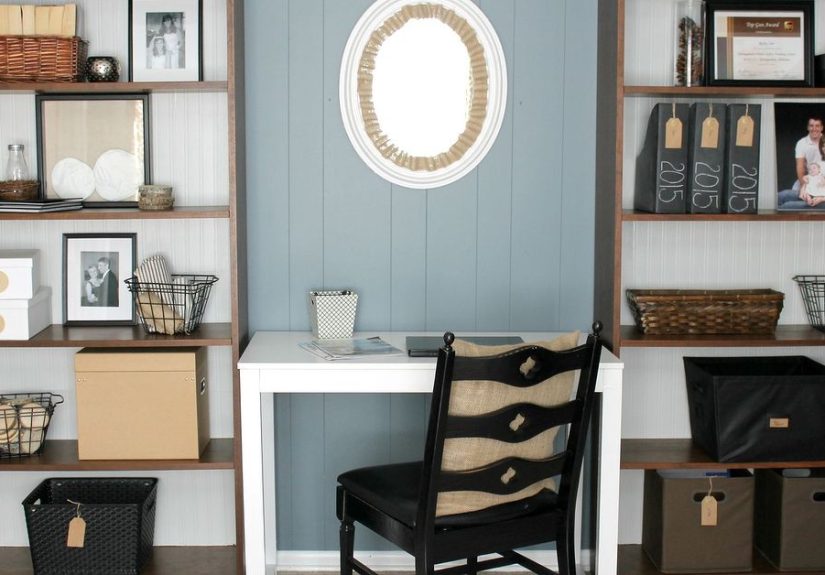
Texture is the secret sauce. A simple accent wall behind your desk can instantly sell the farmhouse vibe.
If you’re handy, real wood paneling is gorgeous. If you’re rentingor simply allergic to big projectstry
paintable wall treatments, peel-and-stick panels, or a faux board-and-batten pattern using thin trim strips.
Trim and millwork that looks custom
Farmhouse chic loves clean trim lines. Updating baseboards, adding a simple chair rail,
or framing a wall with box molding can elevate the whole room. Even “basic” walls look intentional with a little structure.
Barn doors: use with intention (not obligation)
Sliding barn doors are iconic, but they’re also divisive. If you need privacy and have the wall space, they can work.
If you don’t, skip it. Farmhouse chic is about warmth and practicalitynot forcing a door to exist just because it has vibes.
Step 4: Choose Furniture That’s Cozy, Not Clunky
The desk: where farmhouse meets “I have deadlines”
A farmhouse-style desk typically has visible wood grain, a thick top, and a sturdy silhouette.
You can get the look a few ways:
- Farm table desk: Great for spreading out, ideal for big monitors or paperwork.
- Reclaimed wood top + drawers: Warm and rustic, with practical storage.
- Built-in desk: Best for small spaces, and it looks high-end when done cleanly.
Keep the top clear enough to work. Farmhouse chic is not “decorate every inch until the keyboard has nowhere to live.”
The chair: ergonomic first, farmhouse second
Here’s the truth: the prettiest chair is useless if your back starts filing complaints by 3 p.m.
Look for an ergonomic chair with supportive lumbar design, then choose finishes that blend in:
neutral upholstery, leather-look materials, wood accents, or matte black frames. If the chair you love is
ergonomically questionable, add a lumbar cushion in linen or canvas and call it “intentional styling.”
Storage: open for pretty, closed for real life
Farmhouse decor loves open shelvesbut offices need hiding spots. Aim for a mix:
- Open shelving: books, a few curated objects, woven baskets, a plant.
- Closed storage: filing, cords, extra supplies, and the mysterious items that multiply overnight.
A filing cabinet can be disguised beside a desk, tucked into a closet, or softened with a skirted table or cabinet front.
The goal: your office looks calm even when your inbox is not.
Step 5: Layer Lighting Like You Mean It
Natural light: put it to work (without glare)
If you can, place the desk near a window. Many people prefer the desk perpendicular to the window to reduce screen glare
while still getting daylight and a “look outside” break. If glare is an issue, add light-filtering curtains or woven shades.
Task lighting: the unsung hero of productivity
Choose an adjustable desk lamp with a shade or arm that directs light where you need it.
Features that matter: easy controls, flexible angles, and a comfortable brightness that doesn’t feel like interrogation lighting.
Bonus points if it looks like it belongs with your decorthink matte black, aged brass, or a simple dome shade.
Ambient and video-call lighting
Overhead lighting alone can cast unflattering shadows (your cheekbones deserve better).
Add a warm ceiling fixture, a small table lamp, or wall sconces for a soft glow.
For video calls, face a light source or add a subtle front light so you look awake even if your coffee disagrees.
Step 6: Farmhouse Chic Decor That Doesn’t Feel “Overdone”
Patina with purpose
The farmhouse look shines when items feel lived-in: a vintage clock, an old-style desk organizer, antique-style frames,
or a weathered wood tray. One or two pieces go further than a room full of “distressed everything.”
Textiles: cozy without chaos
Add softness with linen curtains, a cotton throw, or a woven rug. A rug also anchors the desk area and helps with sound.
Stick to simple patternsstripes, subtle checks, or vintage-inspired neutralsso your space feels calm, not busy.
Greenery: instant “alive” button
A plant brings the farmhouse vibe home fast. If you’re a plant person, go for a pothos, snake plant, or a small fiddle-leaf fig.
If you’re a plant aspirationalist, choose something hardy and forgive yourself in advance.
Art and personality (yes), word signs (maybe not)
Gallery walls and framed prints work beautifully in farmhouse chicespecially black frames on light walls.
Keep it personal: family photos, meaningful landscapes, or simple line art. As for giant scripted “HUSTLE” signs:
if it sparks joy, go for it. If it sparks secondhand embarrassment, you have permission to retire it.
Step 7: Make Organization Part of the Design
Hide cords like it’s your job (because it kind of is)
Nothing ruins a cozy farmhouse chic office faster than a hydra of charging cables.
Use cable clips, cord sleeves, a simple cord cover along the baseboard, and a power strip mounted under the desk.
Your future self will feel oddly proud.
Create zones that match your routines
- Work zone: computer, notebook, lamp, daily essentials.
- Reference zone: books, files, printer (if needed), supplies.
- Reset zone: a basket or drawer where loose stuff goes at the end of the day.
Adopt the 2-minute “closing shift”
At the end of your workday, put away the top five clutter culprits: cups, papers, cords, random pens, and that one sticky note
you’ve been moving around for three weeks. A quick reset keeps farmhouse chic from turning into farmhouse chaos.
Quick Farmhouse Chic Office Makeover Checklist
- Pick an anchor: desk, built-in wall, or statement light
- Choose a warm neutral paint + one accent (black hardware works)
- Add texture: shiplap/board-and-batten accent, woven rug, linen curtains
- Upgrade lighting: natural + task + ambient
- Mix open + closed storage (baskets + cabinets)
- Hide cords and create zones
- Style with restraint: vintage + greenery + meaningful art
Farmhouse Chic Office Makeover Ideas by Budget
Weekend refresh (budget-friendly)
- Paint the walls a warm white or soft greige
- Swap in black drawer pulls or a matte black desk lamp
- Add one woven basket for “daily clutter”
- Bring in a plant and a simple framed print
Mid-range upgrade (high impact)
- Replace desk with a thicker wood top or farmhouse-style table
- Add a rug and upgrade window treatments
- Install shelves or a storage cabinet that hides supplies
- Upgrade your chair to something supportive that still looks good
Splurge wisely (where it matters)
- Ergonomics: a chair you can sit in all day
- Lighting: layered lighting that reduces eye strain
- Built-ins: if you need serious storage, built-ins are life-changing
Common Mistakes (And How to Fix Them Fast)
-
Too many “themed” items: If everything says “farmhouse,” nothing does.
Fix: keep one or two rustic statement pieces and let the rest be clean and simple. -
Open shelves with zero restraint: Cute in photos, chaotic on Tuesday.
Fix: use baskets, matching boxes, and leave breathing room. -
Ignoring lighting: Dim offices feel sleepy and strain your eyes.
Fix: add a task lamp and warmer ambient light. -
Choosing a chair for looks only: Your spine will start a union.
Fix: prioritize support, then soften the look with neutral textiles and accessories.
Conclusion
A farmhouse chic office makeover is less about “country props” and more about building a workspace that feels
comfortable, organized, and easy to live in. Start with function:
layout, seating, storage, and lighting. Then layer in the farmhouse charm with warm wood, soft neutrals, texture,
and a few pieces with genuine character. Keep the styling intentional, hide the cords, and your office will look
polished on cameraeven if your schedule isn’t.
Most importantly: make it yours. Farmhouse chic is at its best when it feels collected and personalnot like you
bought the entire “Rustic Office Aisle” in one heroic (and highly suspicious) shopping trip.
Real-Life Experiences: What It’s Like Living With a Farmhouse Chic Office
The best part of a farmhouse chic office isn’t the “after” photoit’s how the room behaves on a random Wednesday.
People who move from a makeshift setup to a more intentional farmhouse chic space often notice something surprising:
the room gets quieter in their head. Not literally silent (keyboards still exist), but calmer. When the palette is soft,
the storage is smart, and the textures feel warm, you spend less mental energy fighting your environment and more time
actually working.
One common experience: the clutter creep slows down. It doesn’t vanishthis is real lifebut it becomes easier
to reset. When you have a designated basket for “stuff that doesn’t have a home yet,” loose papers stop spreading across
your desk like a paper-based ecosystem. When cords are clipped and routed, you stop yanking your laptop charger out of a knot
like you’re trying to defuse a movie bomb. Small wins add up, and they’re oddly satisfying.
Another big shift is how you feel on video calls. Farmhouse chic tends to create a flattering background:
light walls, warm wood tones, and minimal (but meaningful) decor. That combo reads clean and professional without feeling cold.
People often realize their camera anxiety drops when the background looks intentional. You’re not scrambling to blur the room
because the room isn’t embarrassingit’s just… nice. And if you add a lamp or sconce behind you, the space gains depth instead
of looking like a flat white box.
Comfort is where the “chic” has to shake hands with reality. A pretty chair that hurts is a fast track to regret, so many
homeowners end up making peace with a chair that’s ergonomic firstand then styling around it. The experience here is practical:
once your back and shoulders feel better, you’re more willing to keep the room tidy and maintain the look. Pain makes people
resent their space; comfort makes them protect it. If you’ve ever felt personally attacked by your own desk chair, you already
know this truth.
Lighting changes the daily rhythm, too. When your desk sits near natural light, mornings feel easier and the day feels more
structuredalmost like the room is gently nudging you into “work mode.” Adding a task lamp helps on cloudy afternoons or winter
days, and people often report fewer headaches when their workspace isn’t dim or shadowy. And yes, you’ll still occasionally work
late, but the room feels more supportive when lighting is layered and warm instead of harsh.
Finally, farmhouse chic offices tend to become multi-use sanctuaries. Because the style is cozy, the room stops
feeling like a place you only enter under duress. People start using the desk for journaling, planning, budgeting, reading, or
even a quiet hobby hour. The “office” becomes a personal space, not just a productivity penalty box. That’s the hidden win:
when your office feels good, you actually want to show upand that makes maintaining the makeover far easier than any paint color ever will.