Table of Contents >> Show >> Hide
- What “Extrinsic Motivation: BASIC For Bluetooth” Actually Refers To
- Why BlueBasic Was Such a Smart Idea
- Bluetooth Low Energy Basics, Without the Fog Machine
- Where Extrinsic Motivation Comes In
- What Product Teams, Educators, and Makers Can Learn
- Why This Project Still Feels Relevant
- Experiences From the BlueBasic Era: What It Felt Like in Practice
- Conclusion
Some titles sound like they were born in a psychology lab. Others sound like they escaped from a hacker bench covered in jumper wires, half-drunk coffee, and one heroic coin cell. Extrinsic Motivation: BASIC For Bluetooth somehow manages to be both. On the surface, it sounds like a TED Talk collided with a development board. Under the hood, though, it points to something genuinely interesting: a maker-era effort to make Bluetooth Low Energy development simpler, cheaper, and much more human.
At the center of the story is BlueBasic, a project that put a BASIC interpreter on Texas Instruments Bluetooth Low Energy chips so developers could stop wrestling with expensive tooling and start building. That may not sound dramatic in an age of drag-and-drop dashboards and AI copilots, but in embedded development, lowering friction is a big deal. Sometimes the greatest innovation is not a new chip, a faster radio, or a shinier acronym. Sometimes it is just making the thing usable by normal mortals before their motivation leaves the building.
What “Extrinsic Motivation: BASIC For Bluetooth” Actually Refers To
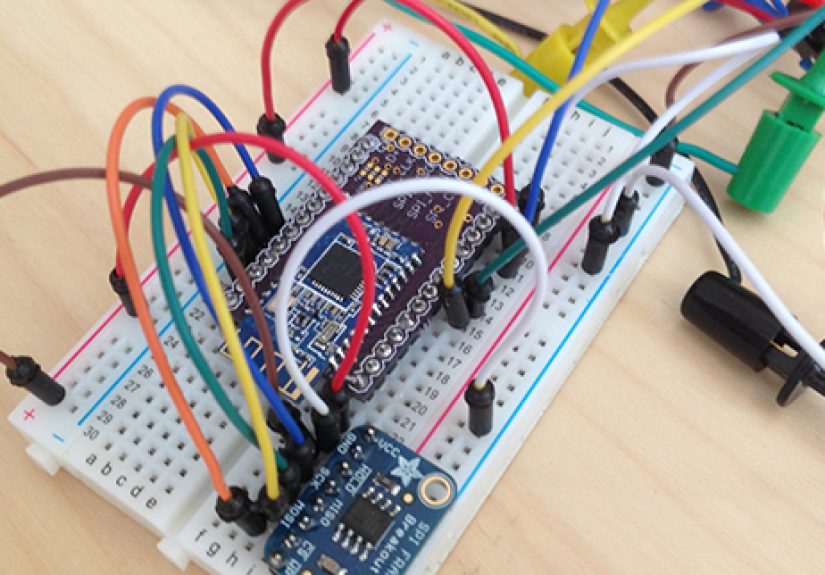
The phrase comes from a Hackaday feature about BlueBasic, a project that brought a modified TinyBasic interpreter to TI’s CC2540 and CC2541 Bluetooth Low Energy chips. In plain English, the idea was elegant: flash the interpreter onto a low-power BLE module, connect to it with a console tool, and write code directly on the device in BASIC rather than fighting through a more traditional C-based embedded workflow.
That mattered because the usual path was full of friction. The BLE chips themselves were capable, inexpensive, and attractive for hobbyists and product tinkerers. The problem was the development experience. The barrier was not imagination. The barrier was the toolchain. BlueBasic’s creator openly framed the project as a way to reduce that pain and make prototyping on cheap HM-10-style BLE hardware far more accessible.
So yes, the title is playful. But it also captures a real truth about technology: people are often pushed into innovation by external pressure. In this case, extrinsic motivation was the annoyance of cost, complexity, and wasted effort. BlueBasic was not built because somebody woke up and said, “You know what the world desperately needs? More BASIC.” It was built because existing options made small-scale Bluetooth experimentation harder than it needed to be.
Why BlueBasic Was Such a Smart Idea
It Solved the Real Problem
A lot of technical projects try to impress you with raw capability. BlueBasic went after something more valuable: developer momentum. The project recognized that many makers did not need a giant enterprise-grade firmware workflow just to blink an LED, read a sensor, or expose a BLE characteristic. They needed a way to move from idea to proof of concept without spending half the weekend becoming part-time toolchain archaeologists.
That is why the project feels surprisingly modern. Even now, the most successful development platforms tend to remove ceremony. They shorten the path between “What if?” and “Hey, it works.” BlueBasic did that for Bluetooth modules that were otherwise powerful but awkward for hobby-scale work.
BASIC Was a Feature, Not a Joke
BASIC has a long history as a beginner-friendly language. It was created at Dartmouth in the 1960s specifically to make programming more approachable. That heritage matters here. BlueBasic was not choosing BASIC as a retro costume. It was choosing BASIC because interpreted, readable, line-oriented scripting is great for experimentation.
In embedded work, every extra step matters. Edit, compile, upload, debug, repeat can turn a simple experiment into a personality test. BASIC reduced that loop to something closer to edit and run. For direct, on-device development, that is powerful. It turns the board from a remote target into something more like a living environment.
It Treated the BLE Chip Like a Real Computer
One of the most interesting arguments behind BlueBasic was philosophical as much as technical. Many BLE modules of that era were treated as little radio sidekicks connected to a separate microcontroller. BlueBasic pushed back against that pattern. If the Bluetooth chip already had processing power, memory, and access to peripherals, why not let it do the job itself?
That is a wonderfully maker-minded question. It saves cost, reduces complexity, cuts power overhead, and respects the hardware. It also anticipates a broader trend in edge computing: pushing intelligence closer to the device rather than stacking extra silicon just because tradition says so.
Bluetooth Low Energy Basics, Without the Fog Machine
BLE Was Built for Small, Efficient Connections
Bluetooth Low Energy, or BLE, was designed for low-power applications where short bursts of communication matter more than constant data streaming. That made it a natural fit for wearables, sensors, tags, locks, buttons, and all the other gadgets that tend to live on tiny batteries and big dreams.
Compared with classic Bluetooth, BLE was engineered to spend less time with the radio active. That is one reason it became so useful for battery-powered devices. When your hardware’s career goal is “run quietly for months,” the radio cannot behave like it is hosting a stadium concert.
GATT Is Where the Data Lives
If you have ever worked with BLE, you have met the alphabet soup: GAP, GATT, services, characteristics, advertising, central, peripheral. It can sound intimidating until you realize the architecture is actually pretty tidy. Devices advertise. A central device, usually a phone or computer, discovers them. Once connected, data is exchanged through GATT using services and characteristics.
BlueBasic leaned into this model instead of hiding it. Its commands were shaped around the actual BLE profile structure, which meant users could create services and characteristics directly in code. In other words, it did not just let you blink pins. It let you think in Bluetooth-native terms.
The Hardware Was Small but Serious
The TI CC2540 and CC2541 were not toy chips. They were real low-power wireless microcontrollers built for BLE applications. The CC2540 combined an RF transceiver with an enhanced 8051 MCU, flash memory, RAM, and peripheral support. BlueBasic extended access to features such as digital I/O, ADCs, timers, power management, and serial interfaces, making the chip feel far less like a sealed appliance and far more like a programmable platform.
That was a huge deal for experimentation. Once you can advertise a service, expose a characteristic, and wire that value to a pin or sensor input, a very small module starts behaving like a genuinely useful embedded node. Suddenly you are not just “adding Bluetooth.” You are building a complete BLE device.
Where Extrinsic Motivation Comes In
External Pressure Often Starts the Journey
In psychology, extrinsic motivation means doing something because of external rewards, incentives, or pressures. Money, praise, recognition, deadlines, grades, status, and even avoiding pain all qualify. It is not automatically bad. In fact, it is often what gets people moving when a task is unfamiliar, tedious, or blocked by friction.
That fits the BlueBasic story perfectly. The project grew from an external problem: expensive tools, cumbersome workflows, and the mismatch between affordable hardware and inaccessible development. The motivation was extrinsic because the push came from outside the joy of programming itself. The pain point created the project.
But Intrinsic Motivation Keeps People Building
Once people get past the barrier, something more interesting often happens. They start exploring. They test sensors. They build custom services. They connect phones to boards just because they can. At that point, motivation shifts. It is no longer just about escaping a bad toolchain. It becomes curiosity, mastery, autonomy, and delight.
That transition matters. Self-determination theory argues that people are more likely to persist when their needs for autonomy, competence, and relatedness are supported. BlueBasic quietly did that. It gave developers more choice, faster feedback, and a friendlier learning curve. That is the kind of environment where intrinsic motivation tends to wake up, stretch, and decide to stay for a while.
The Overjustification Trap Is Real
There is also a cautionary lesson here. Motivation research has long warned that external rewards can undermine internal interest if they become too controlling. If somebody already loves tinkering and you drown the process in rigid incentives, you can accidentally turn play into paperwork. That is the overjustification effect in a nutshell.
For maker culture, that means tools should reduce friction without over-managing the experience. The best platforms do not force creativity into a cubicle. They give enough structure to help people start, then get out of the way. BlueBasic’s charm was that it opened the door without standing in it.
What Product Teams, Educators, and Makers Can Learn
First, ease of entry is not a luxury. It is strategy. If your tool requires a quest line just to print “Hello,” you are not filtering for talent. You are filtering for stubbornness, spare time, and emotional tolerance for poorly documented installers.
Second, beginner-friendly environments do not have to be shallow. BASIC made programming approachable in the 1960s. BlueBasic applied that same idea to Bluetooth hardware. Approachability and seriousness are not opposites. Often, the approachable tool is the one that gets used enough to produce serious work.
Third, external motivators are most useful when they remove barriers rather than control behavior. Lower cost, clearer interfaces, faster feedback, and fewer setup headaches are excellent extrinsic supports. They help people begin. After that, the goal should be to let competence and curiosity take over.
Finally, good technical design is often psychological design in disguise. You are not just designing a protocol, a chip package, or an API. You are designing how people feel while using it. Confident? Curious? Lost? Boxed in? Empowered? That emotional layer is not fluff. It shapes whether a platform is adopted, loved, and extended.
Why This Project Still Feels Relevant
BlueBasic belongs to a specific moment in the maker movement, but its lesson has not aged out. Today’s developers still reward platforms that shorten the distance between concept and result. We see it in scripting layers, no-code dashboards, rapid prototyping boards, and visual programming tools. The underlying rule has not changed: people build more when they can start sooner.
That is why Extrinsic Motivation: BASIC For Bluetooth is more than a quirky title. It is a compact case study in how external pain points can spark clever engineering, and how clever engineering can create the conditions for genuine engagement. First you solve the frustration. Then you unlock the fun.
Experiences From the BlueBasic Era: What It Felt Like in Practice
The most revealing part of the BlueBasic story is not just the architecture. It is the way people reacted when they actually tried it. Early users described flashing BlueBasic onto inexpensive HM-10 modules and immediately feeling a sense of nostalgia, comparing the experience to classic home computers like the ZX-80 and ZX81. That reaction makes perfect sense. There is something deeply satisfying about connecting to a small device and writing code directly on it, almost as if the hardware is inviting you to play instead of filing a formal request with a compiler.
People also saw practical value right away. One user described having “a ball” writing BASIC programs on an HM-10, which says more than a benchmark chart ever could. Joy matters. Another commenter wanted to use BlueBasic to simplify an autonomous robot that would scan floors for radioactive contamination and send results to a smartphone over Bluetooth. The claim was bold but believable: using a higher-level environment could cut development effort dramatically compared with traditional firmware work. That is exactly the promise of a friendlier prototyping layer. It does not magically erase complexity, but it can keep complexity from swallowing the whole project.
Not every experience was friction-free, which is also part of what makes the story real. Some users wanted Android support and discovered that BLE did not offer a universal old-school serial console profile the way classic Bluetooth had. Others were interested in using BlueBasic with TI’s SensorTag hardware and immediately ran into questions about I2C access. A few people focused on low-power behavior and asked whether sleep timing could be improved for better battery life. Those are the kinds of questions that appear when a project moves from “neat demo” to “I might actually build something with this.”
There were also platform headaches on the tooling side. The project log mentioned trying to get a console app into Apple’s App Store, which turned into its own little subplot. That detail is easy to overlook, but it reveals a bigger truth: making embedded development easier is rarely just about firmware. You also need the surrounding tools, apps, and workflows to cooperate. A great interpreter on the chip still needs a comfortable path for people to load code, connect, test, and iterate.
What stands out across these experiences is the pattern. Users were not treating BlueBasic like a museum piece or a retro programming stunt. They were trying to solve actual problems: toggling outputs, reading data, building battery-powered devices, talking to phones, and experimenting with real modules they could afford. Some were beginners. Some were experienced engineers tired of unnecessary pain. All of them were responding to the same underlying value proposition: make Bluetooth development feel less like bureaucracy and more like invention.
That is the lived experience behind the title. The extrinsic push was obvious: expensive compilers, awkward workflows, missing convenience, too much setup. But once people got access to a friendlier environment, the tone changed. The comments shifted from complaint to curiosity. Suddenly the conversation was about what to build next. That is the sweet spot in any developer platform. External pressure gets people in the door. A sense of progress convinces them to stay.
Conclusion
Extrinsic Motivation: BASIC For Bluetooth may sound like an odd mash-up, but it captures a sharp insight about technology. External frustration can inspire meaningful invention. BlueBasic emerged because Bluetooth Low Energy hardware was promising while the development path was clunky, expensive, or both. By putting a BASIC interpreter on BLE chips and making direct experimentation easier, the project turned a barrier into an invitation.
That is why the idea still resonates. Good tools do more than expose hardware features. They respect human motivation. They remove needless friction, support competence, increase autonomy, and let curiosity take over. In the end, BlueBasic was not really about nostalgia. It was about access. And in tech, access is often the difference between a clever chip sitting in a drawer and a real idea coming to life.