Table of Contents >> Show >> Hide
- What Exactly Was Rob Mac Promising?
- How Do You Measure “Best Season Ever” for Always Sunny?
- What Season 17 Actually Delivered (Episode-by-Episode, Without the Homework Vibes)
- What Did Critics and Fans Think?
- So, Did Season 17 Live Up to Rob Mac’s “Best Season Ever” Promise?
- Viewer Experiences: How Season 17 Played Out in Real Life (The Extra You Asked For)
- SEO Tags
Every TV season needs a hook. Some have dragons. Some have murder boards. And some have a creator-star walking onto the internet,
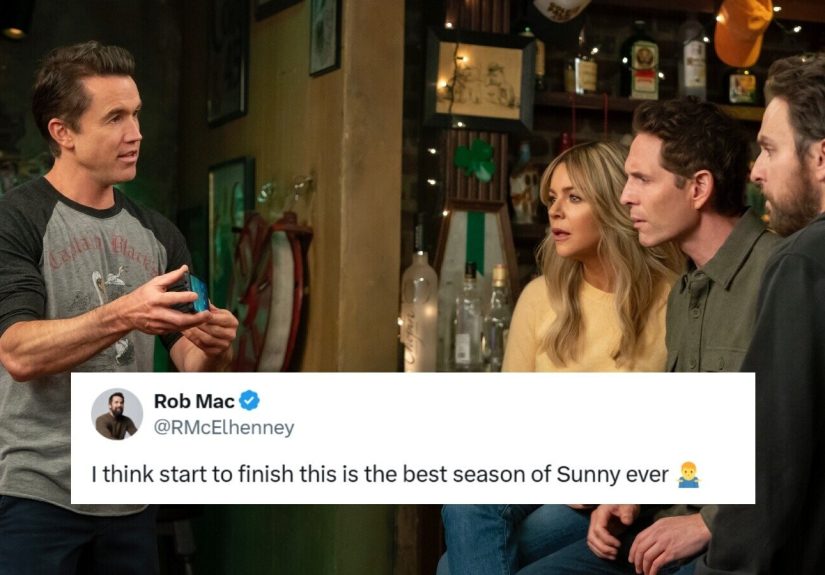
looking directly into the camera, and saying: I think start to finish this is the best season of Sunny ever
.
That was Rob Mac (a.k.a. Rob McElhenney, a.k.a. the guy who has spent two decades turning “confidence” into a controlled substance)
teeing up It’s Always Sunny in Philadelphia Season 17 right as it premiered in July 2025. Which is bold! Because saying your new season is
“the best ever” is basically inviting the fandom to kick the tires, check the mileage, and then argue on the internet about what year the engine peaked.
So… did Season 17 actually live up to the promise? If you’re asking whether it dethroned the untouchable, chaos-goblin glory days that birthed
the show’s all-timer episodes, the answer is complicated. If you’re asking whether Season 17 delivered a genuinely strong modern run with a clever crossover,
sharp pacing, and a finale that somehow managed to be both ridiculous and oddly sweet, then congratulations:
you may be about to enjoy a rare moment of Sunny optimism without immediately needing a shower.
What Exactly Was Rob Mac Promising?
Rob Mac didn’t promise “best episode.” He promised best seasonstart to finish.
That’s a different bet. It’s not “we have one banger.” It’s “there are no weak links,” which, statistically speaking,
is what people say right before you remember a midseason episode where everyone learns a lesson and you briefly lose consciousness.
Season 17 also arrived with unusually loud expectations because it had event television baked in:
a major crossover episode with Abbott Elementary from Sunny’s perspective, plus a multi-episode arc
spoofing The Golden Bachelor. In other words, the Gang didn’t just want to be the worst people in Philly.
They wanted to be the worst people in someone else’s TV show, too.
How Do You Measure “Best Season Ever” for Always Sunny?
“Best” is a trap wordespecially for a series that has been running long enough to have multiple eras, like a rock band
that insists every album is “a return to our roots” while also featuring a 12-minute experimental track called
“Dennis Learns About Crypto (But Like, Wrong)”.
But if you wanted a semi-reasonable scorecard for the best season of It’s Always Sunny in Philadelphia, it might look like this:
- Laugh density: Are there consistent, repeatable laughs, not just one viral clip?
- Character utilization: Does everyone get something specific to do (especially Dee, who deserves better)?
- Classic Sunny structure: A scheme, escalation, and consequencespreferably consequences that ruin someone’s day.
- Freshness without losing the stink: New angles that still feel like Sunny, not a totally different show wearing Sunny’s hoodie.
- End-to-end consistency: The “start to finish” part of the claimdoes the season hold together?
With that in mind, Season 17’s case rests on two big moves:
(1) it opened with a crossover that actually felt purposeful, and
(2) it closed with a finale that was both wildly on-brand and surprisingly human.
Sunny doesn’t do “heartfelt” often… unless it’s using heartfelt as a weapon.
What Season 17 Actually Delivered (Episode-by-Episode, Without the Homework Vibes)
1) The Abbott Elementary crossover… but make it Sunny
Season 17 opened with “The Gang F***s Up Abbott Elementary”, Sunny’s version of the crossover story.
The genius of the crossover concept is that it doesn’t force the shows to blend into one tone.
It lets Abbott stay Abbott in its episode, then lets Sunny come back later and say:
“Cool. Now here’s what actually happened when five sociopaths wandered into your school.”
Critically, this episode didn’t feel like a stunt glued to the front of the season.
It played like Sunny doing what Sunny does best: exposing social norms by violating them with enthusiasm.
The crossover angle also gave the show a fresh structure while still letting the Gang be the Gangselfish, petty,
and somehow still convinced they’re the protagonists of reality.
2) “Frank Is in a Coma” and the show’s secret weapon: consequences
The second episode, “Frank Is in a Coma,” leans into one of Sunny’s most reliable engines:
the Gang confronting a situation that should make them reflect… and then choosing the absolute wrong lesson.
The comedy lands because the premise offers emotional weight, and the characters respond with business plans and delusions.
Sunny has always been at its funniest when it treats a serious event like a minor inconvenience that can be exploited.
Season 17 understands that. It doesn’t try to soften the Gang. It simply gives them a situation where
their normal behavior becomes even more revealing.
3) Midseason: “modern Sunny” that actually feels sharp
The middle stretch is where the “best season ever” claim usually goes to die. That’s where shows run out of gas,
stall on a half-idea, and ask you to applaud the concept of the show rather than the jokes.
Season 17 mostly avoids that trap by leaning into crisp premises:
- “Mac and Dennis Become EMTs” uses the pair’s obsession with masculinity and status as fuel.
Put those two near authority, adrenaline, and uniforms, and you basically have a controlled burn of delusion. - “Thought Leadership: A Corporate Conversation” plays with reputational panic and corporate-speak,
which is always funny because it’s just lying while wearing nicer pants. - “The Gang Goes to a Dog Track” gives you the classic Sunny structure:
a plan, overconfidence, escalating stupidity, and the sense that someone will end up spiritually bankrupt
even if they also end up financially bankrupt. - “Overage Drinking: A National Concern” mines aging, nostalgia, and the horror of realizing
your old party identity has a bedtime now. Sunny has always been good at making time itself the villain.
This run also benefits from a short season length (eight episodes), which forces tighter choices.
There’s less filler. There’s less “we had an open slot, so here’s an episode where the Gang debates something for 22 minutes.”
(To be fair, those episodes can be great. But they can also be… a lot.)
4) The Golden Bachelor arc: ridiculous, committed, and (annoyingly) effective
The last two episodes shift into the season’s big swing: Frank’s Golden Bachelor storyline,
culminating in “The Golden Bachelor Live.” The arc works because it’s a perfect Frank vehicle:
crude appetites, total confidence, no self-awareness, and a willingness to turn romance into a hostage negotiation.
The show also understands the comedic advantage of pairing Frank with a reality-TV format.
Reality shows already have artificial stakes and manufactured sinceritySunny just takes the mask off and says,
“Yes, this is absurd. Now let’s make it worse.”
And then the finale does something rare: it lands a tribute that feels earned.
The season’s closing episode includes a remembrance of the late Lynne Marie Stewart
(Charlie’s mom, Bonnie), giving the finale an emotional aftertaste that doesn’t cancel the comedy,
but deepens itbecause Sunny’s best “heart” moments tend to arrive like a surprise punch you respect.
What Did Critics and Fans Think?
If you like numbers (and who doesn’t, as long as they aren’t your bank account), Season 17 scored strongly on Rotten Tomatoes,
with a high critic score and a solid audience score. That suggests something important:
even if not everyone agrees it’s “the best ever,” a lot of people agree it’s good.
And for a 20-year-old comedy that thrives on bad behavior, “good” is not a given.
Critically, the Abbott crossover episode drew attention as a standout opener, partly because it didn’t feel like Sunny chasing relevance.
It felt like Sunny using a new setting to do what it has always donesatirize social systems by introducing people who would set those systems on fire
if they thought it might earn them free nachos.
Meanwhile, the season’s structuretwo-episode premiere, weekly rollout, and a finale designed like an eventhelped it feel cohesive.
That “start to finish” claim looks less ridiculous when the season is built as one clean run rather than an uneven playlist.
Still, the “best ever” argument runs into a simple reality:
Sunny’s peak seasons are legendary in a way modern seasons can’t easily replicate,
because the early run had the reckless electricity of a show that didn’t know it would survive.
Those seasons feel like discovering a cursed VHS tape that makes you laugh and then whisper,
“Are we allowed to laugh at this?”
Season 17 isn’t trying to be that. It’s trying to be a sharp, modern Sunny season that still bites.
And on that front, it largely succeeds.
So, Did Season 17 Live Up to Rob Mac’s “Best Season Ever” Promise?
Here’s the fairest verdict: Season 17 absolutely made a case for being the best Sunny season in a long time.
It’s tight, it’s structured, it’s ambitious without feeling desperate, and it features at least one episode
(the Abbott crossover from Sunny’s perspective) that feels instantly rewatchable.
But if “best season ever” means “better than the era that defined the show’s cultural footprint,”
that’s a harder sellmostly because those early seasons are baked into comedy DNA at this point.
It’s like asking a band to top the album that made them famous. Even if the new album slaps,
people will still say the old one changed their life at a Taco Bell parking lot in 2009.
So did it live up to Rob Mac’s promise? Emotionally, yesbecause Season 17 feels confident,
purposeful, and consistently funny. Historically, maybe notbecause “best ever” is a crown
you don’t just claim; the fandom has to drag it onto your head while screaming.
The bigger takeaway is this: Season 17 proved Sunny still has real juice.
It can still take big swings, still write sharp premises, and still find fresh ways to make terrible people entertaining.
And honestly? That’s a win. Because the alternative is pretending the Gang has grown as humans,
and nobody wants that. Not even them.
Viewer Experiences: How Season 17 Played Out in Real Life (The Extra You Asked For)
One of the most interesting things about Season 17 wasn’t just what happened on-screenit was how people watched it.
Sunny is the kind of show that lives in two worlds: the episode you watch, and the argument you have afterward.
Season 17 brought that second world roaring back because it handed fans multiple “group chat moments” per episode.
The season premiere, for example, wasn’t just a premiereit was an event drop.
Two episodes in one night changes the vibe. Instead of watching a single episode and moving on,
people treated it like a mini-movie: “Okay, we got the Abbott crossover angle and a Frank-centric premise in one sitting.”
That double feature invited immediate reactions: some viewers loved the rapid momentum,
while others wanted to savor the crossover episode as its own thing instead of immediately jumping into the next disaster.
Either way, it sparked discussionespecially among fans who came in skeptical of crossovers as gimmicks.
And that skepticism mattered, because Sunny fans have long memories. When you’ve been burned by “very special episodes”
or sitcom stunt casting, you learn to flinch. But Season 17’s crossover experience felt different for a lot of viewers
because it didn’t ask Sunny to behave. It asked Sunny to interpret another show through its own warped lens.
People who watch Abbott for warmth and optimism could see what happens when that warmth encounters the Gang’s emotional black hole.
Meanwhile, Sunny fans got a fresh setting without losing the show’s core rhythm: the Gang enters, ruins everything,
and leaves like raccoons escaping a tipped-over trash can.
Midseason, the viewing experience shifted again. Weekly episodes created a rhythm that Sunny is uniquely suited for:
fans love turning small details into big theories. Who’s lying? Who’s more delusional than usual?
Which character is about to “win” the episode by losing the least?
When a season is strong, people don’t just watch itthey start ranking it in real time.
The phrase “best season in years” starts popping up, and suddenly everyone is rewatching older episodes for comparison
like they’re studying game tape.
Then the Golden Bachelor arc hit, and the conversation got even louder.
Reality TV is a shared cultural language, so even casual Sunny viewers understood the format immediately:
staged sincerity, fake romantic stakes, and a host trying to keep the chaos from eating the set.
The fun part, for many viewers, was watching Frank treat reality-TV tropes like business opportunities.
People weren’t just laughing at the jokesthey were laughing at how perfectly Sunny’s cynicism fits the dating-show machine.
That created a specific kind of viewing pleasure: you could enjoy the episode even if you’ve never watched
a single rose ceremony in your life, because the satire was readable at a glance.
And finally, the finale experience was different from what many expected.
Sunny finales usually leave you with a punchline or a grim little twist. Season 17’s ending added something else:
a moment that encouraged fans to pause, share clips, and talk about the show’s history.
For longtime viewers, it created that rare sitcom sensation of “we’ve actually been with these characters for a long time,”
which is wild considering those characters should probably be banned from most public spaces.
In other words, Season 17 didn’t just deliver episodesit delivered a season-long experience:
event premiere, weekly debates, reality-TV chaos, and a finale that landed with a little extra weight.
Whether or not you crown it the best ever, it absolutely felt like Sunny reminding everyone it still knows how to run the room.