Table of Contents >> Show >> Hide
- Why Are They Called “Deviled” Eggs?
- The Deviled Egg Blueprint: The 5 Parts That Make Them Pop
- Classic Deviled Eggs Recipe (Creamy, Tangy, Not Too Sweet)
- Make-Ahead, Storage, and Food Safety (Because Potlucks Are Not a Lab Experiment)
- Flavor Variations That Still Taste Like Deviled Eggs (Not Like Confusion)
- Troubleshooting: Fix the Most Common Deviled Egg Problems
- Serving and Transport: How to Bring Deviled Eggs Without Panic
- Deviled Eggs in Real Life: The Moments Everyone Recognizes (And Secretly Loves)
Deviled eggs are the social butterflies of the appetizer world: they show up uninvited, disappear first, and somehow
leave people debating mayo ratios like it’s a court case. They’re also deceptively simplejust hard-boiled eggs plus
a yolk fillingyet the difference between “legendary tray” and “why is this wet?” comes down to a handful of small,
very fixable details.
This guide breaks down the why behind great deviled eggs (texture, seasoning, stability, and safety), then
gives you a reliable classic recipe, smart variations, and a make-ahead plan that won’t leave you assembling eggs in
the car like a culinary action movie.
Why Are They Called “Deviled” Eggs?
In cooking, “deviled” has long meant “zesty, spicy, or boldly seasoned.” So deviled eggs aren’t haunted; they’re just
seasoned with punchy things like mustard, pepper, vinegar, hot sauce, or paprika. In some families (and plenty of
church cookbooks), you’ll also hear “stuffed eggs” or “dressed eggs,” which is basically the same ideajust said with
a slightly more polite grin.
The Deviled Egg Blueprint: The 5 Parts That Make Them Pop
Every great deviled egg is built from the same five parts. Once you understand them, you can improvise like a pro
instead of dumping random condiments into a bowl and hoping for the best.
1) The egg (firm whites, creamy yolks)
The whites should be tender but set, not rubbery. The yolks should be fully cooked yet not chalk-dry. Overcooked eggs
can develop that greenish-gray ring around the yolkharmless, but it screams “I forgot about you.”
2) The creamy base (usually mayo)
Mayo is classic because it’s smooth, rich, and stable. But “creamy base” can also be Greek yogurt, sour cream, avocado,
or a mix. The trick is adding enough to make the filling pipeable without turning it into yolk soup.
3) Acid (the flavor highlighter)
Vinegar, lemon juice, pickle juice, or a splash of brine makes the filling taste brighter and less heavy. Without acid,
deviled eggs can taste flateven if you used good mayo.
4) Mustard + spice (the “deviled” part)
Mustard brings tang and gentle heat. Paprika, cayenne, black pepper, hot sauce, or smoked chile adds personality. You
don’t need your deviled eggs to melt facesjust to taste awake.
5) Salt (non-negotiable)
Salt is what makes “eggy” taste like “wow.” Add it gradually and taste as you go. A tiny pinch can be the difference
between bland and balanced.
Classic Deviled Eggs Recipe (Creamy, Tangy, Not Too Sweet)
This is a reliable, crowd-pleasing classic with that familiar mustard-and-paprika vibe. It’s not a “one weird trick”
recipeit’s the one you can bring anywhere without starting a condiment argument.
Ingredients (makes 12 halves)
- 6 large eggs
- 3 to 4 tablespoons mayonnaise (start with 3)
- 1 teaspoon yellow mustard (or Dijon for a sharper bite)
- 1 teaspoon white vinegar (or lemon juice)
- 1 to 2 teaspoons pickle relish (optional, for classic sweet-tang crunch)
- 1/8 teaspoon kosher salt, plus more to taste
- Black pepper, to taste
- Paprika (sweet or smoked), for garnish
- Optional garnish: chopped chives, dill, crispy bacon bits, or finely diced pickles
Step 1: Hard-boil eggs without the heartbreak
- Place eggs in a saucepan in a single layer and cover with cold water by about 1 inch.
- Bring to a gentle boil over medium-high heat.
- Once boiling, turn off the heat, cover, and let sit 10 to 12 minutes.
- Transfer eggs to an ice bath (or very cold water) for at least 5 minutes to stop cooking.
This method aims for yolks that are cooked through but still creamyideal for a smooth filling.
Step 2: Peel like you’re trying to impress someone
Tap the egg all over to crack the shell, then peel under a thin stream of water or in a bowl of water. Starting at the
wider end can help because that’s where the air pocket usually lives. If the whites get nicked, don’t panicput the “ugly”
sides down on the platter like you meant it.
Step 3: Make the filling smooth
- Slice eggs lengthwise. Pop yolks into a bowl; set whites on a plate.
- Mash yolks with a fork until fine, or press through a fine-mesh sieve for extra silkiness.
- Add mayo, mustard, vinegar, relish (if using), salt, and pepper. Mix until smooth.
- Taste. Adjust: more salt for flavor, more mustard for tang, more acid for brightness, a tiny pinch of cayenne for heat.
Step 4: Fill and garnish (neat matters, but so does confidence)
Spoon filling into whites, or pipe it using a piping bag. No piping bag? Use a zip-top bag: fill it, snip one corner, and
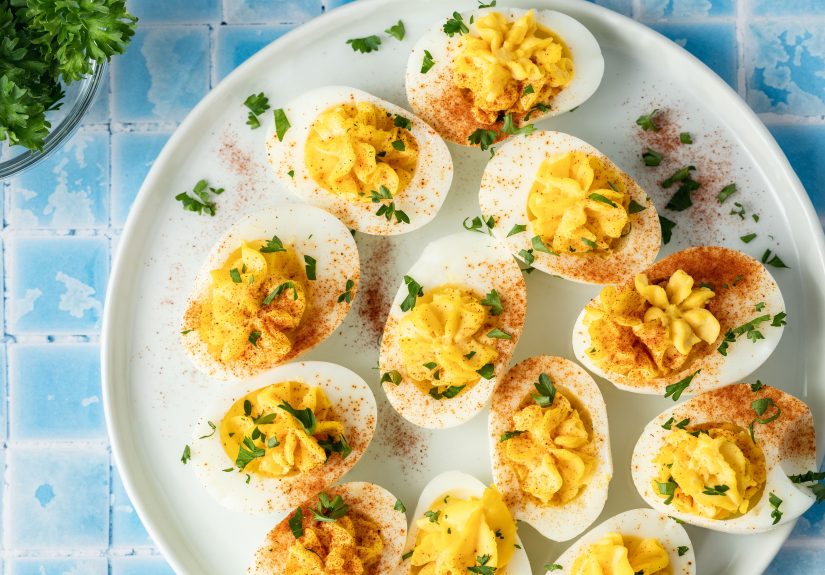
you’re in business. Garnish with paprika and whatever makes you feel fancy.
Make-Ahead, Storage, and Food Safety (Because Potlucks Are Not a Lab Experiment)
The best make-ahead plan
- Up to 7 days ahead: Hard-boil eggs and keep them in the shell in the fridge.
- 1 to 2 days ahead: Peel, halve, and store whites and filling separately (airtight containers).
- 30 to 60 minutes before serving: Pipe or spoon filling into whites and add delicate garnishes.
Keeping the filling and whites separate helps prevent watery condensation and keeps the whites from getting rubbery.
If you store filling in a zip-top bag with the air pressed out, it stays smoother and less prone to drying on top.
How long do deviled eggs last?
Hard-cooked eggs are best used within a week when refrigerated. Once you’ve mixed a filling (especially with mayo and add-ins),
aim to eat assembled deviled eggs within about 3 to 4 days for best quality. If they smell “off,” look slimy, or taste funky,
don’t overthink ittoss them and make a smaller batch next time.
The two-hour rule (and the hot-day exception)
Deviled eggs shouldn’t sit out at room temperature longer than 2 hours. If you’re outside and it’s above 90°F, cut that to 1 hour.
Use a chilled tray, nest the serving platter over ice, and keep backup deviled eggs in the fridge until you need a refill.
Flavor Variations That Still Taste Like Deviled Eggs (Not Like Confusion)
Think of the classic recipe as your “base model.” These variations keep the same creamy-tangy core, then add one clear idea.
Southern-style relish & paprika
Lean into sweet pickle relish, yellow mustard, and a generous dusting of paprika. Add a tiny splash of pickle juice for extra tang.
This is the one that disappears first at family gatheringsmysteriously, even if the gathering is “just five people.”
Spicy sriracha + bacon
Stir 1 to 2 teaspoons of sriracha (or your favorite hot sauce) into the filling. Top with crispy bacon bits and chopped chives.
It’s smoky, spicy, and just dramatic enough.
Smoked paprika + Dijon “grown-up classic”
Swap yellow mustard for Dijon and use smoked paprika. Add a pinch of cayenne. This version tastes a little sharper and more savory,
like the classic put on a blazer.
Dill pickle deviled eggs
Use dill pickle juice instead of vinegar, fold in finely chopped dill pickles, and garnish with fresh dill. Bright, salty, crunchy,
and weirdly addictive.
Avocado-lime “green” deviled eggs
Replace some (or all) mayo with mashed avocado, add lime juice, salt, and a pinch of cumin. Top with cilantro. It’s creamy and fresh,
and it makes your deviled eggs look like they got a spa day.
Herby spring eggs
Add finely chopped herbs like tarragon, chives, and parsley. Use lemon juice for acid. Garnish with extra herbs and flaky salt.
Perfect for brunch spreads and “I brought something light” energy.
Keto-friendly deviled eggs
Good news: classic deviled eggs are already pretty low-carb. Skip relish if you want to reduce sweetness, use mustard + mayo + vinegar,
and garnish with paprika or everything-bagel seasoning.
Troubleshooting: Fix the Most Common Deviled Egg Problems
“My filling is runny.”
Add more yolk (cook an extra egg if you must), or mix in a little less-wet ingredient like finely grated cheese. Also check your add-ins:
watery pickles, too much relish, or juicy roasted peppers can thin things out.
“My filling is bland.”
Add salt first. Then brighten with a little more acid. Then add mustard or a pinch of cayenne. Most bland deviled eggs are missing
salt and acidnot “more stuff.”
“My filling is lumpy.”
Press yolks through a sieve or mash longer before adding mayo. If you’re already mixed, beat the filling more vigorously or use a spoon
to smear it against the bowl until smooth.
“My egg whites won’t sit flat on the platter.”
Slice a paper-thin sliver off the rounded bottom to create a flat base. Do this carefullynobody wants a deviled egg that suddenly becomes
a deviled egg slip-and-slide.
Serving and Transport: How to Bring Deviled Eggs Without Panic
- Use a deviled egg tray if you have one. If not, line a container with paper towels to reduce sliding.
- Carry whites and filling separately and assemble on-site. This is the cleanest “wow, these look perfect” move.
- Keep them cold: store over an ice pack in a cooler, especially for outdoor events.
- Garnish at the last minute so herbs stay green and crunchy toppings stay crunchy.
Deviled Eggs in Real Life: The Moments Everyone Recognizes (And Secretly Loves)
Deviled eggs aren’t just foodthey’re a social situation. They’re the dish that shows up at baby showers, game days, cookouts, and
holiday brunches like a reliable friend who’s always five minutes early and never forgets the napkins. You can measure their popularity
in one very scientific way: the moment the lid comes off the tray, people suddenly “just want one,” and then they somehow return for
“one more” three additional times. Nobody does math around deviled eggs. That’s part of their charm.
There’s also the unspoken deviled egg hierarchy at gatherings. The neat, piped ones with perfect paprika dusting look like they have a
publicist. The slightly rustic onesspooned in, a little swirly, maybe one egg white cracked in a way that suggests it fought backtaste
just as good and often disappear even faster because they feel approachable. People love the idea that deviled eggs are homemade, not
“manufactured.” A deviled egg with a tiny flaw is basically saying, “Relax, I’m here for a good time.”
Then there’s the nostalgia factor. For a lot of families, deviled eggs are tied to one specific person’s “right way” of making them:
a little sweet relish, a little yellow mustard, a little vinegar, and a very serious opinion about whether the paprika should be smoked
or standard. You’ll hear stories like, “My aunt would never use Dijon,” delivered with the gravity of a historical documentary. And the
funny thing is, those tiny preferences become part of the tradition. Deviled eggs are less about culinary perfection and more about
familiaritylike a favorite song you don’t mind hearing again.
They’re also a stealthy host gift. Bring a tray of deviled eggs to a party and you instantly look thoughtful, capable, and slightly
heroiceven if you spent the last 20 minutes peeling eggs and whispering motivational phrases to yourself. Deviled eggs telegraph effort:
you had to boil, chill, peel, mix, season, and assemble. That’s a whole journey. People respect the journey. They may not say it out loud,
but they’ll show it by hovering near the snack table like it’s their assigned post.
And let’s be honest: deviled eggs come with comedy. Someone always asks, “Why are they called deviled?” Someone else always suggests
“angel eggs” as if the eggs might feel judged. Someone always tries to balance a plate while chatting, and the eggs attempt a dramatic
escape. This is why deviled egg trays were inventedand why, if you don’t have one, a paper towel-lined container can make you feel like
a genius. By the end of the event, the tray is either spotless or contains one lonely deviled egg half that nobody takes because everyone
assumes it belongs to someone else. It’s the appetizer equivalent of an abandoned shopping cart.
The best part is how flexible deviled eggs are in real life. You can make them classic for the “don’t surprise me” crowd, spicy for the
heat seekers, herby for brunch people, and bacon-topped for anyone who believes bacon is a food group. You can even split the filling and
do two flavors in one batch, which feels like a magic trick with very little extra work. No matter the version, deviled eggs keep doing
what they’ve always done: bringing people together, starting tiny debates about condiments, and disappearing faster than you predicted.
If that’s not culinary success, what is?