Table of Contents >> Show >> Hide
- Australia’s Long Goodbye to the Cheque
- Why Cheques Faded So Hard
- Who Still Uses Cheques, and Why This Is Not a Trivial Change
- The Plan Is Not Just “Good Luck, Everyone”
- The Last-Mile Risks Australia Still Has to Manage
- What Businesses and Households Should Do Now
- What Australia’s Move Really Means
- Experiences From the End of the Cheque Era
- Conclusion
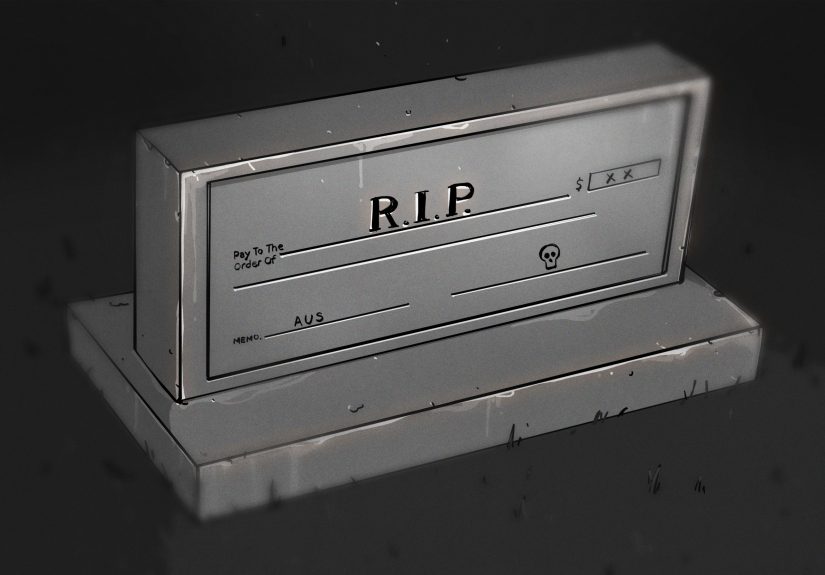
For decades, the cheque was the polite, paper-based middle manager of money. It sat between cash and trust, between a signature and a handshake, between “I owe you” and “the bank says yes.” In Australia, that era is now heading for the exit. The country has committed to winding down its domestic cheques system, with cheque issuance ending by June 30, 2028, and cheque acceptance ending by September 30, 2029. That is not a rumor, a trial balloon, or one of those “coming soon” government phrases that quietly grows cobwebs. It is a real transition with dates, structure, and a growing industry program behind it.
The move reflects a simple reality: Australians have already changed how they pay. Cheques did not die because someone in Canberra woke up and decided paper was unfashionable. They declined because faster bank transfers, online banking, mobile payments, and modern payment rails turned the cheque into the financial equivalent of a fax machine wearing a business tie. Useful once. Familiar to some. But increasingly slow, costly, and awkward in a world that expects money to move at the speed of a thumb tap.
Still, this is not just a technology story. It is a human one. A cheque may be old-fashioned, but for some people it is also familiar, accessible, and deeply built into daily routines. That is why Australia’s shift matters. The country is not just killing off a payment instrument. It is trying to retire an entire habit without leaving older Australians, rural communities, charities, small businesses, and legacy systems stranded at the curb while the digital bus drives away.
Australia’s Long Goodbye to the Cheque
The current transition plan is straightforward on paper, even if the real-world work behind it is anything but simple. By June 30, 2028, Australian financial institutions will stop issuing personal, commercial, government, and bank cheques. Any cheque written after that date will not be accepted for payment. Then, on September 30, 2029, financial institutions will stop accepting all cheques, and the domestic cheques system will close. In plain English: first, no new cheques; then, no more cheque processing at all.
This updated timeline replaced an earlier, more staggered concept for winding down the system. The simplified two-date plan gives businesses, government agencies, banks, and households more time to identify alternatives and move away from cheque-dependent workflows. It also provides a clearer message to the public. One of the big lessons in payment transitions is that confusion is expensive. If half the market thinks cheques are gone and the other half thinks they still work “for now,” everyone loses time, money, and patience.
The dates are also more logical than they first appear. Personal, commercial, and government cheques generally become stale after 15 months. That helps explain why the government set a final acceptance date of September 30, 2029. A cheque written on or before June 30, 2028 would have time to become stale by then, which creates a cleaner legal and operational landing. In other words, the timeline was not pulled from a hat. It was designed to reduce messy overlap.
Why Cheques Faded So Hard
Speed beat sentiment
Cheque use in Australia has collapsed over the past decade. Official and industry sources show a dramatic drop, with cheque payments now accounting for only a tiny share of non-cash retail payments. The decline is not a mystery. Cheques are slow to write, slow to deposit, slow to clear, and unusually manual in a payment environment built for automation. When a modern bank transfer can move funds quickly and a mobile app can confirm a payment in moments, waiting several business days for a cheque to clear starts to feel like mailing a postcard to confirm you received an email.
That speed gap matters for households, but it matters even more for businesses. Cash flow is oxygen for small companies. A payment method that can take days to settle, requires physical handling, and introduces extra operational friction is not just quaint; it is expensive. Australia’s Treasury has noted that the average cost of processing a cheque now exceeds five Australian dollars and that clearing generally takes between three and seven business days. Once usage falls low enough, the math gets ugly fast. The system becomes more expensive per transaction because the fixed infrastructure remains while the volume disappears.
Digital payments got better, cheaper, and less weird
Cheques survived for years because they filled use cases that other tools did not handle elegantly. They were useful when a payer did not have a recipient’s bank details, needed a paper trail, or wanted a familiar formal payment instrument for large or one-off transactions. But digital alternatives improved. Online banking became routine. Mobile banking stopped being a novelty and became muscle memory. Faster payment systems and digital identity checks made electronic transfers more practical for many of the situations that once favored a cheque.
That shift also changed consumer expectations. People no longer ask only whether a payment can be made. They ask whether it can be made now, confirmed now, and tracked now. The cheque increasingly fails all three tests. Nostalgia is powerful, but it is rarely strong enough to beat convenience with a timestamp.
Who Still Uses Cheques, and Why This Is Not a Trivial Change
Older Australians and remote users
The decline in cheque volume does not mean every remaining cheque user is a dinosaur hugging a checkbook out of spite. Some people rely on cheques because they are not comfortable with digital banking, do not trust online transactions, or have limited digital access. Older Australians are frequently mentioned in the transition documents because familiarity matters. So does confidence. A payment method can be technically available and still feel unavailable if the user finds it confusing, unsafe, or humiliating to navigate without help.
Remote and regional communities face a related challenge. The question is not only whether digital alternatives exist, but whether connectivity, branch access, local support, and practical training exist. A transition away from paper works best when it is paired with real assistance, not a cheerful brochure and a shrug.
Charities, clubs, gaming venues, and small businesses
Australia’s official transition materials also point to sectors where cheque use remains more common, including charities, the gaming industry, and small businesses. That makes sense. Organizations with volunteers, legacy accounting practices, or older donor bases often move more slowly than consumers ordering coffee with a phone. A community group might still reimburse members by cheque because that is how its treasurer has done it for fifteen years. A charity may receive donations from supporters who prefer paper because it feels tangible and trustworthy. A small business may use cheques in edge cases where legacy processes have never been redesigned.
These are exactly the cases that tend to look small from a macroeconomic height and very large from up close. A payment reform can be good policy overall while still creating real friction in the last mile. Smart transitions acknowledge both truths at once.
Property, refunds, and one-off high-value payments
Some cheque use has also persisted in specific high-value or formal transactions. Treasury’s consultation work noted their role in areas such as certain property-related payments, while government and business users have continued to rely on them in some refund and settlement scenarios. This is where the phrase “just use a bank transfer” sounds easy until it meets compliance checks, internal approval rules, or a payer that only has a postal address and not account details. Cheques were often a workaround for information gaps as much as payment preference.
The Plan Is Not Just “Good Luck, Everyone”
Australia’s approach is notable because it does not treat cheque retirement as a simple switch-off. The transition plan repeatedly emphasizes communication, education, support, and coordination. The government says impacted users will be supported in moving to alternative payment methods and has also tied the shift to broader efforts around digital inclusion and access to cash. That distinction matters. Ending cheques is not the same thing as ending cash, and policymakers know they cannot sell this transition as modernization if it feels like abandonment.
The plan expects financial institutions to play a central role in helping customers move away from cheques. It also highlights the need for suitable alternatives for all major cheque use cases, reasonable access to branches or Bank@Post-style services during the transition, and targeted support for users most affected by the change. That is the right tone, because a disorderly retreat would be a mess. If banks pulled services at different speeds without coordinated safeguards, some customers could be forced into rushed account changes or left scrambling for payment options before they are ready.
That coordination piece is already becoming more concrete. AusPayNet, the self-regulatory body for the Australian payments industry, is running a formal transition program, and the ACCC has authorized industry collaboration to support the wind-down. That may sound dry, but it is actually one of the most important details in the whole story. Large payment systems do not disappear gracefully on vibes alone. They need governance, migration planning, communications, and clear exit conditions.
The Last-Mile Risks Australia Still Has to Manage
Digital exclusion is not solved by a timeline
The biggest risk is not that Australia cannot build better payment systems. It already has. The bigger risk is that a minority of users will find themselves pushed into tools they do not understand or cannot access comfortably. A clean policy headline can hide a messy lived reality. Someone who has written cheques for twenty years may not merely need a new method. They may need coaching, reassurance, fraud education, and a person at a branch who can explain the steps without sounding like they are late for lunch.
Old paper is not automatically safer paper
There is also a temptation to romanticize the cheque as the safer, slower, more respectable cousin of digital payments. That is not quite true. Payment fraud data show that cheque fraud still exists and can spike sharply even as cheque use falls. Paper is not magic. It can be stolen, altered, counterfeited, or exploited through weak processes. At the same time, moving users online creates new scam and fraud risks, especially for people with limited digital confidence. The lesson is not “paper good, digital bad” or the reverse. The lesson is that payments are only as safe as the support, design, and user education around them.
Forgotten bank cheques could become stranded value
One particularly interesting wrinkle is outstanding bank cheques. Industry data released in late 2025 suggested Australians were still holding millions of bank cheques worth hundreds of millions of dollars, many of them years old. That is a reminder that when a payment method fades, money can get stuck in drawers, folders, glove boxes, and kitchen junk piles that contain three expired batteries, two mystery keys, and at least one warranty no one will ever read again. Public awareness campaigns will matter here. A transition plan is only half a plan if people do not realize they need to act before value goes stale or becomes harder to claim.
What Businesses and Households Should Do Now
For businesses, the first job is boring but essential: map every place where a cheque still appears. Do not assume the answer is obvious. Many organizations think they no longer use cheques until they discover an annual rebate, insurance refund, supplier edge case, or one legacy department quietly keeping the paper torch alive. Once those use cases are identified, the real work is choosing replacements that preserve compliance, proof of payment, internal controls, and customer experience.
For households, the big task is simpler: do not wait until the last minute to figure out alternatives. If a person still receives refunds, reimbursements, or gifts by cheque, now is the time to ask what the replacement method will be. If they are not comfortable with digital payments, they should seek help early from their bank, trusted family members, or community support programs. Panic is a terrible financial planner.
For charities and local organizations, the transition is also an opportunity. Moving away from cheques can improve reconciliation, reduce manual handling, speed up reimbursement, and create cleaner records. That does not make the shift effortless, but it does mean the end of the cheque can be more than a forced goodbye. It can be a chance to modernize systems that were only being kept alive because nobody wanted to be the volunteer who opened that spreadsheet.
What Australia’s Move Really Means
The death of the cheque in Australia is not really about paper. It is about whether a payment system matches the economy it serves. In a country where digital payments dominate, cheque infrastructure increasingly looks like an expensive bridge to a neighborhood most people no longer visit. The government, regulators, banks, and payment networks have decided the bridge is nearing the end of its useful life.
But the smartest part of Australia’s plan is not the deadline. It is the recognition that modernization has to include people, not just technology. A successful transition will not be measured only by how fast paper disappears. It will be measured by whether the people who still depended on it found workable, trusted alternatives without being made to feel foolish, rushed, or invisible. That is the real test. Payments are infrastructure, yes. They are also daily life. And daily life has a way of exposing every weak assumption in a reform plan.
So yes, Australia is moving on. The cheque is heading toward history. But history has a funny way of lingering in desk drawers and accounting habits. The next few years will determine whether Australia simply ends cheques or actually finishes the job well.
Experiences From the End of the Cheque Era
The most interesting part of the cheque phaseout is not the policy memo. It is the lived experience around it. Imagine a retired couple who still receive the occasional rebate or refund by cheque. For them, a cheque is not just paper. It is certainty. One person signs the back, the teller stamps it, and the transaction feels real. Moving that same couple to digital transfers may sound easy to a twenty-five-year-old who can send money while ordering noodles, but the emotional gap is bigger than the technical one. They may worry about pressing the wrong button, sending money to the wrong account, or getting tricked by a scam text dressed up like a bank alert. Their experience of the cheque’s end is not “progress versus nostalgia.” It is trust versus uncertainty.
Now picture the volunteer treasurer at a local sports club or neighborhood charity. She has a metal cash box, a folder of invoices, and an accounting process that has worked well enough for years. A cheque gives her control. It creates a pause between approval and payment. It leaves a paper trail. Switching to digital can absolutely improve the process, but only if the replacement system preserves oversight and is simple enough for volunteers to use without needing a part-time IT department. In that setting, the end of the cheque is less a technology upgrade than an organizational change project wearing sensible shoes.
Then there is the small business owner who occasionally used cheques for unusual supplier payments, refunds, or formal settlements. He may not love cheques, but he understands them. He knows where they sit in the workflow and how to file them. Once he moves to digital alternatives, he may discover that the change is better than expected. Funds land faster. Reconciliation improves. Cash flow becomes easier to manage. Still, the transition period can be frustrating because every old habit has to be found, questioned, and rebuilt. Businesses rarely struggle with the future in theory. They struggle with the Tuesday afternoon version of the future when three people are waiting for a payment and the finance process is half old and half new.
A rural or regional user may feel the change differently again. For them, the question is not whether digital payments are modern. Of course they are. The question is whether support is close enough, connectivity is reliable enough, and banking access is practical enough. If the answer is “usually,” that still may not be good enough. A familiar paper method can feel more dependable than a smart system that sometimes drops out at exactly the wrong moment. That is why access to help, local education, and continued access to cash remain such important parts of the broader conversation.
In the end, the cheque’s disappearance will probably feel unremarkable to many Australians and deeply personal to a smaller group. That is often how payment change works. Most people adapt quickly and move on. Others experience a real sense of dislocation before the benefits become clear. The success of Australia’s transition will depend on whether that second group gets patience, practical alternatives, and enough support to make the new system feel like a doorway instead of a wall.
Conclusion
Australia’s cheques system is not being retired because paper lost a popularity contest. It is being retired because the economics, speed, and structure of modern payments have changed beyond recognition. The real challenge now is not deciding whether cheques belong to the past. That part is settled. The challenge is making sure the path forward is efficient for the digital majority and fair to the people and organizations still catching up. If Australia gets that balance right, the end of the cheque will look less like a funeral and more like a well-managed handoff from one era of money to the next.