Table of Contents >> Show >> Hide
- Why Dale’s Conspiracies Work So Well (Even When They Don’t)
- The 12 Craziest Dale Gribble Conspiracy Theories
- 1) Fidel Castro Stole Dale’s Lawnmower to Make a Submarine
- 2) Dale Isn’t DaleHe’s a Clone From the Future Built for War
- 3) Joseph Is an Extraterrestrial (And Aliens Used Dale’s DNA)
- 4) Peanut Allergies Are Peanuts “Fighting Back” Against Humanity
- 5) The Pyramids Were Originally Built Upside Down
- 6) The USPS and the Red Cross Are Running a “Fatten-and-Harvest” Psyops
- 7) The Super Bowl Was Pre-Taped Six Months Ago in a Nevada Hangar
- 8) Fire Ants Murdered L. Ron Hubbard
- 9) Global Warming Is a Government Plot to Control Earth’s Temperature
- 10) The Army Destroyed Bill’s Brain Cells With a “Deadly Placebo” Drug
- 11) Computers Are Tools of “The Beast” Collecting Data Until They Strike
- 12) There Are Alien Metals in the Soil (So Metal Detectors Are Basically Useless)
- What These Conspiracies Reveal About Dale (and Why Fans Love Him)
- Conclusion
- Reader Experiences: How Dale’s Conspiracies Hit Different on a Rewatch
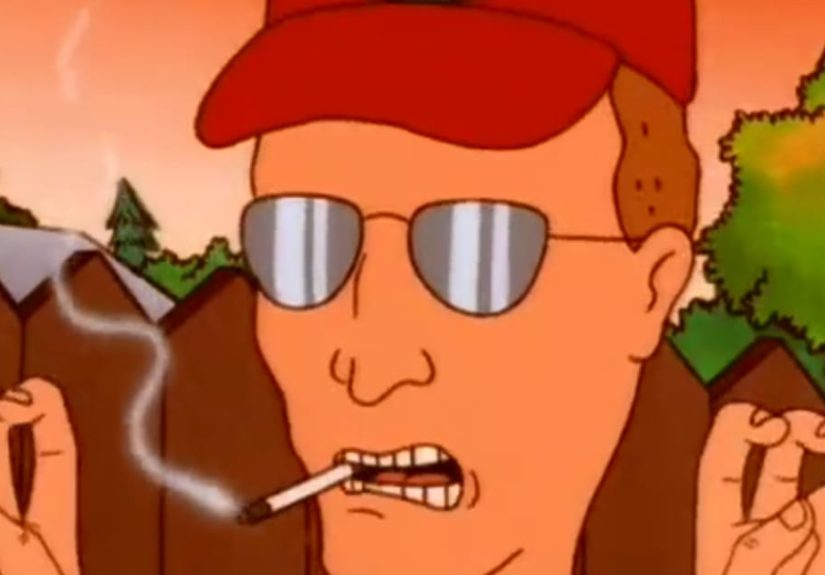
If King of the Hill is a lovingly grilled propane burger, Dale Gribble is the secret sauce that tastes like
equal parts tobacco smoke, government distrust, and whatever’s left at the bottom of a gas-station Slurpee.
Dale’s job is extermination, but his true calling is imagining shadowy forces behind absolutely everything
from weather patterns to peanut allergies to your innocent little metal detector.
What makes Dale’s conspiracies so funny isn’t just the “wow, that’s unhinged” factor. It’s the logic. Dale doesn’t
merely suspect a cover-uphe builds an entire cinematic universe around it, complete with villains,
motives, supply chains, and a cast of invisible bureaucrats who apparently have unlimited free time. Meanwhile, he
misses the one conspiracy sitting on his couch every day. (KoTH is nothing if not consistent.)
Below are twelve of Dale’s wildest conspiracy theorieseach one a perfect snapshot of how King of the Hill
turns paranoia into punchlines, and how Dale turns everyday life in Arlen into a high-stakes thriller… starring
himself, naturally.
Why Dale’s Conspiracies Work So Well (Even When They Don’t)
- They’re specific. Dale doesn’t say “the government is shady.” He says it’s a “psyops campaign,” and he has a flowchart.
- They’re emotional. His theories usually protect his ego, his comfort, or his worldviewespecially when reality gets awkward.
- They’re oddly relatable. Everyone has had that moment of “this can’t be a coincidence.” Dale simply never returns from that moment.
- They fit the KoTH tone. The show plays things straight, so Dale’s nonsense lands even harder against Hank’s grounded normalness.
The 12 Craziest Dale Gribble Conspiracy Theories
1) Fidel Castro Stole Dale’s Lawnmower to Make a Submarine
In “Dog Dale Afternoon”, a simple prank becomes a full-blown international incident in Dale’s mind.
Dale’s beloved riding mower disappears, and rather than consider “my friends are messing with me,” he spirals into
Cold War fan fiction. In Dale’s version of events, Cuban operatives (yes, the serious kind) have seized his mower to
retrofit it into a one-man escape submarine for Fidel Castro.
The comedic beauty here is that Dale treats his lawn equipment like it’s military-grade technology. Hank sees a mower.
Dale sees a classified propulsion system. It’s also peak Dale logic: if something important to him is missing, then it
must be missing for a globally significant reason. Nobody steals his stuff for petty reasons. Not in Arlen.
Not on Dale’s watch.
2) Dale Isn’t DaleHe’s a Clone From the Future Built for War
In “The Incredible Hank”, Dale unveils one of his most cinematic beliefs: he’s not the “original”
Dale Gribble. He’s a clonecreated to assist the real Dale, a future super-warrior, in battling invading armies
sometime around the year 2087 (because why stop at one genre when you can do sci-fi, action, and historical invasion
drama in a single sentence?).
This theory is especially funny because it’s secretly what Dale wants to be: essential, chosen, and destined.
Regular people get up, go to work, and pay bills. Dale believes the universe is running a deluxe storyline that
centers him. It’s less “paranoia” and more “main character syndrome with a tinfoil hat.”
3) Joseph Is an Extraterrestrial (And Aliens Used Dale’s DNA)
In “Of Mice and Little Green Men”, Dale reaches a conclusion that is both wildly wrong and weirdly
insightful: Joseph isn’t biologically his. Hank fears Dale has finally figured out the obvious truth. But Dale doesn’t
land on the obvious truthbecause Dale Gribble doesn’t take the highway when there’s a perfectly good spiral staircase
into madness.
Dale decides Joseph is half-alien. More specifically, Dale believes aliens impregnated Nancy using Dale’s DNA,
creating a cosmic cover story to distract him from discovering “the real truth.” It’s hilarious, but it’s also an
emotional defense mechanism: the alien explanation lets Dale keep loving Joseph without confronting the pain of
betrayal. Dale’s heart stays intact because his brain is busy inventing UFO custody paperwork.
4) Peanut Allergies Are Peanuts “Fighting Back” Against Humanity
In “Naked Ambition”, Dale explains the rise of peanut allergies as the opening act of an
agricultural rebellion. Peanuts, in his view, have evolved a defense mechanism: humans are suddenly allergic because
peanuts are basically launching biological countermeasures.
What makes this one great is how Dale dresses up a complex public-health issue with battlefield language. He turns
a lunchbox problem into a war between species. It also shows Dale’s favorite move: taking a real trend and assigning
it intent. In Dale’s world, nothing is random. Even legumes have a strategy meeting.
5) The Pyramids Were Originally Built Upside Down
In “Texas City Twister”, Dale casually drops a theory that sounds like it was discovered at 2 a.m.
on a forum titled “WAKE UP, SHEEPLE: GEOMETRY EDITION.” Dale suggests the pyramids were once balanced on their points
and later “un-tipped” into their current position.
The punchline isn’t just the absurdityit’s Dale’s confidence. He explains it like he’s reading from a totally normal
instruction manual: a winch, a cinder block, an impossible number of laborers, andboomancient engineering solved.
Dale doesn’t wonder whether it happened; he wonders if anyone has a cinder block handy.
6) The USPS and the Red Cross Are Running a “Fatten-and-Harvest” Psyops
In “Dale to the Chief”, Dale’s frustration with bureaucracy transforms into a horror-comedy conspiracy:
the U.S. Postal Service is allegedly running an elaborate psychological operation to fatten citizens with coupons,
make them docile, and then sell them to the Red Cross for kidney harvestingbecause apparently the final form of
junk mail is organ trafficking.
This is Dale at his most “everything is connected.” He sees a slow-moving system and assumes it’s not incompetence,
but choreography. It’s also classic KoTH satire: Dale’s story is grotesque, but it’s built on a recognizable feeling
everyone has had while waiting in line thinking, “There has to be a reason it’s this bad.”
7) The Super Bowl Was Pre-Taped Six Months Ago in a Nevada Hangar
In “Meet the Manger Babies”, Hank’s sacred Super Bowl party collides with Luanne’s religious puppet
show. Dale, being Dale, tries to “help” by claiming the Super Bowl isn’t live at all. It was pre-taped six months
earlier in the same secret hangar where the moon landing was faked.
The comedy comes from the contrast: Hank is stressed about snacks and seating. Dale is concerned about the logistics
of a hidden sports production facility. He treats a football game like a classified film set, which is Dale’s talent:
he can turn any American ritual into a covert operation. Tailgating? Probably a decoy.
8) Fire Ants Murdered L. Ron Hubbard
In “King of the Ant Hill”, Dale attributes the death of L. Ron Hubbard to a tactical insect
assassinationbecause in Dale’s mind, fire ants aren’t just pests. They’re a coordinated strike force with training,
discipline, and (presumably) little ant-sized earpieces.
This theory is a perfect example of Dale’s “expertise bias.” As an exterminator, Dale knows insects. So he inflates
that knowledge into a worldview where bugs aren’t only a nuisancethey’re an army. It’s funny because it’s so
passionate. Dale talks about ants like they’re a rival intelligence agency. Which, honestly, might be how ants would
prefer to be recognized.
9) Global Warming Is a Government Plot to Control Earth’s Temperature
Right out of the gate in the pilot episode, Dale frames environmental controls as a deliberate plan
to manipulate the planet’s warmthbecause clearly the government’s endgame is… controlling agriculture so oranges can’t
be grown in Alaska (Dale’s brain is a fascinating place).
What’s striking here is how early the show establishes Dale’s defining trait: he distrusts institutions by default,
and he interprets technology as a leash. Even a truck’s emissions system becomes evidence of a global thermostat plot.
It’s also a nice KoTH trick: introduce Dale as “the conspiracy guy,” then let his imagination do the heavy lifting for
thirteen seasons.
10) The Army Destroyed Bill’s Brain Cells With a “Deadly Placebo” Drug
In “Tankin’ It to the Streets”, Dale convinces Bill that the military used him as a guinea pig for
an experimental drug. Dale calls it a “placebo,” treating the word like it’s the name of a top-secret chemical that
melts brain cells and keeps soldiers obedient.
This theory is funny on two levels: first, Dale’s misunderstanding of basic terms; second, his emotional manipulation.
Bill is vulnerable, and Dale’s narrative offers him a comforting villain: it’s not your choices, Billit’s a plot.
KoTH often highlights how conspiracies can be appealing because they offer a clean explanation for messy life problems.
Dale is wrong, but the temptation is real.
11) Computers Are Tools of “The Beast” Collecting Data Until They Strike
In “Hank’s Dirty Laundry”, Hank is mistakenly billed for an adult movie due to a computer/records
issue, and Dale immediately assumes the machine is not “wrong”it’s purposeful. In Dale’s mind, computers are
collecting information, building a database, and waiting for “The Beast” to activate their full power.
This one feels surprisingly modern because it taps into a real anxiety: data collection, surveillance, and systems
that know too much. Dale just cranks that anxiety up to maximum and adds apocalyptic flair. He doesn’t say “privacy
concerns.” He says “The Beast,” like your desktop PC is about to grow horns and demand your Social Security number.
12) There Are Alien Metals in the Soil (So Metal Detectors Are Basically Useless)
In “Not in My Back Hoe”, Dale scoffs at metal detectors and claims they’d be ringing nonstop due to
extraterrestrial alloys buried in the ground. According to Dale, these metals act like a beacon to a Martian capital
citybecause naturally the soil is basically an interplanetary GPS signal.
This theory is peak Dale because it turns a boring object (a metal detector) into proof of cosmic interference.
It’s also classic “Dale logic”: if a tool doesn’t work perfectly in his hands, it must be because reality is far
stranger than advertised. The only alternative would be that Dale is wrongand Dale Gribble does not file paperwork
in that department.
What These Conspiracies Reveal About Dale (and Why Fans Love Him)
Dale’s conspiracies aren’t just random jokesthey’re character-building. He’s anxious, proud, and deeply committed
to feeling prepared for a world he doesn’t trust. His theories give him a sense of control: if there’s a puppet master,
then chaos has a shape. If the world is a plot, then Dale can “solve” it (or at least shout about it in the alley).
And KoTH never treats Dale like a cartoon villain. He’s loyal to his friends, he adores Joseph, and he’s oddly sincere.
That sincerity is why the conspiracies land. Dale isn’t winking at the camerahe believes. Hank is the straight man,
Arlen is the stage, and Dale is the guy insisting the stage is actually a trapdoor built by a secret committee.
Conclusion
Dale Gribble’s greatest gift to King of the Hill is that he makes ordinary life feel like an espionage thriller
without the show ever changing its calm, suburban tone. A missing lawnmower becomes geopolitics. A peanut allergy becomes
evolutionary warfare. A computer error becomes a prophecy. Dale doesn’t just suspect conspiracieshe commits.
If you’re rewatching KoTH, these twelve theories are a perfect “Dale starter pack.” They capture everything that makes
him iconic: the paranoia, the confidence, the accidental insight, and the way he can turn a casual chat into a fever-dream
documentary. Just remember: in Arlen, Texas, the truth is usually simple… and Dale will still find a way to blame aliens.
Reader Experiences: How Dale’s Conspiracies Hit Different on a Rewatch
Watching Dale Gribble in 2025 (or any modern year where your phone knows your location better than you do) can feel like
time travel. On a first watch, Dale’s conspiracies are mostly “ha-ha, this guy is ridiculous.” On a rewatch, you start
noticing something funnier: Dale isn’t always reacting to nothing. He’s reacting to the vibe of living in a world
full of systems you can’t see and rules nobody explains. He just responds to that vibe by sprinting directly into the
conspiracy canyon and planting a flag that says, “I CALLED IT.”
A lot of fans describe a specific KoTH ritual: you put on an episode “for background,” and suddenly you’re paying full
attention because Dale has casually accused a household object of being part of a covert operation. The best part is how
the show doesn’t pause to underline the joke. Hank will respond with a flat “Dale,” like he’s scolding a dog that brought
a dead squirrel into the kitchen. That understated reaction is what makes it feel like you’re sitting in the alley with
thembeer in handwatching Dale turn everyday frustration into a five-act conspiracy.
If you binge these episodes back-to-back, you might notice the “Dale pattern.” Step one: something small goes wrong.
Step two: Dale assigns it a powerful enemy (government, aliens, insects, computers, legumes). Step three: he adds a motive
that somehow involves controlcontrol of people, food, freedom, or information. Step four: he delivers the conclusion like
a man presenting evidence to a jury, even if the “evidence” is basically vibes and a misunderstanding of the word “placebo.”
By the end, you realize the conspiracies aren’t just jokesthey’re Dale’s coping mechanism with a cowboy hat and a pack of cigarettes.
Fans also tend to “collect” Dale moments the way sports fans collect stats. There’s a certain joy in recognizing the
recurring themes: secret hangars in Nevada, mysterious committees, coded messages, shadowy agencies, and aliens with
surprisingly efficient reproductive technology. It becomes a gamealmost like a “Dale Bingo” cardwhere you predict the
next leap in logic. Will this problem be solved by blaming the government? By blaming aliens? By blaming an insect militia?
You’re not just watching; you’re participating.
And then there’s the social side. KoTH fans love quoting Dale because his lines feel like they were engineered for group
chats. Even without repeating exact quotes, you can feel the rhythm: absolute certainty, unnecessary detail, and a
conclusion that makes you laugh before you can question it. That’s why Dale clips travel so well online. His conspiracies
are short, punchy, and weirdly modularperfect for memes, reactions, and “me explaining why the printer jam is a psyops.”
If you want a rewatch experience that’s both funny and oddly thoughtful, try this: after each conspiracy, ask yourself
what Dale is protecting. Sometimes it’s pride (the mower can’t just be stolenit must be stolen by history). Sometimes it’s
fear (computers can’t just be flawedthey must be dangerous). Sometimes it’s love (Joseph isn’t Dale’s biologically, but
Dale’s heart refuses to let that mean what it means). Suddenly, the conspiracies become more than punchlines. They’re
Dale’s way of staying brave in a world that makes him feel small.
Of course, you should still laugh. This is Dale Gribble. The man could watch a leaf fall and accuse it of espionage.
But that’s the magic: KoTH lets you enjoy the absurdity while still seeing the humanity underneath it. On a rewatch, Dale
isn’t just “the crazy neighbor.” He’s a messy, loyal, panicky, hilarious guy doing his bestwhile accusing peanuts of
starting a war.