Table of Contents >> Show >> Hide
- Why Silk Batik Paintings Feel So Powerful
- Materials: Your “Yes, I’m Doing Batik” Starter Kit
- Designing for Impact: Think Like a Director, Not a Decorator
- Step-by-Step: The Silk Batik Painting Process
- Fixing the Color: Make It Stay Put
- Removing Wax: The “How Do I Undo My Own Decisions?” Phase
- Finishing Your Silk Batik Painting for the Wall
- Troubleshooting: Common Batik Drama (and How to Calm It Down)
- Advanced Moves for Serious Visual Punch
- Artist Experiences: What It’s Really Like to Build a Powerful Silk Batik Painting
- Conclusion: Make the Silk Do What You Mean
- SEO Tags
Silk batik is what happens when “painting” and “textile alchemy” shake hands, wink, and then immediately get into a friendly argument about who’s in charge. You’re not just applying coloryou’re orchestrating it. Wax says, “Not here.” Dye says, “Oh yeah? Watch me.” And silksilk just sits there looking expensive.
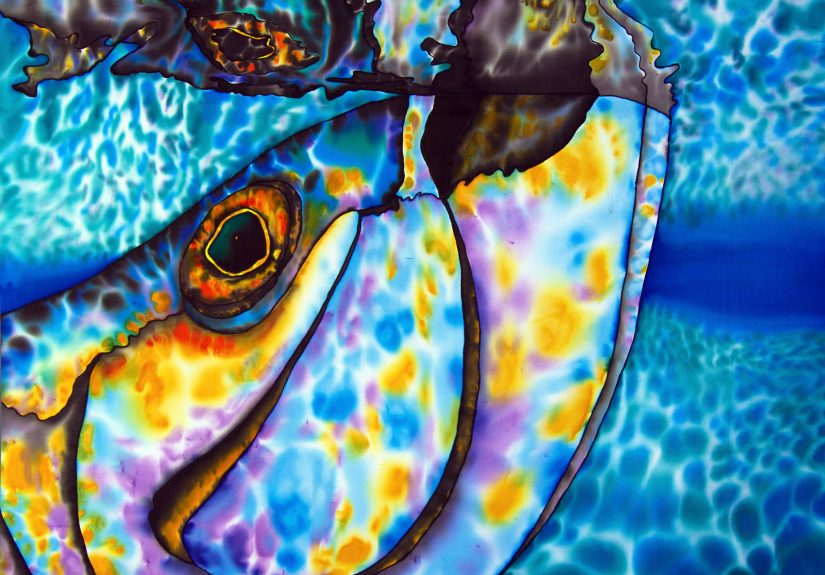
The result can be shockingly bold: luminous color, razor-sharp negative space, and those signature crackle veins that look like lightning trapped inside fabric. If you’ve ever wanted your art to feel alivelike it might climb off the wall and ask for better lightingsilk batik is your medium.
Why Silk Batik Paintings Feel So Powerful
A “powerful painting” isn’t just bright or dramatic. It’s a piece that controls attention: it leads the eye, creates tension, and leaves the viewer with something to chew on (metaphoricallyplease don’t chew your silk). Silk batik delivers power in three unique ways:
- Light-play: Silk reflects and diffuses color differently than canvas, making hues look deeper and more dimensional.
- Negative space with authority: Wax-resist lets you preserve crisp highlights and shapeslike drawing with absence.
- Texture without thick paint: Crackle and layered resists add visual texture while keeping the surface elegant and weightless.
Materials: Your “Yes, I’m Doing Batik” Starter Kit
You can start simple and upgrade as you fall in love (which you will, right after you stop accidentally waxing your gloves to your tools).
Silk choices that behave well
- Habotai (China silk): smooth, friendly, great for beginners and crisp lines.
- Pongee: slightly more texture; lovely for painterly effects.
- Charmeuse: gorgeous sheen, but it’s slipperylike painting on a dramatic fish.
Resist tools
- Hot wax: the classic batik approach (beeswax/paraffin blends are common).
- Tjanting/canting: a pen-like wax tool for fine lines and controlled “drawing.”
- Natural bristle brushes: for bolder wax strokes and expressive marks.
- Optional: gutta resist: not wax, but useful for linework when you want clean boundaries without heat.
Color options
- Steam-set silk dyes: prized for rich, permanent color on silk.
- Iron/heat-set flowable fabric paints: easier setup, great for studio convenience.
- Fiber reactive dyes: commonly used for batik on fabric; many artists also use them on silk with careful process control.
Safety and setup (the “keep your eyebrows” section)
- Use electric heat with temperature control for waxavoid open flames.
- Ventilation matters. Hot wax can smoke if overheated.
- Wear gloves, protect surfaces, and keep dye tools separate from anything food-related.
- If working with dye powders, use a dust mask/respirator to avoid inhaling fine particles.
Designing for Impact: Think Like a Director, Not a Decorator
Powerful batik paintings don’t happen by accident (even though the “happy accidents” are often the best part). Before you touch wax, decide what your artwork needs to say.
Three composition tricks that translate beautifully to silk
- Big shape + small detail: a bold silhouette (mountain, koi, profile, leaf) anchored by delicate wax linework.
- High-contrast focal point: reserve your lightest lights with wax early, then build darker color around them.
- Directional energy: use crackle, flowing dye gradients, and repeated lines to “aim” the viewer’s eye.
A quick example: The “Storm-Lit Lighthouse” plan
- Wax the lighthouse shape and a few bright wave crests.
- Dye the sky in layered indigo-to-slate gradients.
- Introduce crackle in the storm clouds for electric tension.
- Add a warm glow near the lighthouse beam for emotional contrast.
Step-by-Step: The Silk Batik Painting Process
There are many valid workflows, but this one is reliable and easy to scale from “small study” to “gallery wall piece.”
1) Prep the silk (so it stops fighting you)
Wash or scour your silk if needed to remove finishes that can block dye absorption. Let it dry, then stretch it taut on a frame or pin it so the surface stays flat. Tension matters: loose silk encourages dye to pool and boundaries to drift.
2) Transfer your design lightly
Use a soft pencil or a disappearing fabric marker. Keep it faintyour wax lines and color should be the star, not a graphite cameo.
3) Melt and manage wax temperature
Wax should be hot enough to penetrate the silk (so it resists dye effectively) but not so hot that it spreads uncontrollably or smokes. If your lines look pale and sit on the surface, the wax is too cool. If lines widen like they’re trying to become abstract rivers, you’ve gone too hot.
4) Apply wax with intention (and a little swagger)
- For crisp linework: use a tjanting/canting. Keep a steady hand and let the tool do the work.
- For bold mark-making: brush wax as if you’re painting with invisible paint.
- For pattern power: stamp wax textures (simple foam or carved blocks can create repeating motifs).
Tip: check the back sideif wax hasn’t penetrated, dye can sneak underneath and blur your edges.
5) Add color (two main approaches)
Approach A: “Painted batik” (best for wall-art control)
Apply dye/paint by brush in sections. Wax acts like a fence, allowing you to build gradients, glazes, and controlled color transitions. This is how you get painterly skies, glowing petals, and portraits that feel intentional rather than “tie-dye adjacent.”
Approach B: Dye baths (best for bold, graphic layers)
Dip the silk into a dye bath for large, even fields of color. Once dyed and dried, add more wax to preserve that layer, then dye again in a darker (or different) color. This layering is where batik becomes a strategic game of “protect and reveal.”
6) Layering: The secret sauce for depth
Think in stageslike printmaking, but with silk drama:
- Stage 1 (lights): wax anything you want to stay bright or untouched.
- Stage 2 (mid-tones): add color, then wax parts you want to preserve as mid-values.
- Stage 3 (darks): deepen shadows, intensify backgrounds, and add contrast for punch.
7) Crackle effects: Controlled chaos you can brag about
Crackle is that signature batik webbing. To encourage it, gently crumple or flex waxed areas so micro-cracks form, then apply darker dye over the surface. The dye seeps into the cracks, creating lines that look like veins, lightning, or ancient map pathsdepending on your mood and playlist.
Fixing the Color: Make It Stay Put
This part matters if you want your painting to remain vibrant instead of becoming a “temporary concept piece about fading.” Your fixing method depends on the color product you used:
- Steam-set dyes: typically require steaming to bond color permanently into the fiber.
- Heat-set paints: often set with an iron once fully dry.
- Chemical/immersion fixation: some dye systems allow alternative fixativesfollow the manufacturer’s directions for your specific product line.
Steaming time can vary widely based on dye type, fabric weight, and how saturated your painting is. Always follow the guidance for your materialssilk is fancy, but it’s not psychic.
Removing Wax: The “How Do I Undo My Own Decisions?” Phase
Wax removal is where batik shifts from mystical to practical. Common methods include:
- Boil-out: simmering in water with a bit of detergent so wax floats to the top (use a dedicated pot).
- Iron-and-paper: sandwich the silk between absorbent paper and iron to draw wax out.
Choose the method that fits your setup and your tolerance for cleaning. If you want a professional finish, aim for a clean hand-feel and minimal residueespecially for framed wall art where light can reveal subtle wax haze.
Finishing Your Silk Batik Painting for the Wall
A powerful batik painting deserves a strong finish. Here are a few display options that make silk look intentional (not accidental).
1) Float-mount with a backing
Mount the silk over acid-free backing so it “floats” inside a frame. This highlights the fabric’s texture and keeps the piece looking airy and modern.
2) Stretch on bars like a canvas
If the silk is heavier (or backed), you can stretch it like a painting. It looks bold and contemporaryespecially for abstract or large-scale designs.
3) Hang as textile art
A simple dowel/rod at the top (and sometimes bottom) turns your painting into a tapestry-style wall piece. Great for pieces that lean into the textile identity.
Care tips
- Keep out of direct, harsh sunlight if possibleUV is not an art critic, it’s a thief.
- Make sure dyes are fully fixed and the piece is clean before framing to avoid ghosting or transfer.
Troubleshooting: Common Batik Drama (and How to Calm It Down)
Dye bleeding past wax lines
- Wax didn’t penetrate fully (check the back and re-wax).
- Resist line had gaps (slow down and overlap starts/ends).
- Silk wasn’t taut (tension helps control flow).
Wax lines too thick or blobby
- Wax too hot or tool held too long in one spot.
- Tjanting angle too steep (practice on scraps first).
Colors look dull
- Under-fixing (steam/heat time insufficient for your materials).
- Too much layering without value planning (your brights got buried).
- Fabric not properly prepped (finishes can block dye uptake).
Advanced Moves for Serious Visual Punch
Negative painting
Instead of painting the subject, wax it and build the world around it. This is a fast track to dramatic silhouettes: cranes, trees, faces, city skylinesanything that reads in shape.
Intentional limited palettes
Pick 2–3 core hues plus one surprise accent. For example: indigo + sepia + soft gray, then a single pop of warm gold. Limitation creates coherence, and coherence reads as “power.”
Texture choreography
Use crackle selectively. If everything crackles, nothing crackles. Place it where you want tension: storm clouds, background shadows, or around a focal point like a halo of energy.
Artist Experiences: What It’s Really Like to Build a Powerful Silk Batik Painting
The first “experience” most artists have with silk batik is realizing that wax has a personalityand it’s not always the calm, agreeable type. In workshops and studios, a common moment happens about ten minutes in: you lay down your first confident wax line, feel like a genius, and then notice it’s sitting on top of the silk like a little candle drip that forgot its job. That’s when you learn the golden rule: wax must penetrate, not decorate. The fix is usually simpleadjust temperature, slow your stroke, and let the wax flow consistently. The lesson is bigger: silk batik rewards calm, not force.
Another shared studio experience is the “control vs. surprise” tug-of-war. Beginners often aim for perfect borders, perfect fills, perfect everything. Then dye spreads faster than expected, or a crackle blooms in a place you didn’t plan, or a gradient melts into something better than your sketch. Seasoned batik artists don’t fight these surprises; they curate them. They’ll tell you that powerful work often comes from guiding accidents, not eliminating them. A tiny dye bloom can become atmosphere in a landscape. A stray wax dot can become a constellation. Even an uneven wash can suggest wind, fog, or motion. The emotional shiftfrom “Oh no” to “Wait, that’s cool”is one of the most valuable experiences silk batik teaches.
Many artists also describe batik as strangely meditative. There’s a rhythm to it: wax, cool, dye, dry, wax again. Your brain starts thinking in layers and values instead of single strokes. You plan highlights early. You protect mid-tones like they’re precious (because they are). You delay gratification because the final image doesn’t fully reveal itself until wax comes out at the end. That delayed reveal creates a very specific kind of studio suspense. People sometimes compare it to printmaking: you can’t see the “final” until the process is complete, so you learn to trust your steps.
Then there’s the experience of scale. A small silk study can feel like doodling with dyequick, playful, low-stakes. But as pieces get larger, the process becomes performative. You need space to stretch silk, room to move around a frame, and a strategy for keeping dye edges clean. Artists often start staging their workflow like a kitchen line: wax station, color station, drying zone, steaming/setting plan. It sounds fussy, but it’s actually freeingorganization lets you focus on artistic decisions rather than chasing dripping tools across the table like a cartoon.
Finally, one of the most meaningful experiences artists report is how batik changes their relationship with “brightness.” On canvas, you can always repaint a highlight. On silk batik, the brightest highlights are often the areas you preserved from the beginning. That makes light feel intentionalearned. Powerful batik paintings often have a confident hierarchy of light: a preserved glow in a flower petal, a clean rim light on a face, a sharp wave crest in an ocean. When viewers respond strongly to a silk batik piece, they’re often reacting to that clarity: the art knows what matters, and it built the whole world to prove it.
Conclusion: Make the Silk Do What You Mean
Creating powerful paintings using silk batik is equal parts technique and taste. The technique gives you toolsresist lines, preserved highlights, crackle, and layering. Taste tells you where to place contrast, how to pace detail, and when to let the silk glow instead of shouting over it.
Start with a simple design, commit to strong values, and treat wax like a strategic partner (a partner who occasionally drips). With a few rounds of practice, you’ll stop “trying batik” and start directing batikbuilding paintings that look luminous, intentional, and emotionally loud in the best way.