Table of Contents >> Show >> Hide
- The Return of the Classic Butter Churn
- Meet Churncraft: A Modern Classic with Serious Design Cred
- Design Details: Built to Last and Made to Be Seen
- How the Churncraft Butter Churn Works
- Why Homemade Butter Still Matters
- Churncraft vs. Other Ways of Making Butter
- Tips for Getting the Best Butter from Your Churncraft
- Displaying and Caring for Your Churncraft Butter Churn
- Real-World Experiences with Churncraft and Classic Butter Churns
- Conclusion: A Bridge Between Past and Future in Your Kitchen
Somewhere between the rise of plant-based “buttery spreads” and the era of smart fridges,
the humble butter churn quietly slipped out of most American kitchens. But lately, butter
itself has been having a comebackhome bakers, homesteaders, and curious food lovers are
rediscovering how satisfying it is to turn simple cream into golden, spreadable magic. Enter
the Churncraft butter churn: a beautifully engineered update of the classic hand-crank churn
that looks like it stepped out of a design magazine and straight onto your countertop.
Originally featured by Remodelista, Churncraft is part kitchen tool, part heirloom, and part
conversation starter. It takes everything people loved about traditional butter churnsthe
ritual, the control, the connection to real foodand pairs it with modern design, durable
materials, and user-friendly engineering. If you’ve ever wanted to make your own butter but
didn’t love the idea of shaking a jar for 20 minutes, this updated churn might be your new
favorite gadget.
The Return of the Classic Butter Churn
Butter churning is ancient history in the best way. Early churns were simple wooden or
earthenware containers with a vertical “dasher” that you pumped up and down by hand. Later
came barrel churns and hand-crank churns with internal paddles, which made the job easier
and faster. For centuries, this was just normal kitchen work, especially on farms where cream
was plentiful and nothing went to waste.
Industrialization and refrigeration changed all that. Store-bought butter became cheap, reliable,
and widely available. Most households gladly retired their churns to the attic, the barn, or
the antiques market. Today you’re more likely to see a vintage butter churn used as rustic
farmhouse décor than as a working tool.
But the modern food movement has brought churns back into the spotlight. People want fewer
additives, better flavor, and more control over what they eat. Food writers and baking sites
now regularly publish guides to homemade butter using everything from stand mixers and blenders
to old-fashioned churns. The idea of taking one ingredientgood creamand turning it into
something rich, fresh, and deeply satisfying feels both nostalgic and very now.
Meet Churncraft: A Modern Classic with Serious Design Cred
Churncraft was created to bring a high-quality, beautifully made churn back to the American
market. Instead of trying to reinvent the wheel (or the paddle, in this case), the designers
focused on updating the classic hand-crank churn with better materials, smoother mechanics,
and a clean, modern look that still nods to tradition.
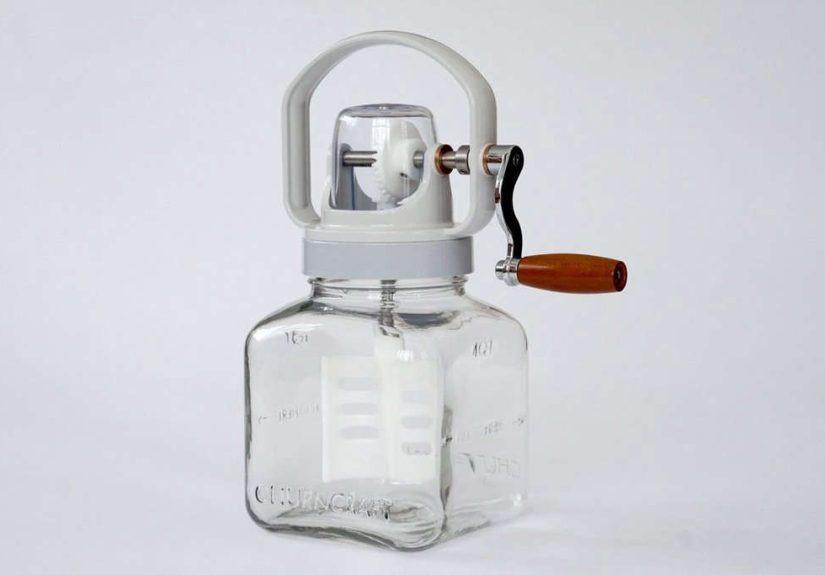
The churn is built around a large, clear glass jar that holds about four quarts. That’s
enough capacity to churn roughly two quarts of cream into a generous batch of butter and
buttermilkperfect for serious bakers, brunch enthusiasts, or anyone who loves the idea
of batch-making butter to freeze, gift, or flavor in different ways.
On top of the jar sits a robust cast-metal frame with a hand crank and internal paddles.
The frame is fitted with stainless steel shafts, bronze bushings, and precision gears,
so the motion stays smooth and controlled even as the cream thickens. A wooden handle
adds warmth and a tactile feel that makes churning surprisingly pleasant instead of a chore.
The overall impression is of a tool designed to last: solid, repairable, and meant to be
passed down, not tossed out.
Design Details: Built to Last and Made to Be Seen
Churncraft isn’t a gadget you hide in a cabinet. It’s intentionally handsome. The combination
of thick glass, metal, and wood feels more like a piece of small-scale industrial art than
a novelty kitchen tool. It has even received international design recognition, showing that
the world still cares about well-made, analog objects in a digital age.
Beyond looks, the design is practical:
- Clear glass jar: Lets you watch each stage of the process, from liquid cream to whipped cream to clumps of butter and buttermilk. It’s both educational and oddly mesmerizing.
- Comfortable hand crank: The gearing ratio makes it easier to churn for several minutes at a time without feeling like an arm workout video.
- Removable paddle assembly: The paddle and top mechanism can be taken apart for cleaning, which is essential when you’re dealing with dairy fat.
- Compact footprint: The churn is tall rather than wide, so it fits neatly on a countertop, open shelf, or in a pantry.
The result is a butter churn that fits right into modern interiorsfrom minimalist white
kitchens to cozy cottage-style spaces. It subtly reinforces the idea that everyday tools
can be both useful and beautiful.
How the Churncraft Butter Churn Works
At its core, Churncraft works the same way churns have always worked: you agitate cream until
the fat molecules separate from the liquid and cling together as butter. The difference is how
controlled and efficient the process feels.
Step-by-Step: From Cream to Butter
- Start with good cream. For the best butter, use high-quality heavy cream with a higher fat percentage. Many butter enthusiasts prefer grass-fed or local cream for richer flavor.
- Bring it to the right temperature. Room-temperature cream (around the mid-60s °F) churns faster and more consistently. Ice-cold cream will take longer and can be frustrating.
- Fill the jar to the marked level. Overfilling makes it harder for the paddles to move freely. Churncraft’s jar has a recommended fill line to keep things efficient.
- Crank, don’t sprint. Turn the handle at a steady, moderate pace. You’ll first see the cream thicken into something like whipped cream, then start to look grainy and curdled as the fat separates.
- Watch for the break. At a certain point, the churn gets harder to turnand then suddenly easier as the butter clumps up and the buttermilk releases.
- Drain and wash. Pour off the buttermilk (save it for pancakes or biscuits), then rinse the butter with cold water to wash out remaining buttermilk so it keeps better.
- Salt and shape. Knead in salt if desired, shape the butter into blocks or balls, and chill. Congratulations, you’ve just made butter the old-fashioned new-fashioned way.
Total active time is usually in the 10–20 minute range, depending on cream temperature,
fat content, and how enthusiastically you crank. It’s long enough to feel involved, but
not so long that you regret your life choices.
Why Homemade Butter Still Matters
You might be wondering: if supermarket butter is cheap and convenient, why bother? For many
people, the answer is flavor first. Fresh-churned butter tends to taste sweeter, creamier,
and more nuanced than mass-produced sticks that may have been sitting in cold storage for
weeks or months.
With a churn like Churncraft, you also control:
- Ingredients: Just cream and optional salt. No coloring agents, stabilizers, or mystery “natural flavors.”
- Fat content: You can tailor the butter’s richness by choosing different creams.
- Flavors: Fold in herbs, citrus zest, smoked salt, roasted garlic, or honey for compound butters that feel special but are easy to make.
- Provenance: If you care where your food comes from, churning lets you highlight local dairies and support regional producers.
There’s also the experience itself. Making butter is tactile, visual, and a little bit magical.
It’s a great way to get kids (or skeptical adults) curious about how food is made. Instead
of “butter just comes from the store,” you get to say, “We made this at the kitchen table
in under half an hour.”
Churncraft vs. Other Ways of Making Butter
The internet is packed with DIY butter methods: shake it in a mason jar, whip it in a stand
mixer, blitz it in a blender, or use a small countertop churn. All of these work, but they
feel different in practice.
Mason Jar Method
The jar method is charming and low-tech: fill a jar halfway with cream and shake until your
arms fall off. It’s ideal for very small batches and for classroom demos, but it’s tiring and
inconsistent for larger quantities. It’s also hard to see what’s happening inside, especially
as condensation forms.
Stand Mixer or Blender
These appliances get the job done quickly and are perfect if you already own them. The downside
is that they can be noisy, messy, and a bit disconnected from the traditional experience.
You’re really just watching a machine do the work for you, which is efficient but not exactly
romantic. They also require careful monitoring so you don’t overprocess and splash buttermilk
everywhere.
Dedicated Modern Churns
Smaller modern churns, like jar-style manual churners, are popular among home bakers and
homesteaders. Churncraft falls squarely into this categorybut it occupies the higher end
with its larger capacity, substantial construction, and design-forward aesthetic. It’s for
people who know they’ll use a churn regularly and want something that feels like a permanent
fixture, not a temporary gadget.
Tips for Getting the Best Butter from Your Churncraft
If you’re going to invest in a premium churn, you’ll want premium results. A few practical
tips can make the difference between “nice” and “wow”:
- Use the best cream you can find. Higher-fat, minimally processed cream tends to produce butter with better flavor and texture.
- Mind the temperature. Slightly cool room temperature works best. Too cold and you’ll churn forever; too warm and the fat can become greasy.
- Don’t rush the rinse. Washing the butter with cold water until it runs clear dramatically improves shelf life and flavor.
- Experiment with salt levels. Start with a small amount, taste, and adjust. Many people prefer slightly less salt in homemade butter than in store-bought versions.
- Try small flavored batches. Divide a batch into portions and flavor each differentlyherb butter for steak, honey butter for cornbread, garlic butter for toast.
Displaying and Caring for Your Churncraft Butter Churn
Because Churncraft is both functional and attractive, it doesn’t need to be hidden away.
Many owners keep it on an open shelf, a farmhouse-style island, or a countertop corner near
their baking station. It naturally complements wooden cutting boards, stone counters, and
simple ceramics.
Caring for it is straightforward:
- Rinse and wash the jar and paddles promptly after use so dairy residue doesn’t dry and harden.
- Use non-abrasive brushes or sponges to protect the glass and metal finish.
- Dry thoroughly to prevent water spots and keep the metal components looking their best.
- Occasionally check moving parts to ensure everything is turning smoothly.
With basic care, the churn should last for years, if not generationsvery much in line with
its heritage-inspired design philosophy.
Real-World Experiences with Churncraft and Classic Butter Churns
Beyond specs and history, what really sells a tool like Churncraft is the way it fits into
daily life. Talk to people who’ve used hand-crank churnsboth vintage and modernand a few
themes pop up again and again: connection, ritual, and surprisingly strong opinions about
toast.
A Weeknight Butter Epiphany
Imagine this: it’s a weeknight, and you’re making a simple pasta with fresh herbs and lemon.
You pour cream into the Churncraft, start cranking while water boils, and in under 20 minutes
you have a small mound of fresh butter. Half of it gets tossed with hot pasta, grated cheese,
and herbs; the rest goes into the fridge for tomorrow’s breakfast. The process adds only a
little time to dinner, but it changes how the meal feelsless like “throw something together”
and more like a small ritual of care.
People who adopt churns like this often talk about how it shifts their mindset. Instead of
defaulting to convenience foods, they’re more likely to ask, “Could I make this myself?”
Butter becomes not just an ingredient, but something you craft, tweak, and actually taste.
Teaching Kids Where Food Really Comes From
Churncraft also fits neatly into a family kitchen. Kids who would never sit still for a
lecture on food systems will happily argue over who gets to turn the crank. Watching cream
transformvisibly and tangiblymakes a powerful point about whole foods and basic ingredients.
Parents sometimes turn churning into a mini science lesson: What happens when we agitate
fat molecules? What’s the difference between buttermilk and cream? Why does temperature
matter? It’s hands-on, messy in a controlled way, and ends with warm bread and butter,
which is basically the ultimate incentive to pay attention.
From Farmhouse Décor to Daily Tool
For some people, the journey to Churncraft starts with a vintage churn picked up at a flea
market. They buy it as décor, then get curious and try to restore it. Sometimes that works
beautifully; sometimes, old gears and fragile glass make real use risky. A modern churn like
Churncraft scratches the same itcha visible symbol of traditional foodwaysbut with food-safe
materials and reliable engineering.
Owners often describe their churn as an “anchor” in the kitchen, a constant reminder to slow
down and enjoy the process. It’s not something you use every day like a knife or pan, but when
you do pull it out, it turns an ordinary meal into an event.
Lessons from Experienced Churners
People who’ve churned butter for years, whether with Churncraft or other classic churns,
tend to offer similar advice:
- Don’t chase perfection. Your first batch might be too soft, too firm, or not salted enough. That’s normal. Butter is forgiving, and every batch teaches you something.
- Use the whole process. Don’t treat buttermilk as wasteuse it in pancakes, biscuits, fried chicken brines, or quick breads.
- Make it social. Churning is more fun with a helper. Trade off turns, put on music, and let it become part of your hosting routine for brunches or dinner parties.
- Respect the tool. A well-built churn deserves the same care you’d give a favorite cast-iron pan or chef’s knife. Keep it clean, dry, and ready for the next inspiration.
The common thread in these stories is that Churncraftand classic churns in generalreconnect
people with the simple pleasure of making something from scratch. It’s not about replacing
every stick of store-bought butter in your life. It’s about having the option, and about
savoring the process as much as the result.
Conclusion: A Bridge Between Past and Future in Your Kitchen
Churncraft: The Classic Butter Churn Updated isn’t just a pretty object Remodelista readers
swoon over. It’s a thoughtfully engineered tool that honors traditional butter making while
fitting seamlessly into modern kitchens and lifestyles. With its sturdy construction, generous
capacity, and design-forward look, it invites you to slow down, roll up your sleeves, and
take part in a deeply satisfying culinary ritual.
Whether you’re a serious home baker, a weekend homesteader, a design lover, or simply someone
who wants to taste what truly fresh butter is like, Churncraft offers a compelling way to
bring old-school craft back into everyday life. One crank at a time, it turns cream into
butterand your kitchen into a place where heritage and innovation coexist in the most
delicious way possible.