Table of Contents >> Show >> Hide
- What the “Check Fuel Cap” Message Actually Means
- Top Causes of a Check Fuel Cap Light on a Honda Accord
- Fast Fix Checklist (5–10 Minutes) You Can Do in Your Driveway
- How Long Until the Light Goes Away?
- When It’s Probably Not the Cap (And What to Do Next)
- Is It Safe to Drive With the Check Fuel Cap Light On?
- Typical Repair Costs (Ballpark, Not a Crystal Ball)
- Preventing the Check Fuel Cap Light From Coming Back
- Real-World Experiences (): What This Looks Like in Actual Honda Accord Life
- Conclusion
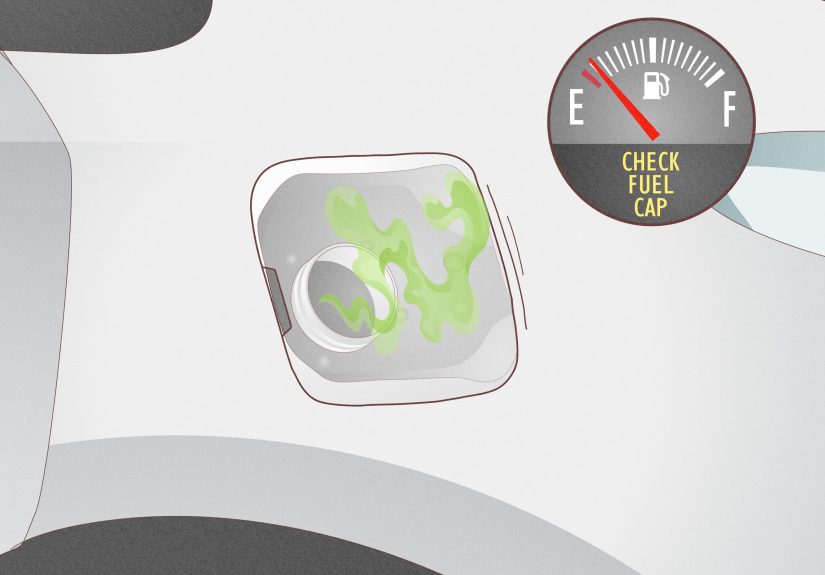
Your Honda Accord flashing “CHECK FUEL CAP” can feel like your car is scolding you in all caps.
The good news: most of the time, it’s not a catastrophic engine issue. The less-good news: it’s also not always
“just tighten the cap and forget it forever.” Let’s break down what the message really means, the most common causes,
the quickest fixes, and how to know when your Accord is asking for more than a simple twist-and-click.
What the “Check Fuel Cap” Message Actually Means
On many Honda Accords, the “Check Fuel Cap” message is tied to the car’s EVAP system
(evaporative emissions control). This system is designed to keep gasoline vapors from venting into the air.
Instead of letting fumes escape, the vapors are stored (typically in a charcoal canister) and later routed into the
engine to be burned under the right conditions.
If the car detects it can’t properly seal and hold pressure/vacuum in that system, it assumes there’s a leak.
The most obvious leak is a loose or missing fuel capso Honda gives you the friendliest possible nudge:
“Hey… check the cap.” In some cases, if the system still detects a leak, you may also see the
check engine light (MIL) join the party.
Top Causes of a Check Fuel Cap Light on a Honda Accord
Here are the most common reasons the message shows up, starting with the easiest wins.
1) The fuel cap isn’t tightened enough (or was left slightly loose)
This is the #1 cause, especially after refueling. Many Honda manuals instruct tightening the cap until it
clicks at least 3 times. If the cap doesn’t fully seat, vapors can leak and the EVAP system complains.
2) The cap seal (rubber gasket) is worn, cracked, dirty, or flattened
The cap’s rubber seal is the real MVP. If it’s torn or hardened, it may not hold pressure even if you tighten it
like you’re trying to open a pickle jar in a bad mood.
3) Wrong cap or cheap aftermarket cap that doesn’t seal quite right
Not all caps fit the same. An aftermarket cap might thread on, but if the sealing surface or pressure relief design
doesn’t match what your Accord expects, you can get repeat warnings (and sometimes EVAP codes).
4) Dirty or damaged filler neck sealing surface
The cap can be perfect, but if the filler neck lip is dirty, corroded, or nicked, the seal can still leak.
This is more likely on older vehicles or those exposed to harsh weather and road salt.
5) An EVAP leak that isn’t the cap
If you’ve tightened/replaced the cap and the warning returns, the EVAP system may have a leak elsewherelike a hose,
a valve, or the canister. Two common related OBD-II codes are:
- P0455: EVAP system large leak detected (think “big leak,” sometimes a cap left off entirely)
- P0456: EVAP system very small leak detected (think “sneaky little leak”)
Fast Fix Checklist (5–10 Minutes) You Can Do in Your Driveway
Step 1: Safely stop and turn the engine off
If the message appears while driving, it’s usually fine to continue to a safe place, but don’t ignore strong fuel
odors or visible leaking (more on that below).
Step 2: Remove the cap and inspect it
- Check the rubber gasket for cracks, tears, or missing chunks.
- Look for dirt, grit, or sticky residue on the seal.
- Make sure the cap threads aren’t stripped or cross-threaded.
Step 3: Inspect and clean the filler neck lip
Wipe the sealing surface where the gasket sits. If you see grime or crusty buildup, clean it gently. You’re not
sanding a boat hulljust making sure the seal has a clean surface to press against.
Step 4: Reinstall the cap and tighten it properly
Tighten until you hear and feel it click at least 3 times. That “click-click-click” is your Accord’s
love language.
Step 5: Clear the message (if your model allows it)
Some Accord manuals describe clearing the “CHECK FUEL CAP” message by pressing/holding the
Trip/Reset button until the display returns to normal. This clears the message display, but it does not
magically fix an actual leakthink of it as closing a notification, not deleting the problem.
How Long Until the Light Goes Away?
This is where people get annoyed, because the car doesn’t always forgive instantly. EVAP testing doesn’t run 24/7.
The system checks itself under certain conditions, and it can take multiple trips for the car to confirm the leak is
gone.
Message vs. check engine light (MIL)
- If you only had the message: tightening the cap correctly often resolves it, but it may take a few
drive cycles for the system to re-test and stop triggering warnings. - If the MIL (check engine light) came on: after you tighten or replace the cap, the light may take
time to turn off on its own. Some Honda manuals note it can take a few days of normal driving after the cap is
properly secured.
Why EVAP can be slow to “re-check”
EVAP readiness tests often require specific operating conditionscommonly including a moderate fuel level (not
nearly empty, not topped off), a cold start, and normal driving patterns. If you just filled the tank to the brim
or you only do short trips, the monitor might take longer to run, which can delay the system confirming the fix.
When It’s Probably Not the Cap (And What to Do Next)
Clues that the issue is deeper than a loose cap
- The message returns quickly after you tightened the cap correctly (3 clicks).
- You replaced the cap (preferably OEM) and the warning still comes back.
- The check engine light is on and a scan shows EVAP codes like P0455 or P0456.
- You notice a fuel smell around the rear of the car or near the fuel door.
- The warning tends to appear regardless of refueling (not just right after fill-ups).
Next diagnostic steps (DIY-friendly)
- Scan for codes: Even a basic OBD-II scanner can tell you if you’re dealing with P0455 (large leak)
or P0456 (small leak), which helps guide the next steps. - Check EVAP hoses (visible ones): Look for cracked, disconnected, or brittle hosesespecially near
the charcoal canister area and lines routed under the car. - Listen for obvious issues: A purge valve that sticks can sometimes cause drivability symptoms
(rough idle after fueling, hard starts). Not always, but it’s a clue.
Professional-level testing that saves time
If the cap is good and the codes persist, a shop can perform a smoke test on the EVAP system. This is
one of the quickest ways to find tiny leaks that you’d never spot by eye. It can also help pinpoint whether the
issue is a hose, valve, canister, filler neck, or something more obscure.
Is It Safe to Drive With the Check Fuel Cap Light On?
In most cases, yesyou can drive normally, because EVAP issues are usually emissions-related rather than immediate
engine-safety emergencies. But you shouldn’t ignore it forever:
- You may lose fuel vapor (and sometimes a tiny amount of fuel economy).
- Emissions increase, and you may fail an inspection in states with emissions testing.
- A persistent leak can keep the check engine light on, which is annoying because it can hide other new problems
(your car can’t “warn you twice” if it’s already warning you).
Stop and investigate immediately if you smell strong gasoline odors, see liquid fuel, or notice
other symptoms like misfires or hard starting after refueling.
Typical Repair Costs (Ballpark, Not a Crystal Ball)
Costs vary by model year and location, but here’s what many owners commonly encounter:
- New fuel cap: often the cheapest fix (especially if the seal is worn).
- Purge valve or vent valve: moderate cost parts + labor, depending on access.
- EVAP hose repair: can be inexpensive if it’s a simple cracked line, pricier if hard to reach.
- Smoke test diagnostic: a shop fee that can be worth it if you’re stuck in “replace parts and pray” mode.
Preventing the Check Fuel Cap Light From Coming Back
- Always tighten until 3 clicks after refueling.
- Don’t top off the tank after the pump clicks offoverfilling can stress the EVAP system.
- Keep the seal clean (especially if you live where dust, pollen, or road salt is a lifestyle).
- Use a quality capOEM is often the least drama for EVAP sealing.
- Address small leaks early so they don’t turn into “why is my check engine light my new roommate?”
Real-World Experiences (): What This Looks Like in Actual Honda Accord Life
If you’ve never had the “Check Fuel Cap” message before, your first reaction is usually a mix of:
(1) suspicion (“Did someone steal my gas cap?”), (2) mild panic (“Is my car about to explode?”), and
(3) annoyance (“Why is the car yelling at me over a cap?”).
One common scenario goes like this: You refuel on a rainy night, you’re juggling a coffee, a phone, and a
half-open umbrella doing its best impression of a kite. You put the cap on quickly, hop back in, and drive off.
Next morning: CHECK FUEL CAP. You tighten it againthis time listening for those satisfying clicks
and the message still pops up on the next start. That’s when people assume the fix didn’t work. Often, it did.
The EVAP system just hasn’t run its next self-check yet, so your Accord is basically saying,
“Cool story, but I’ll verify.”
Another classic: the “I replaced the cap, now what?” moment. Owners will sometimes grab the first cap that fits
from a parts store (totally reasonable) and then get the same warning a week later. That’s when you learn the
difference between “threads on” and “seals exactly the way the system expects.” Switching to a higher-quality cap,
making sure the filler neck lip is clean, and tightening to the click standard fixes a surprising number of repeat
offenders.
Then there’s the inspection deadline story. The cap gets tightened, the code gets cleared, and suddenly the driver
realizes their emissions readiness monitors might need time to reset. Cue the “drive-cycle roulette” where you’re
doing normal errands but also secretly hoping the EVAP monitor runs like it’s auditioning for a talent show.
In practice, it helps to avoid a totally full or totally empty tank and to mix city and highway driving over a few
days. Nothing fancyjust enough variety for the car to complete its checks.
Finally, there’s the “it wasn’t the cap” plot twist. People describe tightening perfectly, replacing the cap, and
still seeing the warning paired with a small leak code. That’s often when a smoke test reveals a tiny split in a
vapor line, a tired vent valve, or a leak around the canister area. It’s frustrating, but there’s a silver lining:
once the exact leak is found, the repair is usually straightforward. The real time-waster is guessing. The moment
you stop playing parts-darts and start verifying (cap seal, filler neck, scan codes, smoke test if needed), the
problem stops being mysterious and starts being fixable.
Conclusion
A “Check Fuel Cap” light on a Honda Accord is most often a simple sealing issue: the cap wasn’t tightened enough,
the gasket is worn, or the filler neck lip is dirty. Start with the easy stuffinspect, clean, and tighten until
3 clicks. If the message returns or the check engine light stays on, scan for EVAP codes (like P0455
or P0456) and consider professional leak testing to pinpoint the real culprit.
Translation: your Accord is probably not doomed. It’s just very serious about vapors.