Table of Contents >> Show >> Hide
- Why the CDC Sounded the Alarm
- How Bad Is the Current Measles Situation?
- What’s Driving the Surge in Measles Cases?
- Who Is Most at Risk Right Now?
- How to Protect Yourself and Your Family
- Recognizing Measles Symptoms (And When to Call the Doctor)
- What the Alert Means for Travel, Schools, and Communities
- Looking Ahead: Can We Turn This Around?
- Real-World Experiences During the Measles Surge
- Conclusion
Measles is having a comeback, and not in a cute, retro way. In response to a sharp rise in cases in the United States and around the world, the Centers for Disease Control and Prevention (CDC) has issued health alerts warning clinicians, laboratories, and the public to stay on high alert.
After measles was declared eliminated in the U.S. in 2000, many people assumed it was a disease of the past. Fast-forward to 2024 and 2025, and the picture is very different: outbreaks have surged in under-vaccinated communities, cases are being imported from countries with large outbreaks, and health systems are being forced to relearn hard lessons about this “old” virus.
The CDC’s health alerts are essentially a flashing red light to doctors, public health officials, and travelers: pay attention, check vaccination status, and be ready to spot measles quickly. Let’s unpack what the alert means, why measles is rising again in the U.S. and globally, and what you can actually do today to protect yourself and your family.
Why the CDC Sounded the Alarm
The CDC uses its Health Alert Network (HAN) to push out urgent, high-priority messages. In March 2024, CDC issued a HAN advisory warning about an increase in global and domestic measles cases and outbreaks, highlighting 58 U.S. cases in just the first 10 weeks of the yearmatching the entire total from 2023.
In March 2025, CDC followed with another HAN advisory focused on an expanding outbreak centered in Texas and New Mexico. By March 7, 2025, more than 200 confirmed cases were linked to this regional outbreak, including two deathsAmerica’s first measles deaths in about a decade.
These alerts aren’t just paperwork. They:
- Warn clinicians that measles is circulating and may show up in their exam rooms.
- Remind labs how to collect and ship specimens for testing quickly.
- Emphasize the importance of rapid reporting to public health departments.
- Push vaccination reminders, especially for kids and travelers.
In short, the CDC is saying, “This is not business as usualbe ready.”
How Bad Is the Current Measles Situation?
United States: From “Eliminated” to Emergency
The U.S. technically still holds measles “elimination” status, which means there is no continuous, year-round spread of the virus. But the number of outbreaks and imported cases is putting that status under real pressure.
A few key numbers show how quickly things escalated:
- In all of 2024, CDC recorded around 285 measles cases in the U.S., already a jump from prior years.
- By April 2025, cases had climbed to roughly 800 across 25 jurisdictions, with most linked to outbreaks and a large concentration in Texas and New Mexico.
- CDC data show that 2025 ultimately reached about 1,800+ confirmed cases and more than 40 separate outbreaksone of the highest tallies in over 30 years.
Studies published in medical journals like JAMA and other analyses point out that by mid-2025, the U.S. had already logged more measles cases than in any year since elimination was declared in 2000.
The pattern is clear: a few large, intense outbreaks in under-vaccinated communities are driving the national totals, but imported cases and smaller clusters are happening in many different states.
A Global Resurgence That Crosses Borders
The U.S. measles problem doesn’t exist in a bubble. Globally, measles has surged since the COVID-19 pandemic disrupted routine immunization programs:
- Worldwide, an estimated 10.3 million people were infected with measles in 2023, a roughly 20–22% increase from the year before.
- UNICEF and WHO estimate that over 100 countries have experienced measles outbreaks in the past five years.
- In the Region of the Americas alone (which includes the U.S.), confirmed measles cases in early 2025 were roughly 11 times higher than during the same period in 2024.
Because measles is so contagious, a single infected traveler can spark an outbreak back home. That’s exactly what CDC’s alerts emphasize: measles “anywhere” quickly becomes a problem “everywhere” if vaccination coverage slips.
What’s Driving the Surge in Measles Cases?
Measles isn’t sneaky; it just takes advantage of gaps. Several trends are feeding the current surge:
1. Falling or Uneven Vaccination Coverage
The measles-mumps-rubella (MMR) vaccine is extremely effectiveabout 97% protection after two doses. But to keep measles under control, a community typically needs at least 95% vaccination coverage.
Unfortunately, coverage has slipped in many places since the pandemic. Global childhood immunization rates fell, leaving millions more kids under- or unvaccinated compared with 2019. Small pockets of low vaccinationwhether in rural counties, certain schools, or specific communitiescreate perfect conditions for measles to explode.
2. Pandemic Disruptions and Health System Strain
COVID-19 didn’t just cause its own wave of illness; it also disrupted routine pediatric visits, immunization campaigns, and school-based vaccine programs. Even as clinics reopened, some families got out of the habit of staying up to date on vaccines, especially if they were juggling financial stress, lost insurance, or caregiving responsibilities.
3. Misinformation and Vaccine Hesitancy
Another big challenge: misinformation. Online claims about vaccines being unsafe or unnecessary have spread faster than the virus itself. In some regions, skepticism about COVID-19 vaccines spilled over to long-trusted childhood vaccines, including MMR.
The result is a dangerous paradox: parents who never saw measles in real life may underestimate how serious it is, while overestimating the risks of a vaccine that’s been safely used for decades.
4. International Travel and Importation
Travelers moving between countries with active outbreaks continually re-seed measles in places like the U.S. CDC data from 2024 show that more than 90% of early-year measles cases were linked to international travel. When travelers aren’t fully vaccinated, they may bring measles home before symptoms start, exposing people in airports, hotels, schools, or shelters along the way.
Who Is Most at Risk Right Now?
Measles can make anyone seriously ill, but some groups face much higher risk:
- Infants and young children who are too young for routine vaccination or have only had one dose.
- People with weakened immune systems, such as those on chemotherapy or immunosuppressive medications.
- Pregnant people, who can face complications for themselves and their babies.
- Unvaccinated or under-vaccinated adults, especially those born after 1957 who missed doses or never got a booster.
- Travelers to areas with active outbreaks, including many parts of Africa, Asia, and the Americas.
CDC’s alerts specifically call on clinicians to think about measles when they see febrile rash illnesses in these groups, especially if there’s a history of travel or exposure.
How to Protect Yourself and Your Family
1. Check Your Vaccination Records
Step one: find out who in your household is fully vaccinated. For most people in the U.S., the standard recommendation is:
- First MMR dose at 12–15 months of age.
- Second MMR dose at 4–6 years of age.
During outbreaks or before international travel, children as young as 6 months may be recommended to receive an early dose, with additional doses later on schedule.
If you’re an adult and can’t find your records, talk with your healthcare provider. They may recommend either blood testing for immunity or simply giving you MMR if it’s safe and appropriate for you.
2. Follow CDC Travel Guidance
Before traveling internationallyor to U.S. areas with ongoing outbreakscheck for health alerts and make sure you’re up to date on MMR. CDC’s travel and provider advisories emphasize that people 6 months and older traveling outside the U.S. should be protected against measles.
Think of it like packing your passport: don’t leave home without your vaccine status squared away.
3. Support Community Vaccination Efforts
Many local health departments, school districts, and pediatric practices are running catch-up clinics and outreach campaigns. By supporting these effortsbringing your child, sharing accurate information, or helping neighbors with transportationyou’re not just protecting your family; you’re helping rebuild community-wide immunity.
Recognizing Measles Symptoms (And When to Call the Doctor)
The CDC alert stresses early recognition. Measles often follows a classic pattern:
- High fever (often 103°F or higher)
- Cough, runny nose, and red, watery eyes
- Tiny white spots inside the mouth (Koplik spots)
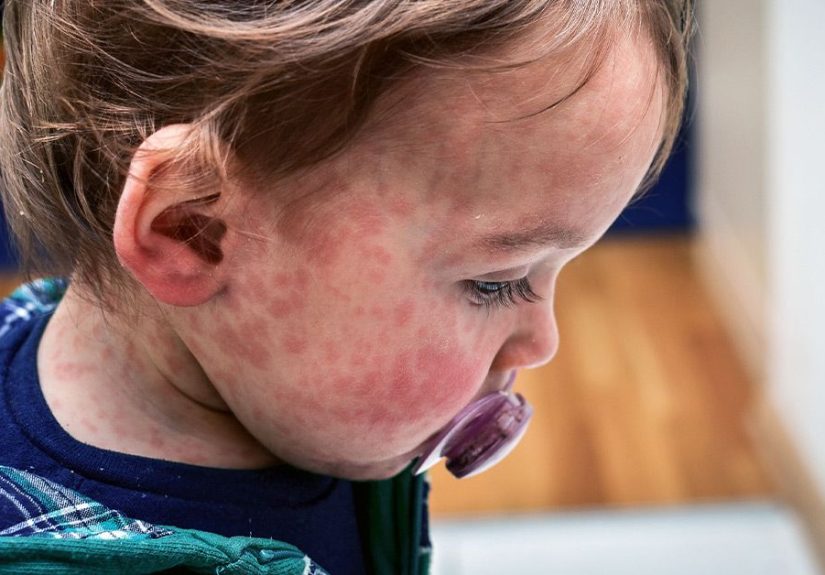
- A red, blotchy rash that usually starts on the face and spreads down the body
If you suspect measles:
- Call ahead before going to a clinic or ER so they can minimize exposure to others.
- Wear a mask if you must be around other people.
- Follow your provider’s advice on testing and isolation.
Measles isn’t just an inconvenient rash. It can cause pneumonia, brain inflammation (encephalitis), hearing loss, and even death, especially in young children and people with immune problems.
What the Alert Means for Travel, Schools, and Communities
CDC’s health alerts ripple outward into policies that affect daily life:
- Schools and childcare centers may tighten enforcement of vaccine requirements or temporarily exclude unvaccinated students during outbreaks.
- Hospitals and clinics may put stricter infection-control measures in place for patients with fever and rash.
- Travelers may see updated advisories or vaccination recommendations for certain destinations.
- Local health departments may launch outbreak response teams, contact tracing, and pop-up vaccine clinics in affected neighborhoods.
None of this is meant to scare people; it’s meant to respond quickly so that a handful of imported cases doesn’t turn into months of sustained transmission.
Looking Ahead: Can We Turn This Around?
The good newsyes, there is someis that we already know how to control measles. Countries have proven again and again that when vaccination coverage rises and surveillance is strong, measles fades back into the background.
WHO estimates that measles deaths have dropped by nearly 88% globally since 2000 thanks to vaccination. The current surge is less about the virus changing and more about our systems and habits slipping.
The CDC’s latest health alerts are a wake-up call. They’re urging us to:
- Refocus on childhood vaccination.
- Strengthen catch-up campaigns for older kids and adults.
- Fight misinformation with clear, evidence-based communication.
- Stay vigilant as travel and global movement continue to increase.
In other words, measles is testing our public health “maintenance plan.” The outcome depends on what we do nextat the national level, yes, but also in everyday decisions about appointments, school forms, and travel vaccines.
Real-World Experiences During the Measles Surge
Statistics and advisories are important, but they don’t always capture how a measles alert feels in real life. Here are a few composite scenariosbased on patterns reported in news coverage and public health case descriptionsthat illustrate what this crisis looks like on the ground.
The Pediatrician in a “Quiet” Suburb
Dr. Lena works at a pediatric clinic in what used to be considered a low-risk suburb. For years, measles was something she taught medical students about, not something she actually saw.
After the CDC’s 2025 measles alert, her inbox fills with messages from the local health department: updated testing protocols, instructions on how to isolate suspected cases, and reminders to report immediately. A few weeks later, a toddler comes in with a high fever, runny nose, and a faint rash after a family trip overseas.
In the pre-alert days, it might have been brushed off as “just a virus.” But because she’s on high alert, she masks up, has the family wait in a separate room, calls the health department, and arranges urgent testing. When the result comes back positive, contact tracing teams fan out to alert families who shared the waiting room, the daycare center, and the international flight.
The toddler recovers fully, but the experience changes the way the clinic talks about vaccines. Suddenly, parents who had delayed that second MMR dose are asking to book appointmentstoday, not “someday.”
The Parent Scrolling Through School Emails
Over in another state, Maya, a working parent, is catching up on school emails late at night. Buried between PTA notices and a bake-sale reminder is a message titled “Important: Measles Exposure at School.”
The email explains that a student with measles attended classes before the rash appeared. It links to CDC guidance, outlines symptoms to watch for, and explains that unvaccinated students may need to stay home for several weeks.
Maya had always assumed vaccines were “done” when her kids were little, but she’s not sure if her 13-year-old ever got that second MMR dose after they switched pediatricians. The CDC alert is suddenly personal: if her child isn’t fully vaccinated, they might not only be at risk of serious illness, but they could also miss weeks of school.
The next morning, she’s on the phone with their doctor, asking to verify records and schedule a catch-up dose if needed. That one decision adds another fully protected teen to the community, slowly closing the immunity gap that allowed the outbreak to catch fire in the first place.
The Traveler Planning a Long-Awaited Trip
After years of pandemic delays, Carlos finally books his dream tripa multi-country tour across regions where measles outbreaks have been reported. As he checks entry requirements and health advisories, he keeps seeing the same message: “Make sure you are fully vaccinated against measles before travel.”
He remembers getting “some shots” as a kid but isn’t sure exactly which ones. Because CDC’s alert specifically calls out travel-related cases, his primary care provider takes the question seriously. They review his history and decide to give him an MMR dose to be safe, based on age and documentation.
On his trip, he never knows whether he crossed paths with someone infectious at an airport, market, or train station. What he does know: the vaccine quietly did its job, preventing him from becoming one more line in the outbreak statisticsor from bringing the virus back to his community.
The Community That Comes Together
In a county hit hard by the 2025 outbreak, the initial response is fear and confusion. Parents worry about sending kids to school; small businesses wonder if they’ll lose customers; local hospitals scramble to add isolation spaces.
But the CDC alert also gives the community a blueprint. Health officials organize Q&A sessions with local doctors, faith leaders help spread accurate information, and pop-up vaccine clinics appear in familiar places: school gyms, libraries, and grocery store parking lots.
Over several months, vaccination rates slowly creep upward. New cases dwindle. Eventually, the outbreak is declared over. The experience is exhaustingbut it also leaves the community with stronger relationships between residents, schools, and public health agencies.
These experiences underscore the central message of the CDC’s health alert: measles is incredibly contagious and potentially life-threatening, but it is also highly preventable. Every vaccine record checked, every travel clinic visit, and every honest conversation about misinformation is part of how we turn the tide.
Conclusion
The rise in measles cases in the U.S. and worldwide is a serious warning, but it doesn’t have to be our new normal. The CDC’s health alerts are a call to action: rebuild vaccination coverage, strengthen surveillance, and treat measles like the real threat it isnot a dusty chapter from an old textbook.
The story of measles in 2025 isn’t finished yet. What happens next depends on decisions made in exam rooms, school offices, airports, and living rooms. The tools are already in our hands; now we have to use them.