Table of Contents >> Show >> Hide
- The Setup: A “Hang” That’s Still an Interview
- Why Maher Comes Off Worse: Three Choices That Backfire
- The “Let Your Guest Talk” Problem Isn’t a NitpickIt’s the Whole Thing
- What Actually Gets Discussed: Craft, Cancellation, and a Side of Trump
- The Bigger Context: Why This Interview Is Radioactive Before Anyone Speaks
- “Cancel Culture” as a Performance: When the Host Becomes the Main Character
- What Would a Better Version of This Interview Look Like?
- So Why Does the “Worst Person” Label Stick to Maher?
- The Viewer Experience: Watching This Interview in Real Time (and Living to Tell the Group Chat)
- Conclusion: The Interview Is the Message
There are interviews that feel like a warm bath: two people swapping stories, nobody keeping score, your brain gently turning to pudding in the best way. And then there are interviews that feel like being trapped in a rideshare where the driver keeps making “just asking questions” eye contact in the rearview mirror.
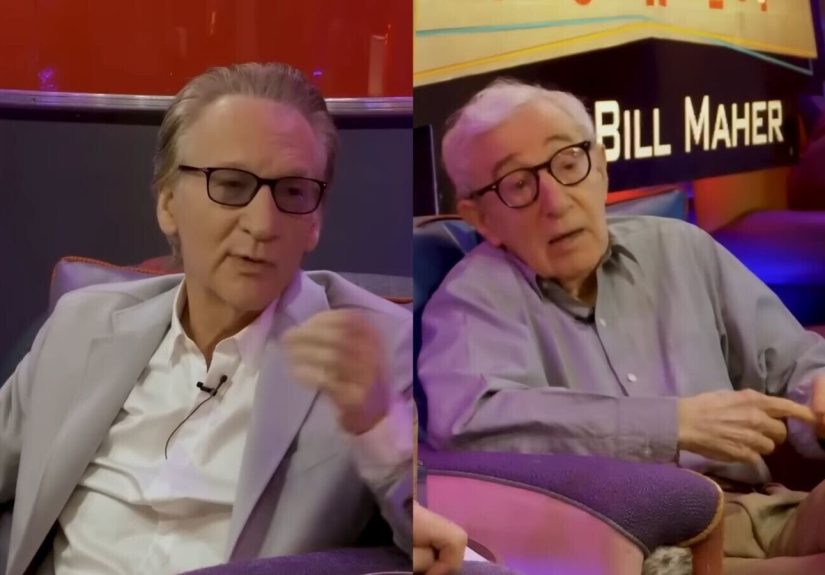
Bill Maher’s long-form sit-down with Woody Allen lands squarely in the second category. That’s not because Woody Allen suddenly becomes charming (he doesn’t), or because all controversies evaporate under podcast studio lighting (they very, very don’t). It’s because Maher manages a rare feat: making a conversation with one of America’s most polarizing filmmakers feel like a hostage negotiation conducted by a guy who really wants credit for being the hostage.
The internet’s reaction wasn’t subtle. The vibe, as one viral take put it, was basically: how did Bill Maher out-annoy Woody Allen? And once you watch the dynamic, you realize the answer isn’t mysterious. It’s structural. It’s tonal. It’s the difference between an interview and a crusade that happens to have a guest chair.
The Setup: A “Hang” That’s Still an Interview
Club Random sells itself as the casual, after-hours version of a celebrity conversation: drinks, loose talk, fewer guardrails. Maher has described the show’s goal as capturing the kind of intimate, relaxed conversation that happens when people feel like cameras aren’t runningeven when they absolutely are.
That format can be genuinely fun when the host treats it like a “hang.” But it also turns into a problem when the host shows up with an agenda and uses “casual vibes” as a disguise for relentless cross-examination. The less structured a show is, the more the host’s personality becomes the structure. Which is great if the host is curious. Less great if the host is auditioning arguments.
In this episode, Woody Allen appears in the context of renewed attention around his public reputation, his work, and the larger culture-war conversation about artists accused of wrongdoing. That context matters because Maher doesn’t treat it like background. He treats it like the main eventand repeatedly tries to steer Allen into confirming Maher’s worldview.
Why Maher Comes Off Worse: Three Choices That Backfire
1) He Interviews Like He’s Trying to Win a Debate
The fastest way to make a conversation miserable is to approach it as a competition. Not a competition of ideasthose can be interestingbut a competition for dominance: who’s funnier, who’s more morally clear, who gets the last word.
Maher’s approach often feels like: “Here’s the conclusion; now let’s drag the guest to it.” In this interview, he returns again and again to the idea that Allen was the victim of a “witch hunt,” that the entertainment industry performed some hypocritical moral theater, and that the real scandal is how people reacted rather than what people alleged.
Even if you agree with some of Maher’s broader complaints about performative outrage, it’s still a rough watch when every detour leads back to the same rhetorical cul-de-sac. A long-form interview lives or dies on curiosity. A crusade lives or dies on repetition. This episode leans heavily toward repetition.
2) He Can’t Let the Guest Be Boring (or Complicated)
Here’s the twist that makes Maher look especially bad: Woody Allen doesn’t always take the bait. At multiple points, Allen sounds less interested in rage than in resignationmore “I’m old and tired” than “let’s relitigate the internet.”
Allen’s posture in the conversation (calm, sometimes evasive, sometimes oddly pragmatic) creates a contrast that is devastating for Maher. When one person is trying to escalate and the other person keeps shrugging, the escalator starts to look unhinged.
Maher wants a dramatic moral narrative: villains, mobs, brave truth-tellers, courageous heretics. Allen offers something closer to a depressing reality: public scandal can be loud without being career-ending, and in some cases the consequences are uneven, delayed, or absorbed by wealth and status.
And that leads to the most awkward element of all: the “victim” story doesn’t fully stick, even with the “victim” sitting right there.
3) His Sympathy Points Go to the Wrong Place
Maher frequently positions himself as a skeptic of “overreach,” and skepticism can be healthy. The issue is where he aims it. In this conversation, the emotional energy is disproportionately spent on defending the accused, mocking the accusers’ side of the cultural equation, and rolling his eyes at people who publicly distanced themselves from Allen.
The result is a tonal mismatch: Maher talks like he’s calling out moral panic, but he also sounds oddly invested in rehabilitating the reputations of famous men. Even viewers who enjoy contrarian comedy can get fatigued by a host who always seems to have more empathy for the “misunderstood celebrity” than for the broader reasons the public has become distrustful of powerful people.
Put bluntly: if your main emotional project is “why won’t Hollywood forgive this guy,” your audience may start asking, “Why is this your hobby?”
The “Let Your Guest Talk” Problem Isn’t a NitpickIt’s the Whole Thing
One of the most repeated viewer complaints about Maher’s interview style is that he talks over guests or steers them so aggressively that the guest becomes a prop. In this episode, that critique goes from minor annoyance to defining feature.
When an interviewer interrupts constantly, it signals something ugly: the guest isn’t there to be understood; the guest is there to be used. And that’s what makes Maher seem “worse” in the framing people shared online. It’s not that Allen becomes likable. It’s that Maher appears more interested in being the protagonist than in listening.
The dark comedy is that long-form podcasts are supposed to be the antidote to shallow sound bites. But if the host is determined to score points, the “long-form” part just means you have more time to watch the scoring.
What Actually Gets Discussed: Craft, Cancellation, and a Side of Trump
The conversation bounces between three lanes:
- Comedy and filmmaking craft: the old New York comedy scene, influences, writing habits, working styles.
- Cancellation and reputational fallout: who “renounced” Allen, what Hollywood “owes” artists, what #MeToo did and didn’t do.
- Donald Trump as a cameo actor: Allen’s recollection of directing Trump in Celebrity and the weirdness of that story in a political era.
The craft lane is the one place the episode breathes. When Allen talks about processhis impatience, his lack of perfectionism, his habit of moving quicklythere’s a recognizable artist conversation happening. It’s the “old showbiz guy” part of the interview. It’s also the part that gets crowded out when the cancellation lane takes over.
The Trump lane became a headline magnet: Allen describes Trump as professional on set and “convincing” as an actor, while also distancing himself politically. It’s the kind of quote that detonates on social media because it’s simultaneously mundane (“he hit his mark”) and surreal (“why are we grading a president’s acting like it’s a freshman showcase?”).
This is where Maher’s tone matters again. A skilled interviewer could use the Trump anecdote to explore celebrity, performance, and power: how fame blurs into politics, how stagecraft becomes governance, how charisma sells narratives. Instead, the episode’s energy keeps snapping back to the grievance theme: the culture is unfair, the mob is irrational, and the real crime is people making other people uncomfortable at dinner parties.
The Bigger Context: Why This Interview Is Radioactive Before Anyone Speaks
You can’t talk about Woody Allen in 2026 (or 2016, or 2006) without talking about the allegations that have followed him for decades. Dylan Farrow has accused Allen of sexually abusing her when she was a child; Allen has repeatedly denied wrongdoing and has not been charged. The public debate reignited in waves, including during the #MeToo era and through documentary coverage that brought renewed scrutiny.
That context creates a “no clean exits” conversation. If you platform Allen, people will ask why. If you challenge him gently, people will call it a softball. If you challenge him aggressively, others will call it a show trial. And if you focus on how unfair it is that he was criticized, you end up sounding like you’re more offended by accountability than by harm.
Maher’s problem isn’t that he talks about the controversy. It’s that he treats it like a culture-war scorecard instead of a morally complicated public story. That’s why he ends up feeling like the “worst person” in the room: not because Allen’s history stops mattering, but because Maher’s priorities become painfully visible.
“Cancel Culture” as a Performance: When the Host Becomes the Main Character
Maher has made a brand out of being the guy who says what others won’t. That persona can be useful when it punctures hypocrisy. It becomes exhausting when it’s used to defend powerful people as if they are the endangered species.
In earlier conversations on his podcast, Maher has argued that Hollywood’s punishments are inconsistent and has criticized actors who refuse to work with Allen. He frames it as standing up for fairness. Critics hear it as standing up for the comfort of famous men.
The Allen interview amplifies that tension because it turns Maher’s opinions into the gravitational center. Instead of learning something new about Allen (even if you dislike him), you learnagainwhat Maher thinks about wokeness, hypocrisy, and the moral fashion industry. The guest becomes a mirror that reflects the host’s obsession.
And when viewers complain that Maher won’t stop talking, they’re not just nitpicking manners. They’re pointing at a core failure of long-form interviewing: the inability to surrender control long enough for a real moment to happen.
What Would a Better Version of This Interview Look Like?
A “better” interview does not mean a friendlier one. It means a more honest one. If Maher wanted to do real journalism (or even real comedy), he had options:
- Ask fewer leading questions. “Do you agree with me that you were witch-hunted?” is a trap. “What did the public backlash actually change in your daily life and work?” is information.
- Separate craft from controversy without avoiding either. You can talk about work ethic, legacy, and artistic influence and address the moral debate without turning it into a scoreboard.
- Let discomfort exist. An interviewer doesn’t need to “win” the discomfort. Sometimes the most revealing thing is watching someone sit in it.
- Stop trying to recruit the guest. If your guest doesn’t want to be your culture-war mascot, forcing it only makes you look desperate.
The irony is that a calmer, more curious Maher could have made Allen look worse simply by letting him talk. When people are evasive, self-justifying, or cold, silence gives them room to show it. Interruptions give them cover.
So Why Does the “Worst Person” Label Stick to Maher?
Because the episode accidentally becomes an x-ray of power. Not just Allen’s power as an artist who has been protected by fame, money, and legacy, but Maher’s power as a host who controls the room and still wants to be seen as the underdog.
Viewers can tolerate a lot from long-form interviewsrambling, tangents, awkward jokesif they sense genuine curiosity. What they struggle to tolerate is a host who seems to be using the guest to win an argument the audience didn’t agree to join.
The “somehow” in the headline does a lot of work, but the mechanism is straightforward: Maher brings the most heat, the least curiosity, and the loudest self-regard. Against someone as notoriously unpleasant as Allen, that combination is enough to make Maher feel like the bigger problem in the room.
The Viewer Experience: Watching This Interview in Real Time (and Living to Tell the Group Chat)
If you watched the episode as it droppedor even just absorbed the clips secondhandyou probably had a familiar modern experience: the slow realization that you’re not watching a conversation, you’re watching a social media argument being manufactured in advance.
The first stage is optimism. “Okay,” you tell yourself, “maybe this will be a rare, unguarded look at a complicated figure.” You settle in. You brace for the uncomfortable parts. You prepare to learn something you can’t get from headlines.
The second stage is the eyebrow raise. The host circles the same point. The guest tries to move on. The host circles again. You start doing the mental math of an evening ruined by someone who won’t stop returning to one topic: that friend who swears they’re “just talking,” but keeps steering the table back to their one grievance like a Roomba stuck under a couch.
Then comes the third stage: the bodily cringe. You realize you’re tensing your shoulders. You’re pausing the video to do a lap around the kitchen. You’re checking commentsnot because you need validation, but because you need proof that you’re not alone in feeling like the conversation is getting steamrolled. It’s the digital version of making eye contact with a stranger at a party like, “Are you hearing this?”
And this is where the “Maher seems worse” phenomenon really becomes an experience, not just a take. A controversial guest is expected. The discomfort is priced into the ticket. But a host who dominates, moralizes, and performs outrage while insisting he’s the reasonable one creates a different kind of fatigue. It’s not “wow, this guest is gross.” It’s “why does the host seem emotionally invested in controlling how I’m allowed to feel about this?”
Afterward, the episode doesn’t end; it metastasizes. It becomes snippets on your feed. It becomes a link your friend texts with, “You need to see this.” It becomes an argument about whether the host is “brave” or “insufferable,” whether the guest is “unrepentant” or “unbothered,” whether the audience is “too sensitive” or simply tired of being lectured by millionaires who confuse annoyance with oppression.
And maybe the most relatable part is the final stage: the weird, guilty relief when you stop watching. Not because you “won” anything, but because you escaped. You didn’t learn a clean lesson. You didn’t get a satisfying resolution. You just got confirmation of a modern truth: long-form content doesn’t automatically create depth. Sometimes it just gives self-importance more room to stretch out.
If that sounds bleak, here’s the upside: your discomfort is useful data. It’s a reminder that audiences can tell the difference between honest curiosity and a performance of righteousnessno matter how many drinks are on the table.
Conclusion: The Interview Is the Message
The headline joke works because it points at a real shift in how audiences judge public figures: it’s not only about what someone has done, but also about how someone uses their platform. Maher didn’t “redeem” Allen, and Allen didn’t “expose” Maher. The interview simply revealed what happens when a host treats a complicated topic like a personal brand opportunity.
In the end, the episode functions less as an exploration of Woody Allen than as a case study in modern media: the podcast era rewards loud certainty, but the audience still craves genuine listening. And when listening fails, the hostnot the guestbecomes the story.