Table of Contents >> Show >> Hide
The The Hills Have Eyes franchise is not just about jump scares, radioactive dust, and people making terrible road-trip decisions.
What really sticks in your brain (in a slightly worrying way) are the characters: the ordinary families pushed past their limits, the
feral mutants watching from the hills, and even the dogs who end up braver than half the humans on screen. When fans rank the best
characters in The Hills Have Eyes, they are really ranking the moments that made them gasp, cheer, or quietly swear off road trips
through the desert forever.
This guide dives into the best characters across the movies in the franchise, focusing especially on the 1977 original and the 2006 remake
and its sequel. We will look at who fans love most, why certain villains are so unforgettable, and how the survivors earn their spots as
horror icons. Buckle up, keep the doors locked, and maybe don’t take any “shortcuts” while you read.
How This Character Ranking Works
To put together a solid list of the best The Hills Have Eyes characters, it is not enough to just remember who swung the biggest axe.
This ranking blends several factors:
- Fan popularity: Characters who consistently land at the top of fan-voted lists and discussions.
- Impact on the story: How much they shape the plot, raise the stakes, or change the tone of the movie.
- Memorability: Visual design, catchphrases, kills, sacrifices, and that “you’ll never forget this face” factor.
- Character arc: Who grows, who breaks, and who stays terrifyingly the same from start to finish.
With that in mind, here are the best characters in The Hills Have Eyes franchise, ranked by fans and remembered by everyone who
watched these movies with the lights off when they really should not have.
Ranked: Best The Hills Have Eyes Series Characters
#1 Pluto
Pluto is the mutant you think of first when someone mentions The Hills Have Eyes. Huge, brutal, and disturbingly childlike, he feels
less like a movie monster and more like a nightmare version of a playground bully who never learned limits. In the remake, his towering
physicality and twisted facial features make him instantly recognizable, and his scenes around the trailer are some of the most stressful
in the entire film.
What pushes Pluto to the top of the list is how much energy he brings to every moment he is on screen. He is unpredictable: one second he is
taunting and laughing, the next he is smashing his way through doors and windows. Fans also remember him for the way he forces Doug and the
other survivors to rise to the occasion. If you can survive a fight with Pluto, you have earned your horror final-girl-or-guy badge.
#2 Doug Bukowski
Doug starts the 2006 remake as the guy everyone lightly makes fun of. He is a tech nerd, not outdoorsy, more at home in a cubicle than in
the New Mexico desert. That is exactly why his arc hits so hard. Once his family is attacked and his baby is taken, Doug transforms from
an anxious husband into a relentless desert warrior, armed with whatever he can find, plus one extremely loyal dog.
Doug’s journey is a textbook example of how horror can forge heroism. He is scared the entire time, and that is what makes him relatable.
Every time he gets knocked down, you can almost feel the internal decision: “I don’t have the luxury of staying down.” Watching him go up
against Pluto, Cyst, and the rest of the clan proves that the scariest thing in the desert is not the mutants; it is a parent with nothing
left to lose.
#3 Brenda Carter
Brenda is often remembered for the sheer horror of what she endures in the trailer attack, but reducing her to just a victim does her a
disservice. After the assault, Brenda does not shut down. Instead, she channels her trauma into survival, working with Bobby to rig up an
explosive trap and fighting back against Jupiter with pure rage and a pickaxe.
She represents a kind of resilience that feels painfully authentic: she is terrified, she is not magically “fine,” but she refuses to give
in. Horror fans remember her because she stands in for every viewer who has ever thought, “I don’t know how I would live through that” and
then watches her do exactly that.
#4 Ruby (2006)
Ruby is the mutant with a conscience, and in a series that leans heavily into brutality, that makes her instantly compelling. She does not
fully belong with the Carter family, but she also does not belong with her cannibal clan. Her kindness toward Bobby, her discomfort with the
violence, and her final sacrifice make her one of the most tragic figures in the franchise.
Ruby’s story reframes the mutants as more than faceless monsters. Through her, we see that some members of the clan understand the horror of
what they are doing but feel trapped by loyalty and fear. When she chooses to save Catherine and confront Lizard, it is the clearest statement
in the series that even in a wasteland, there is space for compassion and choice.
#5 Lizard
If Pluto is the franchise’s blunt instrument, Lizard is its razor blade. He is quicker, sharper, and far more sadistic. His scenes inside the
trailer are some of the most uncomfortable in the series, precisely because he enjoys psychological torment as much as physical violence.
Lizard is the kind of villain who talks too much purely because he knows you cannot stop him.
What makes Lizard so effective is how he contrasts with Doug as the film goes on. By the time they clash, it feels like two polar opposite
forces meeting: one born into violence, one forced into it. Their final struggle is brutal and messy, and when Lizard finally goes down, it
feels like a cathartic release of all the tension he has created.
#6 Beauty & Beast (the Dogs)
Horror fans love to argue about who the best character in a franchise is, but when it comes to The Hills Have Eyes, a surprising
number of people point to the dogs. Beauty and Beast may not speak, but they are far from background animals. Beauty’s death is one of the
first major shocks in the remake, signaling how cruel the mutants really are. Beast, on the other hand, becomes a furry engine of vengeance.
Beast’s role in taking down Goggle and later helping Doug in his quest to rescue Catherine cements him as more than a pet; he is a full-on
supporting hero. In a story where humans often freeze or panic, Beast simply acts. The franchise would be weaker without this four-legged
embodiment of loyalty and payback.
#7 Papa Jupiter
Papa Jupiter is the patriarch of the mutant clan, the warped mirror image of Big Bob Carter. Where Bob is stubborn but loving, Jupiter is
cruel, vengeful, and completely comfortable treating other humans as livestock. In both the original and the remake, his presence gives the
mutant family a frightening sense of organization: this is not random chaos, it is a system.
He is not on screen as much as Pluto or Lizard, but when he appears, you feel the shift. His confrontation with the Carter kids, especially
in the trailer and around the explosive trap, frames him as the last big obstacle between them and freedom. When he finally falls, it feels
like the end of a dark dynasty in the hills.
#8 Bobby Carter
Bobby is the classic horror teenager: a little cocky, a little annoyed, and absolutely not ready for what the desert has in store. His first
major turning point happens when he discovers what’s left of Beauty. From that moment, the jokey, casual version of Bobby disappears. What
replaces him is a young man who has to grow up in a single night.
Alongside Brenda, Bobby becomes the brains and nerves of the operation back at the trailer. He is the one who has to decide whether to tell
the others what he saw, navigate his own guilt, and still function under pressure. Bobby’s arc is smaller than Doug’s, but his transition from
scared kid to active defender makes him one of the franchise’s most relatable characters.
#9 “Big” Bob Carter
Big Bob is the embodiment of old-school, stubborn American dad energy. He is loud, opinionated, often wrong about everything, and yet his
love for his family is obvious. His clashes with Doug over masculinity and practicality set the stage for the film’s themes about what it
really means to protect your family.
Bob’s fate is one of the most brutal in the remake, and it sets off a chain reaction that transforms the rest of the family. Without Big Bob,
there is no one left to “take charge,” forcing Doug, Brenda, and Bobby into roles they never wanted. His death is horrifying, but it also
underlines how quickly the comfortable structure of a family can collapse in the face of real danger.
#10 Big Brain
Big Brain is disturbing in a quieter way than Pluto or Lizard. Confined to a wheelchair with an oversized head and a calm, almost polite
manner, he feels like the strategist behind the clan’s brutality. His conversation with Doug in the testing village is one of the rare scenes
where the film slows down long enough to let the horror sink in on a conceptual level.
Through Big Brain, we see that the mutants have a twisted logic and history. They are not random monsters; they are the result of decades of
radiation, neglect, and rage. Big Brain’s composed demeanor and warped wisdom make him one of the most chilling figures in the franchise, even
if he does not swing a weapon himself.
#11 Papa Hades
In the sequel to the remake, Papa Hades steps in as the new patriarch of terror. He is less iconic than Papa Jupiter to casual viewers, but
among fans who follow the whole franchise, he adds another layer to the mutant mythology. His role emphasizes that the clan is not a single
family but a wider, generational threat.
Papa Hades works as a reminder that even when the “main” villains die, something worse can be waiting deeper in the hills. That sense of a
horror ecosystem, rather than a one-off group, keeps the franchise feeling dangerous long after the credits roll.
#12 Amber
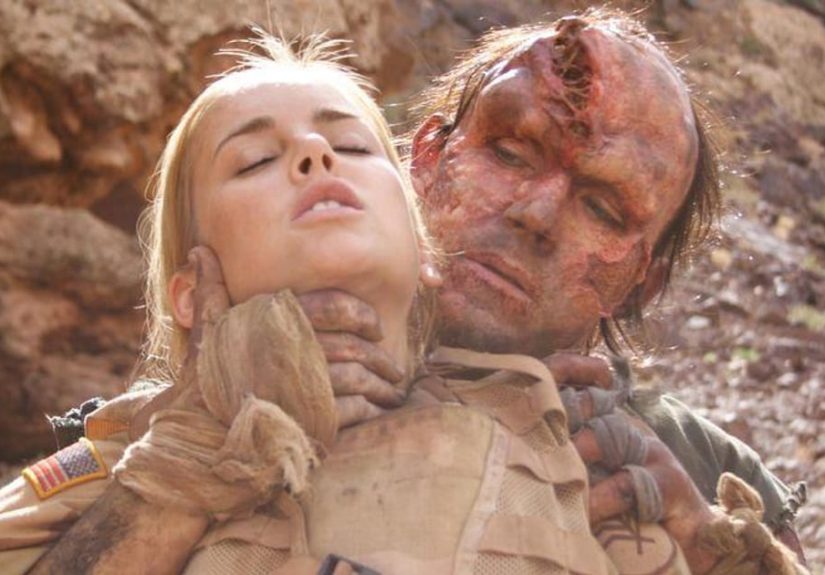
Amber, a National Guard trainee in the sequel, stands out as one of the more capable and level-headed human characters in the later films.
She is tough without being invincible, scared without being paralyzed. In a movie that could easily turn into a mindless “soldiers vs.
mutants” shootout, Amber brings a more grounded sense of vulnerability.
Her decisions under pressure and refusal to abandon others make her a spiritual cousin to Doug and Brenda. Even if the sequel does not hit
as hard for all viewers, Amber’s presence gives fans someone to root for beyond just hoping the body count slows down.
#13 The Reaper
The Reaper is one of the more mysterious figures tied to the mutant clan, often depicted as a looming, nearly unstoppable force. Where Pluto
is rage and Lizard is cruelty, Reaper feels like inevitability: a hulking reminder that the hills have more secrets and more killers than any
one film can fully reveal.
He is especially interesting to fans who explore the wider lore, because he reinforces the idea that this harsh environment keeps creating
and sustaining new monsters. Every time you think the lineage of killers is over, someone like Reaper steps out of the shadows.
#14 Chameleon
Chameleon appears in the later entries as one of the mutants who rely more on stealth and ambush than brute force. As his name suggests, he
uses the terrain to his advantage, blending into the jagged, dusty environment until it is too late for his victims to react.
Characters like Chameleon show how the franchise keeps the threat feeling fresh. Not every mutant has to be enormous or loud; some are scary
precisely because you do not notice them until they are inches away. That variation in villain design is one reason the series has such a
devoted cult following.
#15 Ruby (1977)
Long before the 2006 remake reimagined Ruby, the 1977 original introduced her as the outsider within the mutant family. She is torn between
loyalty to her blood and her sense that what her family is doing is wrong. Her attempts to help the victims add a crucial note of moral
ambiguity to the story.
Ruby’s role in the original film laid the groundwork for the more developed version of the character in the remake. Together, the two
incarnations create a through-line that reminds viewers that even in the most monstrous environments, there can be individuals trying to
choose another path.
Why These Characters Keep The Hills Have Eyes Scary
The reason these characters stay with viewers long after the credits is simple: they feel painfully human, even when they are technically
inhuman. The Carters are flawed, stubborn, sometimes annoying, but their reactions to terror feel real. The mutants are exaggerated and
grotesque, yet their family structure, hierarchy, and grudges make them strangely believable as a community.
The tension between those two groups is what gives the franchise its staying power. We are watching two versions of family collide: one
based on suburban comfort and road snacks, the other on survival at any cost. Characters like Doug, Brenda, Ruby, and Pluto sit at the
center of that collision, turning dusty hills into a battleground for what “civilized” actually means when everything goes wrong.
Experiences & Takeaways: Watching the Best Hills Have Eyes Characters in Action
For many horror fans, their first experience with The Hills Have Eyes is a kind of rite of passage. You go in expecting a simple
“family versus monsters” setup and walk out feeling like you survived a psychological obstacle course. The characters are a huge part of
that. They shape how you feel about every scene, every decision, and every scream echoing across the rocks.
On a first viewing, most people tend to latch onto Doug and Brenda. Doug’s transformation from mild-mannered guy in over his head to
determined rescuer is strangely inspiring in the middle of all the blood and dust. You watch him stumble, hesitate, and push through anyway,
and part of you wonders what you would do in his position. Brenda, on the other hand, embodies raw survival instinct. Even after extreme
trauma, she finds a way to act, to help, and to fight back. It is hard not to root for someone who literally turns her pain into resistance.
On rewatch, however, other characters start to stand out more. Ruby becomes a quiet favorite for viewers who appreciate nuance. When you are
no longer bracing yourself for the next jump scare, you can pay attention to her expressions, her hesitation, and the way she moves between
her family and the Carters. Her final sacrifice hits even harder when you already know how things end, because you spend the whole movie
noticing just how much she never truly belongs on either side.
Then there are Pluto, Lizard, and the rest of the mutant clan. The first time, they are just “the bad guys.” On later viewings, you start to
notice how differently they each operate. Pluto’s brute-force approach, Lizard’s gleeful cruelty, Big Brain’s eerie calm, and Papa Jupiter’s
authoritarian presence paint a picture of a twisted but functional family. It does not make them any less terrifying, but it does make them
more interesting. You begin to see patterns in who takes risks, who hangs back, and who seems to be pulling strings.
Fans also talk a lot about watching these movies with friends or partners who claim they “never get scared.” The Hills Have Eyes is
one of those franchises that quietly tests that claim. The trailer attack, Beauty’s death, Doug’s bloody trek through the testing village,
and Brenda’s revenge sequence tend to peel away that detached, ironic horror-fan persona. By the time Pluto and Lizard get what is coming
to them, even the toughest viewers usually exhale like they have been holding their breath for half an hour.
Another common experience is realizing just how much the setting amplifies the characters. The mutants would not be nearly as scary in a
crowded city, and the Carters would not feel as vulnerable if help were a phone call away. The wide-open desert, the abandoned testing
village, the rocky hills where figures appear and disappear at the edge of your visionall of that turns simple character moments into
something much more intense. Watching Doug walk alone across that landscape with Beast at his side feels like entering a hostile planet.
For long-time horror fans, revisiting the series is also a lesson in how character-driven horror ages better than pure shock value. The
gore may feel less extreme over time, but Doug’s desperation, Brenda’s fury, Ruby’s conflict, and Pluto’s manic brutality remain effective.
New viewers still flinch, still cheer, and still argue over who the “best” character really is. That ongoing conversation is a sign that
these characters have carved out a permanent place in the horror canon.
Ultimately, watching the best The Hills Have Eyes characters in action is about more than just scares. It is about seeing ordinary
people pushed to extremes, villains who are horrifyingly committed to their own code, and a hostile world that does not care who was “right”
before everything went wrong. Whether you are revisiting the franchise or braving it for the first time, these characters ensure that you
will remember the hills long after you drive out of the desert.