Table of Contents >> Show >> Hide
- Why We Love Dystopian Novels (Even When the World Feels on Fire)
- What Counts as a Dystopian Book?
- Best Classic Dystopian Novels
- Modern Must-Read Dystopian Books
- 6. The Hunger Games by Suzanne Collins
- 7. The Giver by Lois Lowry
- 8. Parable of the Sower by Octavia E. Butler
- 9. Station Eleven by Emily St. John Mandel
- 10. The Road by Cormac McCarthy
- 11. Prophet Song by Paul Lynch
- 12. The Fifth Season by N.K. Jemisin
- 13. Divergent by Veronica Roth
- 14. Battle Royale by Koushun Takami
- 15. Chain Gang All Stars by Nana Kwame Adjei-Brenyah
- How to Choose the Right Dystopian Novel for You
- What Reading the Best Dystopian Novels Feels Like (A Reader’s Experience)
- Conclusion: Building Your Own Dystopian TBR Stack
If you’ve ever finished the news, sighed, and thought, “You know what would really relax me?
A book about a collapsing society,” congratulations: dystopian fiction is your comfort genre.
From totalitarian regimes and climate catastrophes to terrifyingly efficient surveillance states,
the best dystopian novels don’t just predict the future they hold up a cracked mirror to the present.
This guide walks you through a curated list of top dystopian books a mix of iconic classics,
modern must-reads, and a few under-the-radar gems. Whether you love political thrillers,
character-driven literary fiction, or pulse-pounding YA, you’ll find your next unsettling favorite here.
Why We Love Dystopian Novels (Even When the World Feels on Fire)
On paper, dystopian books shouldn’t be comforting. They’re full of censorship, collapsing ecosystems,
and governments who really need HR. But readers keep coming back because these stories let us process
real-world fears in a safe, structured way. The stakes are huge, the villains are clear,
and the heroes are ordinary people trying to stay kind and human when everything around them says “don’t bother.”
Broadly speaking, dystopian fiction is a branch of speculative or science fiction that uses broken societies
to explore real issues like authoritarianism, inequality, surveillance, racism, environmental disaster,
and runaway consumerism. You’re not just getting cool world-building you’re getting commentary on the
world you live in right now, just dialed up to “nightmare, but make it readable.”
What Counts as a Dystopian Book?
Not every bleak novel is dystopian. A true dystopia usually includes:
- A controlled or distorted society run by a government, corporation, AI, cult, or other power.
- A loss of basic freedoms speech, movement, bodily autonomy, or access to the truth.
- A protagonist who wakes up someone who starts to notice the cracks and decides to push back.
- Social commentary the story is saying something about our politics, technology, or values.
With that in mind, let’s dive into some of the best dystopian novels you should read at least once
preferably with a cup of something soothing and your phone on “Do Not Disturb (From Big Brother).”
Best Classic Dystopian Novels
1. 1984 by George Orwell
The blueprint for modern dystopia, 1984 drops you into Airstrip One, where the Party rewrites history daily,
telescreens watch your every move, and even your thoughts can be crimes. Winston Smith’s quiet rebellion
keeping a diary, falling in love, daring to remember the past feels shockingly dangerous in a world where
language itself is being edited for obedience. If you’ve ever heard phrases like “Big Brother,” “Newspeak,”
or “thoughtcrime,” you’ve already met this book’s cultural footprint.
2. Brave New World by Aldous Huxley
If 1984 is the dystopia that rules by fear, Brave New World is the one that rules by pleasure.
In Huxley’s world, humans are bred and conditioned into castes, kept content with endless entertainment
and a handy government-issued drug called soma. No one is starving. No one is technically oppressed.
They’re just…not free. This novel is perfect if you’re interested in consumer culture, genetic engineering,
and the unsettling idea that comfort can be a more effective control mechanism than cruelty.
3. Fahrenheit 451 by Ray Bradbury
Fireman Guy Montag doesn’t put out fires he starts them, burning books in a future where reading is banned.
When a curious young neighbor asks him uncomfortable questions, Montag begins to wonder what’s actually in
those pages he’s destroying. Fahrenheit 451 is both a love letter to books and a warning about censorship,
distraction culture, and what happens when we trade deep thinking for constant entertainment.
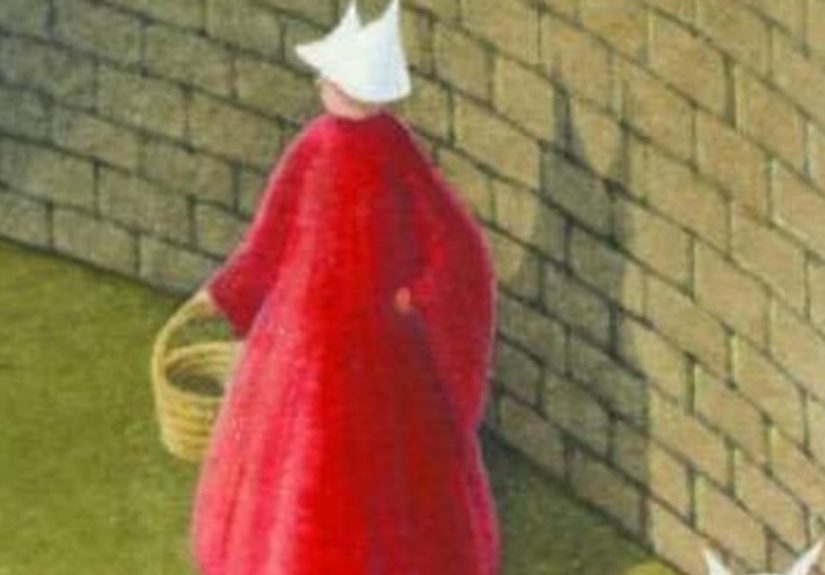
4. The Handmaid’s Tale by Margaret Atwood
In the theocratic state of Gilead, women are stripped of their rights and reduced to rigid roles.
Offred, a “Handmaid,” is forced into reproductive servitude for a high-ranking commander.
Atwood’s genius is how close this feels to reality: every horror in the book is rooted in something that
has happened, somewhere, sometime. This is essential reading if you’re interested in gender, power, religion,
and how fragile rights can be when people assume they’re permanent.
5. We by Yevgeny Zamyatin
Written in the 1920s, We is an early dystopian masterpiece that influenced both Orwell and Huxley.
Citizens in the One State live in glass apartments, watched constantly, and are known by numbers instead of names.
Our narrator, D-503, is a true believer in the system until love and imagination start to destabilize his
perfectly logical world. If you want to see where many dystopian tropes started, this one’s a fascinating time capsule.
Modern Must-Read Dystopian Books
6. The Hunger Games by Suzanne Collins
Welcome to Panem, where the Capitol keeps its districts in line by forcing their children to fight to the death
on live TV. Katniss Everdeen volunteers to take her sister’s place and accidentally becomes the face of a revolution.
The Hunger Games is fast-paced, emotional, and surprisingly sharp about media manipulation, wealth inequality,
and the way trauma gets turned into entertainment. It’s the go-to recommendation if you want a gateway into YA dystopia.
7. The Giver by Lois Lowry
In Jonas’s world, everything looks peaceful. There’s no war, no pain, no hunger and also no color, no choice,
and no real memory. When Jonas is chosen to be the Receiver of Memory, he begins to learn what his community
gave up in exchange for “sameness.” Often considered one of the first major YA dystopian novels,
The Giver is deceptively simple and quietly devastating.
8. Parable of the Sower by Octavia E. Butler
Set in a climate-ravaged near-future America, this novel follows Lauren Olamina, a young woman with a rare condition
that makes her physically feel others’ pain. As her California community collapses into violence, she escapes north
and begins shaping a new belief system called Earthseed. Parable of the Sower blends social commentary,
survival realism, and spiritual exploration and feels uncannily like tomorrow’s headlines.
9. Station Eleven by Emily St. John Mandel
After a deadly flu wipes out most of humanity, a traveling Shakespearean troupe moves through the remnants
of North America, performing plays and trying to preserve beauty in a ruined world. Station Eleven
alternates between the chaotic early days of the pandemic and the strange, fragile society that emerges
twenty years later. If you like your dystopia more reflective than explosive, this one is a modern classic.
10. The Road by Cormac McCarthy
Bleak? Yes. Worth it? Also yes. The Road follows a father and son trudging through a burned landscape,
trying to survive and “carry the fire” of human decency when almost everything good seems gone.
The world is never fully explained which makes it feel even more plausible. This is dystopia stripped to
its emotional core: love, fear, and the question of what you’ll do to keep someone safe.
11. Prophet Song by Paul Lynch
Rather than dropping you into a long-established dictatorship, Prophet Song shows you what it feels like
as a democratic country slides into totalitarianism in real time. Set in Ireland, the novel follows a mother
whose life slowly constricts as emergency laws, secret police, and disappearances become the new normal.
It’s intense, lyrical, and terrifying precisely because the changes are incremental until they’re not.
12. The Fifth Season by N.K. Jemisin
In the Stillness, a continent wracked by catastrophic climate events, certain people called orogenes can control
seismic energy and are brutally exploited for it. The Fifth Season weaves together three storylines that
eventually converge in a mind-bending way. Think of it as epic fantasy with a deeply dystopian backbone,
interrogating who gets labeled “dangerous” and why.
13. Divergent by Veronica Roth
In a future Chicago, society is divided into factions based on personality traits: Abnegation, Dauntless, Erudite,
Amity, and Candor. Tris Prior discovers she doesn’t fit neatly into any of them which makes her “Divergent” and
therefore a threat to the system. Divergent is ideal if you like high-stakes training sequences,
found families, and exploring identity in a world that demands labels.
14. Battle Royale by Koushun Takami
Before The Hunger Games, there was Battle Royale, a brutal story where a class of Japanese ninth graders
are forced by a fascist government to fight to the death on a remote island. It’s graphic and intense,
but also sharp about propaganda, fear, and peer pressure. If you want to see a major influence on modern dystopian
death-game stories, this is required reading.
15. Chain Gang All Stars by Nana Kwame Adjei-Brenyah
This recent entry into the dystopian canon imagines a near-future America where incarcerated people can fight
in deadly gladiator-style games for the entertainment of the public and the slim chance of freedom.
It’s a searing critique of mass incarceration, reality TV, and the way suffering gets packaged as a spectacle.
Come for the high-concept premise, stay for the sharp, humane writing.
How to Choose the Right Dystopian Novel for You
With so many great dystopian books, where should you start? Let’s match your mood to your next read:
- “I want the big classics, no skipping.”
Start with 1984, Brave New World, and Fahrenheit 451. You’ll get government surveillance,
engineered happiness, and book burning the holy trinity of dystopian nightmares. - “I love character-driven, literary reads.”
Reach for The Handmaid’s Tale, Parable of the Sower, Station Eleven, or The Road.
These are rich in theme and emotion, not just plot twists. - “Give me something fast-paced and accessible.”
The Hunger Games, Divergent, and The Giver (short but powerful) are perfect for
binge-reading or getting out of a reading slump. - “I want fresh, modern, and a little weird.”
Try Chain Gang All Stars, The Fifth Season, or Prophet Song for new spins on
oppression, climate collapse, and state power.
And remember: dystopian fiction doesn’t have to be read in any particular order. Think of this list as a map,
not homework. Follow whichever book is quietly (or loudly) screaming your name from the shelf.
What Reading the Best Dystopian Novels Feels Like (A Reader’s Experience)
Here’s what often happens when you fall down the dystopian rabbit hole: you pick up one book “just to see
what the hype is about,” and suddenly you’re comparing fictional regimes like some kind of literary policy analyst.
The first time many readers encounter dystopia is in school with books like 1984, The Giver,
or Fahrenheit 451. At that age, the symbolism might be what sticks the telescreens, the colorless world,
the burning books. But when you revisit them as an adult, they hit differently. You start recognizing real headlines,
real debates about privacy, book bans, climate change, and misinformation. The metaphors get uncomfortably literal.
Then there’s the experience of binge-reading a series like The Hunger Games or Divergent.
You tell yourself, “Just one more chapter,” and suddenly it’s 2 a.m., you’re deeply invested in fictional
political alliances, and you’ve mentally divided your coworkers into factions or districts. YA dystopia
does something brilliant: it lets you step into the story through a teenager’s eyes, when everything
feels unfair, intense, and up for negotiation. It’s no coincidence that so many of these books center on
young people refusing to play by rigged rules.
Literary dystopias like The Handmaid’s Tale, Parable of the Sower, or Prophet Song
offer a different kind of experience. You don’t just speed through the plot; you sit with the language,
the slow tightening of everyday life, the tiny compromises people make to get through the day.
These books linger. You’ll find yourself thinking about a single line or scene days later at a traffic light,
in a meeting, while scrolling your phone and realizing you’re still mentally living in their world.
There’s also a weird, almost guilty comfort in reading about people whose world is objectively worse than yours.
When you close The Road and step outside into actual sunlight, or finish Station Eleven
and go to a crowded grocery store, ordinary life feels oddly luxurious. You have electricity. You have
tap water. You can text your friends without worrying that a secret police algorithm will flag you as subversive.
Dystopian fiction sharpens your appreciation for everyday freedoms you usually don’t think about privacy,
choice, movement, and access to information.
On a more practical level, these books also change how you watch the world. After reading enough dystopias,
you start noticing the “this is how it starts” moments: subtle shifts in laws, the way technology creeps into
your daily routine, or how certain groups are talked about in public conversation. You don’t necessarily become
paranoid, but you do become more alert more curious about who benefits from the systems around you,
and who gets left out.
And perhaps the most important part: dystopian novels aren’t just about despair. Many of the best ones end
on what you might call “cautious hope” not a neat happily-ever-after, but a sense that resistance, empathy,
and community still matter. In Parable of the Sower, Lauren’s Earthseed philosophy imagines a future
shaped by adaptability and cooperation. In The Giver, Jonas’s choice to leave his controlled community
cracks open the possibility of something better. Even in the darkest worlds, there’s almost always someone
trying to protect a child, save a story, plant a seed, or simply tell the truth.
So when you pick up a dystopian novel, you’re not just signing up for misery and doom. You’re also signing up
for stories about bravery, loyalty, and the stubborn human refusal to give up on each other. The settings may
be bleak, but the emotional payoff that sense that what we do and choose still matters is surprisingly uplifting.
Conclusion: Building Your Own Dystopian TBR Stack
Whether you start with the big classics like 1984 and Brave New World, or dive straight into
modern hits like The Hunger Games, Parable of the Sower, or Chain Gang All Stars,
the best dystopian novels will change how you see your own world. They’ll make you question what you’ve
taken for granted, notice small freedoms you usually overlook, and maybe even inspire you to be a little
braver in everyday life.
Build your TBR like a balanced survival kit: a couple of foundational classics, a few emotionally heavy
literary picks, some fast-paced YA, and at least one recent title that speaks directly to current anxieties.
Read them slowly or binge them just don’t be surprised if, after a while, you start looking at your
smartphone and thinking, “This is step one of someone’s dystopian prologue.”
SEO JSON