Table of Contents >> Show >> Hide
- What Is the Basque Honey Dining Table, Exactly?
- Why People Keep Falling for This Table
- Size, Seating, and Room Planning Before You Buy
- How to Style a Basque Honey Dining Table Without Going Full Fake Farmhouse
- Care, Maintenance, and the Reality of Living With Solid Wood
- Is the Basque Honey Dining Table Worth It?
- Living With a Basque Honey Dining Table: The Real Experience
- Conclusion
Some dining tables are polite little things. They hold four plates, two candles, and one carefully arranged bowl of lemons, then spend the rest of the week looking decorative and slightly nervous. The Basque Honey Dining Table is not that kind of table. This one arrives with presence. It is chunky, warm, grounded, and quietly dramatic in the way only solid wood can be. It looks like it could host roast chicken, board games, science homework, birthday cake, and one mildly chaotic family debate about whose turn it is to do the dishes. In other words, it understands the assignment.
The appeal of the Basque Honey Dining Table starts with its rustic European-farmhouse look, but that is only part of the story. What has kept this table relevant is the mix of honest materials, useful proportions, and a finish that softens its bulk. It feels substantial without feeling showy. It has texture without looking overdesigned. And it manages to sit comfortably in homes that lean farmhouse, transitional, organic modern, or even slightly industrial, which is not a trick every wood table can pull off.
This article takes a close look at what makes the Basque Honey Dining Table special, how it performs in real rooms, how to style it so it feels fresh instead of theme-y, and what to know before bringing one home. If you have been wondering whether this table is a timeless workhorse or just another pretty face with a furniture tag, pull up a chair. Preferably one that does not wobble.
What Is the Basque Honey Dining Table, Exactly?
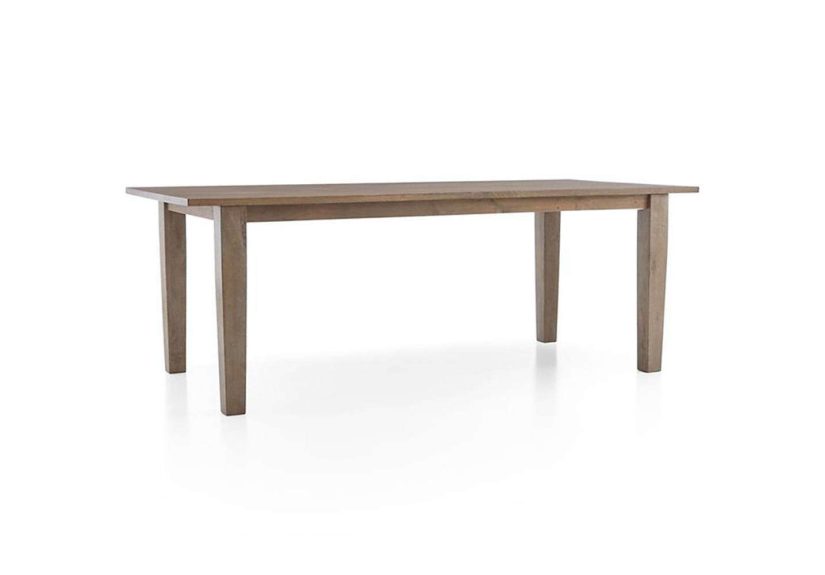
The Basque Honey Dining Table is best known through the Crate & Barrel Basque collection, where the design has built a loyal following for years. The table is made from solid mango wood and is defined by hand-planed planks, visible grain, naturally occurring knots, and peg detailing that gives the top an old-world, handcrafted look. The honey-toned finish adds warmth and a soft glow rather than a glossy showroom shine, which is a big reason the piece feels inviting instead of overly formal.
Mango wood matters here. It is dense enough to feel reassuringly solid, but visually it has more movement than some tighter-grained woods. That open grain gives the Basque table personality. One plank may have a darker streak, another a knot, another a subtle variation in tone. The result is a dining surface that does not look machine-perfect, and that is exactly the point. If you want a table that resembles a polished hotel conference room, keep walking. If you want a table that looks like it has stories to tell, now we are talking.
Why the “Honey” Finish Works So Well
Color is where this table earns a lot of its fan base. The honey finish lands in that sweet spot between dark traditional wood and pale Scandinavian oak. It is warm without turning orange, rich without becoming gloomy, and rustic without looking dusty. In practical terms, that means it can sit next to black Windsor chairs, linen slipcovered seating, leather side chairs, woven textures, brass pendants, matte ceramics, or even a modern bench and still look intentional.
That versatility is rare. Many farmhouse-style tables lean too distressed, too yellow, or too “I bought a rooster-shaped cookie jar and now I must commit to the bit.” The Basque Honey Dining Table avoids that trap. Its finish reads earthy and classic, which is why homeowners often keep it for years even as the rest of the room evolves.
Why People Keep Falling for This Table
First, it looks expensive in a low-drama way. The thick legs and substantial top give it visual weight, and the hand-worked details suggest craftsmanship without screaming for attention. This is the furniture equivalent of someone wearing a great coat and not mentioning it. The table does not need to show off; it already knows it looks good.
Second, it performs well as a real-life dining table rather than a museum object. Reviews and design commentary around the Basque line often come back to the same themes: sturdiness, timelessness, and everyday usability. That matters because dining tables are among the hardest-working pieces in a home. They are not just for dinner. They become offices, homework stations, wrapping-paper headquarters, puzzle arenas, holiday buffets, and the place where someone inevitably sets down a wet glass despite the presence of six perfectly good coasters.
Third, the style is flexible. The Basque Honey Dining Table nods to a European farmhouse antique, but it is simple enough to cross stylistic borders. In a traditional room, it reads warm and classic. In a modern farmhouse space, it adds authenticity. In a cleaner, more contemporary room, it can act as the grounding natural element that keeps the space from feeling cold. That ability to adapt is a large part of what makes it a smart long-term purchase.
It also helps that natural wood remains deeply appealing in current dining-room design. Across American design media, there is a steady preference for natural materials, organic texture, and rooms that feel layered rather than overly matched. A chunky wood table fits that mood beautifully. Even when trends shift toward stone, sculptural silhouettes, or mixed materials, a solid wood dining table still functions as the visual anchor that makes a room feel inhabited.
Size, Seating, and Room Planning Before You Buy
This is where good intentions meet tape measure. The Basque line has appeared in multiple sizes, including versions around 65 inches, 82 inches, and 104 inches long, along with extendable options in some finish variations. In general terms, the smaller version is appropriate for about six seats, the mid-size works well for around eight, and the longest version can accommodate about ten. That sounds straightforward until someone remembers the radiator, the buffet, the swing of the back door, and the fact that humans enjoy being able to leave the table without performing gymnastics.
A smart rule is to allow roughly 36 inches of clearance between the table edge and the wall or nearby furniture. More room is even better if you expect frequent traffic behind seated guests. Another useful design guideline is to subtract about six feet from the room’s length and width to estimate a comfortable maximum table size. That helps preserve walkways and keeps the dining room from feeling like the furniture has staged a coup.
Rectangular tables like the Basque are especially effective in narrow or long rooms. A width in the 36- to 42-inch range is often ideal because it allows place settings on both sides without making conversation feel like a game of long-distance shouting. The Basque table’s rectangular profile makes it a natural fit for many American dining rooms and open-plan spaces, especially where a round table would waste precious length.
Who This Shape Works Best For
A rectangular table is ideal if you host larger groups, have a long room, or want the table to double as a workspace. It also plays nicely with benches, which can be useful in tighter spaces or homes with kids. If you are planning bench seating, remember that each person still needs elbow room. A crowded holiday meal may create memories, but nobody wants to spend Thanksgiving shoulder-to-shoulder like commuters on a delayed train.
The Basque Honey Dining Table is especially appealing for households that need one table to do many jobs. It has enough mass to look important in a dedicated dining room, but it also feels durable and grounded enough for kitchen-adjacent daily use.
How to Style a Basque Honey Dining Table Without Going Full Fake Farmhouse
The first styling secret is not to overmatch it. Because the Basque table already has strong character, pairing it with a perfectly coordinated set of rustic chairs can tip the room into theme-park territory. A better move is to mix in contrast. Try upholstered end chairs with simpler side chairs. Or combine wood seating with woven backs, leather cushions, or black painted frames. The table likes company, but it does not need clones.
The second secret is to use restraint with decor. A wood table with active grain is already visually busy enough to carry the room. That means a low ceramic bowl, a linen runner, a trio of candlesticks, or a single generous vase of branches will usually look better than an elaborate centerpiece that behaves like it is auditioning for a holiday catalog. Everyday elegance tends to win here.
Lighting matters too. A good rule for a rectangular dining table is to choose a fixture that feels substantial but not wider than the table itself. Linear pendants and elongated chandeliers work beautifully over a Basque-style table because they echo the shape and help balance its visual heft. If the room is small, one bold fixture can do more for the space than ten tiny decorative gestures.
Color-wise, the honey finish pairs especially well with creamy whites, warm grays, muted greens, black accents, terracotta, and natural fibers. That palette helps the table read timeless rather than trendy. If you want the room to feel less rustic and more refined, layer in cleaner silhouettes, tailored slipcovers, plaster or stone accessories, and modern art. The table is rustic, yes, but it is not fragile. It can handle a little sophistication.
Care, Maintenance, and the Reality of Living With Solid Wood
Let us speak plainly: if you buy a solid wood dining table, you are entering a relationship with a natural material, not a piece of plastic pretending to be noble. Wood moves. It reacts to humidity. It can show wear. That is not a defect; that is part of the charm. But charm still appreciates basic care.
For daily maintenance, a soft dry cloth is your friend. Wipe spills promptly, especially water, wine, or anything acidic. Use coasters, trivets, and placemats when appropriate. Avoid harsh or abrasive cleaners, and do not soak the surface. Too much moisture and too much heat are both enemies of wood finishes. That includes setting a hot dish directly on the table because you were “just doing it for a second.” The table sees through your lies.
Indoor humidity also matters more than many people realize. Solid wood can expand and contract as seasons change, which is why stable indoor conditions help furniture age gracefully. Direct sunlight is another factor; over time, strong UV exposure can affect wood tone and finish. If your dining room gets dramatic afternoon sun that could roast a tomato, a curtain or shade is not a terrible idea.
The good news is that natural wear often looks better on a table like this than it would on something sleek and glossy. A few signs of life can make the Basque Honey Dining Table feel even more authentic. This is not the kind of piece that falls apart emotionally after one scratch. It is a working table. It is meant to be used.
Is the Basque Honey Dining Table Worth It?
If your priorities are solid wood, timeless styling, visual warmth, and a table that can handle daily life while still looking handsome, the answer is yes. The Basque Honey Dining Table succeeds because it offers substance in every sense of the word. It is substantial physically, visually, and emotionally. It does not chase trends, and that is a strength.
It may not be the best choice for someone who wants a super-light, airy, barely-there silhouette. Nor is it ideal for anyone hoping never to think about wood care again. But for buyers who appreciate real material, visible craftsmanship, and furniture that gets better when a room actually lives around it, this table makes a convincing case for itself.
Living With a Basque Honey Dining Table: The Real Experience
The most interesting thing about the Basque Honey Dining Table is how quickly it stops being “the dining table” and starts becoming the place where life happens. On day one, you notice the design details. The tone of the wood looks warm in morning light. The top has enough texture to feel handcrafted. The legs make the whole thing look grounded and confident, like it was built by someone who did not believe in flimsy furniture and definitely did not believe in disposable furniture. You circle it a little. You admire it. You maybe wipe an invisible speck off the surface because that is what people do when they are in love.
Then real life begins. A laptop appears. Then coffee. Then unopened mail. By the end of the week, the table has hosted takeout containers, a school project involving markers of suspicious permanence, and a conversation that started with “What’s for dinner?” and somehow ended with a debate about whether socks count as acceptable Christmas gifts. That is the point where you realize the Basque table is not just attractive. It is useful in the most unglamorous, deeply important way.
It also changes the mood of a room. Because it has visual weight, it gives the dining area a center of gravity. Even when the room is otherwise simple, the table makes it feel finished. Add a runner and some candles, and it looks ready for guests. Remove everything, and it still looks complete. That is a sign of good furniture. It does not need constant styling support like a diva demanding special lighting.
Over time, the experience becomes less about perfection and more about familiarity. You learn where the grain catches the light. You notice that the honey finish feels cozy in winter and glowy in summer. You start to appreciate that a table with knots and variation is oddly forgiving. It looks good with mismatched plates, a giant salad bowl, and a slightly crooked bouquet from the grocery store. It does not insist on formality. It invites people to sit down.
For families, that matters a lot. A table like this can handle breakfast chaos, after-school homework, cookie decorating, and holiday dinners without seeming confused about its identity. For couples or smaller households, it can make everyday meals feel more intentional. Even eating pasta out of a weeknight pot feels a little more civilized when the setting has warmth and character. Not fancy, exactly. Just better.
Perhaps that is the best way to describe the Basque Honey Dining Table experience: it elevates daily life without demanding theatrical effort. It is not precious. It is not trendy. It does not need to be babied, though it does appreciate a coaster and a little common sense. It simply shows up, looks beautiful, and keeps working. And in a home full of objects that blink, beep, need charging, or become obsolete by next Tuesday, there is something deeply satisfying about a heavy wood table that just stays useful and lovely year after year.
Conclusion
The Basque Honey Dining Table has staying power because it combines what buyers actually want in a dining table: warmth, strength, flexibility, and style that does not expire when the trend cycle gets bored. Its solid mango wood construction, handcrafted look, and honey-toned finish give it character. Its rectangular form and practical sizing make it easy to live with. And its ability to move between rustic, farmhouse, transitional, and organic-modern rooms makes it one of those rare pieces that can grow with a home instead of trapping it in one aesthetic moment.
In a market crowded with tables that are either too flimsy, too fussy, or too eager to become a personality trait, the Basque Honey Dining Table feels refreshingly grounded. It is handsome, hardworking, and built for real meals, real people, and real homes. Frankly, that is a pretty delicious combination.