Table of Contents >> Show >> Hide
- Quick Snapshot: What Makes Aves “Aves”
- The Design Story: Heritage Motifs, Modern Stitch
- Where Aves Embroidered Wallpaper Looks Best
- Styling Aves: Three Foolproof Room Recipes
- Planning the Install: Panels, Seams, and the Math That Saves Your Weekend
- Installation Tips: How to Get a Result That Looks Expensive (Because It Is)
- Care and Cleaning: Keeping the Embroidery Beautiful
- Design Moves That Make Aves Look Intentional (Not “I Panicked and Bought Wallpaper”)
- Is Aves Embroidered Wallpaper – Navy Worth It?
- Experiences With Aves Embroidered Wallpaper – Navy (Real-World Scenarios)
- Final Thoughts
If you’ve ever looked at a room and thought, “Nice… but it’s giving ‘waiting room’,” wallpaper is your shortcut to
personality. Not the “your aunt’s floral from 1993” kind (no shade to your auntshe’s thriving), but the new wave:
tactile, graphic, and unapologetically interesting.
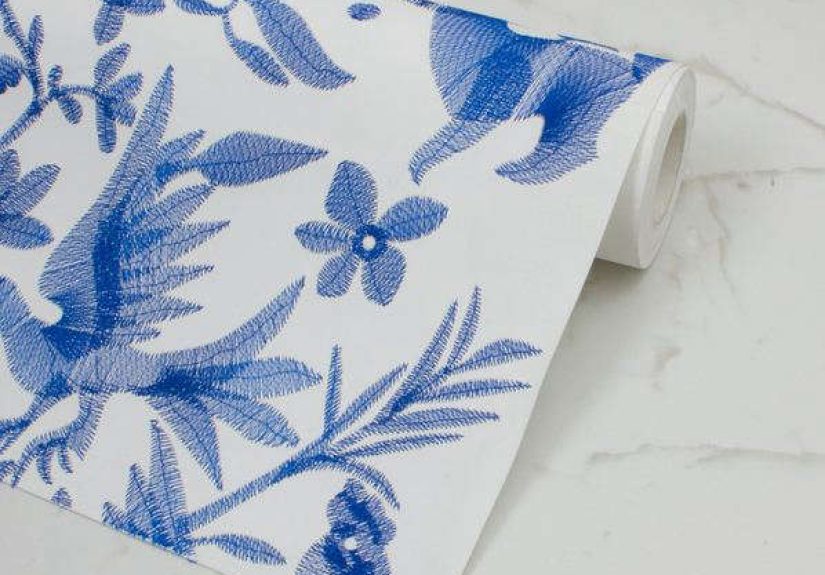
Aves Embroidered Wallpaper – Navy sits right in that sweet spot. It’s not just a pattern printed on
paperit’s stitched. It takes the playful, story-filled spirit of Otomi-inspired motifs and translates them
into a dramatic navy-on-off-white wallcovering that feels both artisanal and modern. In other words: it’s the wall
equivalent of wearing a crisp blazer with sneakers. Elevated, but still fun.
Quick Snapshot: What Makes Aves “Aves”
- Look: A lively “menagerie” of creatures in an embroidered, graphic style.
- Colorway: Navy motifs on an off-white background.
- Format: Panel size is 55 cm x 100 cm (about 21.7 in x 39.4 in).
- Vibe: Heritage-inspired craft meets crisp contemporary geometry.
- Why you’ll care: It adds texture and depth that flat wallpaper simply can’t fake.
The Design Story: Heritage Motifs, Modern Stitch
Aves draws from the rich tradition of Otomi textilesoften recognized for bold, whimsical depictions of animals,
birds, and flora that feel like folk art and storytelling had a very stylish baby. Instead of copying that heritage
literally, Aves interprets it with a more graphic, contemporary hand. The result is rooted in tradition, but it
doesn’t look like it time-traveled straight from a souvenir shop.
The big twist: the motif isn’t simply printed. The embroidered effect creates a tactile surface that changes as the
light shiftsalmost like the wall is quietly showing off every time you walk by. If paint is a handshake, this is a
wink.
Why the “Navy” colorway hits different
Navy is one of the most reliable “bold neutrals” in design. It reads classic, grounding, and surprisingly flexible.
Done right, it can act like charcoal or blackjust warmer, friendlier, and less likely to make your space feel like
a villain monologue is about to happen.
Navy also plays well with the good stuff: warm woods, brass, and natural textures. That’s why designers often treat
it as a base color, not merely an accent. With Aves, the navy embroidery gives you that anchor, while the off-white
background keeps it airy enough to live with every day.
Where Aves Embroidered Wallpaper Looks Best
Because Aves is tactile and detailed, it thrives in spaces where you’ll see it up close (and where people are
trapped long enough to notice itpolitely, of course).
1) Entryway or hallway
Hallways are often ignored because they’re “just connectors.” But they’re also prime real estate for a statement.
Aves turns a pass-through into a mood: curated, intentional, and a little bit playful.
2) Powder room
The powder room is basically your home’s tiny stage. You can go dramatic without committing the entire first floor
to a personality. Navy embroidery looks especially sharp with warm metals (think aged brass) and creamy whites.
3) Dining nook
Want dinners to feel like “we’re hosting” even if it’s just you and leftover pizza? A textured wallcovering behind
a banquette instantly upgrades the vibe.
4) Home office backdrop
Navy reads professional and polishedgreat for video callswhile the embroidery keeps it from feeling corporate.
This is “I’m organized,” with a side of “I have a personality.”
Styling Aves: Three Foolproof Room Recipes
Recipe A: Classic + Collected
- Pair with: warm oak or walnut furniture, vintage frames, a simple linen shade.
- Metals: brass or antique gold.
- Textiles: creamy curtains, a patterned rug that includes navy (but doesn’t compete).
- Why it works: navy becomes the “quiet luxury” base while the embroidery supplies the sparkle.
Recipe B: Modern + Minimal (but not boring)
- Pair with: clean-lined furniture, matte black hardware, and plenty of negative space.
- Keep it tight: limit the palette to navy, off-white, and one warm tone (like camel leather).
- Why it works: the wall becomes artno extra clutter required.
Recipe C: Eclectic + Playful
- Pair with: colorful ceramics, woven baskets, and art that echoes the folk-art vibe.
- Pop color: terracotta, marigold, or teal (choose one star and let it shine).
- Why it works: the “menagerie” motif thrives when the room feels lived-in and layered.
Planning the Install: Panels, Seams, and the Math That Saves Your Weekend
Aves comes as smaller panels (55 cm x 100 cm), so you’re not dealing with one long roll that tries to fold itself
into origami the second you look away. But panel wallpaper does require thoughtful planning: where will seams land,
and how will the motifs feel across the wall?
Step 1: Decide your “feature zone”
If you’re doing a full room, great. If you’re doing an accent wall (the most common choice), pick a wall that feels
naturally framedbehind a bed, in a nook, or the first wall you see when you walk in.
Step 2: Do a real-world measurement
Measure width and height of the area you’re covering. Then add a little buffer for trimming and alignment.
Wallpaper is not the place to live dangerously.
Step 3: Estimate panel count (example)
Let’s say your wall is 10 feet wide (120 inches) and you want to cover a 4-foot-high band (48 inches) above
wainscoting. Each panel is about 21.7 inches wide and 39.4 inches tall.
- Width: 120 ÷ 21.7 ≈ 5.5 → round up to 6 panels across.
- Height: 48 ÷ 39.4 ≈ 1.2 → you’ll need 2 panels stacked vertically (and plan seams thoughtfully).
- Total: 6 × 2 = 12 panels (plus extras for mistakes and future repairs).
Pro tip: order extra. Specialty wallcoverings are often produced in batches, and reordering later can mean subtle
variation. Also, life happenskids happenmoving a chair “gently” happens.
Installation Tips: How to Get a Result That Looks Expensive (Because It Is)
Embroidered wallcovering is the kind of finish that rewards careful prep. The wall needs to be smooth, clean, and
properly primed so the adhesive behaves and the seams lie flat.
Prep like a grown-up
- Patch holes and cracks, sand smooth, and prime so the surface is uniform.
- Old wallpaper or adhesive residue should be removed before you install anything new.
- Let freshly painted walls cure fully before wallpaper goes up.
Mark a true vertical line
Walls are rarely as straight as they look. Most installers start with a level or plumb line so the first panel
isn’t slightly crookedbecause if panel #1 leans, panel #6 will be doing interpretive dance.
Lay out the pattern before it hits the wall
One of the easiest mistakes is trying to “match as you go.” It’s slow, frustrating, and can stretch paper or shift
alignment. Dry-fit your panels, plan seam locations, and label your sequence.
Consider hiring a pro
You can DIY wallpaper, absolutely. But embroidered or textile-like finishes are less forgiving than basic printed
paper. If the wall is large, the lighting is harsh, or your tolerance for tiny mistakes is “absolutely not,” a
professional installer can be money well spent.
Care and Cleaning: Keeping the Embroidery Beautiful
The best cleaning routine is “don’t let it get gross in the first place.” (Truly inspirational. Put it on a mug.)
That means gentle dusting and spot-checkingespecially in high-traffic areas.
Everyday maintenance
- Use a vacuum with a brush attachment to remove dust, starting at the top and working down.
- For delicate wallcoverings, use dry methods first (dry sponge/eraser) before introducing water.
- Always test any cleaning method in an inconspicuous area.
If you must wipe
Some wallpapers tolerate a lightly damp sponge, but embroidered and textile-style surfaces can be more sensitive.
If your wallpaper is labeled washable, use mild detergent in warm water, rinse, wipe with the seams, and dry with a
soft cloth. If it’s delicate, stick to dry cleaning tools and gentle vacuuming.
Design Moves That Make Aves Look Intentional (Not “I Panicked and Bought Wallpaper”)
Use it as a framed moment
If a full wall feels too bold, treat Aves like artwork: install it inside panel molding, above wainscoting, or in a
recessed niche. This makes the texture feel curated and architectural.
Echo the navy elsewherequietly
You don’t need matching-everything navy. A single navy note (a lampshade trim, a ceramic vase, or a rug border)
helps the wallpaper feel connected to the rest of the room.
Let the texture do the talking
With embroidered wallcovering, less extra pattern is more. Choose solid textiles and simpler art so your wall can be
the star without competing with your throw pillows for attention.
Is Aves Embroidered Wallpaper – Navy Worth It?
If you want a wall treatment that feels like a design decisionnot just decorationAves makes a strong case. It’s a
mix of craft and crispness: folk-art energy with tailored structure, softened by an off-white ground and sharpened
by navy detail.
The practical considerations are real: panel layout, seams, careful install, and gentler cleaning. But the payoff is
also real: depth, texture, and a “waitwhat is that?” effect that paint can’t deliver.
Experiences With Aves Embroidered Wallpaper – Navy (Real-World Scenarios)
The best way to understand a statement wallpaper is to imagine living with it. Below are composite, real-world-style
scenariosbased on common homeowner experiences and design outcomesshowing how Aves tends to behave once it’s part
of daily life. (No magical unicorn claims. Just the honest stuff.)
1) The “I need my entryway to stop apologizing” makeover
One of the most common stories with a wallpaper like Aves starts with a narrow entryway: a small space, a harsh
overhead light, and a shoe pile that always looks like it’s plotting something. The homeowner chooses Aves for the
wall directly facing the doorjust one wallso the rest of the area can stay calm and practical.
The first surprise is how the embroidery changes the light. In the morning, it reads crisp and graphic, almost like
ink. At night, it gets warmer and softer, because the stitched surface catches shadow in a way flat wallpaper can’t.
The second surprise is psychological: guests pause. They look at the little creatures and smile. The wall becomes a
conversation starter that politely distracts from the shoe situation. Honestly, wallpaper deserves a Nobel Prize for
this.
2) The powder room that finally earns its “wow”
Powder rooms are where people go big because no one has to live in them for eight consecutive hours (unless you have
a toddler, in which case… solidarity). In this scenario, Aves goes behind a simple white sink with brass fixtures.
The homeowner keeps everything else quietcream paint, a clean mirror, one small sconceso the navy embroidery feels
like a deliberate centerpiece.
The “experience” part is how close-up the wallpaper feels. Guests can actually see the stitching and the geometric
structure under the motif. It reads handmade and intentional, not like a printed shortcut. The practical side: the
homeowner adds a gentle dusting routinequick vacuum brush attachment once a monthbecause powder rooms collect
lint like it’s their job. Five minutes of upkeep, a lot of payoff.
3) The home office that looks polished on camera
Aves in navy is especially popular for office backdrops because navy reads serious enough for work, while the motif
adds warmth and personality. In this scenario, the wallpaper goes on the wall behind the desk. The rest of the room
stays simple: light walls, natural wood shelves, and one plant that is either thriving or bravely hanging on. (Both
are valid design choices.)
On video calls, the wallpaper behaves like a design cheat code. The navy anchors the frame, the off-white background
prevents it from going too dark, and the stitched texture keeps it from looking flat or overly “staged.” The
homeowner notices something else: it’s easier to keep the room tidy, because when your wall looks expensive, you
suddenly feel morally obligated to stop throwing random mail piles into the camera zone.
4) The “I love it, but I’m commitment-phobic” approach
Not everyone wants a full wall. Some people want a taste. In this scenario, the homeowner uses Aves panels as
decorative insetsinstalled within simple trim frames above wainscoting. It creates a gallery effect: wallpaper-as-art,
with the added bonus that the seams are visually managed by the framing.
The lived-in experience here is flexibility. If the homeowner changes paint colors later, the navy still works as a
stable anchor. If tastes evolve, the wallpaper remains contained and intentional rather than taking over the entire
room. It’s the design equivalent of ordering dessert you can sharestill indulgent, just slightly more responsible.
Final Thoughts
Aves Embroidered Wallpaper – Navy is for people who want their walls to do more than “be a wall.” It brings
storytelling motifs, a confident navy palette, and genuine texture into a roomwithout needing a full renovation to
feel like a transformation. Plan the install carefully, clean it gently, and let the embroidery handle the rest of
the drama.