Table of Contents >> Show >> Hide
- The Discovery: A Few Steps That Refuse to Be Forgotten
- Why Footprints Are Archaeology’s Ultimate “Receipts”
- The Scene: A Lakeshore Shared With Giants
- How Do You Date a Footprint That Old?
- Putting These Tracks in Context: Other Famous Human Footprints
- What This Discovery Suggests (and What It Doesn’t)
- What Comes Next: From Tracks to “Day-in-the-Life” Science
- Conclusion: The Oldest “Selfie” Is a Footprint
- Experiences: What It’s Like to Chase Ancient Footprints (Without Time Travel)
If you ever wanted proof that history sometimes shows up without pants, here you go: footprints.
Not statues. Not scribbles on clay tablets. Just a few perfectly timed steps across ancient mud that
decided to become a fossil instead of a smudge. And this time, those steps are a whopping
300,000 years old.
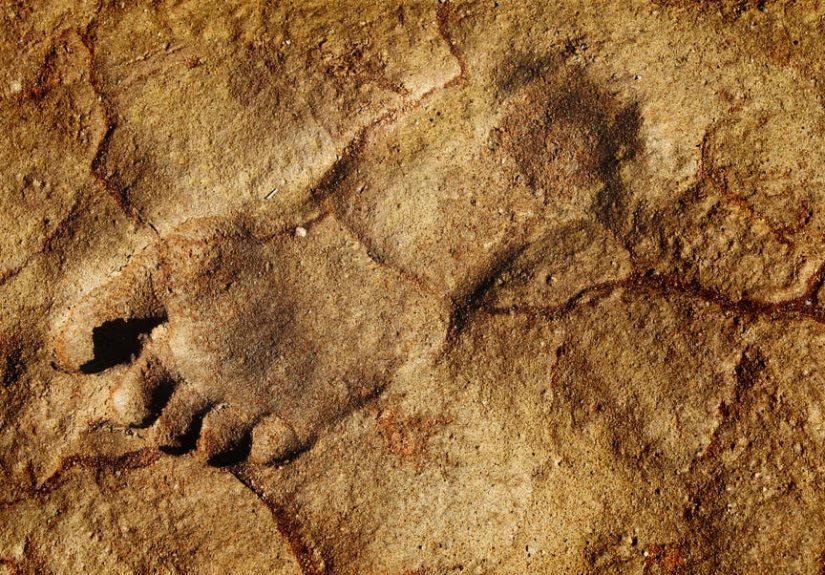
Recently studied track surfaces from the Schöningen site complex in Lower Saxony, Germany have revealed
three hominin footprintsone adult-sized and two smaller onespressed into what used to be a lakeshore.
Around them: the stomp-marks of Ice Age giants, including straight-tusked elephants and rhinoceroses.
Think of it as the world’s oldest “family outing” photo… except the camera is mud and the flash lasted
three hundred millennia.
The Discovery: A Few Steps That Refuse to Be Forgotten
Where the prints were found
The footprints come from the broader Schöningen Paleolithic site complex, famous for extraordinary
preservation and a deep record of Middle Pleistocene life. In the footprint research, scientists focused on
track-bearing areas tied to a paleolake environmentmuddy shorelines that acted like a natural guestbook
for any creature that came to drink, bathe, or forage.
What was actually found (and why “three” is a big deal)
Three footprints might not sound like muchuntil you remember how rarely footprints fossilize.
For a track to survive, it needs a perfect chain of events: the right kind of wet sediment, the right pressure,
quick burial, and a long quiet period where erosion doesn’t come along and ruin everything like an uninvited
toddler with a sandcastle.
The standout detail is the size mix. Two of the three prints match the proportions expected from
young individuals. That matters because prehistoric childhood is notoriously hard to “see” in the record:
kids don’t always leave durable tools, their bones preserve less often, and their daily activity is easy to miss.
Footprints can capture presence and behavior in a way artifacts often can’t.
Who made them? Likely Homo heidelbergensis
Based on age and context, researchers interpret these tracks as likely made by Homo heidelbergensis,
a Middle Pleistocene human species often discussed as part of the broader ancestry story involving Neanderthals
and modern humans. No, we don’t get a name, a biography, or a diary entryjust three steps and the world around them.
But sometimes that’s enough to ask better questions.
Why Footprints Are Archaeology’s Ultimate “Receipts”
Footprints are behavior, not just objects
Tools tell you what someone could do. Footprints tell you what someone didat a specific place, in a specific moment.
A stone scraper might sit in a layer for centuries of repeated visits. A footprint is a timestamped gesture:
“I was here, and I weighed this much, and the ground was soft, and I walked this way.”
With enough tracks, researchers can infer speed, gait, direction, group size, and how individuals moved through a landscape.
With only three, you stay cautiousbut you can still notice the mixed ages and the lakeshore setting.
Children in the record: rare, messy, and hugely important
The smaller footprints are the headline-stealers because they point to a mixed-age group rather than an all-adult activity.
That nudges interpretation away from the classic “band of hunters only” stereotype and toward something more realistic:
human life includes kids. It includes learning, tagging along, exploring, and probably being told
“don’t go near the rhino” approximately 400 times a day.
The Scene: A Lakeshore Shared With Giants
Elephants with 55-centimeter footprints
Among the animal tracks, the most dramatic belong to the extinct straight-tusked elephant
Palaeoloxodon antiquus. Some elephant footprints on these surfaces reach about
55 centimeters in lengthbasically a dinner-table platter, but for feet. These animals were among the
largest land mammals of their time, and their presence helps reconstruct what the habitat supported:
plenty of vegetation, reliable water, and an ecosystem capable of feeding true megafauna.
A rhinoceros cameo
Researchers also report a rhinoceros footprint attributed to Stephanorhinus (one of two Pleistocene species),
notable because such track evidence is exceptionally rare in Europe. Add even-toed ungulates and other herbivores,
and you get a shoreline that functioned like a prehistoric watering-hole intersectionbusy, seasonal, and full of risk.
Not a desert. Not a tundra. A surprisingly “livable” Europe
The reconstructed environment is not a bleak wasteland. The evidence points to an open setting with
birch and pine and a ground layer rich in grasses. Around the water, plant foods would have been available
depending on seasonfruits, leaves, shoots, and other edible resources. In other words, this wasn’t just a place to hunt;
it was a place to live.
How Do You Date a Footprint That Old?
Footprints don’t come with a label, so context does the heavy lifting
You don’t radiocarbon date a 300,000-year-old footprint (radiocarbon doesn’t reach that far reliably).
Instead, researchers date the sediments and layers associated with the track surfaces using a toolbox of methods:
stratigraphy (where the layers sit in sequence), correlation to known climatic stages, and comparison with other
well-dated materials and horizons from the site complex.
Why Schöningen is uniquely helpful
Schöningen isn’t a random spot where someone happened to find tracks. It’s a long-studied complex known for
Middle Pleistocene archaeology and remarkable preservation, including wooden artifacts and evidence of
ancient animal exploitation. That deep research history helps scientists place the footprints into a more
confident timeline and ecological framework.
Modern footprint science: measuring mud like it’s a crime scene
Footprint research (ichnology) today often uses detailed photography, 3D surface modeling, and careful measurement
of depth, toe impressions, arch traces, and pressure patterns. Even when the prints are incomplete,
morphology and proportions help narrow whether a track is likely hominin or something else.
Putting These Tracks in Context: Other Famous Human Footprints
Schöningen’s footprints are extraordinary for Germany, but the broader human story includes other iconic tracksites.
Looking at them together shows what footprints can reveal across vastly different times and places.
Laetoli (Tanzania): the celebrity ancestors
The Laetoli trackway (about 3.6 million years old) is famous because it captures early bipedal walking in volcanic ash.
It’s a reminder that once footprints preserve, they can become some of our clearest evidence for how early humans moved.
Ileret (Kenya): modern-looking feet far earlier than you’d think
Trackways around 1.5 million years old show foot anatomy and walking patterns that look surprisingly humanlike,
suggesting efficient long-distance travel was part of the hominin toolkit long before our species appeared.
White Sands (New Mexico): footprints that rewrote an entire timeline
The White Sands footprintsdated to roughly 21,000–23,000 years agomatter because they strengthen evidence that
humans were in North America during the last Ice Age much earlier than the once-popular “Clovis-first” timeline.
Different era, different question, same core power: tracks can overturn assumptions.
So what makes Schöningen different?
Schöningen is special because it offers a Middle Pleistocene lakeshore snapshot in Europe with a mixed-age group
and abundant megafauna tracks in the same general setting. It’s less about “first humans anywhere” and more about
“what daily life looked like” for an extinct human species in a specific ecosystem.
What This Discovery Suggests (and What It Doesn’t)
Likely a small mixed-age groupmaybe a “family outing”
The presence of two smaller tracks strongly supports the idea that young individuals were there.
It’s reasonable to imagine a small group using the lakeshore resourceswalking the shallows, collecting plant foods,
checking the waterline. But archaeology stays humble: three footprints can’t prove a picnic.
What it can prove is mixed ages on that spot at that time.
Coexistence with megafauna doesn’t mean friendship
Headlines love the idea of humans casually hanging out with elephant herds like it’s a nature documentary with snacks.
The smarter takeaway is simpler: humans and big animals used the same water sources. That implies knowledge, caution,
and probably a lot of situational awareness. A lakeshore is a resource… and also a place where large bodies with horns
and tusks show up unannounced.
It adds texture to Homo heidelbergensis life
We often talk about extinct human species through fossils, tools, and abstract models. Footprints bring it back to bodies.
Someone stepped. Someone’s kid stepped. The ground gave a little. The lake was right there. The rest of the world kept moving.
What Comes Next: From Tracks to “Day-in-the-Life” Science
The big promise of footprint research isn’t just identifying a printit’s linking footprints to environment, seasonality,
animal movement, and human decisions. At a complex site like Schöningen, the best future discoveries may come from
combining tracks with pollen and plant evidence, animal bones, site spatial analysis, and more refined sediment studies.
- More surfaces: footprints often come in clusters, and new exposures can reveal additional trackways.
- Better models: 3D documentation makes prints sharable and measurable without damaging them.
- Richer behavior stories: the goal is cautious reconstructionwhat the lakeshore offered, and how humans used it.
Conclusion: The Oldest “Selfie” Is a Footprint
Three footprints won’t tell you everything. But they tell you something that’s weirdly hard to get from any other evidence:
a direct moment of presence. A small group, including young individuals, stood on a muddy shore 300,000 years ago in a landscape
shared with elephants and rhinos. That’s not just a data point. That’s a scene.
And maybe that’s why footprints hit differently. They don’t feel like artifacts. They feel like you’re almost thereclose enough
to imagine the squelch of mud, the glitter of water, and the universal human experience of trying not to step in something gross.
Experiences: What It’s Like to Chase Ancient Footprints (Without Time Travel)
Most of us will never discover a 300,000-year-old track surface (and frankly, if you do, please stop poking it with a stick).
But you can understand why footprints make archaeologists a little giddybecause footprint work is one part science,
one part detective story, and one part “wait, is that… toes?”
People who work on tracksites often describe the first clear footprint as a mental gear-shift. At many digs, you spend days
staring at sediments that look like nature’s beige wallpaper. Then suddenly a curve appears, or a toe ridge, or a heel cupsomething
unmistakably shaped by a living body. It’s not like finding a stone tool, where you expect stone. It’s more like spotting a face in
a crowd: once you see it, you can’t unsee it.
There’s also a physical experience to footprint landscapes that helps the science click. If you’ve ever walked along a muddy lakeshore
or a tidal flat, you already know the basic physics: one step can be crisp, the next can blur, and the difference might be a tiny change
in moisture, sand content, or how long the sun’s been out. That’s why researchers obsess over sediment details. A footprint isn’t just a
footprint; it’s a recording of ground conditions in that moment. The mud becomes a kind of natural sensor, logging pressure and movement
in real timeonly the “real time” happens to be 300,000 years ago.
For museum visitors, the experience is different but just as sticky (emotionally, not literally). Seeing casts or 3D models of printsespecially
smaller onesoften triggers an immediate reaction: “That’s a kid.” It’s a rare moment when deep time stops feeling like an abstract number and starts
feeling like a life. A child’s footprint collapses distance. It makes you think about learning to walk, staying close to adults, wandering toward water,
and the fact that curiosity is older than our species.
Technology has added its own “wow” factor. Modern track research often involves photogrammetry and 3D scanningmethods that let scientists capture
the geometry of a print in high detail and share it widely without repeated handling. For students or enthusiasts, exploring a digital footprint model
can feel like rotating a time capsule under a desk lamp. You can tilt the surface, watch shadows fall across toe ridges, and understand why experts argue
over millimeters. Those millimeters can separate “hominin” from “not hominin,” or suggest whether a foot slid slightly or lifted cleanly.
And then there’s the imaginative experiencethe one everyone has, scientist or not. Footprints invite you to play out the scene. At Schöningen, the
setting reads like a natural crossroads: water, edible plants, large herbivores, and the ever-present calculus of risk. If you picture an adult and two
younger individuals near shallow water, you don’t have to add much for it to feel real. Maybe they were rinsing off, collecting something, or simply
moving along the shore. The point isn’t to write fan fiction about the Pleistocene. The point is that footprints make plausible human moments visible,
and that visibility changes how we think about extinct humans. Not as silhouettes holding spears in a textbook illustration, but as bodies navigating
landscapescarefully, routinely, and sometimes with kids underfoot.
So the next time you see footprints on a beach or in wet dirt, consider the weird possibility that you’re doing something ancient in the most literal way:
leaving a record of your presence that could outlast you by a lot. Hopefully not 300,000 years. But heymud has ambition.