Table of Contents >> Show >> Hide
- What Happened in Fulda?
- Why the Story Took Off So Fast
- How Human Bones Ended Up in Private Hands
- Why the Bones Still Matter After 1,500 Years
- The Real Plot Twist Is Archaeological Ethics
- Why the IKEA Bag Is a Perfect Symbol for the Whole Thing
- What the Story Says About Our Relationship With the Past
- So, Was This a Big Archaeological Breakthrough?
- Final Thoughts
- Related Experiences: Why Stories Like This Hit People So Hard
Some headlines sound like they were assembled by a very sleep-deprived algorithm after three espressos and a true-crime binge. This is one of them. An IKEA bag. Human bones. German officials. And yet, beneath the eyebrow-raising packaging and the inevitable “some assembly required” jokes, this strange little story opens the door to something bigger: how archaeology used to work, how it works now, and why even a bundle of bones wrapped in old newspaper can still matter 60 years later.
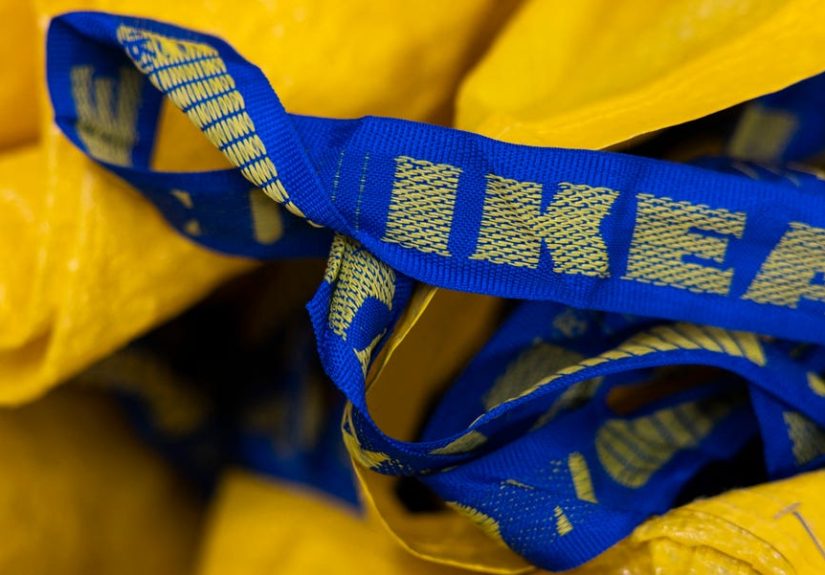
The short version is weird enough to carry itself. In Fulda, Germany, officials recently received human skeletal fragments believed to be around 1,500 years old. The remains had been tucked into a large blue IKEA shopping bag and handed over to the local archaeology office. That is the kind of sentence that practically writes its own social media caption. But the real story is less about shock value and more about a long, winding chain of custody that began in the 1960s, when archaeology was often handled with a level of casualness that would make modern professionals reach for a stress ball.
This is what makes the story more than a curiosity. It is not just about old bones turning up in an unexpected tote. It is about the changing standards of science, the ethics of handling human remains, and the odd ways history can wander off before finding its way back to the right shelf.
What Happened in Fulda?
According to reports from Germany, the bones were turned in to the Department of City and District Archaeology in Fulda after passing through private hands for decades. Officials believe the remains came from a 1965 excavation of a burial ground near Göttingen in Lower Saxony. At the time, a volunteer helper on the dig was apparently allowed to keep the skeletal fragments as a thank-you for assisting with the work. Today, that sounds less like archaeology and more like the world’s most unsettling gift bag.
Over the years, the bones stayed wrapped in old newspaper from the 1950s and 1960s. Eventually, they were passed along again and finally delivered to archaeologist Milena Wingenfeld in Fulda in, yes, an IKEA bag. Reports say the bones had been sorted by anatomical region, with pieces of skull, jaw, thigh bones, kneecaps, ribs, and other fragments packed in a fairly orderly way. So while the delivery system screamed “weekend laundry run,” the contents were handled with enough care to suggest somebody understood they were dealing with something historically significant.
Officials do not believe this is a criminal case, a recent death, or a mystery worthy of ominous piano music. The remains are thought to date to roughly the late Roman or early medieval period, likely from what many reports loosely describe as the Germanic era. The bones are expected to be returned toward the Göttingen district archaeology authorities, closer to the original excavation area.
Why the Story Took Off So Fast
Let’s be honest: part of the reason this story exploded is because it sounds absurd. The IKEA bag is doing a lot of work here. If the same bones had arrived in a plain archival box labeled “historic osteological materials,” the internet would have yawned and moved on. But put them in a giant blue shopping bag associated with flat-pack furniture, meatballs, and impulse-buy tealight candles, and suddenly the entire story becomes click-resistant in the best possible way.
That contrast is what gives the headline its snap. Ancient remains belong to the solemn world of museums, laboratories, and carefully lit documentary voiceovers. The IKEA bag belongs to the modern world of dorm-room moves and “I’m sure this bookshelf will fit in my car” optimism. Put those two worlds together, and the cognitive dissonance is irresistible.
Still, the humor should not flatten the real issue. What made archaeologists pause was not the color of the bag. It was the fact that human remains from a legitimate excavation had spent decades outside formal collections. That is the genuinely important part.
How Human Bones Ended Up in Private Hands
From a modern perspective, the idea that a volunteer could simply take home human remains from an archaeological dig feels astonishing. But the past is full of practices that once seemed normal and now look deeply wrong, careless, or both. Mid-20th-century archaeology was not the free-for-all that people sometimes imagine, but standards around excavation, storage, repatriation, documentation, and ethics were often looser than they are today.
In older digs, researchers frequently focused on visually striking grave goods such as jewelry, weapons, ceramics, and luxury items. Human remains did matter, of course, but osteological analysis was not always prioritized the way it is now. In some projects, especially smaller or volunteer-heavy ones, items could be distributed casually, insufficiently cataloged, or separated from their original context. That context is crucial. A bone is data, yes, but a bone in relation to soil, burial position, associated objects, and nearby graves is a much richer dataset.
In other words, archaeology is not treasure hunting with dust. It is contextual science. Once objects or remains leave that context, some of their story leaves with them.
Why the Bones Still Matter After 1,500 Years
Even if experts do not expect a blockbuster scientific revelation from this specific find, the remains are still valuable. That may sound surprising. After all, if the excavation happened in 1965 and the bones have been floating around ever since, what can they still tell researchers now?
Quite a bit, potentially. Human remains can reveal age at death, biological sex estimates, signs of disease, trauma, nutritional stress, and sometimes cultural practices related to burial. Even fragments can help complete a broader picture of how people lived and died in a certain region and period. Archaeologists are often building history from incomplete puzzles, and another handful of pieces can still sharpen the final image.
This matters especially for the period these bones likely come from. Around 1,500 years ago, Central Europe was in the middle of major transition. The Western Roman Empire had collapsed, migration patterns were reshaping the political map, and communities in what is now Germany were navigating shifting identities, power structures, trade routes, and burial customs. That era can feel fuzzy to modern readers, tucked awkwardly between “Rome” and “medieval castles,” but archaeology is one of the best ways to make it clearer.
Burials from this period can reveal status, belief systems, regional affiliations, and changing cultural habits. Were people buried with weapons? Jewelry? Imported goods? Were graves arranged in family clusters? Did burial styles shift over time? These are the kinds of questions archaeologists chase, and every recovered fragment helps stabilize the record.
The Real Plot Twist Is Archaeological Ethics
The most interesting thing about this story is not the bag. It is the gap between then and now. Modern archaeology treats human remains with far more ethical scrutiny than earlier generations often did. Today, professionals emphasize stewardship, documentation, consultation, dignity, and accountability. Human remains are not quirky collectibles, and they are certainly not souvenirs.
That shift did not happen overnight. It grew out of decades of criticism, reform, and a wider recognition that the dead are not just scientific material. They are people, and in many cases they are connected to descendant communities whose views and rights must be respected. Museums, universities, and archaeology organizations have had to rethink long-standing habits, including how remains are stored, studied, exhibited, and, in some cases, returned.
This is why the Fulda case feels like a message in a bottle from an older archaeological culture. It reminds us that research practices are shaped by their times, and that “common then” does not automatically mean “acceptable now.” A volunteer taking home bones as a token of appreciation may once have passed without much comment. Today, it lands with a thud.
Why the IKEA Bag Is a Perfect Symbol for the Whole Thing
Oddly enough, the bag works as more than a visual gag. It is a symbol of practicality. IKEA bags are huge, durable, anonymous, and designed to haul stuff from one place to another. That is exactly what happened here: not a ceremonial transfer, not a cinematic discovery, just a practical handoff of history that had been misplaced for far too long.
And maybe that is fitting. Archaeology is not always dramatic. Most of the field is less “golden idol on a pedestal” and more “careful paperwork, storage conditions, labeling, and patient analysis.” The bag’s ordinary usefulness actually mirrors the unglamorous labor of preserving the past. Not elegant, perhaps. Effective? Apparently yes.
Still, the image lingers because it compresses centuries into one scene. A modern consumer object carrying an ancient human story. Flat-pack culture meeting the Migration Period. A bag built for towels and extension cords suddenly moonlighting as a vehicle for historical accountability.
What the Story Says About Our Relationship With the Past
People love stories like this because they make history feel mobile and unpredictable. We expect the past to stay put behind glass. Instead, it turns up in attics, walls, thrift stores, construction sites, and, occasionally, giant blue bags. That unpredictability is part of the appeal. It reminds us that history is not fully archived. It is still circulating, still surfacing, still being returned.
There is also a moral comfort in the ending. The bones were not lost forever. They were not sold, trashed, or forgotten in a damp basement until the paper disintegrated. They made their way back to professionals who can document, preserve, and interpret them properly. In an age when so many headlines feel like civilization is being held together with expired tape, this one offers a rare note of repair.
It also nudges readers to think about what counts as responsibility. The person who finally turned in the bones may not have caused the original problem, but they helped correct it. That is often how stewardship works. You do not need to be the person who made the mess to be the person who decides it should end.
So, Was This a Big Archaeological Breakthrough?
Probably not in the fireworks-and-headlines sense. Experts have suggested that modern testing is unlikely to transform what is known about this specific 1965 find. But that does not make the handover trivial. Archaeology advances not only through spectacular discoveries, but also through the slow correction of records, the reunification of collections, and the restoration of context.
That may be less glamorous than unearthing a jeweled crown, but it is arguably more important. Good science is not only about finding new things. It is also about putting old things back where they belong.
Final Thoughts
The headline about an IKEA bag full of human bones turned in to German officials is irresistible because it sounds like satire. But the underlying story is real, useful, and surprisingly thoughtful. It is a story about how archaeology has changed, how ethics have evolved, and how even a strange handoff in an ordinary shopping bag can reopen questions about history, respect, and responsibility.
And maybe that is why this story sticks. It gives us the oddity we click on and the larger meaning we stay for. Yes, the bag is funny. No, the bones are not. Together, they create the kind of cultural collision that makes readers pause, laugh nervously, and then realize they are actually thinking about how the past should be handled in the present.
Related Experiences: Why Stories Like This Hit People So Hard
Stories like this do not just spread because they are strange. They spread because they tap into a very familiar human experience: the uneasy moment when something ordinary suddenly becomes charged with history. Most people have had a small version of that feeling. You open an old box in a relative’s house and find letters, military pins, photographs, or a watch that belonged to someone you never met. For a second, the object stops being an object. It becomes a doorway.
The IKEA bag story works in exactly that way, only on a much larger and more startling scale. Everyone recognizes the bag. It belongs to normal life. It is what you use when moving apartments, cleaning out closets, or pretending you only came in for one lamp. That familiarity gives the story its electric jolt. The vessel is everyday. The contents are ancient. Readers can instantly imagine the scene, and that mental image creates a strange emotional whiplash that makes the story memorable.
There is also a museum effect at work here. Many people have experienced that odd hush that settles over a gallery containing human remains, funerary objects, or burial artifacts. Even chatty visitors lower their voices. There is a natural instinct to treat the space differently. Not everyone can explain why, but most people feel it. The Fulda case shrinks that museum feeling into a headline-sized package. A shopping bag becomes, however briefly, a portable exhibit about time, mortality, and the limits of casual ownership.
Archaeologists and historians often talk about context, but regular readers experience context emotionally before they understand it intellectually. That is why so many unusual history stories catch fire. They do not just tell us something happened; they show us that the past was never really gone. It was sitting nearby, sometimes badly labeled, occasionally misunderstood, and waiting for someone to recognize it for what it was.
Another reason these stories resonate is that they mix humor with discomfort. People laugh first because the image is absurd. Then the second thought arrives: hold on, those are human remains. That tension creates a more lasting reaction than either comedy or seriousness alone. It is the same reason people remember bizarre estate-sale finds, hidden tombs beneath parking lots, or skeletons discovered during home renovations. Everyday routines collide with the deep past, and suddenly life looks less flat and more layered.
In that sense, the Fulda story is not just about one bag of bones. It is about the experience of realizing history is closer than we think. It can hide in family stories, private collections, mislabeled drawers, and inherited objects nobody quite knows what to do with. And when those things are finally returned, identified, or recontextualized, the experience is bigger than information. It feels like a small moral correction. Something lost is acknowledged. Something mishandled is handled better. Something silent gets a little of its story back.
That is why readers do not simply shrug and move on. Beneath the weirdness, there is a deeply recognizable feeling: the past has weight, and every once in a while, someone unexpectedly ends up carrying it.