Table of Contents >> Show >> Hide
- Before You Build: Choose Your Terrarium Style
- Terrarium Building 101: The Layers That Keep the Magic Alive
- Plant Palette: Tiny Heroes That Usually Behave Themselves
- 9 Fairy Garden Ideas to Create in a Terrarium
- 1) Seaside Souvenir (Beach Vacation Terrarium)
- 2) Trailhead Trek (Take a Hike Scene)
- 3) The Fishing Hole (Big Fish, Small Container)
- 4) Tiny Park Day (Hard at Work…But Make It Cute)
- 5) Laundry Line Lane (Capture Daily Life)
- 6) Owl Hollow Hideaway (A Real Hoot)
- 7) Creek Crossing Adventure (An Element of Adventure)
- 8) Forest Drop (Bring Nature In, Hanging Style)
- 9) Lightbulb Wanderlust (A Bright Idea)
- Care and Troubleshooting: Keep Your Mini World Thriving
- Conclusion
- Experience Notes: of “What People Learn the Fun Way”
A fairy garden in a terrarium is basically interior design for imaginary tenants. The best part? Your “clients” never ask for open-concept, never request a second bathroom, and never send midnight texts about the lighting. You get all the charm of a miniature worldtiny paths, pocket-size landscapes, whimsical propspaired with the satisfying logic of a self-contained plant display.
In this guide, you’ll learn how to set up a terrarium that won’t turn into a foggy swamp (or a crispy desert), then pick one of nine themed fairy garden ideas inspired by real-life memories: beach trips, hikes, daily routines, and a little “I found this cute rock and now it’s decor” energy. Grab a jar, a spoon, and your most dramatic miniature mushroom.
Before You Build: Choose Your Terrarium Style
Closed terrarium (lid on, humidity stays high)
- Best for: Mosses, ferns, fittonia (nerve plant), polka dot plant, selaginella, and other humidity-loving plants.
- Vibe: Lush, woodland, “tiny rainforest with a rent-controlled climate.”
- Watch-outs: Too much water = rot. Too much sun = greenhouse effect (aka plant soup).
Open terrarium (lid off, airflow stays steady)
- Best for: Drier setups like mini succulents or a mixed, low-humidity scene.
- Vibe: Airy, desert-y, “tiny hike but with better footwear.”
- Watch-outs: Dries out faster, so you’ll water a bit more often.
Terrarium Building 101: The Layers That Keep the Magic Alive
A terrarium is a container without drainage holes, so your goal is to create a “safe zone” where extra water can collect away from roots. Think of it as building a tiny basement that nobody lives inon purpose.
Quick supply list
- Clear glass container (wide-mouth jars are easiest for beginners)
- Gravel/pebbles (or perlite) for the drainage layer
- Activated charcoal (helps keep things fresh)
- Optional barrier layer: sheet moss, sphagnum, or landscape fabric
- Potting mix (light and well-draining)
- Small terrarium-friendly plants
- Mini props: pebbles, driftwood, shells, tiny figurines, mini fences, etc.
- Tools that feel unnecessarily fancy but help a lot: long tweezers, chopsticks, small scissors
Layering steps (simple, reliable, not fussy)
- Drainage layer: Add a base of gravel/pebbles (enough to create a reservoir, usually around 1–2 inches depending on container size).
- Charcoal layer: Sprinkle in activated charcoal (a thin layer is plenty).
- Barrier layer (optional but helpful): Add sheet moss or a cut-to-fit piece of landscape fabric to keep soil from sifting down.
- Soil layer: Add potting mix (generally 2 inches or enough for roots to sit comfortably).
- Planting: Place plants, keeping leaves off the glass when possible (constant wet contact can invite decay).
- Decor: Add paths, stones, branches, and miniaturesthen step back and pretend you’re judging a tiny landscaping competition.
- Water lightly: Mist or add small amounts of water. In terrariums, “more” is rarely “better.”
Plant Palette: Tiny Heroes That Usually Behave Themselves
For closed terrariums, pick slow-growing, humidity-friendly plants: fittonia (nerve plant), polka dot plant, lemon button fern, selaginella, baby tears, small peperomias, and mosses. For open terrariums, mini succulents can workjust keep the watering low and the airflow high. The key is matching plants with similar light and moisture needs so your terrarium doesn’t become a roommate drama.
9 Fairy Garden Ideas to Create in a Terrarium
Each idea below includes a theme, a plant direction (open vs. closed), and a quick “build this in real life” plan. Feel free to mix and matchfairies are famously flexible, and also famously not the ones buying the potting soil.
1) Seaside Souvenir (Beach Vacation Terrarium)
Best terrarium type: Open or lightly vented (drier is easier if you’re using sand). Build a tiny shoreline with sand, pebbles, driftwood, and a few shells. Use a small patch of moss as “dune grass” or choose a compact, low-water plant if your container stays open. Add sea-glass-style stones as the “tide line.” The trick is restraint: one great shell beats fourteen “I couldn’t choose” shells every time.
2) Trailhead Trek (Take a Hike Scene)
Best terrarium type: Closed. Create “geology” with layered pebbles, darker soil, and mossy ledges. Add a tiny hiker or backpack near a winding path of fine gravel. Choose lush, small-leaf plants (fittonia, baby tears, a small fern) to mimic forest groundcover. Finish with a stick “log” or a small stone “overlook” for that peak-photo momentno actual altitude required.
3) The Fishing Hole (Big Fish, Small Container)
Best terrarium type: Open or vented. Use a glass bowl or snifter shape to make a curved “pond.” Blue-green stones or polished glass can become your water. Around the edge, place pebbles and a bit of moss. Add a tiny fishing figure, a miniature dock, or a twig “pier.” Keep plants low so the “water” remains the starthis is a fishing story, after all.
4) Tiny Park Day (Hard at Work…But Make It Cute)
Best terrarium type: Closed. Turn everyday outdoor chores into a miniature park scene: a tiny rake, a wheelbarrow, or “gardeners” doing tiny garden things. Use moss and wood chips for texture, then add a few small branches as “fallen logs.” Plant choices: a small fern for height, fittonia for color, and moss as lawn. It’s wholesome, it’s charming, and nobody complains about leaf pickup.
5) Laundry Line Lane (Capture Daily Life)
Best terrarium type: Closed. Build a gentle green backdrop with moss along the back wall and a slim, tall container to create depth. Add a tiny clothesline using thread and toothpicks or thin twigs, then hang mini fabric scraps (or paper “sheets”) as laundry. Keep plants simple and tidyfittonia or baby tears reads like soft greenery at this scale. It’s domestic bliss, minus the actual laundry basket.
6) Owl Hollow Hideaway (A Real Hoot)
Best terrarium type: Closed. Make a woodland habitat with potting soil, stones, lichen, and driftwood. Nestle a small owl figure near a “hollow” made from bark or a curved piece of wood. Add a cushion of dried sphagnum or preserved moss for a forest-floor look. Plants: a small fern plus one trailing accent (like creeping fig in very small doses) can make the scene feel alive without overcrowding.
7) Creek Crossing Adventure (An Element of Adventure)
Best terrarium type: Closed. Create a “stream” with pale stones down the center and a few translucent blue pieces as water sparkle. Build “mountains” by stacking larger rocks and topping them with moss. Add two tiny hikers mid-journey for instant narrative. Plant low and slow: moss, baby tears, and a compact fern keep your world in scale and prevent the jungle-from-eating-the-village problem.
8) Forest Drop (Bring Nature In, Hanging Style)
Best terrarium type: Open or lightly vented (especially for hanging pieces). A teardrop or hanging globe is ideal for a minimalist forest scene: one small deer figure, a mossy hill, and a few tiny plants. If it’s open, you can use drought-tolerant mini plants; if it’s partially closed, stick with humidity lovers. Keep decor sparsehanging terrariums look best when they feel airy, not crowded.
9) Lightbulb Wanderlust (A Bright Idea)
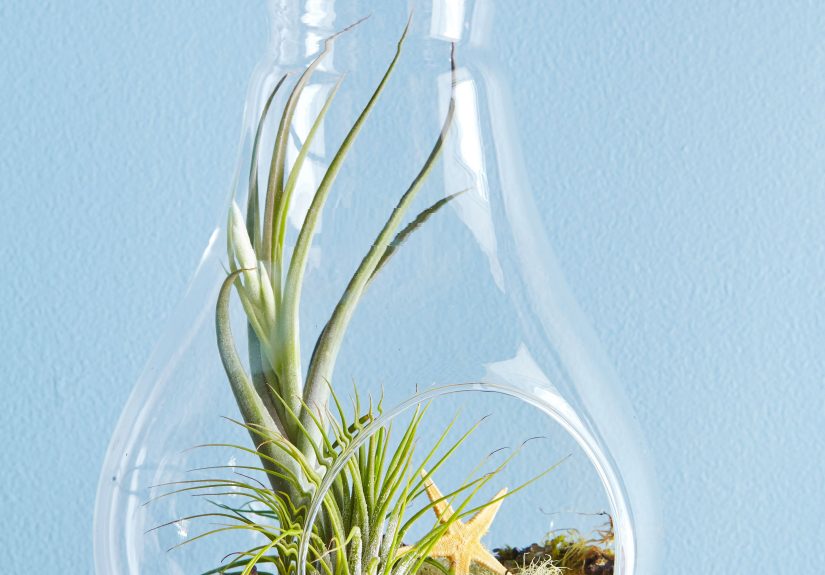
Best terrarium type: Open. An oversized “lightbulb” terrarium practically begs for travel souvenirs: a shell, a tiny stone, maybe a pinch of sand. Pair the theme with air plants (which prefer airflow) and a few sculptural accents like sea-urchin-shaped decor or textured stones. The result feels like a tiny vacation snapshot that hangs in the windowlike a postcard, but alive and less likely to get lost in a drawer.
Care and Troubleshooting: Keep Your Mini World Thriving
Light
Bright, indirect light is the sweet spot. Direct sun can overheat glass containers fast, especially closed terrariums. If you see scorched leaves or sudden wilting, move it back from the window.
Water
Water lightly. In closed terrariums, you may go weeks (sometimes months) without watering once the system balances. If you see heavy condensation or soggy soil, leave the lid off until things dry out. If the glass never fogs and plants look thirsty, add a small amount of watertiny sips, not a flood.
Pruning and “keeping the scale”
Trim early and gently. The secret to a fairy garden that stays magical is not letting one enthusiastic plant turn into a full-time jungle manager. Pinch back growth, remove yellowing leaves, and keep foliage from constantly touching glass.
Conclusion
A terrarium fairy garden is equal parts creativity and plant science: build the right layers, match plants to humidity, and decorate with intention. Pick a theme that makes you smilebeach nostalgia, trailhead vibes, a tiny laundry lineand your terrarium becomes more than a houseplant. It becomes a miniature story you can keep on a shelf.
Experience Notes: of “What People Learn the Fun Way”
Most terrarium fairy gardens start with optimism and end with one of two realizations: either you’ve built a charming little ecosystem, or you’ve accidentally created a fog machine starring a very stressed fern. The good news is that the “oops” moments are usually gentle and fixable, and they teach you the exact skills that make your next terrarium look like it was styled by a tiny professional.
One of the most common experiences is discovering that water behaves differently in glass. Because terrariums don’t have drainage holes, extra water doesn’t “just disappear.” It collects in the bottom layer and slowly changes the whole environment. People often describe the learning curve as moving from “I watered it like a houseplant” to “I water it like I’m feeding a very small, very polite bird.” Once you switch to misting and tiny pours, plant health usually improves fast.
Another frequent lesson: scale is a real thing. In a regular container garden, a plant can sprawl and it’s still cute. In a fairy garden, one fast grower can swallow your entire storyline. The first time someone watches a once-mini fittonia become a leafy giant hovering over a tiny bench, they realize pruning isn’t “optional maintenance,” it’s part of the design. The people who enjoy terrariums long-term tend to treat trimming as a styling sessionsnip, step back, adjust the scene, repeat.
There’s also a classic surprise about light: bright windows feel like a good idea until the sun hits the glass directly. Many makers learn (often quickly) that a closed terrarium in direct sun can heat up like a parked car. The fix is usually simplemove it a few feet back, or place it where it gets bright light without the sunbeam. Once the placement is right, growth looks steadier and the terrarium stays clearer.
On the creative side, people tend to find that natural materials outperform plastic props for realism. A twig becomes a fallen log. A pebble becomes a boulder. A pinch of sand becomes a path. The “best” fairy gardens often don’t have the most miniaturesthey have the best composition. Makers who get really happy with their results usually choose one focal moment (a tiny fisherman, a deer, a hiker crossing a stream) and then build the landscape to support that story, instead of scattering decorations everywhere like confetti.
Finally, many terrarium fans end up loving the routine of observation: checking condensation, watching new leaves unfurl, and noticing when a tiny corner gets too damp. It becomes a small, calming habitlike keeping a little weather system on your desk. And honestly, if your day is chaotic, it’s oddly comforting to manage a world where the biggest crisis is “the moss is slightly too enthusiastic.”