Table of Contents >> Show >> Hide
- Why These Home Trends Are Losing Favor
- 1. Stark All-White Kitchens and Rooms
- 2. Gray and Greige Everything
- 3. Matchy-Matchy Furniture Sets
- 4. Modern Farmhouse Overload
- 5. Open Shelving and the Hyper-Styled “Show Kitchen”
- 6. Bouclé, Bubble Shapes, and Other Instagram-First Furniture
- 7. Impersonal Mass-Market Decor
- So What Should You Do If Your Home Has These Trends?
- Real-Life Experiences: How These Outdated Home Trends Show Up in Everyday Living
- Final Thoughts
Home trends are a lot like trendy haircuts: amazing in the moment, slightly confusing in old photos, and occasionally followed by the phrase, “What were we thinking?” That does not mean every popular look deserves exile. It just means some styles that once felt fresh, polished, and Pinterest-worthy are starting to lose their sparkle in real homes.
Right now, interior designers are not rejecting style. They are rejecting sameness. Across kitchens, living rooms, bedrooms, and entryways, the mood is shifting away from formula decorating and toward spaces that feel warmer, more personal, more layered, and much easier to live in on an average Tuesday. In other words, people still want beautiful homes. They just do not want homes that look like a showroom, a social media set, or a very expensive waiting room.
If you are planning a refresh, you do not need to rip out every surface and hold a dramatic breakup ceremony with your sofa. But it helps to know which once-hot looks are beginning to read dated, especially if you are about to invest real money in furniture, finishes, or a remodel. Here are the seven home trends designers say are quickly becoming outdated, plus what feels more current instead.
Why These Home Trends Are Losing Favor
The biggest reason is simple: people are craving homes with character. After years of algorithm-approved interiors, homeowners are getting tired of rooms that look interchangeable. Designers are seeing more interest in warmth, texture, patina, practical layouts, vintage pieces, and materials that age gracefully instead of peaking in one very photogenic season.
Function matters, too. A trend can survive almost anything except daily life. If it shows every fingerprint, collects dust, limits storage, clashes with how families actually live, or feels obviously copied from a viral post, its days are numbered. The new benchmark is not “Does this look expensive online?” It is “Does this still feel good after six months of cooking, hosting, lounging, working, cleaning, and stepping over the dog?”
1. Stark All-White Kitchens and Rooms
Why it is falling out of favor
For years, all-white interiors were treated like the gold standard of tasteful design. White walls, white cabinetry, white quartz, white tile, white upholstery, white everything. The look signaled cleanliness and simplicity, but it also became so widespread that it lost much of its charm. In many homes, stark white now feels less timeless and more sterile, especially when there is little contrast, texture, or architectural interest to keep the room from feeling flat.
There is also the tiny issue of actual living. White kitchens may photograph beautifully, but they are not always forgiving. Every smudge, splash, chip, and mystery mark seems to announce itself like it paid rent. The result can be a space that feels more high-maintenance than high-style.
What designers are leaning toward instead
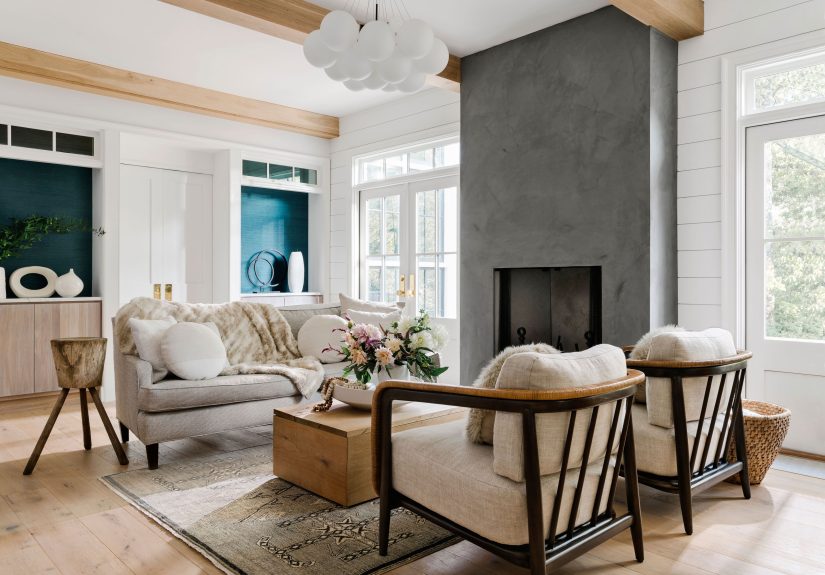
The move now is toward warmth and depth: creamy whites instead of icy whites, wood cabinetry instead of full-white runs, darker islands, earthy stone, plaster finishes, and richer color accents. A kitchen can still feel bright without looking like a dental office with pendant lights. The most interesting spaces today layer whites with woods, metals, handmade tile, and subtle color so the room feels collected instead of copy-and-pasted.
2. Gray and Greige Everything
Why it suddenly feels tired
Gray had a spectacular run. Then gray flooring showed up. Then gray sofas. Then gray walls. Then gray bedding. Then gray wood-look tile. Then it started to feel as if an entire decade had been filtered through a cloud. What once read as modern and safe now often feels cold, generic, and emotionally unavailable. Greige, meanwhile, was supposed to soften the effect, but in many homes it turned into a kind of visual shrug.
The problem is not that gray is inherently bad. It is that too much gray drains energy from a room. When the whole palette stays muted, spaces can feel anonymous rather than elegant. Designers are increasingly steering clients away from gray-heavy schemes that flatten architecture and make rooms feel less inviting.
What works better now
Warmer neutrals are taking over: mushroom, bone, putty, ecru, sand, clay, caramel, and soft olive-based tones. These shades still behave like neutrals, but they add more warmth and complexity. If you love a restrained palette, you do not need to leap straight into tomato-red walls and a zebra-print ottoman. You just need a palette with a pulse.
3. Matchy-Matchy Furniture Sets
Why designers are over it
A matching bedroom set once felt like the ultimate adult purchase. Same wood tone, same hardware, same lines, same everything. The living room version was not much better: sofa, loveseat, chair, coffee table, and side tables all arriving like a coordinated dance team. The issue is that perfect matching rarely looks curated. It looks purchased in one afternoon under fluorescent lighting.
Designers increasingly see overly coordinated rooms as one of the fastest ways to make a home feel dated. When every piece belongs to the same family, the room loses tension, personality, and the sense that it evolved over time. It may look tidy, but it often feels flat.
What to do instead
Mixing styles, materials, and eras creates a room with more soul. Pair a modern sofa with a vintage wood coffee table. Let your nightstands be siblings, not twins. Bring in contrast through shape, scale, and finish. The goal is not chaos. The goal is a room that feels assembled by a human with taste, not shipped as a bundle deal.
4. Modern Farmhouse Overload
Why the look is aging fast
Modern farmhouse became so dominant that it turned into a design default. White shiplap, barn-style references, black fixtures, rustic wood accents, and a carefully edited “country but make it boutique hotel” vibe spread everywhere. In the right house, with authentic materials and restraint, pieces of the style can still work. The problem is what happened after the trend hit maximum speed.
When modern farmhouse is over-applied, it stops feeling grounded and starts feeling theatrical. Shiplap on every vertical surface, generic reclaimed-style finishes, and matte-black hardware everywhere can make a house feel locked into a very specific moment. Designers are now moving toward interiors that respond more to architecture, region, and personal taste rather than one national decorating template.
What feels fresher
Homes are getting more nuanced. Instead of farmhouse clichés, designers are using traditional millwork, warmer woods, mixed metals, softer historic references, and materials that feel native to the house. Translation: less “I bought a sign that says Gather,” more “this room actually belongs to the people who live here.”
5. Open Shelving and the Hyper-Styled “Show Kitchen”
Why people are cooling on it
Open shelving had a long honeymoon period. It promised airy kitchens, easy access, and a chance to display the pretty bowls you swear you use all the time. In reality, open shelving often becomes a full-time job. Dishes need to stay neat, colors need to coordinate, dust is very real, and the visual calm disappears the second life gets busy. Which, rude but true, is often.
The same fatigue is hitting the broader “show kitchen” mentality, where everything is styled for appearance and nothing can look messy for more than four minutes. Designers are hearing from homeowners who want kitchens that function beautifully without requiring permanent performance mode.
What is replacing it
More concealed storage, mixed cabinet layouts, secondary prep spaces, pantry-style organization, and a balance of open and closed elements. A small shelf for cookbooks or pottery still works. A whole wall that turns cereal boxes into a design challenge? Less appealing. The kitchen is becoming more practical again, which is good news for anyone who owns both a toaster and a realistic schedule.
6. Bouclé, Bubble Shapes, and Other Instagram-First Furniture
Why the novelty is wearing off
Bouclé and blob furniture exploded because they looked cozy, sculptural, and very online. Curved chairs, rounded sofas, puffball ottomans, and cloud-like silhouettes had undeniable visual appeal. But many of these pieces were trend-driven rather than truly versatile. Some are hard to clean, some wear poorly, some are uncomfortable, and some look amazing until they have to coexist with pets, kids, denim, or gravity.
Designers are not arguing against softness or curves. They are just less interested in exaggerated shapes that dominate a room for the sake of trendiness. When a chair feels more like a prop than a piece of furniture you want to sink into every evening, the romance fades pretty quickly.
What to buy instead
Look for furniture with longevity: cleaner lines, tactile but durable fabrics, softer curves used in moderation, and silhouettes that can adapt as your style evolves. A room can still feel current without buying a chair that resembles a marshmallow in a couture phase.
7. Impersonal Mass-Market Decor
Why this trend dates a home almost immediately
Few things make a space feel older faster than decor that never felt personal to begin with. Generic canvas prints, word art, mass-produced filler accessories, overly staged gallery walls, fake plants that look aggressively fake, and decorative objects bought only because a shelf looked empty can all make a room feel like it was assembled by a content algorithm.
This type of decor tends to age badly because it has no emotional anchor. It is trend fuel, not story. Designers are increasingly encouraging homeowners to skip the filler and buy less, but better: real art, thrifted finds, handmade ceramics, vintage lighting, meaningful books, and pieces with some evidence of life. Not everything has to be rare or expensive. It just has to feel chosen.
What makes a home feel current now
Authenticity. That can mean original art, family photos in thoughtful frames, collected objects from travel, heirloom furniture, or even quirky pieces that start conversations. A room feels modern when it reflects a point of view. Personality, it turns out, has much better staying power than decor purchased in a panic five minutes before guests arrive.
So What Should You Do If Your Home Has These Trends?
First, exhale. You are not legally required to redecorate because a designer somewhere got tired of bouclé. Trends are useful signals, not commandments. If you still love your black fixtures or your white kitchen works beautifully for your life, keep them. The smartest updates happen when you edit, not when you overreact.
Start with the pieces that bother you in daily life. If your open shelves annoy you, add more concealed storage. If your room feels cold, bring in wood, warmer paint, and softer lighting. If your furniture feels too coordinated, swap one or two pieces rather than replacing everything. The most stylish homes usually evolve in layers. They are not built by panic-buying a whole new personality over a holiday weekend sale.
Real-Life Experiences: How These Outdated Home Trends Show Up in Everyday Living
Here is the funny thing about a home trend becoming outdated: most people do not notice it because a magazine says so. They notice it because living with it starts to feel mildly irritating, visually stale, or weirdly disconnected from real life. That is when a trend stops being a style choice and starts becoming background friction.
Take the all-white kitchen. At first, it feels bright, clean, and impossibly polished. Then real life enters the chat. Coffee splashes happen. Tomato sauce splatters. Somebody leans against the island with blue jeans. A chair leg scuffs the floor. Suddenly, the room that once looked calm starts feeling fragile. Homeowners often describe this stage the same way: they are tired of protecting the kitchen instead of enjoying it.
Gray-heavy interiors create a different kind of experience. They usually do not feel bad all at once. Instead, they slowly start feeling dull. A living room that once seemed sleek begins to feel sleepy, especially in homes that do not get tons of natural light. People bring in a warm wood side table, an earthy throw pillow, or a lamp with a linen shade, and the room instantly feels more alive. That moment is often when they realize the issue was never minimalism. It was emotional temperature.
Matchy furniture sets tend to create another common experience: the room looks finished, but not memorable. Homeowners often say the space feels “fine” and yet weirdly impersonal. Then they add one vintage chair, a secondhand chest, or a rug with more character, and suddenly the room starts talking back. It feels less like a catalog page and more like a life.
Open shelving and show-kitchen styling usually hit a wall when schedules get busy. The shelves looked gorgeous when every dish was stacked like a still-life painting. But after a few weeks of work, school, cooking, and regular human chaos, the same shelves can start to feel bossy. People realize they do not want their mixing bowls auditioning for a design award every day. They want storage that lets them close a cabinet and move on.
Bouclé furniture and blob shapes often lose their charm through touch and use. A chair can be adorable online and deeply unhelpful in person. Maybe it snags. Maybe it pills. Maybe it looks oversized in a small room. Maybe everyone avoids sitting in it because it is more sculpture than seat. That is the difference between trend appeal and lived comfort, and homeowners feel it fast.
Even mass-market decor tends to reveal itself through experience. Many people reach a point where they look around and realize nothing in the room says anything about them. The space is not ugly. It is just generic. Then they swap one printed phrase sign for a thrifted painting, one filler vase for a handmade ceramic piece, or one fake plant for a real branch clipped from the yard, and the whole room gets more believable.
That is why the best home updates rarely come from chasing the next trend at full speed. They come from paying attention to the moments when your home feels too cold, too fussy, too staged, too cautious, or too disconnected from the way you actually live. Designers may spot the shift first, but homeowners feel it in the details: what is hard to clean, what never gets used, what looks dated in photos, and what no longer feels like home. That experience, more than anything, is what pushes trends out the door.
Final Thoughts
The home trends designers say are quickly becoming outdated all share one thing in common: they were overdone. That is usually how trends end, not with a dramatic crash, but with a slow collective realization that maybe the room does not need another gray sectional, another black faucet, another filler vase, or another wall trying to be “the moment.”
The good news is that what is replacing these trends is more forgiving and more personal. Warmth beats sterility. Character beats coordination. Function beats fantasy. And homes that feel lived-in, layered, and specific to the people inside them are not just more current. They are much harder to get tired of.