Table of Contents >> Show >> Hide
- 1) Too Many Items on Flat Surfaces (a.k.a. The Countertop Landing Zone)
- 2) Visible Wires, Chargers, and Tech Spaghetti
- 3) Too Many Pillows and Blankets (Cozy… Until It’s Chaos)
- 4) A Cluttered Entryway (Your Home’s First Impression Is Panicking)
- 5) Overfilled Open Shelving (Pretty in Photos, Chaotic in Real Life)
- 6) Too Much Stuff on the Refrigerator Door (The Visual Noise Billboard)
- Quick Wrap-Up: The Secret Is Managing Visual Clutter
- of “Yep, That’s My House” Experiences (And What They Teach You)
Ever notice how your home can be actually clean, yet still look like it just lost a pillow fight against a mailroom? That’s because “messy-looking”
is often less about dirt and more about visual noisethe stuff your eyes trip over the second you walk in.
Cleaning pros and professional organizers love a good deep-clean, sure. But when they want a home to look instantly tidier (especially when guests are “five minutes away”),
they focus on the sneaky culprits that broadcast chaos even in an otherwise decent space.
Below are six of the biggest offendersand the fast, realistic fixes that make your home look pulled together without forcing you to live like a minimalist monk
who owns one spoon and a single well-behaved plant.
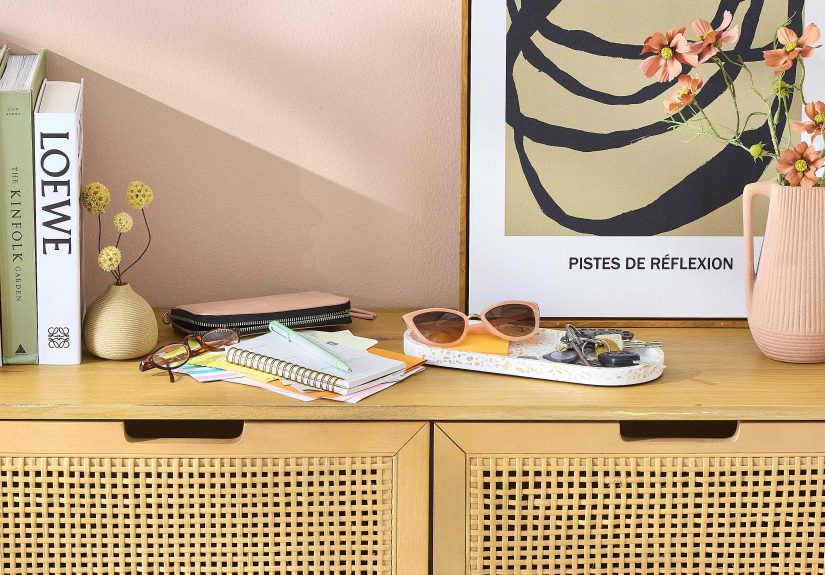
1) Too Many Items on Flat Surfaces (a.k.a. The Countertop Landing Zone)
Flat surfaces are magnets for random life debris: keys, receipts, a half-charged power bank, yesterday’s coffee mug, and the mysterious screwdriver that
appears whenever you’re emotionally vulnerable. Even if the room is “clean,” crowded surfaces read as clutterbecause your brain assumes there’s more mess
hiding nearby.
Why it makes your home look messy
Horizontal clutter creates instant visual busyness. Kitchens and bathrooms suffer the most because counters are front-and-center and heavily used.
When every inch is occupied, the space looks smaller, louder, and harder to maintain.
Quick fixes cleaning pros actually use
- Set a “rule of three” for visible counter items (example: soap + tray + one daily-use item).
- Group, don’t scatter: corral essentials on a tray so they look intentional, not abandoned.
- Create a drop zone near the entry (not the kitchen!) for keys, mail, and daily pocket-dump items.
Real-life example
If your coffee corner currently hosts a coffee maker, grinder, syrup lineup, protein shaker, vitamin bottles, and three “temporary” mugscongratulations,
you’ve built a shrine to chaos. Choose the daily must-haves, store the rest, and keep one cute container for pods/filters. Same caffeine, fewer “why is this so stressful?” vibes.
2) Visible Wires, Chargers, and Tech Spaghetti
Nothing ruins a calm living room faster than a glowing power strip and a nest of cables that looks like it’s plotting something. Wires are visual clutter,
and because they’re often dark and angular, they grab attention immediately.
Why it makes your home look messy
Loose cords signal “unfinished” and “temporary,” like you just moved in yesterdayor like your TV stand is auditioning for a cyberpunk movie set.
Even stylish spaces look untidy when cords are draped, tangled, or running across open floors.
Quick fixes cleaning pros recommend
- Bundle cords with Velcro ties (easy to adjust; less rage than zip ties).
- Hide the power strip in a cord box or mount it under a desk/console table.
- Use cable clips so chargers stay where you want them (instead of slithering to the floor).
- Pick one charging station (drawer, basket, or shelf) so the whole house isn’t a charging museum.
Pro-level tip
If you can, route cords behind furniture and along baseboards. It’s not glamorous, but it’s the kind of “invisible improvement” that makes a room feel instantly calmer.
3) Too Many Pillows and Blankets (Cozy… Until It’s Chaos)
Throw pillows and blankets are like snacks: one is nice, five feels fun, and twelve makes you wonder how you got here. Cleaning pros see this constantly:
the couch becomes a fabric mountain that you have to climb just to sit down.
Why it makes your home look messy
Over-accessorizing soft goods creates volume and disorder. When pillows don’t have a consistent arrangementor blankets are draped like a cape mid-flight
the room reads as “unmanaged,” even if everything is technically clean.
Quick fixes that keep the cozy without the clutter
- Edit the pillow count: keep what you actually use and love; store the rest.
- Use one “blanket home”: a basket, ottoman storage, or a single shelf.
- Pick a reset pattern (example: two pillows per side + one lumbar). Make it automatic.
Real-life example
If guests need to relocate four pillows and two throws just to sit down, your living room is silently yelling “I am a display, not a place.”
Your goal is inviting, not furniture cosplay.
4) A Cluttered Entryway (Your Home’s First Impression Is Panicking)
The entryway is where “I’ll deal with this later” goes to breed. Shoes pile up. Bags multiply. Mail forms a paper glacier. Suddenly your front door opens
to a scene that screams, “We live here in a very dramatic way.”
Why it makes your home look messy
The entry is a high-traffic drop zoneand it’s also the first thing you and your guests see. When it’s chaotic, the entire home feels messier by association,
even if the rest of the rooms are fine.
Quick fixes that make the biggest difference
- Limit shoes to one pair per person by the door; store the rest.
- Give bags a home: hooks, a closet bin, or a dedicated shelf.
- Stop mail at the source: a sorter tray or a “process bin” (open it daily, not monthly).
- Use less open storage: too many hooks/baskets can look messy if they’re overflowing.
The “two-minute reset” trick
Before bed, do a tiny entryway reset: shoes aligned, bags hung, loose papers corralled. Two minutes buys you a calmer morning and a better-looking home.
5) Overfilled Open Shelving (Pretty in Photos, Chaotic in Real Life)
Open shelves can look gorgeouswhen styled. But in daily life, they’re often holding a mismatched parade of mugs, snack containers, and the one random
candle you received as a gift and now feel legally obligated to keep.
Why it makes your home look messy
Open storage puts everything on display, which means any inconsistency becomes visual clutter. The more small items you show, the “busier” the shelf looks.
When shelves are packed, they read less like design and more like a retail clearance aisle.
Quick fixes that keep shelves functional and tidy
- Use matching containers (baskets, bins, canisters) to reduce visual noise.
- Leave breathing room: negative space makes shelves look intentional.
- Group by category (all mugs together, all pantry items together) instead of mixing everything everywhere.
- Store the “ugly essentials” behind doors; display the nicer, uniform pieces.
Real-life example
If your shelf holds cereal, wine glasses, a tool kit, and a tiny pumpkin decorationyour shelf isn’t “open concept.” It’s “open season.”
6) Too Much Stuff on the Refrigerator Door (The Visual Noise Billboard)
The fridge door is prime real estate for calendars, school art, invitations, magnets, coupons, and the phone number of someone you haven’t called since 2019.
It’s also a giant shiny rectangle in the kitchenmeaning clutter there becomes the room’s accidental focal point.
Why it makes your home look messy
A crowded fridge front creates a loud “command center” look even when the counters are spotless. Cleaning pros call it visual noise: lots of small,
bright, mismatched items competing for attention.
Quick fixes that still let you keep what matters
- Move paper elsewhere: use a wall pocket, binder, or “mailbox” container.
- Create a fridge limit: only a few favorites at a time (rotate kids’ art like a gallery).
- Use coordinated magnets or a single magnetic frame system to make it look intentional.
The “kitchen calm” payoff
Clearing the fridge front is one of the fastest ways to make a kitchen feel more polishedno scrubbing required. It’s basically a makeover with zero elbow grease.
Quick Wrap-Up: The Secret Is Managing Visual Clutter
If your home looks messy, it’s rarely because you’re “bad at cleaning.” It’s usually because daily-life items are living out in the open with no system:
surfaces become storage, cords become décor, shelves become overflow, and the fridge becomes a bulletin board with abandonment issues.
The good news? These fixes are small, fast, and repeatable. Pick one zone (counters, entryway, or fridge door) and make a tiny rule you can keep.
A home that looks tidy isn’t one that’s perfectit’s one that has simple defaults.
of “Yep, That’s My House” Experiences (And What They Teach You)
Let’s get painfully real for a minutebecause the reason clutter wins isn’t laziness. It’s momentum. Messy-looking homes are usually the result of tiny,
totally understandable habits that stack up like pancakes you never asked for.
Experience #1: The Countertop Creep. You start the day with good intentions. You make coffee. You open one piece of mail. You set your keys down
“just for a second.” By dinner, the counter is hosting a full cast: vitamins, receipts, a package you meant to return, and a random LEGO piece (which, honestly,
might be holding the entire household together). The lesson: counters need a rule. Even a simple “nothing lives here overnight” changes everything.
Experience #2: The Charging Cable Octopus. Your phone needs power. Your watch needs power. Your earbuds need power. Suddenly every outlet has a
dangling cord and your nightstand looks like a tech support hotline. The lesson: one charging station beats ten “charging moments.” Put a basket on a shelf,
run a power strip into it, and your room stops looking like a robotics lab.
Experience #3: The Pillow Avalanche. You bought two decorative pillows. Then a sale happened. Then another sale happened. Now you remove five
pillows just to sit down, and when you stand up, you don’t put them back because you’re not training for the Olympics. The lesson: comfort first. Keep the pillows
you actually like using, and let the decorative extras retire to a closet.
Experience #4: Entryway Pile-Up. You walk in carrying a bag, a jacket, and a “quick” package. You put everything near the door because you’ll
“deal with it later.” Later never comes. Eventually, the entryway becomes a maze where you have to sidestep shoes like it’s an obstacle course. The lesson:
the entry needs just three thingsshoe control, a hook strategy, and a paper plan. Anything else is optional.
Experience #5: Open Shelves, Open Season. Open shelves look amazing onlineuntil you live with them. One mismatched mug becomes two, then five,
then suddenly you’re the proud curator of a chaotic collection called “Things I Use Sometimes.” The lesson: open shelving requires editing. If you can’t keep it
styled, convert part of it to hidden storage with baskets or bins.
Experience #6: The Fridge Door Time Capsule. The fridge starts innocent: one calendar, one drawing. Then come the invitations, menus, coupons,
and the phone number you wrote on a napkin because you were “being responsible.” The lesson: the fridge is not a filing cabinet. Give paper a real homeand
keep the fridge door for a few rotating favorites. Your kitchen will look calmer instantly.
In the end, a home that looks tidy is usually just a home that has decided where things go before they become clutter. You don’t need perfection.
You need defaults you can actually keep on a normal Tuesday.