Table of Contents >> Show >> Hide
- 1) Size the Rug Like You Mean It
- 2) Layer Lighting (Because One Overhead Light Is a Crime Scene)
- 3) Treat Your Windows Like They Paid Rent
- 4) Use Art to Set Scaleand Hang It at Human Height
- 5) Add Depth with Textureand Repeat a “Thread” for Cohesion
- 6) Style Surfaces with “Usable Vignettes” (Rule of Three Included)
- A Quick “Finished Living Room” Checklist
- Common Mistakes That Scream “Not Finished Yet”
- of Real-World “Experience” (What These Tricks Look Like in Actual Homes)
- Conclusion
If your living room feels like it’s almost therelike it’s dressed, but forgot shoeswelcome to the club. Most “unfinished” rooms don’t need a new sofa, a dramatic renovation, or a second mortgage disguised as a “custom sectional moment.” They need finishing moves: the small, high-impact styling tricks interior designers use to make a space look intentional, cohesive, and lived-in (in a good way).
Below are six designer-backed strategies you can apply in one weekend. They work whether your vibe is modern, traditional, cozy, maximalist, minimalist, or “I moved in 18 months ago and the walls are still naked.”
1) Size the Rug Like You Mean It
Want the fastest way to make a living room look finished? Stop letting your rug cosplay as a bath mat.
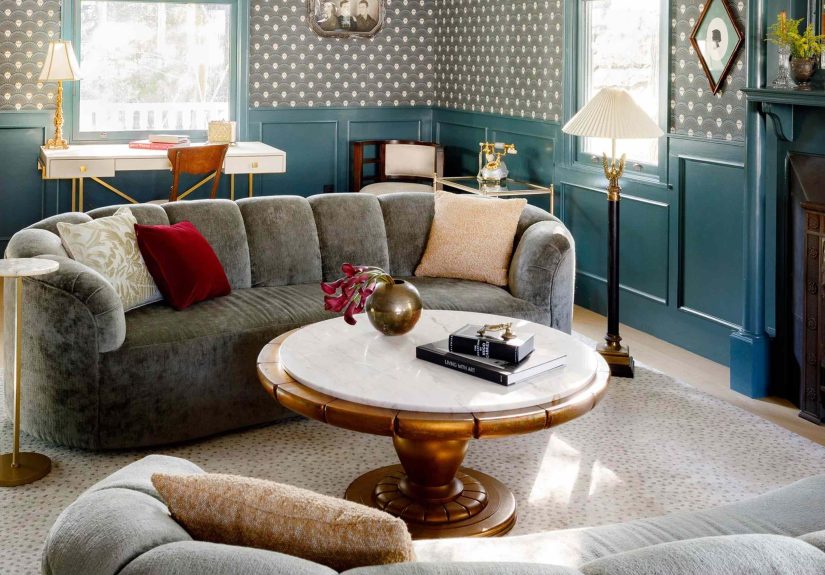
Designers use rugs to anchor the seating area, define the zone, and visually “connect” furniture pieces. When the rug is too small, everything looks like it’s hovering awkwardly around a tiny island (often known as the dreaded “coffee table island”). When the rug is correctly sized, the room suddenly reads as one complete composition.
What “right size” looks like
- At minimum: the front legs of your sofa and chairs sit on the rug.
- Better: all major seating legs are on the rug (if your room allows).
- Common living room sizes: 8’×10′ or 9’×12′ often work better than a 5’×8′ in a main seating area.
Designer shortcut
Outline rug dimensions on the floor with painter’s tape before you buy. It’s the adult version of trying on jeansless emotional damage, more accuracy.
Example
You have an 84-inch sofa and two accent chairs. A rug that extends beyond the sofa ends and catches the front legs of all seating will make the arrangement feel cohesive. The same furniture on a smaller rug usually looks pinched and temporary.
2) Layer Lighting (Because One Overhead Light Is a Crime Scene)
Designers rarely rely on a single ceiling fixturebecause overhead-only lighting can feel harsh, flat, and unflattering. (Your room deserves better. So do you.) The secret is layered lighting: different sources at different heights that eliminate dark corners and add mood.
The three layers designers build
- Ambient: the general glow (ceiling fixture, recessed lights, or a floor lamp that throws light broadly).
- Task: focused light for reading, puzzles, or pretending you read (table lamps near seating).
- Accent: highlights that add depth (sconces, picture lights, a small lamp on a console, or subtle LEDs).
The finishing touch that changes everything
Dimmers. Designers love them because they let you adjust brightness for time of day, mood, and functionwithout changing a single piece of decor.
Example
In a standard living room, try: one overhead fixture on a dimmer, a floor lamp near the sofa corner, and a table lamp on a side table. Add a small accent light on a bookshelf or console. Suddenly, the room feels “done,” even if your throw pillows are still negotiating their final positions.
3) Treat Your Windows Like They Paid Rent
Window treatments are one of the biggest differences between “moved in” and “finished.” Designers use curtains and shades to frame the room, soften hard lines, control light, and add texture.
The designer move: hang curtains high and wide
Mounting curtain rods higher than the window (and extending them past the frame) can make ceilings feel taller and windows feel larger. It’s a classic optical trick that instantly elevates a room.
- Height: hang the rod closer to the ceiling rather than right on top of the window frame.
- Width: extend the rod beyond the window so panels can stack mostly off the glass when open.
- Length: for a polished look, panels often skim the floor (rather than hovering awkwardly above it).
Pick your “finished” fabric
If you want a designer-feel without going overly formal, linen, cotton-linen blends, and textured weaves tend to read elevated and relaxed. Bonus: they hide wrinkly reality better than shiny fabrics.
Example
Even with budget panels, a properly placed rod and full-length curtains can make the whole room feel taller and more intentionallike your living room got a promotion.
4) Use Art to Set Scaleand Hang It at Human Height
Blank walls are the fastest way to make a living room feel unfinished. But the bigger issue is usually scale, not “lack of taste.” Designers use art (or mirrors) to create a focal point, balance big furniture, and pull the eye up.
Two designer rules that keep art from looking “off”
- Proportion: art above a sofa often looks best when it spans a substantial portion of the sofa’s width (a common guideline is roughly two-thirds to three-quarters).
- Height: aim to hang art so it lands around eye leveloften discussed as the center of the piece sitting roughly 57–60 inches from the floor.
If you can’t go big, go grouped
A gallery wall can read just as finished as one oversized pieceif it’s planned. Designers frequently lay out the arrangement on the floor first, then hang with consistent spacing for a clean, intentional look.
Example
You have a long sofa and a big empty wall. One medium piece floating above the sofa can look timid. A larger statement piece or a well-planned grouping will make the room feel complete and properly scaled.
5) Add Depth with Textureand Repeat a “Thread” for Cohesion
Finished rooms have layers. Not clutter. Layers.
Designers build depth by mixing materials (soft, nubby, sleek, natural) and repeating a few elements throughout the room so everything feels connected. Think of it as giving your space a theme songsubtle, not on loop.
Texture layering that looks designer (not chaotic)
- Textiles: combine a woven throw, a couple of different pillow fabrics (linen + velvet, boucle + cotton), and a rug with visual texture.
- Hard surfaces: mix wood, metal, ceramic, glassjust not all at once like you’re hosting a materials science fair.
- Organic elements: add greenery or branches for life and softness.
The “thread” trick
Choose one or two repeating detailsan accent color, a warm wood tone, a black metal finish, a curved shapeand echo them in at least three spots (pillow, art, vase; or lamp, frame, cabinet hardware). Repetition is what makes a room feel deliberate instead of accidental.
Example
If you have a navy throw pillow, repeat that navy in a piece of art and a small ceramic vase. The room immediately feels “pulled together” because your eye can connect the dots.
6) Style Surfaces with “Usable Vignettes” (Rule of Three Included)
Designers don’t just place objectsthey compose little moments. Coffee tables, consoles, and shelves look finished when they’re styled in groups with variation in height, shape, and texture. The goal is curated, not precious.
Start with a tray (yes, really)
A tray acts like a frame. It corrals small items and makes them look intentionaleven if you’re just hiding remotes and a candle you’ve lit exactly twice.
Use odd numbers
The “rule of three” is popular for a reason: groupings of three often look balanced but relaxed. Build a trio with different heights, like:
- A short stack of books (low)
- A candle or small sculpture (medium)
- A vase with greenery (tall)
Make it livable
Leave negative space. Designers love a styled coffee table you can still usebecause the most finished rooms are the ones that function.
Example
On a rectangular coffee table: place a tray off-center, add two books, top with a small object, then add a vase nearby. Keep one area clear for actual living-room behavior like snacks, board games, or dramatic phone scrolling.
A Quick “Finished Living Room” Checklist
- Rug is large enough to anchor seating (front legs on rug at minimum).
- At least 2–3 light sources, ideally on dimmers.
- Window treatments are hung high and wide (or a shade is installed and intentional).
- Art or mirror is correctly scaled and hung at eye level.
- Texture is layered (textiles + materials + something organic).
- Surfaces are styled in grouped moments with negative space.
Common Mistakes That Scream “Not Finished Yet”
- Too-small rug that doesn’t connect the seating area.
- One lonely overhead light that makes everything feel flat.
- Curtains hung low and narrow (the room looks shorter and tighter).
- Art hung too high (it floats away from the furniture like it’s trying to escape).
- Everything the same texture (a room can be calm without being bland).
- Overstyling every surface (your home is not a showroom; let it breathe).
of Real-World “Experience” (What These Tricks Look Like in Actual Homes)
Most living rooms don’t start unfinished because someone has “bad taste.” They start unfinished because real life happens: you move in, you buy the big stuff first, and then you tell yourself you’ll “get to the details” after work calms down. (Spoiler: work does not calm down.) The good news is these six tricks are exactly the kinds of moves designers lean on when a room is 80% done and needs that last 20% magic.
Take a super common scenario: a perfectly fine sofa, a coffee table, and a TV standplus a rug that’s a size too small because it was on sale and it fit in the car. Everything technically works, but the room looks a little like a waiting area. The moment you swap in a larger rug that catches the front legs of the seating, the whole space feels anchored. It’s not that the rug is the star; it’s that the rug tells your furniture where to “stand” so the layout reads as intentional.
Or consider the lighting situation in many apartments: one ceiling fixture and the glow of a television. Add a floor lamp near the sofa and a table lamp on a side tablesuddenly, the room has depth. It also feels warmer, because your eye isn’t staring into a single overhead sun. This is one of those upgrades that feels almost suspiciously effective. Designers love it because the room looks better at night and it’s more functional.
Windows are another frequent “I’ll deal with it later” category. Plenty of people live with bare blinds for years, then wonder why the room feels stark. Hanging curtains high and wide is the type of trick that makes people say, “Wait… why does the ceiling look taller?” You didn’t renovate. You just adjusted where your eyes travel. Even affordable curtain panels look more expensive when the rod is placed correctly and the panels have enough fullness to drape instead of stretching flat like a bedsheet.
Then there’s wall artthe place where indecision goes to multiply. Designers often solve this with either one large piece (instant confidence) or a planned gallery wall (intentional personality). When art is too small or hung too high, the wall and the furniture feel disconnected. When it’s properly scaled and hung around eye level, the room feels collected, like someone cared enough to finish the thought.
Finally, styling surfaces is where the room becomes yours. A tray, a few books, a candle, a bit of greenerythese aren’t random objects. They’re visual punctuation marks. They add rhythm, texture, and a sense that someone lives here on purpose. Not perfectly. Not like a catalog. But finished.
Conclusion
A finished living room isn’t about having more stuffit’s about having the right moves. Size the rug to anchor the space, layer lighting, treat windows like design features, scale your art, add texture and a repeating thread, and style surfaces with curated (usable) groupings. Do those six things, and your living room will look like it got its life togetherwithout actually requiring you to get your life together.