Table of Contents >> Show >> Hide
- How to Tell If Your Dishwasher Is Clogged
- Safety First: What to Do Before You Start
- Reason 1: The Drain Filter Is Packed with Gunk
- Reason 2: The Drain Hose Is Blocked or Kinked
- Reason 3: The Garbage Disposal or Sink Drain Is Clogged
- Reason 4: The Spray Arms or Pump Area Are Loaded with Debris
- When to Call a Professional
- How to Prevent Dishwasher Clogs in the Future
- Real-Life Experiences: What You Learn from a Clogged Dishwasher
- The Bottom Line
You loaded the dishwasher, pressed start, and walked away feeling like a responsible adult.
Then you came back to a tub full of murky water and dishes that look like they spent the
cycle in a mud puddle. Not ideal.
A clogged dishwasher is one of those household problems that looks scary but is often
fixable with a little detective work and some basic tools. In many cases, you can clear
the clog yourselfno emergency plumber, no hundred-dollar service fee, and definitely
no eating off paper plates for a week.
In this guide, we’ll walk through four of the most common reasons your dishwasher gets
clogged and exactly how to fix each one fast. We’ll also cover when to call in a pro and
how to prevent future clogs so your dishwasher can go back to doing the chore it was
born to do: saving you from the sink.
How to Tell If Your Dishwasher Is Clogged
Before we dive into the specific reasons, let’s confirm you’re actually dealing with a clog
and not another issue like a faulty sensor or a bad pump. Common signs of a clogged
dishwasher include:
- Standing water at the bottom of the tub after a cycle.
- Slow draining or gurgling from the dishwasher or nearby sink.
- Foul odors that smell like old food or stagnant water.
- Dishes coming out dirty or gritty even after a full cycle.
- Error codes related to drainage on modern models.
If one or more of these symptoms matches what you’re seeing, there’s a good chance you’re
dealing with a clogged drain, filter, hose, or disposal connection.
Safety First: What to Do Before You Start
Any time you work on an applianceespecially one that mixes water and electricitytake a
few basic safety steps:
- Turn off the dishwasher and, if possible, unplug it.
- Shut off power at the breaker if you’ll be removing panels or working near wiring.
- Lay down towels to catch any residual water.
- Have a small bucket or bowl handy to scoop out standing water.
Once everything’s safe and dry enough to work, it’s time to track down the clog.
Reason 1: The Drain Filter Is Packed with Gunk
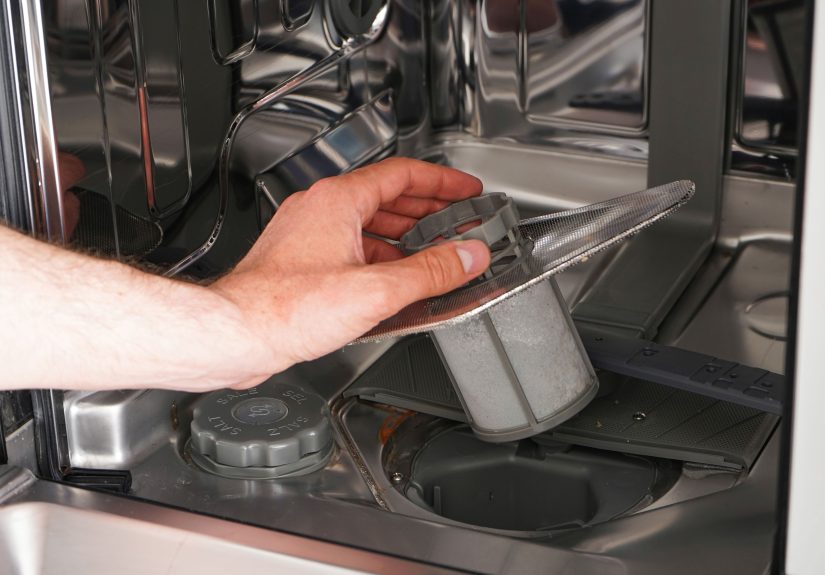
On most modern dishwashers, the drain filter is your first and most likely culprit. The
filter sits in the bottom of the tub and catches food particles, paper from labels, and
other debris so they don’t travel into the pump and drain hose.
Over time, especially if dishes aren’t scraped well, that filter can turn into a soggy
lasagna of crumbs, noodles, seeds, and mystery sludge. When it’s packed, water can’t
pass through easily, and your dishwasher starts to back up.
How to Fix a Clogged Dishwasher Filter Fast
- Remove the bottom rack. Pull out the lower rack to access the floor of the tub.
- Locate the filter. Most filters are a circular or rectangular piece near the drain, sometimes under a twist-off cover.
- Twist or lift it out. Follow your owner’s manual instructions, but usually it twists counterclockwise to release.
- Rinse thoroughly. Run the filter under warm water and scrub with a soft brush (an old toothbrush works great). Remove all food bits, grease, and paper.
- Clean the filter housing. Wipe around the opening inside the dishwasher with a sponge or cloth to remove any remaining gunk.
- Reinstall the filter. Make sure it’s seated securelyan improperly installed filter can lead to leaks or more debris slipping through.
After cleaning the filter, run a short rinse cycle. If the dishwasher drains properly,
you’ve just fixed the problem in under 15 minutes. You win.
Pro Tip:
Make filter cleaning a monthly habit, especially in busy households. It’s quick, and it
dramatically reduces clogs, odors, and cloudy dishes.
Reason 2: The Drain Hose Is Blocked or Kinked
If the filter looks reasonably clean or cleaning it didn’t solve the issue, the next
suspect is the drain hose. This flexible hose runs from the dishwasher to
your garbage disposal or sink drain. Over time, it can:
- Fill with grease, soap scum, and food particles.
- Become kinked or crushed behind the dishwasher or under the sink.
- Lose its “high loop” shape, allowing dirty water to flow back into the dishwasher.
How to Check and Clear the Drain Hose
- Turn off power and water. Again: safety first.
- Access the hose. You’ll usually find the hose under the sink where it connects to the disposal or drain, and behind or beneath the dishwasher where it exits the machine.
- Inspect for kinks or crushing. Gently straighten any sharp bends or compressed sections.
- Disconnect the hose at the sink end. Place a bucket under the connection, then loosen the clamp and remove the hose.
- Check for clogs. Shine a flashlight and use a flexible brush or a short drain snake to loosen debris. You can also run water through the hose from the sink or outside with a garden hose (gentle pressure only).
- Reattach and secure. Make sure the hose has a proper high loop (or air gap, if required by local code) above the level of the sink drain to prevent backflow.
Once the hose is clear and reinstalled, run the dishwasher again to see if it now drains
properly. If it does, your hose was the villain all along.
Reason 3: The Garbage Disposal or Sink Drain Is Clogged
If your dishwasher drains into a garbage disposal, that disposal is part of the drainage
system. If it’s cloggedor if the knockout plug on a brand-new disposal wasn’t removed
your dishwasher can’t push water out properly.
Even without a disposal, a partially clogged kitchen sink drain can cause dishwasher water
to back up, since they often share the same drain line.
How to Fix a Dishwasher Clog at the Disposal or Sink
- Run the disposal. With cool water running, turn on the garbage disposal for 20–30 seconds to clear minor food buildup.
- Check for a knockout plug (new disposals). If your disposal was recently installed, the small plastic plug where the dishwasher hose connects might still be in place. Remove the hose, knock out the plug with a screwdriver and hammer, and remove the loose piece.
- Clear the sink drain. If your sink is draining slowly or backing up, try plunging the sink (with the dishwasher off), then flushing with hot water. Avoid harsh chemicals that can damage pipes or the dishwasher’s connections.
- Inspect the air gap (if you have one). The small “cap” on your sink or countertop is an air gap that prevents backflow. If water spills from it when the dishwasher runs, it may be clogged. Remove the cap and clean out debris with a brush or pipe cleaner.
Once the sink and disposal are clear, run a short cycle. If your dishwasher now drains
normally, the problem wasn’t inside the machine at allit was in the shared plumbing.
Reason 4: The Spray Arms or Pump Area Are Loaded with Debris
Sometimes the clog is less about the drain line and more about the parts that move water
around inside the dishwasher. When spray arms are clogged with mineral deposits or
food particles, or when debris collects around the drain pump, water circulation and
drainage both suffer.
How to Clean Spray Arms
- Remove the racks. Take out the upper and lower racks to access the spray arms.
- Take off the spray arms. Most models let you unscrew or unclip the arms from their mounts.
- Rinse and soak. Rinse under warm water and use a toothpick, small brush, or paperclip to gently clear any blocked holes. If you have hard water, soak the arms in a mixture of white vinegar and warm water to dissolve mineral buildup.
- Reinstall securely. Make sure the arms spin freely once they’re back in place.
How to Check Around the Pump
Some models allow easy access to the area around the drain pump under the filter. You may
find broken glass, fruit pits, or other debris there. If you see visible obstructions:
- Carefully remove them with gloves or needle-nose pliers.
- Avoid forcing anything into the pump or blades.
- If the pump area is not easily accessible, don’t disassemble it unless your manual clearly shows how and you’re comfortable doing so.
If the dishwasher still doesn’t drain after these steps, then the clog may be deeper in
the plumbingor you may be dealing with a failing pump or sensor.
When to Call a Professional
DIY fixes are great up to a point. It’s time to call a pro if:
- You’ve cleaned the filter, hose, disposal, and spray arms and it still won’t drain.
- You hear grinding, buzzing, or clicking sounds from the pump area.
- The dishwasher trips the breaker or shows electrical fault codes.
- There’s water leaking under the unit or from behind the cabinet.
An appliance technician or licensed plumber can diagnose whether the pump, control board,
or internal plumbing needs repair or replacement. The good news: you’ll already have ruled
out the basic, easy-to-fix issues, which can save time on the service call.
How to Prevent Dishwasher Clogs in the Future
Once you’ve unclogged your dishwasher, protecting it from future blockages is all about
habits and maintenance. A few simple routines make a big difference:
- Scrape, don’t rinse. Remove large chunks of food from plates and bowls before loading. You don’t need to fully rinse, but don’t send a salad’s worth of leftovers into the machine.
- Clean the filter regularly. Aim for once a month, or more often in large households.
- Run hot water before starting a cycle. Let the kitchen sink faucet run until the water is hot, then start the dishwasher so it fills with hotter water from the beginning.
- Use the right detergent and amount. Too much detergent can create excess suds and residue that builds up in hoses and filters.
- Run a cleaning cycle monthly. Use a dishwasher cleaner or a cup of white vinegar in a dishwasher-safe container on the top rack and run a hot cycle to clear grease and mineral buildup.
- Keep the drain path clear. Periodically inspect the hose, disposal connection, and air gap (if you have one).
Think of it as a tiny spa day for your dishwasherexcept instead of cucumber slices and
calming music, it gets hot water, vinegar, and a filter scrub.
Real-Life Experiences: What You Learn from a Clogged Dishwasher
If you’ve never dealt with a clogged dishwasher before, it can feel like a crisis. The
first time many homeowners open the door to find a pool of cloudy water and floaty food
bits, the immediate reaction is: “Welp, that’s it. The dishwasher is dead.”
In reality, most clogs tell a story about how the dishwasher has been used (or abused)
over time. Here are some common “lessons learned” from people who’ve battledand beaten
dishwasher clogs:
1. The Filter Isn’t Optional
It’s surprisingly common for people to not know the filter even exists. Many assume the
dishwasher is a magical self-cleaning box that destroys food particles on contact.
Unfortunately, that’s not how it works. The filter is a workhorse, and when it’s never
cleaned, it slowly turns into a felt-like pad of sludge that traps everything.
Homeowners who discover the filter for the first time usually describe it as “shockingly
disgusting”but also incredibly satisfying to clean. After one good scrub, dishes start
coming out cleaner, smells disappear, and drainage improves. It’s one of the highest ROI
maintenance tasks in the whole house.
2. Shortcuts with Scraping Can Come Back to Haunt You
Many of us are guilty of tossing in plates with a little too much “extra” dinner still on
them. That half cup of rice or pile of lettuce might rinse off easily during the cycle,
but guess where it ends up? In the filter, the pump area, or the drain hose.
People who habitually load heavy food scraps tend to see recurring clogs, cloudy glasses,
and funky smells. When they start taking 10 extra seconds to scrape plates into the trash
or compost, the difference is huge: fewer clogs, better wash performance, and less
frustration.
3. The Area Under the Sink Matters More Than You Think
The space under the sink is prime real estate for cleaning supplies, sponges, and random
bottles you forgot you owned. But overpacking that space can accidentally push against
the dishwasher drain hose, causing a kink or crushing it against the cabinet.
A lot of “mysterious” drainage issues turn out to be nothing more than a bent hose that
can’t carry water away quickly enough. Once homeowners tidy up under the sink and give the
hose some breathing roomnot to mention restoring the high loopdrainage problems often
vanish.
4. Hard Water and Detergent Choice Add Up Over Time
In areas with hard water, minerals can slowly build up inside spray arms, the filter
housing, and even the drain area. Combine that with too much detergent, and you have a
sticky, mineral-rich residue that clings to everything and traps food particles.
People who switch to a high-quality detergent, use the recommended amount (not the “extra
for good luck” scoop), and run a monthly cleaning cycle with a dishwasher cleaner or
white vinegar often see fewer clogs and better performance. The machine doesn’t have to
fight through as much buildup just to do its job.
5. A Little Routine Prevents a Lot of Panic
After fixing a bad clog once, most homeowners become big believers in simple maintenance:
- Scrape plates before loading.
- Clean the filter regularly.
- Check the hose and disposal every few months.
- Run a hot cleaning cycle monthly.
These habits take just a few minutes but dramatically reduce the odds of waking up to
standing water and an urgent “why is my dishwasher clogged?” search at midnight.
The big takeaway from real-world experience: clogged dishwashers are usually annoying,
but rarely catastrophic. With a calm approach, a few basic tools, and a willingness to
get slightly grossed out by what’s living in your filter, you can almost always solve the
issue yourselfand keep it from coming back.
The Bottom Line
When your dishwasher is clogged, it’s tempting to assume the worst. But in most cases,
one of four things is to blame: a dirty filter, a blocked or kinked drain hose, a clogged
disposal or sink drain, or gunked-up spray arms and pump areas. Work through each of
these systematically and you’ll often restore normal drainage without a service call.
Once everything is flowing again, treat your dishwasher like the hardworking appliance
it is: give it regular cleaning, reasonable scraping, and the occasional deep cleanse.
Do that, and the only thing you’ll be “clogged” with is clean dishes.
SEO JSON