Table of Contents >> Show >> Hide
- Why Movie Trivia Feels Like a Tiny Plot Twist
- 30 Random Bits of Movie Trivia to Utterly Decimate Your Brain’s Fourth Wall
- “Jaws” had a mechanical shark with a nameand it was a problem child.
- “Jaws” basically turned limitation into a filmmaking philosophy.
- “Jaws” didn’t just scare swimmersit helped define the modern blockbuster vibe.
- In “Psycho,” the shower-scene blood is… dessert.
- “Psycho” used black-and-white for more than moodit was practical.
- Indiana Jones’ funniest win was born from a very unfunny illness.
- That “Raiders” sword scene was also a production time-saver.
- Somebody trained hard for the “Raiders” sword fight… and then got shot immediately.
- Gene Wilder designed Willy Wonka’s entrance to mess with you (on purpose).
- The cat in “The Godfather” wasn’t plannedit wandered in and became iconic.
- That same “Godfather” cat caused real behind-the-scenes headaches.
- In “The Lord of the Rings,” a scream of pain is exactly what it sounds like.
- “Back to the Future” was rejected a ridiculous number of times.
- Disney thought “Back to the Future” was too dirty.
- A studio executive wanted to rename it “Space Man From Pluto.”
- Originally, the time machine was refrigerator-adjacent.
- “Back to the Future” almost had a chimpuntil someone got superstitious about chimps.
- A U.S. president quoted “Back to the Future” in a major speech.
- Elijah Wood pops up in “Back to the Future Part II” before he was a household name.
- The filmmakers even explained how Marty and Doc became friends.
- “Back to the Future Part II” didn’t actually predict the Florida Marlins.
- Even the actor who played Biff got tired of the same questions.
- The Wilhelm scream is Hollywood’s most famous inside joke.
- That scream traces back to a 1950s war movie moment.
- “Toy Story” wasn’t just a hitit was a technical milestone.
- “Toy Story” went into production in the early ’90sbefore CGI was a sure bet.
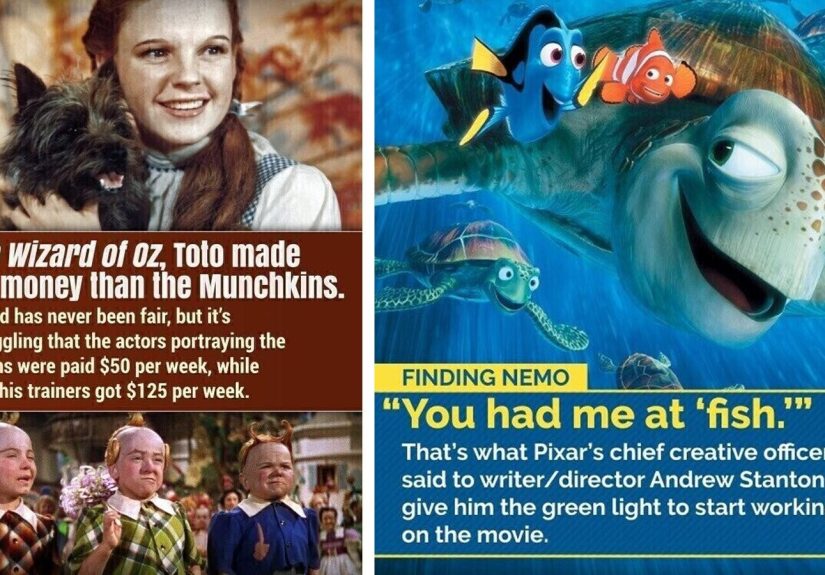
- The “Wizard of Oz” has an unsettling debate about its fake snow.
- Even when the details vary, the bigger point stands: old sets were not OSHA’s favorite place.
- The National Film Registry is like America’s “cinema memory vault.”
- Registry picks aren’t brand-new releasesyou need time for cultural impact.
- The 2024 National Film Registry lineup is a wild mix (in the best way).
- Only three films have matched the record for most Oscar wins: 11.
- How to Use These Trivia Bits Without Becoming “That Person”
- of Movie-Trivia “Experience” Fuel (Because Your Brain Asked for the Director’s Cut)
- Conclusion
Movies are magical… right up until you learn the magic trick. Then they’re still magicaljust in a
“WAIT, that was a cardigan, not a cape” kind of way. That’s what great movie trivia does:
it doesn’t ruin the illusion, it gives your brain a secret backstage pass. Suddenly you’re watching
the story and the duct tape holding the story together. (Respectfully.)
Below are 30 random bits of movie triviaproduction quirks, happy accidents, and industry in-jokesthat
punch straight through the fourth wall, wave hello to your awareness, and then run away giggling into
the craft-services tent.
Why Movie Trivia Feels Like a Tiny Plot Twist
A good film pulls you into a world where everything feels inevitable. Great trivia yanks the curtain and
shows you how many “inevitable” moments were actually last-minute compromises, weird studio notes, or a
human being having a very bad day in very hot weather. In other words: movie trivia is the behind-the-scenes
version of an unreliable narrator. It reminds you the film is a carefully engineered machinemade by artists,
yes, but also by schedules, budgets, props, physics, and occasionally… gastrointestinal distress.
And that’s why it’s so satisfying. Your brain loves stories, but it also loves pattern recognition:
“Ohhh, that’s why they didn’t show the monster as much.” “That sound pops up everywhere!” “So the studio
wanted it called WHAT?” Trivia rewards you with extra layerslike a director’s cut that lives in your head.
30 Random Bits of Movie Trivia to Utterly Decimate Your Brain’s Fourth Wall
“Jaws” had a mechanical shark with a nameand it was a problem child.
The mechanical shark used in Jaws was nicknamed “Bruce,” and its frequent malfunctions helped push
Spielberg toward suspense-by-absence: more tension, fewer clear shots, and a bigger payoff when it finally
shows up. Sometimes the broken thing becomes the genius thing.“Jaws” basically turned limitation into a filmmaking philosophy.
Because the shark wasn’t always cooperative, the movie leans into POV shots, rippling water, and that
now-legendary music cue. Your imagination fills in the terrorand your imagination is always willing to
spend a bigger effects budget than reality.“Jaws” didn’t just scare swimmersit helped define the modern blockbuster vibe.
The film’s success is often credited as a turning point for the big summer release strategy. In other words,
one malfunctioning shark helped shape how studios plan your entire warm-weather movie calendar.In “Psycho,” the shower-scene blood is… dessert.
Because the movie was shot in black-and-white, filmmakers used chocolate syrup for blood in the famous shower
scene. It read perfectly on cameraand somewhere a brownie mix looked at Hollywood and whispered, “I could do that.”“Psycho” used black-and-white for more than moodit was practical.
The monochrome look wasn’t only stylistic. It also helped the violence play differently on screen, keeping the
scene effective without relying on bright-red realism. Hitchcock understood that suggestion can be sharper than gore.Indiana Jones’ funniest win was born from a very unfunny illness.
The “gun vs. sword” moment in Raiders of the Lost Ark wasn’t the original plan. Harrison Ford was sick with
dysentery, and the elaborate fight got simplified into a quick, hilarious “nope” shot. Cinematic history, sponsored
by survival mode.That “Raiders” sword scene was also a production time-saver.
Beyond the illness, the streamlined version helped keep filming moving. It’s a reminder that a classic moment can
come from asking, “What if we solve this problem in five seconds instead of five pages of choreography?”Somebody trained hard for the “Raiders” sword fight… and then got shot immediately.
Part of what makes the scene funnier is the implied effort: the swordsman is ready for an epic duel, and Indy just
ends it. The meta-joke is that the movie briefly acknowledges the “action scene we all expected” and refuses to do it.Gene Wilder designed Willy Wonka’s entrance to mess with you (on purpose).
Wilder wanted Wonka’s first appearance to keep the audience unsure whether he was fragile or faking it. The cane,
the limp, and the sudden flip are a character thesis in five seconds: “From here on out, you won’t know when I’m lying.”The cat in “The Godfather” wasn’t plannedit wandered in and became iconic.
Vito Corleone calmly petting a cat feels like deliberate symbolism (soft power, quiet menace, etc.). But accounts say the
cat wasn’t scripted; Coppola placed it in Brando’s arms on the spotcreating one of the most famous “accidents” in cinema.That same “Godfather” cat caused real behind-the-scenes headaches.
While the cat helps the scene, the purring complicated sound recording. Which is funny because the movie opens with
a man asking for justice, and the immediate response is: “Sure, but first… cat audio problems.”In “The Lord of the Rings,” a scream of pain is exactly what it sounds like.
When Aragorn kicks a helmet and then collapses in grief, the anguish is extra convincing because Viggo Mortensen
actually broke toes during the kick. It’s a brutal reminder that sometimes realism is… not a metaphor.“Back to the Future” was rejected a ridiculous number of times.
The screenplay got turned down repeatedly before it ever became a beloved classic. Which is comforting and terrifying:
the movie about changing your destiny almost didn’t get a destiny.Disney thought “Back to the Future” was too dirty.
Yes, really. Some executives found the mother-son romantic confusion too scandalous for Disney at the timeproof that
context matters, and that studio feedback has always been a wild roller coaster.A studio executive wanted to rename it “Space Man From Pluto.”
One note suggested retitling Back to the Future because “future” sounded like box-office doom. The proposed title?
Space Man From Pluto. The fact that we live in the timeline where that didn’t happen is one of humanity’s quietest victories.Originally, the time machine was refrigerator-adjacent.
Early drafts had Doc’s time travel device as a “time chamber” akin to a refrigerator setupless sleek DeLorean, more “appliance
that comes with an instruction manual and a warning label.”“Back to the Future” almost had a chimpuntil someone got superstitious about chimps.
At one point, Doc Brown was supposed to have a pet chimpanzee. The idea got nixed with the logic that “movies with chimps don’t make money.”
Hollywood decision-making is sometimes data-driven… and sometimes it’s just vibes in a suit.A U.S. president quoted “Back to the Future” in a major speech.
Ronald Reagan quoted “Where we’re going, we don’t need roads” in a State of the Union address. That’s a movie line leaving the screen,
stepping into reality, and casually stealing the podium.Elijah Wood pops up in “Back to the Future Part II” before he was a household name.
If you love spotting future stars, this one’s for you: Wood appears as a kid in the retro-future Café 80s sequence. It’s like
cinema’s version of “before they were famous,” tucked into a blink-and-you-miss-it moment.The filmmakers even explained how Marty and Doc became friends.
Ever wonder how a teenager ends up hanging out with a wild-eyed inventor? One account explains Marty sneaks into Doc’s lab,
gets fascinated, and ends up with a part-time job. It’s the most wholesome origin story for an extremely unsafe hobby.“Back to the Future Part II” didn’t actually predict the Florida Marlins.
Internet lore tried to claim the sequel predicted a Marlins World Series. But the film’s sports broadcast shows the Cubs beating an
unnamed Miami team represented by a gatorso no accidental prophecy there. Sorry, time travelers.Even the actor who played Biff got tired of the same questions.
Tom Wilson (Biff) reportedly carried a card answering common fan questions. Which is both relatable and poetic: the man played a bully,
and the universe responded by bullying him with endless trivia quizzes.The Wilhelm scream is Hollywood’s most famous inside joke.
Once you notice it, you’ll hear it everywhere: a specific yell used repeatedly across films as a playful audio Easter egg.
It’s basically the cinematic equivalent of a director waving at you from behind the curtain.That scream traces back to a 1950s war movie moment.
The sound effect is commonly linked to a scene in Distant Drums (1951). Later, sound designers reused it, and it turned into
a traditionlike a secret handshake, but for people who own multiple microphones.“Toy Story” wasn’t just a hitit was a technical milestone.
It’s widely credited as the first feature-length animated film that was completely computer generated. It didn’t just tell a story about
toys coming alive; it made an entire industry levitate.“Toy Story” went into production in the early ’90sbefore CGI was a sure bet.
The movie’s development sits in a moment when computer animation was still proving itself. Which makes the final result feel even more
like a high-wire act: charming characters balanced on brand-new technology.The “Wizard of Oz” has an unsettling debate about its fake snow.
For decades, people have claimed asbestos was used as “snow” on set. Some sources report asbestos was used in production elements; others
dispute the snow claim specifically and cite different materials. Either way, it’s a reminder that “movie magic” used to come with fewer
safety disclaimers than a toaster.Even when the details vary, the bigger point stands: old sets were not OSHA’s favorite place.
Classic Hollywood didn’t always prioritize performer safety the way modern productions try to. Learning that can be a fourth-wall punch:
the glittering fantasy was made in an era where “We’ll figure it out” sometimes meant “We’ll inhale it.”The National Film Registry is like America’s “cinema memory vault.”
The Library of Congress adds 25 films each year to the National Film Registry to highlight works that are culturally, historically,
or aesthetically significant. It’s not a “best movies” listit’s a “these matter” list.Registry picks aren’t brand-new releasesyou need time for cultural impact.
Films generally must be at least 10 years old to be eligible. That gap lets a movie prove it wasn’t just popularit was influential,
enduring, or weirdly predictive in a way that sticks.The 2024 National Film Registry lineup is a wild mix (in the best way).
Recent additions included big crowd-pleasers and cultural touchstones like Dirty Dancing, Beverly Hills Cop, and
Spy Kids, plus films with lasting impact like The Social Network. It’s a reminder that “important” can mean “artful,”
“iconic,” or “quoted at parties forever.”Only three films have matched the record for most Oscar wins: 11.
The 11-Oscar club is famously tiny: Ben-Hur (1959), Titanic (1997), and The Lord of the Rings: The Return of the King (2003).
It’s the awards equivalent of an elite trilogyexcept the trilogy is “wow, that’s a lot of trophies.”
How to Use These Trivia Bits Without Becoming “That Person”
Movie trivia is social seasoning. A pinch makes everything better; a whole shaker makes people quietly check their phones. The sweet spot is
sharing details that change how someone watches the scene right now. Example: drop the “Raiders” dysentery fact right before the
marketplace moment hitsthen let the laughter happen naturally.
Also, don’t just recite facts like you’re reading a grocery receipt. Connect them to what’s on screen:
“That’s why the scene feels so abruptbecause it was a last-minute fix,” or “That sound is the Wilhelm screamlisten for it later.”
When trivia improves the viewing experience, it feels like a bonus feature, not an interruption.
of Movie-Trivia “Experience” Fuel (Because Your Brain Asked for the Director’s Cut)
Imagine you’re at a movie night with friends. The lights are low, someone’s balancing a paper plate of nachos like it’s a stunt performance,
and the movie starts rolling. At first, everyone is locked inuntil a moment happens that’s too perfect. A pause. A glance. A weirdly
specific sound effect. That’s when trivia turns into an experience: it’s not just information, it’s a second layer of watching.
You feel it in your body like a tiny pop of recognition. “Oh, I know this one.” But instead of blurting it out like a spoiler grenade, you
let it simmer. Then the moment passes, and the room relaxes, and you casually say, “Fun fact: that scene wasn’t supposed to go that way.”
Suddenly everyone’s leaning innot because you’re showing off, but because you’re handing out a secret lens. Now they’re rewatching with you,
hunting for the seams, admiring the craft.
The best part is how trivia changes the emotional texture of a scene without killing it. The “Jaws” shark malfunction story doesn’t make the
ocean less scaryit makes the suspense feel smarter. The “Psycho” chocolate syrup detail doesn’t make the shower scene less intenseit
makes you appreciate the weird genius of solving a visual problem with something from a kitchen shelf. It’s like learning how a chef made a
dish and still enjoying every bite.
And then there are the moments where trivia turns into a game. Someone hears a familiar scream and goes, “Wait… was that the Wilhelm?” Another
person starts spotting early cameos like they’re collecting rare trading cards. You’re not just watching a film anymoreyou’re watching a room
full of brains interact with it. That’s the “fourth wall” effect in real time: the movie becomes a conversation between the screen and the
audience, with trivia as the translator.
Even solo viewing gets upgraded. You catch yourself noticing how a director hides a limitation, how a studio note could have derailed a classic,
how a preservation list tries to protect the stories that shaped culture. You start seeing films as living artifactspart art, part accident,
part history. And somehow, that makes the magic stronger, not weaker. Because now you’re not only moved by the storyyou’re impressed it exists
at all.
Conclusion
Movie trivia isn’t about ruining the illusion. It’s about appreciating the human chaos behind the illusion: the compromises, the clever tricks,
the accidental genius, and the tiny in-jokes that keep filmmaking fun. The next time you watch a classic, listen closelythere’s always a little
fourth-wall crack somewhere, and it’s usually smiling at you.