Table of Contents >> Show >> Hide
- Heat-and-Drought Success Basics (So Your Pots Don’t Become Drama Pots)
- 25 Outdoor Succulent Container Ideas for Heat and Drought
- 1) The “Desert Sunset” Terra-Cotta Bowl
- 2) Minimalist Concrete Cylinder with a Single Statement Agave
- 3) Trough Planter “Mini Xeriscape”
- 4) Glazed Pot “Blue & Silver” Combo
- 5) Hanging Basket of Trailers (The Drought-Proof Waterfall)
- 6) The “Spiky & Soft” Contrast Pot
- 7) Vintage Galvanized Tub (With a Drainage Upgrade)
- 8) Strawberry Pot Succulent Tower
- 9) The “Patio Edge” Window Box of Cold-Hardy Succulents
- 10) Shallow Bonsai Dish with Rock Top-Dressing
- 11) Hypertufa Trough (DIY “Stone” That Breathes)
- 12) Cinder Block “Succulent Grid”
- 13) Half Wine Barrel “Desert Meadow”
- 14) Birdbath Conversion (The Unexpected Succulent Stage)
- 15) Rustic Wooden Crate (Lined for Drainage)
- 16) Double-Pot “Root Cooldown” Method
- 17) The “Full-Sun Front Door” Urn (With Morning Sun)
- 18) Concrete Bowl “Moonlight” Palette
- 19) Small Pots Grouped as a “Succulent Family Reunion”
- 20) Tall Column Planter with Trailing Edge
- 21) “Rock Garden in a Pot” with Mixed Gravel Sizes
- 22) Patio Tabletop Succulent Centerpiece
- 23) “Cascading Cliff” Planter on Steps
- 24) The “Low-Water Pollinator Pop” Pot
- 25) The “Hard-Mode” Full-Sun Pot (Done Smart)
- Common Mistakes (And the Simple Fixes)
- Seasonal Notes for Outdoor Containers
- Extended “Real-World” Experience: What Gardeners Learn After a Few Hot Summers (About )
- Conclusion: Your Heat-Proof Succulent Container Formula
Succulents have a PR problem: people think they’re “unkillable,” then promptly drown them like they’re houseplants auditioning for a soap opera. The truth is better (and funnier): succulents are tough, but they’re picky about how they’re tough. Give them bright light, fast-draining soil, and a container that doesn’t turn their roots into hot soup, and they’ll cruise through heat and dry spells like they own the place.
This guide serves up 25 outdoor succulent container ideas designed for hot, dry weatherplus the practical details (soil, drainage, watering, and sun management) that make the difference between “Pinterest-perfect” and “why is everything mushy?”
Heat-and-Drought Success Basics (So Your Pots Don’t Become Drama Pots)
1) Drainage is non-negotiable
Outdoor containers need a real drainage holeideally more than one. Succulents hate standing water because soggy soil blocks oxygen around roots and invites rot. If your dream container has no hole, use it as a decorative cachepot: keep the succulent in a nursery pot with holes and set that inside the prettier one.
2) Use a gritty mix, not garden soil
For outdoor succulent containers, aim for a fast-draining, airy mix. Many gardeners do well with a simple recipe like 1 part potting mix + 1 part coarse mineral material (perlite, pumice, or coarse sand). The goal is larger particles and air pockets, so water moves through quickly instead of clinging around roots.
3) Containers can overheatprotect the root zone
Full sun is great for many succulents, but containers can heat up dramatically, especially dark plastic or metal. Hot roots can stall growth and cause stress. Use light-colored pots, add a “pot sleeve” (set the inner pot inside a larger outer pot), or position the pot so the container itself gets some shade while the plant gets sun.
4) Water deeply, then let it dry (the “soak and dry” rhythm)
In hot weather, water thoroughly until it runs out the drainage holes, then wait until the mix dries substantially before watering again. Heat waves can change the schedule fastsmall pots dry sooner; clay dries faster than glazed ceramic; wind is basically a hair dryer for your containers.
5) Acclimate to sun to avoid “succulent sunburn”
If a plant has been indoors or shaded at a nursery, don’t toss it straight into blazing afternoon sun. Give it a week or two of brighter shade or morning sun first, then ramp up exposure. Otherwise, leaves can scorch and scar (and they won’t apologize).
25 Outdoor Succulent Container Ideas for Heat and Drought
Design tip: Most arrangements look best using the classic “thriller, filler, spiller” approachone bold centerpiece, supportive mid-layer plants, and a trailing edge that softens the rim.
1) The “Desert Sunset” Terra-Cotta Bowl
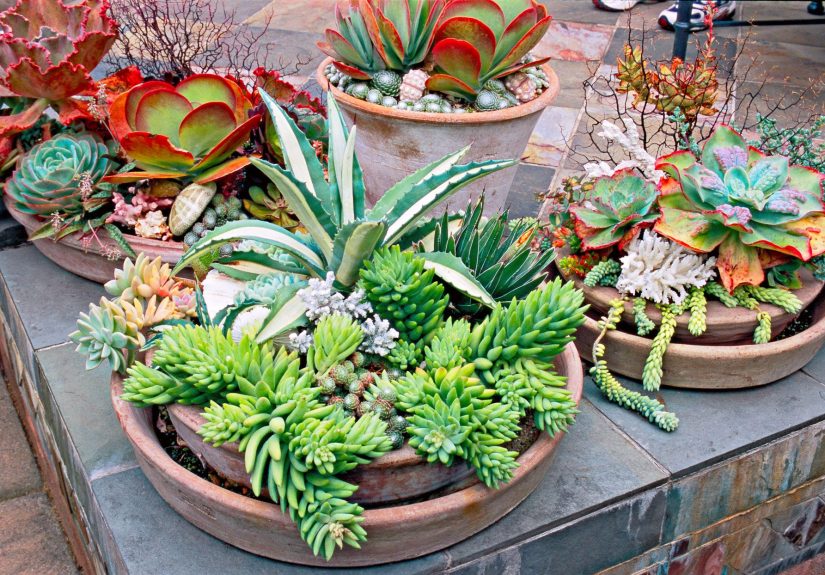
Container: Wide terra-cotta bowl (shallow but broad). Plants: Echeveria rosettes (coral or purple), Sedum (gold tones), and a trailing Senecio. Heat trick: Terra-cotta breathes, helping the mix dry evenlygreat for humid heat and heavy rain regions too.
2) Minimalist Concrete Cylinder with a Single Statement Agave
Container: Tall concrete or fiberstone cylinder. Plants: One compact agave (or a hardy, architectural aloe where climate allows). Heat trick: A single specimen uses less water, stays cleaner, and looks intentionally modernlike you hired a designer instead of impulse-buying plants.
3) Trough Planter “Mini Xeriscape”
Container: Long trough (stone, concrete, or hypertufa). Plants: Sempervivum + hardy sedums + small stonecrop varieties. Heat trick: Troughs buffer temperature swings, and hardy choices handle both heat and cooler nights.
4) Glazed Pot “Blue & Silver” Combo
Container: Light-colored glazed ceramic. Plants: Blue chalk sticks (Senecio), pale echeverias, and a silver trailing sedum. Heat trick: Lighter exteriors reflect sun and help keep the root zone cooler than dark pots.
5) Hanging Basket of Trailers (The Drought-Proof Waterfall)
Container: Hanging basket with excellent drainage. Plants: Burro’s tail sedum, string-of-bananas, trailing kalanchoe types. Heat trick: Hang where it gets bright light but not the hottest late-afternoon blast; hanging baskets dry fast in wind.
6) The “Spiky & Soft” Contrast Pot
Container: Medium-height pot. Plants: A spiky centerpiece (small agave/aloe) + soft rosettes (echeveria/graptoveria) + sedum filler. Heat trick: Mixed leaf textures also handle different micro-exposures within the same pot.
7) Vintage Galvanized Tub (With a Drainage Upgrade)
Container: Galvanized tub or bucket (drill holes). Plants: Portulacaria afra (elephant bush) + sedums + compact crassula. Heat trick: Metal heats fastuse a thick gritty mix, top-dress with gravel, and place where the tub isn’t baking all day.
8) Strawberry Pot Succulent Tower
Container: Strawberry pot with side pockets. Plants: Trailing sedums and small rosettes tucked into pockets. Heat trick: Vertical planting increases airflow and reduces soggy zonesjust watch watering so the top doesn’t steal it all.
9) The “Patio Edge” Window Box of Cold-Hardy Succulents
Container: Window box with drainage. Plants: Sempervivum + sedum + small stonecrops. Heat trick: These can take intense sun and bounce back fast; great for bright ledges and railings.
10) Shallow Bonsai Dish with Rock Top-Dressing
Container: Bonsai dish (wide, low). Plants: Compact echeverias, haworthia in hotter climates with some shade, and low sedums. Heat trick: A gravel top-dress reduces splash, slows evaporation a bit, and looks crisp.
11) Hypertufa Trough (DIY “Stone” That Breathes)
Container: Hypertufa trough. Plants: Hardy sedums and sempervivums. Heat trick: Hypertufa is porous, helping moisture balance in scorching weather without staying swampy.
12) Cinder Block “Succulent Grid”
Container: Cinder blocks arranged as a grid; plant in the holes. Plants: Sedums, sempervivums, small echeveria types (seasonally). Heat trick: Blocks act like thermal mass; they warm slowly and cool slowlysteady conditions help plants cope.
13) Half Wine Barrel “Desert Meadow”
Container: Half barrel (drill holes). Plants: Opuntia (cold-hardy types in suitable climates), yucca-like forms, sedum groundcover. Heat trick: Bigger soil volume holds moisture longerhelpful in relentless dry wind.
14) Birdbath Conversion (The Unexpected Succulent Stage)
Container: Old birdbath with drainage added. Plants: A ring of rosettes + sedum spillers. Heat trick: Elevated planters get airflow, reducing fungal issues after summer storms.
15) Rustic Wooden Crate (Lined for Drainage)
Container: Wood crate lined with landscape fabric; add drainage gaps. Plants: Mixed rosettes and sedums. Heat trick: Wood insulates better than thin plastic; it’s less likely to “cook” roots in direct sun.
16) Double-Pot “Root Cooldown” Method
Container: Inner pot with drainage placed inside a larger outer pot. Plants: Any sun-tolerant mix. Heat trick: The air gap reduces heat transferespecially useful if you love dark pots but also love living plants.
17) The “Full-Sun Front Door” Urn (With Morning Sun)
Container: Tall urn. Plants: Aeonium (in mild climates), echeveria, and trailing sedum. Heat trick: Position for morning sun and afternoon shade; many succulents love bright light but appreciate a break from peak heat.
18) Concrete Bowl “Moonlight” Palette
Container: Low concrete bowl. Plants: Pale/white-leaning succulents (silver sedum, light echeverias, dusty kalanchoe types). Heat trick: Lighter foliage reflects light and often looks fresher in harsh sun.
19) Small Pots Grouped as a “Succulent Family Reunion”
Container: Several small pots clustered on a tray. Plants: One plant per potmix textures and colors. Heat trick: Separate pots let you water by need. Also, rotating small pots is easier than rotating a 50-pound arrangement that hates you back.
20) Tall Column Planter with Trailing Edge
Container: Tall narrow planter. Plants: Upright aloe/agave type + trailing sedum at the rim. Heat trick: Height can reduce reflected heat from patios; add a gravel top-dress to slow surface crusting.
21) “Rock Garden in a Pot” with Mixed Gravel Sizes
Container: Wide pot. Plants: Low sedums, sempervivums, and a couple of rosettes. Heat trick: A mineral-heavy top layer reduces soil splash, helps stabilize stems, and keeps crowns drier after watering.
22) Patio Tabletop Succulent Centerpiece
Container: Long low planter as a centerpiece. Plants: Rosettes + sedum spillers + a compact spiky accent. Heat trick: Table placement can reduce radiant heat from the ground (especially on stone or concrete patios).
23) “Cascading Cliff” Planter on Steps
Container: Pot placed on a stair edge or ledge. Plants: Trailing sedum, string-of-bananas, and a few rosettes near the center. Heat trick: Trailers shade the pot rim and soil surface a bitless direct sun on the mix.
24) The “Low-Water Pollinator Pop” Pot
Container: Medium pot with drainage. Plants: Ice plant (Delosperma) + sedum + a structural rosette. Heat trick: Some flowering succulents are heat champs and add color without demanding daily watering.
25) The “Hard-Mode” Full-Sun Pot (Done Smart)
Container: Light-colored, thick-walled pot; avoid thin black plastic in scorching sites. Plants: Sun-loving sedums, sempervivums, hardy rosettes, and a small agave (where appropriate). Heat trick: Give the pot itself a little shade (behind a chair leg, next to a taller planter) while the plant still gets sunroot comfort matters.
Common Mistakes (And the Simple Fixes)
- No drainage hole: Use a nursery pot inside a decorative container.
- Too much organic soil: Add grit (pumice/perlite/coarse sand) to increase air and drainage.
- Watering on a rigid schedule: Check the mix; water when it’s dry enough, not when the calendar says so.
- Instant full sun: Acclimate gradually to prevent sunburn.
- Dark pot in extreme sun: Double-pot, switch to lighter colors, or shade the container wall.
Seasonal Notes for Outdoor Containers
Summer: Expect faster drying, especially in small or clay pots and in wind. Water early in the day so plants can use moisture before the hottest hours.
Rainy spells: Fast drainage matters even moreraise pots on feet so water doesn’t pool under them.
Cold weather: Many popular succulents are not frost-hardy. If your winters freeze, either bring tender types indoors or build containers around cold-hardy succulents like sempervivums and many sedums.
Extended “Real-World” Experience: What Gardeners Learn After a Few Hot Summers (About )
Outdoor succulent containers teach a very specific life lesson: plants don’t care about your aesthetic goalsthey care about physics. Sun hits a pot, pot heats up, roots react, and suddenly that “low-maintenance” planter is acting like it needs a therapist. The good news is that once a few patterns are understood, succulents become one of the most forgiving container styles for heat and drought.
One of the biggest “aha” moments gardeners report is that the container is part of the climate. A succulent in the ground may cruise through a heat wave, while the same plant in a small dark pot can struggle because the root zone warms faster and dries faster. This is why thick-walled pots, light colors, and larger volumes matter. People often assume bigger containers are “more work,” but in hot weather, bigger soil volume usually means less stress and fewer emergency waterings. The pot becomes a buffer instead of a panic button.
Another common learning curve is watering. Many gardeners start by “sprinkling a little” because it feels gentle, but succulents typically respond better to deep watering followed by a real dry-down. A thorough soak encourages roots to grow through the container instead of hovering near the surface like they’re afraid of commitment. Then, when the mix dries, roots get oxygencritical for avoiding rot. The trick is to let the soil do its job: a gritty mix drains quickly, so soaking doesn’t automatically equal overwatering.
Sun exposure is also more nuanced than “full sun.” In many regions, morning sun + afternoon shade is the sweet spot for attractive color without crispy leaf tips. In extremely hot climates, bright shade can outperform all-day sun for long-term looks. That’s why so many successful patios place succulent pots where the plants get strong light, but the container wall isn’t taking the full blast. A chair, a railing, a taller planter, or even a bit of lattice shade can drop pot temperatures enough to keep roots happier.
Design-wise, gardeners often learn to stop forcing “perfect symmetry” and start planning for growth. Rosettes expand, trailers spill, and sun can change color dramaticallyespecially in echeverias and sedums. Instead of packing everything tightly, leaving small gaps improves airflow and reduces the chance of hidden rot. Top-dressing with gravel isn’t just pretty; it can keep crowns cleaner, reduce splashing onto leaves, and help the arrangement look intentional even when plants shift.
Finally, experienced growers keep a “swap strategy.” If one plant sulks, it gets movedbecause containers are mobile. That’s the secret superpower: you can fine-tune microclimates all season. In other words, the best outdoor succulent container “hack” is the simplest one: treat your patio like a set of adjustable sun and shade zones, and let the plants vote with their growth.
Conclusion: Your Heat-Proof Succulent Container Formula
If you remember only three things, make them these: drainage holes, a gritty fast-draining mix, and a setup that keeps roots from overheating. From there, the fun part beginschoosing shapes, palettes, and textures that look custom-designed for your patio (even if you assembled them in flip-flops on a Saturday morning).