Table of Contents >> Show >> Hide
- Plan First: What Makes a Covered Patio Actually Work
- 24 Covered Patio Ideas for a Cute Outdoor Living Space
- 1. Create a Cozy Outdoor Living Room
- 2. Turn the Patio into a Dining Room “Al Fresco”
- 3. Build a Breezy Pergola with Climbing Vines
- 4. Go Modern with a Louvered Roof System
- 5. Use Shade Sails for a Budget-Friendly Cover
- 6. Add a Polycarbonate or Glass Roof for Extra Light
- 7. Try a Rustic Wood Pavilion
- 8. Extend the Roofline into a “California Room”
- 9. Screen In a Porch for Bug-Free Evenings
- 10. Make It Kid-Friendly with a Play Nook
- 11. Layer String Lights Under a Wood Ceiling
- 12. Add a Ceiling Fan for Porch-Swing Energy
- 13. Build in a Fireplace or Fire Table
- 14. Create an Outdoor Kitchen Under Cover
- 15. Mix Metal Roofing with Natural Wood
- 16. Use Curtains for a Cabana Feel
- 17. Build a Cozy Corner Retreat
- 18. Use Brick or Stone Columns for Classic Charm
- 19. Add a Skylight or Open Section for Sun
- 20. Create a Garden Tunnel Patio
- 21. Go Minimal with a Simple Flat Roof and Concrete
- 22. Add an Outdoor Bar Under Cover
- 23. Blend Indoor and Outdoor Flooring
- 24. Style a “Garden Living Room” with Plants Everywhere
- Design Tips for a Cute, Cozy Covered Patio
- Real-World Lessons: What People Learn After Building a Covered Patio
Want to spend more time outside but not in direct sun, random drizzle, or under a barrage of bird gifts from above? A covered patio is your new best friend. Done right, it feels like an extra room that just happens to smell like fresh air and barbecue. From simple shade sails to full-on outdoor living rooms, there’s a covered patio idea for every budget, climate, and style.
Design pros agree that the best outdoor spaces start with a clear purpose, smart proportions, and weather-savvy materials. That means thinking about how you’ll use the space (lounging, dining, working, hosting), choosing the right type of cover (pergola, solid roof, awning, or hybrid), and planning your layout just like you would indoors. A few simple detailslike layered lighting, textiles, and greeneryturn a basic concrete slab into the cutest hangout on the block.
Plan First: What Makes a Covered Patio Actually Work
Think in Zones, Not Just “One Big Slab”
Before you start shopping for pergolas and cushions, decide what needs to happen out there. If your patio is large enough, divide it into clear zones: one for dining, one for lounging, maybe a small grilling or prep area. Use outdoor rugs to define each zone and leave at least a couple of feet of space behind dining chairs or lounge seating so people can move comfortably through the space.
Choose the Right Type of Cover
Different covers work best for different climates and budgets. Solid roofs (wood, metal, or insulated panels) are great for hot or rainy climates and feel like a true outdoor room. Pergolas with slats or louvers give dappled light and can be upgraded with fabric canopies or polycarbonate panels for more weather protection. Shade sails, umbrellas, and retractable awnings are flexible, affordable solutionsespecially for renters or anyone who wants a lighter look.
Match Materials to Your Weather
Wood is warm and classic but needs sealing and regular maintenance, especially in humid or rainy regions. Aluminum and steel covers are durable and low maintenance, which is ideal in harsher climates or where sun and salt air are intense. Vinyl and composite options can mimic wood with less upkeep. Think about how much time you realistically want to spend maintaining your patio cover and choose materials accordingly.
Don’t Forget Lighting, Power, and Drainage
Before you build, plan for wiring, lighting, and ceiling fans, as well as drainage for heavy rain. Covered patios feel more inviting when you can flip on layers of lightoverhead fixtures, string lights, lanterns, and maybe some step or path lighting. Proper roof slope and gutters help prevent water from pooling and protect both your patio surface and your home’s foundation.
24 Covered Patio Ideas for a Cute Outdoor Living Space
1. Create a Cozy Outdoor Living Room
Start with a solid roof extension off the house and treat it like an indoor living room. Add a comfy outdoor sectional, a cushioned lounge chair, a coffee table, and a big outdoor rug. Layer in throw pillows, a knit-style outdoor blanket, and a side table for drinks. Finish with warm string lights or a chandelier under the ceiling for instant cozy vibes.
2. Turn the Patio into a Dining Room “Al Fresco”
If you love dinner parties, make a covered patio dining zone the star. Choose a weather-resistant dining table that seats at least six, pair it with cushioned chairs or benches, and hang a statement lantern or chandelier overhead. An outdoor-friendly sideboard or console gives you room for drinks and extra plates. Add an outdoor rug under the table to visually anchor the area.
3. Build a Breezy Pergola with Climbing Vines
For a romantic garden feel, install a wood or metal pergola and train climbers like jasmine, trumpet vine, or grapevines along the top. The plants soften the structure and create dappled shade. Just be sure to pick species that suit your climate, and keep aggressive vines (like wisteria or ivy) away from delicate roofs or siding.
4. Go Modern with a Louvered Roof System
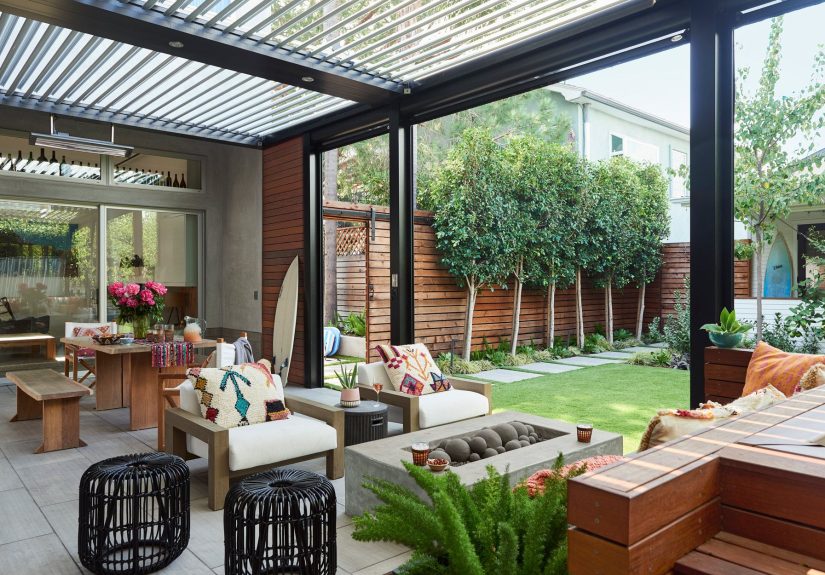
Adjustable louvered pergolas let you tilt the slats for sun, shade, or rain protection at the touch of a button. They offer a sleek, contemporary look and work brilliantly in climates where weather changes quickly. Pair the structure with low-slung lounge seating, concrete planters, and simple outdoor lighting for a clean, modern aesthetic.
5. Use Shade Sails for a Budget-Friendly Cover
Need shade on a budget or in a rental? Shade sails are your MVP. Mount them to the house, posts, or even strong trees to create triangles of shade over seating or dining areas. Choose UV-resistant fabric in colors that complement your exterior. Layer two or three sails at different heights for extra visual interest and coverage.
6. Add a Polycarbonate or Glass Roof for Extra Light
If you want protection from rain without losing sunlight, consider a clear or translucent polycarbonate roof or tempered glass panels over your patio structure. These materials let natural light pour in while blocking UV rays and keeping the space usable in light showers. They’re especially nice in cooler climates where every ray of sunshine counts.
7. Try a Rustic Wood Pavilion
For a cabin or farmhouse vibe, build a freestanding pavilion with chunky wood posts and a gabled roof. Top it with asphalt shingles or metal roofing to match your home. Inside, place a big dining table or a cluster of rocking chairs and a love seat. Add lantern-style lighting and a stone or brick floor to complete the cozy, lodge-like feel.
8. Extend the Roofline into a “California Room”
A California room is basically a covered patio that feels like an extension of your living room, with the same flooring or similar finishes running from inside to out. Add sliding or folding glass doors, then furnish the outdoor portion with weather-resistant versions of what you love indoorssofas, accent tables, a media console, and even an outdoor fireplace or TV for game day.
9. Screen In a Porch for Bug-Free Evenings
If mosquitoes think you’re a buffet, a screened-in covered patio is pure luxury. Use framed screens or retractable screen panels around a roofed patio so you can let in breezes but keep out bugs. Add ceiling fans, a jute or sisal-style rug, and soft lighting so the space feels more like a sunroom than a temporary fix.
10. Make It Kid-Friendly with a Play Nook
Dedicate one corner of your covered patio to the kids. Put down foam tiles or an outdoor rug, add a small table and chairs, a toy bin, and maybe a mini teepee or reading tent. Choose a durable cover (like a metal or composite roof) that can handle wayward balls and wild weather without fuss.
11. Layer String Lights Under a Wood Ceiling
For instant cuteness, hang classic café lights across your covered patio. Under a wood tongue-and-groove or beadboard ceiling, the lights feel warm and inviting. Add a dimmer for late-night mood lighting and supplement with lanterns on tables or battery-powered candles for soft, flickering glow.
12. Add a Ceiling Fan for Porch-Swing Energy
In hot or humid regions, a ceiling fan turns a covered patio from “pretty but stuffy” into “I could live here.” Choose a damp- or wet-rated fan and center it over the main seating area. Pair it with a porch swing, hanging chair, or daybed and you’ve just built the world’s coziest nap zone.
13. Build in a Fireplace or Fire Table
A fireplace under a covered patio instantly makes the space feel like a four-season retreat. Gas fire tables are easier to add to existing patios, while built-in fireplaces require more planning and professional installation. Either way, combine fire with soft seating, blankets, and warm lighting for the perfect s’mores-ready lounge.
14. Create an Outdoor Kitchen Under Cover
If you grill year-round, give your outdoor kitchen a proper roof. Cover the cooking zone and an adjacent bar or dining area so you can cook even when it’s drizzling. Use noncombustible materials around the grill, add task lighting over the cooking area, and consider a vent hood to keep smoke from lingering under the roof.
15. Mix Metal Roofing with Natural Wood
Combine a sleek metal roof with wood beams or posts for a modern-meets-rustic look. Metal roofs shed water easily and handle snow and sun well, while wood adds warmth and texture. Keep the furnishings simplethink clean-lined chairs, a neutral outdoor sofa, and one statement coffee table.
16. Use Curtains for a Cabana Feel
Hang outdoor drapery panels from the beams of your covered patio to create a cabana vibe. Close them for privacy or to block low sun, then tie them back when you want full openness. Choose fade-resistant, mildew-resistant fabric; soft neutrals and coastal stripes are classics that work with almost any style.
17. Build a Cozy Corner Retreat
Even a small corner can become a charming covered patio. Tuck a compact pergola or corner roof extension into an underused spot, then add a loveseat or two lounge chairs with a tiny side table. A vertical garden or trellis behind the seating gives you privacy and a lush backdrop without eating up floor space.
18. Use Brick or Stone Columns for Classic Charm
For a timeless look that ties into older or traditional homes, build your patio roof on brick or stone columns. Echo the masonry from your home’s foundation, fireplace, or front entry. Furnish with wrought-iron or wood seating, a patterned tile or outdoor rug, and a few potted topiaries for a polished, classic outdoor room.
19. Add a Skylight or Open Section for Sun
If you’re worried a solid roof will make your patio feel dark, integrate one or two skylights, or leave a small section as open pergola slats. This hybrid approach gives you shade and rain protection where you need it while still letting in patches of sun for plantsand for your vitamin D cravings.
20. Create a Garden Tunnel Patio
Use a long, narrow pergola structure to form a “tunnel” from the house to the backyard. Cover it with slats, polycarbonate panels, or vines, and arrange a slim dining table or bistro set along the length. Add lanterns or string lights overhead to emphasize the shape and turn the tunnel into a magical nighttime walkway.
21. Go Minimal with a Simple Flat Roof and Concrete
If you love clean lines, pair a simple flat roof with a sleek concrete or large-format paver floor. Keep furniture low and streamlined: a slim outdoor sofa, integrated bench seating, and a single statement lounge chair. Use just a handful of large planters for greenery so the space looks intentional, not cluttered.
22. Add an Outdoor Bar Under Cover
Transform the covered edge of your patio into a bar zone. Install a countertop along the railing or wall, add a few barstools, and hang pendant lights overhead. Include a compact outdoor fridge or cooler nearby and some shelves or a cart for glassware and mixers. It’s perfect for casual gatherings and weekend mocktail nights.
23. Blend Indoor and Outdoor Flooring
For the most seamless look, choose patio flooringlike porcelain tile, composite decking, or stained concretethat echoes the color or pattern of your indoor floors. When your covered patio sits right off the main living area, this trick makes both spaces feel bigger, as if your home just gained a bonus room without knocking down walls.
24. Style a “Garden Living Room” with Plants Everywhere
Turn your covered patio into a plant-filled retreat. Mix tall planters, hanging baskets, and a vertical garden on one wall. Combine evergreen shrubs, flowering annuals, and herbs so there’s always something interesting happening. Keep furniture light and neutral so the greenery is the star of the show.
Design Tips for a Cute, Cozy Covered Patio
Get the Scale Right
A patio that’s too tiny feels cramped; too huge feels empty and awkward. As a general rule, allow at least 3–4 feet of clearance for walkways, and don’t push furniture right to the edges unless you’re intentionally creating a built-in bench or wall-hugging layout. Measure before you buy and tape out potential layouts inside your house to test how they feel.
Layer Lighting Like a Pro
Just like indoors, layered lighting makes your covered patio feel finished. Use overhead fixtures or ceiling fans as your main light, string lights for ambiance, lanterns or sconces at eye level, and small accent lights for steps or pathways. Warm white bulbs (around 2700–3000K) give you that flattering, cozy glow everyone loves.
Use Textiles to Add “Cute” Factor
Outdoor-safe pillows, poufs, and rugs are the easiest way to add pattern, color, and personality. Pick one or two main colors and repeat them in cushions, rugs, planters, and table decor so the space feels cohesive instead of chaotic. Don’t be afraid of bold printsyour patio can handle more color than your living room.
Plan for Year-Round Comfort
In warm climates, ceiling fans, misters, and shade are essential. In cooler areas, add a fire pit, patio heater, or cozy blankets in a lidded storage bench. Consider roll-down shades or clear vinyl panels on the windward side of your covered patio so you can use it in shoulder seasons without freezing or overheating.
Real-World Lessons: What People Learn After Building a Covered Patio
Designing a covered patio looks simple on paperuntil you actually live with it. Homeowners often discover a few universal truths once their outdoor living space is finished, and you can borrow those lessons now instead of learning them the hard way.
1. You’ll use the patio more than you thinkif it’s comfortable. Many people report that once they add a proper cover, fans, and cozy seating, the patio becomes their default coffee spot, reading nook, and phone-call zone. That means investing in real comfort pays off. Choose cushions you’d actually sit on for hours, not just something pretty for photos. Add a side table for every seat; no one wants to juggle a drink in their lap.
2. Weather wins every time. The most Pinterest-perfect patio still loses if it doesn’t stand up to real weather. People in sunny, hot regions often wish they’d gone for more solid shade and lighter-colored surfaces to reflect heat. In rainy or snowy areas, they quickly appreciate sloped roofs, good gutters, and durable materials that don’t warp or rust. When in doubt, err on the side of more shade and more weather protectionyou’ll never regret being able to sit outside during a drizzle or a bright afternoon.
3. The right size cover matters more than you expect. A tiny awning over a large patio leaves half your furniture baking in the sun, while an oversized roof can make a small yard feel top-heavy. People often find that sizing the cover just beyond the furniture footprintallowing extra space for chair push-back and walking roomgives the best balance. If your dining table seats six, make sure the roof extends well past the chair backs so no one ends up half in, half out of the rain.
4. Zoning keeps the patio from becoming a “stuff collector.” Without clear zones, covered patios can quietly turn into outdoor storage: random shoes here, sports gear there, a forgotten side table from three decorating experiments ago. Homeowners who intentionally map out a lounging area, a dining area, maybe a grill or bar zone, find it easier to keep the patio tidy. Each section has a job, so it’s easier to resist dumping everything on the nearest flat surface.
5. Storage is the secret hero. Bench seating with storage, an outdoor cabinet, or even a handsome deck box makes day-to-day life much easier. Cushions, blankets, candles, and games all have a home, which means you can set up for a gathering in minutes. People who skip storage often end up hauling everything in and out of the house, which gets old fast and quietly reduces how much they use their outdoor space.
6. Lighting changes how often you actually hang out there. A lot of patios start with a single overhead light that’s either “on” or “off”and usually way too bright. Homeowners who later add string lights, lanterns, or dimmable fixtures almost always say they wish they’d done it sooner. Soft lighting makes the patio feel like a destination after dark, not a parking lot.
7. Plants make the space feel finished. Even the most beautiful structure looks a little bare until greenery moves in. People often start with a couple of pots and then gradually add hanging baskets, raised planters, or a vertical garden. The more plants, the more the space feels like a tiny outdoor retreat instead of a random roof over some furniture.
8. A covered patio can boost indoor comfort too. One pleasant surprise: in hot climates, a well-designed patio cover can shade windows and reduce indoor heat gain. Homeowners sometimes notice cooler rooms and lower energy bills simply because the sun isn’t blasting directly into the glass. It’s like getting a mini energy upgrade along with your cozy outdoor room.
9. “Cute” is in the details, not the price tag. People who love their patios long-term usually didn’t splurge on everything. Instead, they mixed value pieces with a few standout items: maybe a custom wood table paired with budget chairs, or a simple pergola dressed up with fun pillows and thrifted lanterns. The personality comes from color, textiles, and little styling moments, not from the most expensive furniture in the catalog.
10. The best covered patio is the one you actually finish. Finally, a lot of homeowners admit they waited years because they thought they needed the “perfect” design or a huge budget. In reality, you can start with a modest pergola, a shade sail, or a simple roof extension and style it over time. Once you have basic shade and comfortable seating, you’ll naturally figure out what upgrades matter mostoutdoor kitchen, fireplace, more plants, or something else entirely.
In short: plan smart, choose materials that match your climate, and don’t underestimate the power of good lighting, comfy seating, and a few well-placed plants. Do that, and your covered patio will become everyone’s favorite cute outdoor living spacepets included.