Table of Contents >> Show >> Hide
- Before You Store Anything: 4 Small-Space Rules That Actually Work
- Quick Table of Contents
- 1) Wall-Mounted Shelves and Cubes
- 2) Behind-the-Door Storage
- 3) Pegboard “Command Center”
- 4) Inside-the-Cabinet-Door Mini Storage
- 5) Under-Sink Zones That Don’t Collapse into Chaos
- 6) A Slim Rolling Cart for Tight Gaps
- 7) Under-Bed Storage That Slides, Not Sighs
- 8) A Storage Bed (or a Bed Upgrade)
- 9) Floating Nightstands + Wall Lights
- 10) Double-Duty Furniture That Hides Clutter
- 11) A Bookshelf That Doubles as a Room Divider
- 12) Closet Vertical Stacking (No Remodel Required)
- 13) Baskets That Make Open Shelving Look Intentional
- 14) Use Corners Like You Mean It
- 15) Toe-Kick and “Dead Space” Storage
- 16) A Real Entryway Drop Zone (Even If You Don’t Have One)
- 17) Kitchen Vertical Storage for Pans, Lids, and Spices
- 18) Seasonal Rotation: Store Less, Live More
- How to Keep Your Small Space Organized (Without Becoming a Full-Time Organizer)
- Real-Life Small-Space Experiences (What People Commonly Learn the Hard Way)
Small space living is basically a daily game of Tetrisexcept the pieces are sweaters, snack boxes, charging cords, and that one oddly long pan you swear you’ll use “next weekend.” The good news: you don’t need a bigger home. You need smarter storage.
The secret isn’t buying a hundred matching bins and calling it a personality. It’s finding storage in places you’re already paying rent for: walls, doors, corners, the air above shelves, and the weird gap between the fridge and the cabinet that currently collects dust bunnies like they’re Pokémon.
Before You Store Anything: 4 Small-Space Rules That Actually Work
- Store by frequency, not fantasy. Put daily items where your hands naturally go. The waffle maker you use twice a year can live elsewhere.
- Make “vertical” your love language. When floor space is scarce, walls and doors become prime real estate.
- Reduce friction. If it takes three steps to put something away, it will live on a chair forever. (That chair has a family.)
- Contain categories. Storage isn’t about hiding stuffit’s about grouping it so you can find it fast and put it back faster.
Quick Table of Contents
1) Wall-Mounted Shelves and Cubes
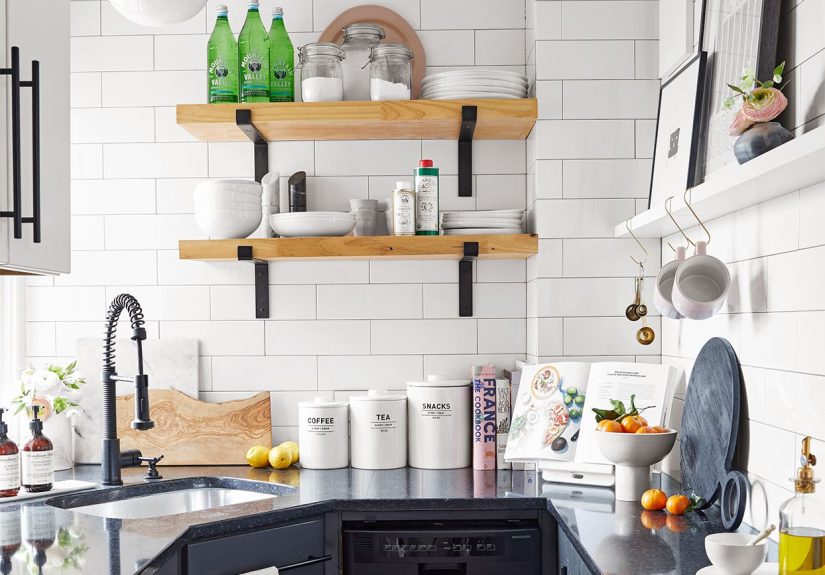
When floor space is limited, wall-mounted shelves are basically free square footagelike a hidden level in a video game. Install floating shelves or cube units to hold books, décor, baskets, or everyday grab-and-go items. The trick is to keep it tidy: open storage only works when the items look “curated,” not “yard sale aftermath.”
Example: Mount two small shelves near your desk for notebooks, a tray for chargers, and a basket for mail. Suddenly your desktop can breathe again.
2) Behind-the-Door Storage
Doors are wildly under-employed. Add over-the-door organizers in closets, bathrooms, or pantries to store shoes, cleaning supplies, hair tools, snacks, or accessories. If you’re renting, look for options that hang without drilling.
Example: Use a shoe-pocket organizer for beanies, gloves, scarves, sunscreen, bug spray, and travel-size toiletries. It’s like a tiny closet for your tiny closet.
3) Pegboard “Command Center”
Pegboards are the Swiss Army knife of small-space organization. Mount one in the kitchen, office, craft area, or entryway, then add hooks, cups, shelves, and bins that can be rearranged as your needs change.
Example: In a kitchen, hang measuring cups, a small shelf for spices, and a basket for recipe cards. In a home office, corral scissors, tape, pens, and charging cables.
4) Inside-the-Cabinet-Door Mini Storage
The inside of cabinet doors is prime “bonus storage.” Add adhesive hooks for oven mitts, measuring spoons, or hair tools. Stick-on bins can hold small items that otherwise vanish into the void (hello, toothpaste caps and hair ties).
Small win, big impact: If it’s stored on a door, you see it every time you open the cabinetso it actually gets used.
5) Under-Sink Zones That Don’t Collapse into Chaos
Under-sink cabinets are chaotic because they mix tall bottles, awkward plumbing, and mystery leaks. Fix it by creating zones: a bottom tray (to catch spills), stackable drawers or a tiered organizer, and a vertical section for sprays.
Example: Use a tension rod to hang spray bottles by their triggers, freeing the floor of the cabinet for bins. Add a small caddy for “daily cleaners” so you can pull everything out in one trip.
6) A Slim Rolling Cart for Tight Gaps
If you have a 5–8 inch gap anywhere (bathroom, kitchen, laundry area), you have storage potential. A slim rolling cart turns dead space into a flexible supply station.
Example: In a bathroom, store extra toilet paper, skincare backups, and cleaning supplies. In the kitchen, stash oils, spices, and snacks you want off the counter.
7) Under-Bed Storage That Slides, Not Sighs
Under-bed storage is amazingunless it’s a graveyard of unlabeled bins you dread opening. Choose containers that slide easily (wheels or low-friction bottoms), and label them by category. Bonus points for clear windows so you can spot what you need fast.
Example: Separate into “cold-weather clothes,” “extra linens,” and “shoes.” If everything is in one giant bin called “stuff,” your future self will file a complaint.
8) A Storage Bed (or a Bed Upgrade)
Beds take up a huge footprintso make yours earn its keep. A bed with built-in drawers is a game-changer in small bedrooms. If a new bed isn’t happening, use bed risers to create more clearance for bins, or add a low-profile under-bed drawer system.
Best for: seasonal clothing, spare bedding, bulky sweaters, and anything you don’t need daily.
9) Floating Nightstands + Wall Lights
Tiny bedroom? Ditch bulky nightstands. A floating shelf can act as a nightstand while keeping the floor clear (which makes the room feel bigger). Pair it with a wall-mounted sconce or plug-in wall light so you don’t lose surface space to a lamp base.
Example: One small shelf holds your phone, book, and glassesadd a tiny tray so things don’t wander off at night like they’re on a mission.
10) Double-Duty Furniture That Hides Clutter
In small spaces, furniture should have a side hustle. Think storage ottomans, beds with drawers, benches with lift-up tops, coffee tables with shelves or compartments, and console tables with baskets underneath.
Example: An entry bench with storage holds shoes and bags, while the top gives you a seat to put them onno more hopping on one foot like a confused flamingo.
11) A Bookshelf That Doubles as a Room Divider
Studio apartment or multi-use room? Use an open bookshelf as a divider to define zones without blocking light. Place the “pretty” side facing outward, and use matching bins or baskets on the less visible side for the practical stuff.
Example: Separate “sleep” and “work” zones with a shelf unit. Store books and décor on top shelves; hide office supplies in labeled baskets below.
12) Closet Vertical Stacking (No Remodel Required)
Closets fail when they only use one hanging bar and nothing above or below. Add a second tension rod for shorter items (shirts, skirts), or use hanging shelves for folded items. Shelf dividers keep stacks from toppling like tiny fabric dominoes.
Example: Hang a fabric closet organizer for tees, gym clothes, and accessories. Put shoes in stackable bins or an over-the-door rack to reclaim the floor.
13) Baskets That Make Open Shelving Look Intentional
Open shelves can look gorgeousor like you’re moving out. The difference is baskets and bins. Use them to group categories and visually calm the space. Choose a few sizes that fit your shelves so everything looks consistent.
Example: In the living room, one basket for remotes and chargers, one for kid stuff, one for throws. Your shelf becomes décor, not a confession.
14) Use Corners Like You Mean It
Corners are sneaky storage zones. Add a corner shelf in the shower, a corner bookcase in the living room, or corner wall shelves in a bedroom. You’ll gain storage without eating up the room’s main walking paths.
Example: A tall corner shelf unit can hold books, plants, and binsheight is your friend when square footage is not.
15) Toe-Kick and “Dead Space” Storage
That little recessed space under cabinets (the toe-kick) is often wasted. If you’re handy (or hiring help), toe-kick drawers can store flat items like baking sheets, cutting boards, or placemats. If that’s too advanced, look for other “dead space” moments: under a TV, above a door frame, or beneath a console.
Example: Add a slim floating shelf under a wall-mounted TV for game controllers, remotes, and headphonesstorage that doesn’t steal floor space.
16) A Real Entryway Drop Zone (Even If You Don’t Have One)
Many small homes don’t have an entrywayso clutter piles up wherever the front door happens to be. Create a drop zone with a narrow wall shelf, a few hooks, and a basket below for grab-and-go items.
Example: Install a small shelf for keys and mail, hooks for coats and bags, and a labeled bin for “returns” so packages don’t become permanent décor.
17) Kitchen Vertical Storage for Pans, Lids, and Spices
Small kitchens get overwhelmed because cabinets become jumbled caves. Go vertical: add a rail with hooks for mugs or utensils, store pans and cutting boards upright with dividers, and consider magnetic spice storage on the fridge or a narrow wall.
Example: Use a file-sorter style rack to store lids vertically. Add a small shelf riser inside a cabinet so plates and bowls aren’t stacked like a wobbly tower.
18) Seasonal Rotation: Store Less, Live More
The fastest way to get organized in a small space is to stop trying to store every single thing everywhere all at once. Rotate seasonally: cold-weather gear, holiday items, and off-season clothes can live in labeled bins out of your main daily zones.
Example: Keep one “current season” bin accessible and move everything else under the bed, on a high closet shelf, or in a single dedicated storage corner.
How to Keep Your Small Space Organized (Without Becoming a Full-Time Organizer)
Storage ideas work best when they’re paired with tiny habits that don’t require superhuman discipline.
- The 5-minute nightly reset: put away the day’s “floaters” (mail, chargers, mugs, socks that escaped).
- One in, one out: if something new comes in (a jacket, a gadget), something old leaves.
- Label your “homes”: not every bin needs a label, but shared spaces doespecially closets, pantries, and under-sink zones.
- Keep donation bags visible: if it’s hidden, it won’t happen. If it’s visible, it fills itself (like magic, but useful).
Real-Life Small-Space Experiences (What People Commonly Learn the Hard Way)
If you’ve ever felt like you’re “bad at organizing,” you’re not alone. Most people aren’t disorganizedthey’re living in spaces that don’t have enough built-in storage for modern life (hello, ten different charging cables per person). Here are a few common small-space experiencesand the practical lessons that tend to stick.
Experience 1: The Studio Apartment “Everything Pile”
In a studio, the biggest surprise is how fast flat surfaces become magnets. The countertop becomes a mail sorter, the chair becomes a wardrobe, and the coffee table becomes…well, a coffee table plus your entire personality. The fix usually isn’t “more storage.” It’s clear storage roles. People who succeed in studios often create micro-zones: a drop zone by the door (keys, wallet, headphones), a “work zone” (laptop, notebook, chargers), and a “relax zone” (blanket basket, book tray). Once each zone has a containerlike a small tray, a basket, or a pegboardthe pile stops migrating. The biggest mindset shift? If an item doesn’t have a home, it will choose one. And it will usually choose the most inconvenient place possible.
Experience 2: The Small Bathroom That Eats Products
Small bathrooms are where good intentions go to multiply. A few extra skincare items turn into a full store display, and suddenly the sink looks like it’s hosting a product convention. The experience many people share is that “organizing” only works after a quick category reset: keep daily items in one small bin, backups in another, and store rarely used things higher up or elsewhere. Under-sink storage is the turning point. When people add a tray (for spills), a tiered organizer (for visibility), and door hooks (for tiny tools), the bathroom stops feeling cramped. Another lesson: visibility beats perfection. If you can see what you own, you stop buying duplicates. If you can’t see it, you’ll buy three morethen wonder why you have twelve nearly identical bottles.
Experience 3: The “We Don’t Have Closet Space” Household
In small homes, closets often become mixed-use storageclothes, cleaning tools, holiday décor, random cords, and one mysterious box labeled “misc.” People who finally get relief usually do two things: they use vertical stacking (double rods, hanging shelves, shelf dividers), and they rotate seasonally. The “all coats all year” plan rarely works. Once winter coats are stored away in spring, the closet breathes again. Another common win is creating a dedicated donation bin or bag right inside the closet. That way, when something doesn’t fit, doesn’t get worn, or feels annoying, it doesn’t go back into circulation. It goes straight to “exit.” The real experience-based takeaway is simple: small-space organization is less about finding one perfect system and more about making small adjustments that reduce daily friction. If it’s easy to put away, it stays organized. If it’s hard, clutter will winpolitely, but consistently.