Table of Contents >> Show >> Hide
- How We Picked These Waterfall Trails
- 1) Mist Trail to Vernal & Nevada Falls (Yosemite, California)
- 2) Fairy Falls Trail (Yellowstone, Wyoming)
- 3) Multnomah Falls Trail (Columbia River Gorge, Oregon)
- 4) Hike to Alamere Falls (Point Reyes, California)
- 5) Linville Falls Trails (Blue Ridge Parkway, North Carolina)
- 6) Wallace Falls Trail (Washington)
- 7) Taughannock Falls Gorge Trail (Finger Lakes, New York)
- 8) Base of Fall Creek Falls Trail (Tennessee)
- 9) Cumberland Falls View Trails (Kentucky)
- 10) Pipiwai Trail to Waimoku Falls (Maui, Hawaii)
- 11) Havasu Falls Hike (Havasupai Reservation, Arizona)
- Smart Waterfall-Hiking Tips (So You Don’t Become a Cautionary Tale)
- Bonus: The Waterfall Trail Experience (Add of Real-World Vibes)
- Final Splash
- SEO Tags
Waterfall trails are basically nature’s way of saying, “Yes, you do need to take a walk today.”
They’re part hike, part scavenger hunt, part free sound bathexcept the “sound bath” is a thundering curtain of
water and the “bath” is the mist that turns your hair into a friendly houseplant.
This guide rounds up 11 standout waterfall hikes across the United States, ranging from
“I brought snacks and a denim jacket” strolls to “I trained for this and my socks have a college degree” treks.
You’ll get trail snapshots, timing tips, and the kind of practical advice that keeps your waterfall adventure
memorable for the right reasons (and not because your group chat won’t stop roasting you for slipping in the mud).
How We Picked These Waterfall Trails
“Best” is a spicy word, so we used a simple test: does the trail deliver a genuinely wow-worthy waterfall experience,
with a route that’s scenic, well-known, and realistically doable for everyday hikers (assuming “everyday” includes
people who occasionally forget they own sunscreen)?
- Variety: Iconic national parks, wild coastlines, gorge walks, and desert canyons.
- Range of difficulty: From easy, family-friendly paths to big all-day (or multi-day) missions.
- Practical logistics: Clear trailheads, typical seasons, and any “heads up” rules (permits, tides, closures).
- Waterfall payoff: The kind that makes you stop mid-sentence, point dramatically, and whisper, “Okay… wow.”
1) Mist Trail to Vernal & Nevada Falls (Yosemite, California)
If waterfall hikes had a red carpet, the Mist Trail would arrive in a sparkly outfit and sunglasses. The route climbs
alongside the Merced River, delivering two major hitsVernal Fall and Nevada Fallplus that famous mist that can feel
like Yosemite is personally spritzing you with a spray bottle.
Trail snapshot
- Distance: Roughly 3–4 miles round trip to Vernal Fall; about 7 miles round trip to Nevada Fall (options vary by route).
- Difficulty: Strenuous; lots of climbing (and a lot of “Are we there yet?” opportunities).
- Best time: Late spring to early summer for big flow; summer can be hot and crowded.
Pro tips
Start early to beat crowds and heat. When spray is heavy, granite steps can be slickwear shoes with real traction.
If you want fewer people and more peace, combine parts of the Mist Trail with the John Muir Trail loop for a different feel.
2) Fairy Falls Trail (Yellowstone, Wyoming)
Yellowstone is famous for geysers, but Fairy Falls is proof that the park also does “storybook waterfall” extremely well.
The hike itself is friendly and forested, and the falls deliver a tall, elegant drop that feels like it belongs on a postcard
that your aunt would absolutely frame.
Trail snapshot
- Distance: Typically 5.4–6.7 miles round trip, depending on trailhead/approach.
- Difficulty: Easy to moderate; steady walking with a big payoff.
- Bonus: Add nearby geyser views (and suddenly your “waterfall hike” becomes a whole science field trip).
Pro tips
Carry water and keep wildlife safety in mindthis is Yellowstone, not a petting zoo. Parking can be limited, so earlier is calmer.
If you’re pairing this with other stops, plan for “short hikes + traffic + photo stops” to take longer than you think.
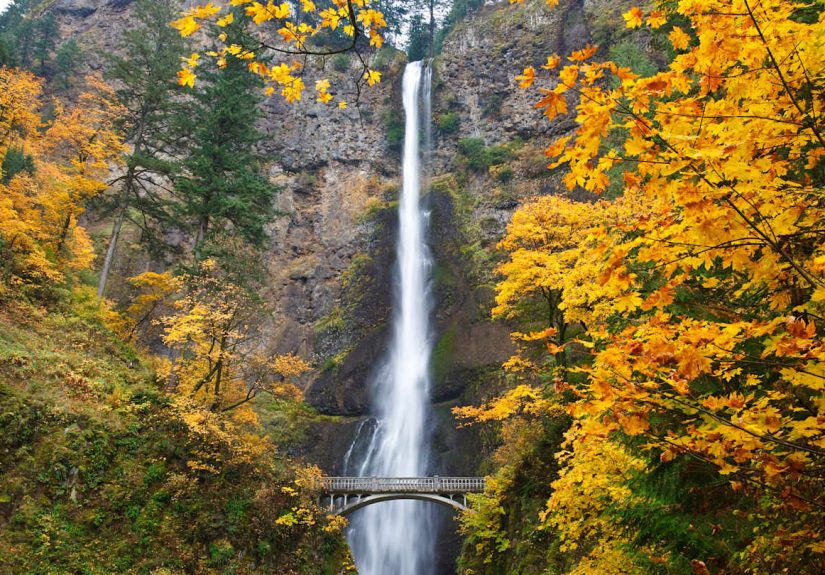
3) Multnomah Falls Trail (Columbia River Gorge, Oregon)
Multnomah Falls is the celebrity waterfall you’ve definitely seen on screensavers and “I moved to the Pacific Northwest”
vision boards. The best part? You can get a spectacular view quickly, or climb higher for the full top-to-bottom experience.
Trail snapshot
- Distance: About 2.4 miles round trip to the top (with shorter options to viewpoints).
- Difficulty: Moderate; paved at first, then lots of switchbacks.
- Best time: Spring for strong flow; shoulder seasons for fewer crowds.
Pro tips
This area can have timed-entry or reservation requirements in peak season, so check rules before you go.
Bring a light layer: gorge weather can flip moods faster than a reality TV season finale.
4) Hike to Alamere Falls (Point Reyes, California)
Alamere Falls is one of the rare U.S. “tidefall” experienceswhere water drops onto the sand near the ocean.
It’s gorgeous, dramatic, and absolutely not the place to wing it. This is a long day hike, and the last stretch
requires serious tide awareness.
Trail snapshot
- Distance: Minimum ~13 miles round trip (route varies by trailhead).
- Difficulty: Challenging due to length; terrain varies, including beach walking.
- Key timing: Plan around low tide for safe beach access.
Pro tips
Avoid the unofficial “shortcut” routes you’ll see onlinepark guidance warns they’re hazardous and damaging.
Pack more water and snacks than your optimism thinks you need, and check tide and surf conditions before committing.
5) Linville Falls Trails (Blue Ridge Parkway, North Carolina)
Linville Falls is a choose-your-own-adventure waterfall stop along the Blue Ridge Parkway, with multiple short trails
leading to different viewpoints. You can keep it mellow, or pick a steeper option for a closer lookeither way,
the gorge scenery is the kind that makes you talk in quieter voices without realizing it.
Trail snapshot
- Distance: Several options, including short overlooks and moderate routes to different viewpoints.
- Difficulty: Ranges from easy to moderate; some paths are steeper and more rugged.
- Best time: Spring for flow; fall for color (a waterfall with a leaf confetti cannon).
Pro tips
Pick a trail that matches your group’s vibe. If you’re hiking with mixed abilities, start with a viewpoint route first,
then decide if you want to add more. And yes: watch your footinggorge trails can be uneven and slick.
6) Wallace Falls Trail (Washington)
Wallace Falls is a classic Washington State Park hike: lush forest, mossy everything, and a waterfall system that feels
like it’s showing off in multiple acts. The route offers several viewpoints, so you can tailor the effort to your schedule
(or your group’s “I’m hungry” meter).
Trail snapshot
- Distance: Popular out-and-back options reach viewpoints; longer routes continue higher.
- Difficulty: Moderate; steady incline in classic PNW greenery.
- Best time: Spring and early summer for strong flow; fall for fewer crowds and moody vibes.
Pro tips
Expect damp trailsembrace it. Bring a rain shell even if the forecast looks confident, because Washington weather enjoys
surprises. A day-use pass may be required, so check park entry rules.
7) Taughannock Falls Gorge Trail (Finger Lakes, New York)
This one is a crowd-pleaser because it’s accessible and still feels epic. The wide, relatively flat gorge trail leads to
a massive waterfall framed by towering rock walls. It’s the kind of place where you take one photo, then immediately take
twelve more “just in case.”
Trail snapshot
- Distance: About a ¾-mile gorge trail to the falls (easy walking; check whether you’re doing it one-way or round trip).
- Difficulty: Easy; great for families and casual hikers.
- Signature: Big vertical drop and dramatic gorge scenery.
Pro tips
If you want variety, pair the gorge walk with rim viewpoints for a “top and bottom” experience.
Also: basic travel smarts applydon’t leave valuables visible in your car at trailheads.
8) Base of Fall Creek Falls Trail (Tennessee)
Fall Creek Falls is a superstar of the Southeast, with a towering drop and a short-but-steep trail option that gets you
down close. It’s a perfect “quick hike, huge payoff” situationjust don’t let the short distance fool you into thinking
it’s a walk to the mailbox.
Trail snapshot
- Distance: About 0.35 miles one way to the base (steep).
- Difficulty: Moderate to strenuous due to elevation change and stairs.
- Best time: Spring for flow; summer for swimming vibes (where allowed and safe).
Pro tips
Take your time on the descent and save energy for the climb back up. Traction matters on wet steps and rocks.
If you’re traveling with kids or newer hikers, set expectations: “short” and “easy” are not synonyms here.
9) Cumberland Falls View Trails (Kentucky)
Cumberland Falls is famous for two things: a powerful waterfall and the chance to see a moonbow (a lunar rainbow)
when conditions line up. Even if you don’t catch the moonbow, the falls are still impressive enough to make you
feel like you should applaud politely.
Trail snapshot
- Distance: Short trails and overlooks provide big views without a big hike (plus longer trail options nearby).
- Difficulty: Easy to moderate depending on route.
- Bonus: Moonbow potential around full-moon windows (weather-dependent).
Pro tips
For moonbow chasing, plan around the full moon and aim for clear skies. Bring a headlamp, go with a buddy,
and keep your expectations flexiblenature doesn’t take appointments, even when you do.
10) Pipiwai Trail to Waimoku Falls (Maui, Hawaii)
The Pipiwai Trail is the “hike inside a nature documentary” experience: bamboo forests, boardwalk sections,
and a waterfall reveal that feels like the finale. Waimoku Falls is tall and dramatic, and the trail itself is
a highlightnot just a means to an end.
Trail snapshot
- Distance: About 4 miles round trip.
- Difficulty: Moderate; can be muddy and slick.
- Best time: Earlier in the day to avoid heat and crowds.
Pro tips
Don’t underestimate island sunwater and sun protection are non-negotiable.
And if rain has been heavy, be extra cautious on slippery sections. This is a trail where “slow and steady”
is genuinely the smartest flex.
11) Havasu Falls Hike (Havasupai Reservation, Arizona)
Havasu Falls is legendary for its blue-green water and dramatic desert-canyon setting. It’s also heavily regulated and
logistically real: you need a reservation, and it’s not a casual day hike. But if you plan well, it’s one of the most
unforgettable waterfall adventures in the country.
Trail snapshot
- Distance: About 10 miles one way to the campground area from the trailhead.
- Difficulty: Strenuous due to distance, heat, and desert conditions.
- Critical rule: Reservations are required, and day hiking is not allowed.
Pro tips
Train for distance, carry sun protection, and respect closures and safety advisoriesflash floods and extreme heat are real.
This is the kind of trip where planning is not “Type A”; it’s “basic survival plus good manners.”
Smart Waterfall-Hiking Tips (So You Don’t Become a Cautionary Tale)
1) Know what kind of “wet” you’re signing up for
Misty waterfall staircases (hello, granite steps) demand traction. Gorge trails can be muddy. Beach approaches require tide timing.
In short: dress for wet feet and slippery surprises.
2) Check conditions like you’re getting paid for it
Waterfall trails change fast. Snowmelt boosts flow, summer heat cranks up dehydration risk, and storms can make creek crossings
a bad idea. Spend five minutes checking official updatesfuture you will be grateful.
3) Start early (your photos will look better anyway)
Morning light is softer, parking is easier, and you’ll have more breathing room on popular trails. Plus, you’ll finish earlier
and can celebrate with the world’s most justified post-hike meal.
4) Pack for comfort, not heroics
- Water: Bring more than you think you need.
- Snacks: Salty and sugary options (your legs will file a complaint without them).
- Layers: Waterfalls create microclimates; bring a light shell.
- Traction: If your shoes are “cute but smooth,” they are not hiking shoes.
5) Respect the landscape (and the rules)
Stay on maintained trails, don’t cut switchbacks, and avoid unofficial routes. Waterfall areas are often fragile, heavily visited,
and prone to erosion. Leave it better than you found iteven if “better” just means “not worse.”
Bonus: The Waterfall Trail Experience (Add of Real-World Vibes)
Here’s the funny thing about chasing waterfalls: the photos are great, but the feeling is the real souvenir. A waterfall hike
isn’t just “walk to water, clap, leave.” It’s a slow build of sound, temperature, and anticipationlike the world’s most wholesome
suspense movie, where the big reveal is… more water.
On a classic forest trail, you’ll often notice the change before you see anything. The air gets cooler. The ground gets darker and
softer. Leaves look shinier, like they’ve been freshly polished. Then the soundtrack starts. At first it’s a faint hush that could be
windor your imagination getting excited. A mile later it’s a steady roar that makes you subconsciously talk louder to your friends,
like you’re at a concert and the headliner is “Gravity + River.”
Different waterfall hikes have different personalities. Mountain waterfalls feel powerful and athleticlike they’re doing a workout
routine you absolutely did not sign up for. Coastal waterfalls (like a tidefall) feel dramatic in a cinematic way, especially when
fog rolls in and everything looks like it was color-graded by an indie filmmaker. Gorge waterfalls feel ancient and theatrical, framed
by cliffs that make you tilt your head back and suddenly become very aware you are a small creature with a snack bag.
Crowds can change the vibe, too. On popular trails, you’ll hear the universal soundtrack of joy: laughter, the click of trekking poles,
and someone confidently saying, “We’re almost there,” with absolutely no evidence. But even in a busy season, there are small ways to
make the experience feel personal. Start earlier. Pause at the first overlook and actually looknot just through your camera. Step aside
and listen for thirty seconds. Waterfall noise has a weirdly calming effect, like your brain is being gently told, “Hey, your problems
are not as loud as you think.”
Then there’s the mist factor. The closer viewpoint is always tempting because it feels more “authentic,” but it also means your hair
will do whatever it wants and your glasses might become decorative. Embrace it. That damp breeze is part of the experience. (Also, your
group will laugh at the “waterfall face” everyone makes when spray hits their nose. It’s science.)
Finally, waterfall trails have a way of turning ordinary hikers into tiny planners. You start thinking about tide charts, trail conditions,
and sunrise times. You get weirdly proud of packing extra socks. You learn the value of a snack break before the steep climb back. And when
you reach the falls, the reward is immediate and honest: a natural wonder that doesn’t care who you are, what you do, or how many emails you
have waiting. It just fallsloudly, beautifully, and without apology. Honestly? Goals.
Final Splash
The best waterfall trails in the U.S. aren’t just about the destinationthey’re about the journey: the buildup, the views, the mist,
and the moment everyone gets quiet because the waterfall is doing all the talking. Pick one that matches your time and fitness,
plan around seasons and conditions, and bring enough snacks to keep morale high. Your future self (and your camera roll) will thank you.