Table of Contents >> Show >> Hide
- First, a reality check: food doesn’t “melt fat”
- What “fat-burning foods” really do
- 11 healthy foods to put on your plate
- 1) Eggs
- 2) Plain Greek yogurt (or skyr)
- 3) Beans
- 4) Lentils
- 5) Oats (and other intact whole grains)
- 6) Leafy greens (plus cruciferous veggies like broccoli and cauliflower)
- 7) Berries
- 8) Nuts (almonds, pistachios, walnuts)
- 9) Avocado
- 10) Fatty fish (salmon, sardines, trout)
- 11) Chili peppers (and other spicy foods, if you tolerate them)
- How to turn these foods into a fat-loss day (without feeling like you’re on a diet)
- Common pitfalls that “cancel out” healthy choices
- Real-life experiences: what people often notice when they add these foods
- Conclusion: build a plate that makes fat loss easier
If you’ve ever googled “fat-burning foods,” you’ve probably seen a parade of claims that sound like they were written by a blender with Wi-Fi.
Here’s the truth: no single food flips a magical “melt fat” switch. But some foods do make fat loss easier by helping you eat fewer calories
without feeling like you’re being punished for existing.
Think of these foods as your “quiet helpers.” They don’t do the work for you they make the work feel more doable by boosting fullness,
supporting muscle, smoothing blood sugar spikes, and keeping meals satisfying. That’s the real secret sauce.
First, a reality check: food doesn’t “melt fat”
Burning body fat happens when your body consistently needs more energy than you’re taking in. That energy gap can come from eating a bit less, moving a bit more,
building muscle, sleeping better, and managing stress all the boring grown-up stuff that actually works.
That said, what you eat matters because different foods affect hunger, cravings, and how many calories you naturally end up eating. Also, digesting food
takes energy (the “thermic effect of food”), and protein generally costs your body more energy to process than carbs or fat. Is it a cheat code? No.
Is it a helpful nudge? Yes.
What “fat-burning foods” really do
- Help you feel full longer (so you stop “snack-spiraling” at 9 p.m.).
- Pack more volume with fewer calories (high water + fiber foods are clutch).
- Support muscle (which helps your body use energy efficiently).
- Reduce “blood sugar rollercoasters” by pairing fiber, protein, and healthy fats.
- Make healthy eating taste like real food, not like a dare.
11 healthy foods to put on your plate
1) Eggs
Eggs are a protein powerhouse that can help you stay satisfied especially at breakfast, when a sugary start can turn into a “hungry all day” situation.
They’re also easy: scrambled, hard-boiled, or folded into a veggie-loaded omelet.
Try it: Two eggs + sautéed spinach + salsa. Add a slice of whole-grain toast if you need more staying power.
2) Plain Greek yogurt (or skyr)
Greek yogurt is high in protein and works as a “base” for fat-loss-friendly meals: it’s creamy, satisfying, and plays well with fruit, nuts, and spices.
The key is choosing plain (sweetened yogurt can quietly turn into dessert with a health halo).
Try it: Greek yogurt + berries + cinnamon + a tablespoon of chopped nuts. Sweet, filling, and not a sugar bomb.
3) Beans
Beans are the overachievers of the grocery store: fiber + protein in one humble package. They digest slowly, help you feel full, and can replace more
calorie-dense foods in meals without leaving you hungry 45 minutes later.
Try it: Add black beans to tacos, chili, salad bowls, or blend white beans into soups for extra creaminess without heavy cream.
4) Lentils
Lentils are quick-cooking, budget-friendly, and great for appetite control. They’re especially useful when you want a hearty meal that doesn’t require
a second dinner.
Try it: Lentil soup with extra vegetables, or a warm lentil salad with lemon, olive oil, and chopped herbs.
5) Oats (and other intact whole grains)
Oats bring soluble fiber to the party (including beta-glucan), which helps with fullness and steadier energy. Whole grains also tend to be more satisfying than
refined grains because they keep more of their natural structure and fiber.
Try it: Overnight oats made with plain yogurt or milk, chia seeds, and berries. Or savory oats with an egg and sautéed veggies.
6) Leafy greens (plus cruciferous veggies like broccoli and cauliflower)
Leafy greens are classic for a reason: huge volume, low calories, and they help meals feel bigger. This is where “eat more to weigh less” actually makes sense
because you’re adding bulk without adding many calories.
Try it: Build a “big salad” with mixed greens, chopped vegetables, a real protein (chicken, tofu, beans, salmon), and a measured dressing.
7) Berries
Berries are naturally sweet, relatively low in calories, and bring fiber plus colorful plant compounds. They’re an easy swap for more calorie-dense sweets when you
want something that feels like a treat but doesn’t hijack your day.
Try it: Frozen berries warmed in the microwave, spooned over Greek yogurt. It tastes like dessert’s responsible older sibling.
8) Nuts (almonds, pistachios, walnuts)
Nuts are calorie-dense and still helpful because they’re satisfying. The combo of healthy fats, fiber, and some protein can curb mindless snacking.
The trick is portioning (nuts are tiny; your handful is not always a serving).
Try it: Pre-portion nuts into small containers or snack bags so “a serving” doesn’t accidentally become “the whole bag.”
9) Avocado
Avocado adds creamy satisfaction with fiber and mostly unsaturated fats. That matters because fat loss isn’t just about eating less it’s about
eating in a way that doesn’t leave you prowling the pantry later.
Try it: Add 1/3 of an avocado to a salad or grain bowl. Pair it with protein for a meal that sticks.
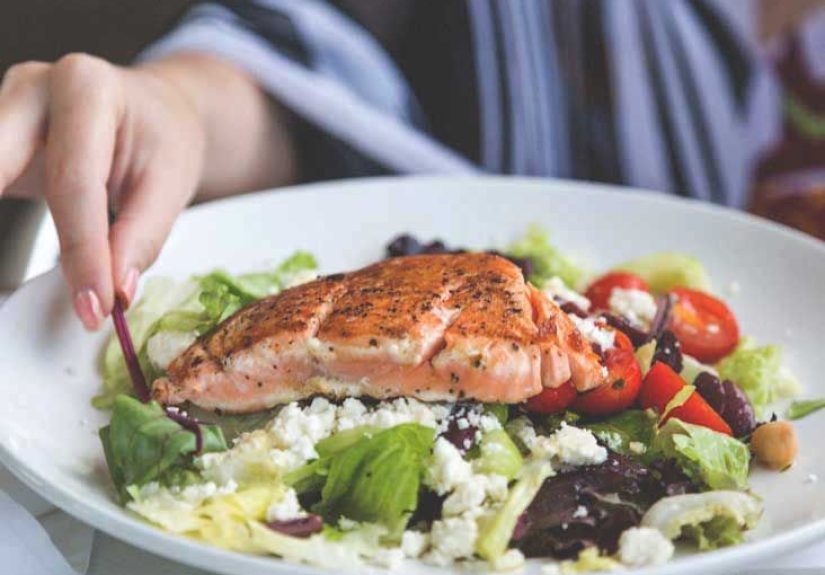
10) Fatty fish (salmon, sardines, trout)
Fatty fish delivers high-quality protein and omega-3 fats. For fat loss, protein helps with fullness and muscle support, while fish can be a lighter option
than many high-saturated-fat proteins.
Try it: Sheet-pan salmon with roasted broccoli and a side of quinoa or brown rice. Easy, filling, and weeknight-friendly.
11) Chili peppers (and other spicy foods, if you tolerate them)
Capsaicin (the compound that makes peppers spicy) has been studied for its potential to slightly increase energy expenditure and fat oxidation.
The effect is modest but spicy food can still be useful because it adds flavor without adding many calories, and it can make simpler meals more satisfying.
Try it: Add chopped jalapeño to eggs, sprinkle red pepper flakes on roasted vegetables, or use hot sauce (watch the sugar in some brands).
How to turn these foods into a fat-loss day (without feeling like you’re on a diet)
Instead of chasing one “miracle food,” build meals using a simple formula that quietly works:
- Protein (eggs, yogurt, fish, beans, lentils)
- High-volume produce (leafy greens, broccoli, berries)
- Smart carbs (oats or other whole grains when you want more fuel)
- Healthy fats (nuts, avocado measured, not guessed)
Example day:
- Breakfast: Greek yogurt + berries + cinnamon + a tablespoon of chopped nuts
- Lunch: Big salad with leafy greens, beans, chopped veggies, 1/3 avocado, and a measured dressing
- Dinner: Salmon + roasted broccoli + oats or quinoa on the side (portion based on your hunger and activity)
Common pitfalls that “cancel out” healthy choices
- Liquid calories (sweet coffee drinks, juices, “healthy” smoothies that are basically milkshakes).
- Hidden sugar add-ins (flavored yogurt, granola mountains, sweet sauces).
- Portion creep with calorie-dense foods (nuts, avocado, oils healthy, yes; unlimited, no).
- Protein too low (meals that are mostly carbs can leave you hungry sooner).
- Sleep debt (hunger hormones don’t care about your good intentions).
Real-life experiences: what people often notice when they add these foods
When people start building meals around protein, fiber, and high-volume foods, the first “win” usually isn’t a dramatic scale drop it’s that their day feels
calmer around food. A protein-forward breakfast like eggs or Greek yogurt often reduces the late-morning crash that leads to random snacking. Many people describe
it as getting their appetite “under control,” even though nothing about it feels extreme. They’re just less likely to hit noon starving and choose the quickest,
most calorie-dense option available.
Beans and lentils tend to create a different kind of change: meals feel more substantial. If you’ve ever eaten a salad and felt hungry again before you even
returned your fork to the sink, adding beans (and a measured fat like avocado) can transform that experience. People often report fewer cravings in the afternoon
because fiber slows digestion and helps meals “last.” The funny part is that this can feel like you’re eating more food bigger bowls, fuller plates
while still supporting a calorie deficit because the foods are less energy-dense.
There’s also a practical, everyday shift that shows up after a week or two: grocery choices get simpler. Instead of buying ten “diet foods” that taste like
cardboard optimism, people start relying on repeatable staples: frozen berries, bags of greens, canned beans, tubs of plain yogurt, oats, eggs, and a few
go-to proteins. That consistency matters because fat loss is rarely about motivation it’s about having foods on hand that make the better choice the easy choice.
Spicy foods and tea-related habits show up in a different way. The biggest benefit most people notice isn’t a metabolism fireworks show; it’s that flavor makes
simpler meals satisfying. A bowl of roasted vegetables feels a lot less sad with chili flakes, garlic, and lemon. A cup of unsweetened green tea can replace
sugary drinks, and that swap alone can make a measurable difference over time. In other words, the “fat-burning” magic is often just fewer liquid calories and
fewer mindless snacks which is honestly the most realistic kind of magic there is.
Finally, many people notice that nuts and avocado are a lesson in “healthy but not infinite.” They’re satisfying, which helps, but they also teach portion awareness.
A small serving can improve fullness; a large serving can quietly erase your deficit. The experience most people describe is learning what a reasonable portion
looks like in real life and realizing you can still enjoy these foods regularly when you measure once, eyeball later, and keep the rest of the plate high-volume.
Conclusion: build a plate that makes fat loss easier
The best “fat-burning foods” aren’t magical they’re the foods that help you stay full, fueled, and consistent. Start with one or two swaps:
add beans to lunch, choose plain Greek yogurt with berries instead of a sugary snack, or build dinners around fish and vegetables. Stack small wins, repeat them,
and let time do what time does best.