Table of Contents >> Show >> Hide
- How to Choose the Right DIY Miniature & Dollhouse Kit
- 10 Marvelous DIY Miniature Furniture & Dollhouse Kits
- 1. Retro Camper: Tiny Road-Trip Retreat
- 2. Modern House with Pool: A Miniature Luxury Villa
- 3. Chic Loft: Urban Living in One Compact Room
- 4. Hawaii Beach House: Vacation in a Box
- 5. Chinese Pagoda: An Ornate Architectural Challenge
- 6. Corner Bookstore: A Cozy Literary Hangout
- 7. Coffee Kiosk: For Hardcore Caffeine Fans
- 8. Flower Shop: A Blooming Miniature Greenhouse
- 9. Pastry Shop: The Sweet Tooth Showpiece
- 10. Sushi Bar: Double-Decker Dining in Miniature
- Lighting, Wiring & Display Tips for Miniature Dollhouse Kits
- Real-Life Experiences with DIY Miniature Furniture & Dollhouse Kits
- Conclusion
Miniatures are having a big moment – which is funny, because they’re tiny. From retro campers to sushi bars, DIY miniature furniture and dollhouse kits have become a favorite hobby for adults who want something calming, creative, and just a little bit obsessive in the best way. Many of today’s most popular kits come in 1:24 scale (half-inch scale), with laser-cut pieces, LED lighting, and astonishingly detailed miniature furniture and accessories.
Whether you’re dreaming of a beach house, a cozy bookshop, or a chic city loft, there’s a miniature house kit designed for you. Brands that specialize in these kits – including long-standing dollhouse makers and newer companies focused on DIY miniature houses – offer everything from simple beginner sets to intricate pagodas that can take weeks to finish.
Below, we’ll walk through 10 marvelous DIY miniature furniture and dollhouse kits (inspired by a popular eHow round-up) and then share extra tips and real-world “builder” experiences to help you choose the right kit and actually enjoy the process.
How to Choose the Right DIY Miniature & Dollhouse Kit
1. Pick a scale you can actually see
Most traditional dollhouse kits are 1:12 scale – one inch equals one foot – which gives you larger furniture and lots of accessory options. However, many modern DIY miniature house kits (especially the cute “room box” style) are 1:24 scale, which is smaller and more compact.
If you have limited display space or love the look of tiny, dense scenes, 1:24 is perfect. If your eyesight isn’t thrilled about squinting at microscopic croissants and chair legs, a 1:12 scale dollhouse kit might be more comfortable.
2. Match the kit to your skill level
Entry-level kits usually involve one room or a compact structure with fewer fiddly parts. More advanced kits add multi-story layouts, intricate architectural details, layered lighting, and dozens (sometimes hundreds) of miniature furniture and accessory pieces. Many brands label their kits beginner, intermediate, or advanced, so check the difficulty rating before you commit.
3. Think about theme and display
Because these dollhouse kits are designed more as display pieces than toys, the “theme” really matters: beach house, bookshop, coffee kiosk, sushi bar, retro camper, and so on. Some even include dust covers so you can display them on a bookshelf without worrying about every microscopic mug gathering dust.
4. Decide how much time and patience you have
Many builders report that a single miniature house kit can take anywhere from 10 to 40+ hours depending on complexity. Advanced pieces like pagodas or multi-level shops can feel more like a long-term puzzle project than a quick weekend craft. If you’re new, start with a one-room kit or a compact structure so you can enjoy a fast “win” before tackling something grand.
5. Consider lighting and power
Many of the best DIY miniature furniture kits now include LED lighting, tiny lamps, or illuminated signs. Some use simple battery packs and pre-wired lights; others assume you’re comfortable with more traditional dollhouse wiring systems such as 12-volt tape wire or round wire connected to a transformer. If you’re just starting out, choose kits with pre-wired LED sets and a battery box. You can always graduate to more advanced wiring later.
10 Marvelous DIY Miniature Furniture & Dollhouse Kits
1. Retro Camper: Tiny Road-Trip Retreat
Love the idea of vintage trailers but not the cost of renovating one in real life? A retro camper miniature kit scratches that itch at 1:24 scale. This small but packed-to-the-roof camper usually includes a cozy bed with pillows, a miniature stove, window boxes, curtains, and outdoor seating so your tiny travelers can enjoy the “view.”
It’s a great option if you:
- Enjoy nostalgic, Americana-inspired décor.
- Want a kit with both interior furniture and exterior details.
- Prefer a project that’s detailed but not multi-story.
For an extra personal touch, many crafters create miniature “family photos” to hang on the camper wall or swap in custom fabrics to match their real-life road-trip gear.
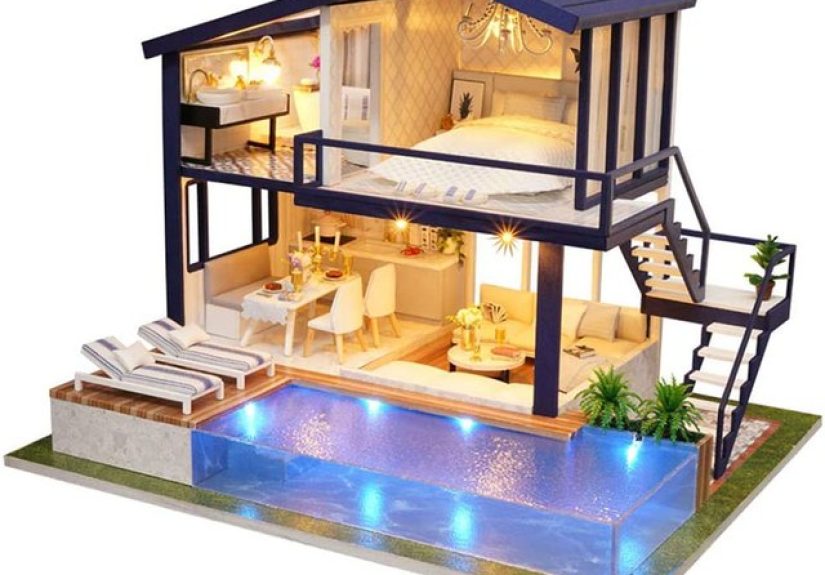
2. Modern House with Pool: A Miniature Luxury Villa
The modern house with pool is basically a tiny HGTV dream home. These kits typically offer a two-story floor plan with a living room, kitchen and dining nook, bedroom, and spa-style bathroom – plus the star of the show: a patio deck with a miniature swimming pool and lounge chairs.
Expect lots of sleek miniature furniture, tiny chandeliers, and LED lighting that makes the pool glow at night. It’s ideal for:
- Fans of modern or contemporary design.
- Intermediate builders who want a multi-room layout.
- Anyone who enjoys styling tiny “photo-ready” interiors.
3. Chic Loft: Urban Living in One Compact Room
If you like the aesthetic of open-plan lofts with spiral staircases, the chic loft miniature kit is a stylish choice. These kits usually include a double-height living space, a wall of shelves or bookcases, a statement chair, indoor plants, and a dramatic staircase that leads to a rooftop or mezzanine.
Because the footprint is small and there’s essentially one main room, it’s more approachable than a full house but still feels impressive when finished. It’s a smart pick if you want:
- A neat display piece for an office or living room shelf.
- To practice making miniature furniture and décor before moving on to a big house.
- A project that balances visual “wow” with manageable build time.
4. Hawaii Beach House: Vacation in a Box
The Hawaii beach house kit is like a miniature resort: airy verandas, ocean-inspired colors, and often multiple levels, including underwater features or aquarium-style scenes with sea life and buried “treasure.”
Many beach-themed dollhouse kits also come with a clear dust cover, which is a huge win because sand-colored details plus real-world dust is not a cute combination. Choose this kit if you:
- Love coastal décor and tropical color palettes.
- Don’t mind meticulous details like seashells, waves, and coral.
- Want a dramatic display piece for a console or bookcase.
5. Chinese Pagoda: An Ornate Architectural Challenge
The Chinese pagoda miniature kit is for patient builders who enjoy intricate architecture. Expect ornate fretwork, layered roofs, balconies, tiny lion-dog guardians, flowering trees, and little courtyard features like koi ponds or lanterns.
This type of kit usually has a higher difficulty rating thanks to the number of small structural pieces and decorative elements. It’s perfect for:
- Experienced miniature hobbyists.
- Fans of traditional East Asian architecture and garden design.
- Builders who want a long, meditative project rather than a quick craft.
6. Corner Bookstore: A Cozy Literary Hangout
If your happy place is a bookstore with overstuffed shelves and comfy chairs, a corner bookstore miniature will instantly speak your language. These dollhouse kits typically feature a storefront with large windows, bookshelves crammed with tiny “books,” reading chairs, magazine stands, and even street elements like a lamppost or sidewalk sign.
Many crafters customize the tiny book covers with their real-life favorites, turning the scene into a personal “best of” library. It’s especially charming when displayed on an actual bookcase so your miniature and full-size books share the same space.
7. Coffee Kiosk: For Hardcore Caffeine Fans
Think tiny café, cobblestone street, and a lot of espresso energy. Coffee kiosk kits generally include an outdoor counter, stools, café table, menu boards, takeaway cups with sleeves, a miniature espresso machine, and bags of “beans.” Some even wink at famous coffee-chain logos with their signage.
It’s a fun option if you:
- Collect coffee mugs or café décor in real life.
- Want a compact, street-scene style miniature instead of a full building.
- Enjoy painting or weathering signs, bricks, and outdoor elements.
8. Flower Shop: A Blooming Miniature Greenhouse
The flower shop is one of the most satisfying DIY miniature furniture kits because you literally build your own “inventory” of plants and bouquets. The structure usually combines a ground-floor shop with bistro seating and a sunny greenhouse or conservatory above.
Expect to:
- Roll and assemble dozens of tiny blossoms and leaves.
- Arrange flowers in buckets, vases, window boxes, and pots.
- Use LED lighting to make the shop glow like a real florist’s window at night.
It’s an amazing choice if you love detailed, repetitive crafting that feels almost like paper quilling or sugar-flower making, just at miniature scale.
9. Pastry Shop: The Sweet Tooth Showpiece
The pastry shop kit is all about tiny desserts: cakes, cream puffs, croissants, and layered pastries displayed on lace-covered tables and stands. Outside, you’ll usually assemble a striped awning, flower boxes, and a charming entrance; inside, you’ll arrange baked goods in glass cases and on tabletops.
Many builders joke that you shouldn’t assemble a pastry shop on an empty stomach because the visuals are so tempting. It’s also a fun kit if you enjoy painting realistic “icing” textures and experimenting with gloss varnish to make pastries look freshly glazed.
10. Sushi Bar: Double-Decker Dining in Miniature
The sushi bar is a two-level restaurant scene full of bamboo cups, chopsticks, tiny soy sauce bottles, rice bowls, and dazzling varieties of sushi lined up on the counter. Some kits include a revolving conveyor belt feature along with booth seating and a bar area.
It’s a standout display piece for a kitchen, dining room, or home bar, and it’s perfect if you:
- Love Japanese food and restaurant culture.
- Have the patience for ultra-small details like maki rolls and nigiri.
- Want a kit that looks especially dramatic when lit up at night.
Lighting, Wiring & Display Tips for Miniature Dollhouse Kits
Once your miniature furniture sets and dollhouse structures are assembled, lighting and display can take them from “cute” to jaw-dropping. Many hobbyists use low-voltage LED systems designed specifically for dollhouses, with either tape-wire or round-wire systems connected to a 12-volt transformer. These systems allow you to run multiple lights safely and even mix ceiling fixtures, sconces, table lamps, and strip lighting.
If that sounds intimidating, don’t worryplenty of current miniature house kits come with simple pre-wired LED strands and a small battery pack. All you have to do is route the wires through walls or floors, tape them down neatly, and hide the battery box behind or under the display.
For display:
- Use clear acrylic cases to keep dust off and protect delicate miniature furniture.
- Place book-themed kits like bookstores on actual bookshelves for a clever visual pun.
- Group shop-style kits together (coffee kiosk, flower shop, pastry shop, sushi bar) to create a “miniature main street.”
Real-Life Experiences with DIY Miniature Furniture & Dollhouse Kits
Beyond the product photos and glowing reviews, what is it actually like to build these miniature house kits? Here’s a look at common experiences and lessons shared by hobbyists who spend their evenings gluing tiny chair legs and wiring dollhouse lights.
The learning curve is real, but very rewarding
Most beginners are surprised by how small everything truly is. Even if you’ve seen photos online, you don’t fully grasp it until you’re trying to fold a paper lampshade that’s barely the size of a fingernail. Many first-time builders say their early attempts looked a little wonkytables leaning slightly, rugs glued crooked, or railings with visible glue blobs.
The good news: every kit makes you noticeably better. By the time you move from a retro camper or chic loft to something like the pagoda or a multi-room dollhouse, your cutting, folding, and gluing skills will have leveled up dramatically. That’s one reason hobbyists often recommend starting with a simpler room box kit from reputable brands, then working your way up to more ambitious builds.
Time estimates are… optimistic
Product descriptions often list build times like “10–20 hours,” which might technically be true if you’re extremely efficient and never re-do anything. In reality, many crafters work on a single DIY miniature furniture kit over several weeks, doing 30–60 minute sessions at night. It’s less about racing to the finish and more about having a relaxing, ongoing project.
Complex scenesespecially those packed with tiny plants, food, or bookscan take dozens of hours. The flower shop, pastry shop, and sushi bar kits tend to be particularly time-intensive because you’re repeating the same small tasks over and over (rolling flowers, shaping pastries, cutting sushi pieces). The upside is that those repetitive steps can feel meditative, almost like knitting or cross-stitch.
Organization matters more than you’d think
One of the first lessons miniature builders learn is that the original plastic bags or cardboard trays are not enough for long builds. Many people quickly upgrade to:
- Small lidded containers or pill organizers for individual parts.
- Labeled bowls or ramekins for furniture pieces, décor, and hardware.
- A dedicated tray or mat so tiny pieces don’t end up on the floor.
Sorting parts by step or by type saves a lot of frustrationespecially when the instructions use reference numbers that don’t obviously match what you see at first glance.
Lighting can be magical, but test early
Hobbyists consistently recommend testing your lights before you commit to gluing walls, ceilings, or roofs in place. Nothing kills the vibe like discovering a dead LED after the entire house is closed up. A quick test with the battery pack or transformer at each stage can save you from major surgery later.
Many experienced builders also plan their wiring routes on paper (or even sketch on the underside of the floor pieces) before they start, borrowing tips from traditional 12-volt dollhouse wiring guides to keep things neat and safe.
Miniatures are surprisingly relaxing
A big part of the appeal is how immersive the process feels. You’re not just assembling a kityou’re building a tiny story. Will your beach house feel like a quiet getaway, or a party weekend? Does your bookstore specialize in mysteries, sci-fi, or romance? Are you styling the coffee kiosk for a quiet morning crowd or a busy city rush?
Many adults describe working on DIY miniature house kits as a form of stress relief. It pulls your attention away from screens and into something tactile and focused. The combination of repetition, fine motor work, and clear step-by-step progress offers a calm, almost meditative rhythm. And when you switch the lights on for the first time and see the whole scene glowing, it’s hard not to smile.
Over time, some hobbyists move from premade kits to designing their own miniature furniture, laser-cutting flat-pack parts, or building custom dollhouses from scratch. But for most people, these 10 marvelous dollhouse kits are the perfect gateway into a wonderfully tiny world.
Conclusion
From retro campers and modern pool houses to bookstores, flower shops, and sushi bars, DIY miniature furniture and dollhouse kits give you a chance to build fully decorated dream spaces that fit on a shelf. Start with a scale and difficulty level that feel comfortable, choose a theme that makes you genuinely excited, and don’t be afraid to take your time. With a little organization, good lighting, and lots of breaks for your eyes and neck, you’ll end up with a miniature scene that looks like it came straight out of a storybookonly this time, you’re the designer.