Table of Contents >> Show >> Hide
- 1. Paris Catacombs, France
- 2. Cairo’s City of the Dead, Egypt
- 3. Wadi al-Salam, Najaf, Iraq
- 4. Colma, California, United States
- 5. New Orleans, Louisiana, United States
- 6. The Vatican Necropolis, Vatican City
- 7. Saqqara, Egypt
- 8. Ancient Thebes and the Valley of the Kings, Egypt
- 9. Palermo’s Capuchin Catacombs, Italy
- 10. Recoleta Cemetery, Buenos Aires, Argentina
- Why These Cities of the Dead Still Matter
- What It Feels Like to Experience a City of the Dead
Most cities brag about skylines, food scenes, and neighborhoods with suspiciously expensive coffee. “Cities of the dead” have a different sales pitch. They offer tombs instead of towers, silence instead of traffic, and the kind of history that makes even the boldest traveler walk a little slower. But these places are far more than spooky backdrops for dramatic photos. They are archives of power, belief, architecture, memory, and plain old human practicality.
The phrase city of the dead comes from the idea of a necropolis, an elaborate burial place linked to a living city. In some cases, that city of the dead was built outside the walls to protect public health or religious order. In others, it became a sacred district, a political statement, or even a community where the living and the dead still share space. That is what makes the world’s greatest burial cities so fascinating: they are never just about death. They are about how civilizations explain life, status, fear, and eternity.
Below are 10 unforgettable cities of the dead and the buried secrets that make them impossible to forget.
1. Paris Catacombs, France
Buried secret: A public health problem turned into an underground empire of bones
Beneath Paris lies one of the world’s most famous ossuaries, where the remains of roughly six million people were moved into old quarry tunnels. That number alone is enough to make your morning croissant feel suddenly philosophical. But the real secret is why the catacombs exist at all. They were not created as a dramatic gothic attraction. They were a practical response to overflowing cemeteries, foul conditions, and even dangerous ground collapses in 18th-century Paris.
In other words, the Catacombs began as urban crisis management with a skull-heavy aesthetic. Over time, officials arranged bones in haunting walls and patterns, transforming a sanitation fix into a monumental landscape of memory. The Paris Catacombs remind us that even the most poetic “city of the dead” can begin with a very unpoetic problem: too many bodies and nowhere safe to put them.
2. Cairo’s City of the Dead, Egypt
Buried secret: It has never belonged only to the dead
Cairo’s City of the Dead is one of the most complex burial landscapes on Earth. It is not just a cemetery district but a vast historic zone of mausoleums, shrine-mosques, family tombs, and neighborhoods where people have lived and worked for generations. That blend of mourning and daily life is what makes the place feel so singular. Here, memory is not tucked away behind a gate. It is woven into ordinary routines.
The buried secret of Cairo’s necropolis is that outsiders often imagine it as a frozen ghost district, when in reality it has long functioned as a lived-in urban space. Caretaker families, traders, workers, and visitors have animated it for centuries. Today, it also sits under pressure from demolition and redevelopment, which means the struggle is no longer only about preserving graves. It is also about protecting a living historic landscape that holds religious, architectural, and human significance all at once.
3. Wadi al-Salam, Najaf, Iraq
Buried secret: Faith, grief, and modern conflict are written into its endless graves
Wadi al-Salam, or the Valley of Peace, is often described as one of the largest cemeteries in the world. Located near the shrine of Imam Ali in Najaf, it holds profound meaning for Shiite Muslims, many of whom consider burial nearby a spiritual honor. The scale is staggering. Graves stretch across the landscape in a way that feels less like a cemetery and more like a stone-built horizon.
Its buried secret is that Wadi al-Salam has become a record not only of devotion, but of Iraq’s modern history. Waves of burials have reflected war, political violence, and public health crises. In that sense, this city of the dead operates like an emotional seismograph. When the living world shakes, the cemetery grows. And yet the place is not defined only by loss. It is also defined by ritual, prayer, and the persistent human belief that where you rest matters as much as how you lived.
4. Colma, California, United States
Buried secret: A real estate decision helped build America’s most literal cemetery town
If there were an award for “most honest municipal identity,” Colma would be a serious contender. This small California town became a cemetery city after San Francisco pushed burials outward as land values rose and urban priorities changed. By the early 20th century, cemeteries were being removed from San Francisco, and Colma inherited enormous numbers of the dead.
The result is a place where cemeteries define the landscape and the deceased vastly outnumber the living. Colma’s secret is not supernatural. It is economic. It shows how even death can get tangled up with land scarcity, city planning, and real estate pressure. That sounds grim, but it is also weirdly revealing. Cities like to pretend they are powered by ideals; Colma politely reminds us that zoning has entered the chat.
5. New Orleans, Louisiana, United States
Buried secret: Its famous tomb cities were shaped by both environment and culture
New Orleans is famous for above-ground tombs that rise in neat white rows, turning its cemeteries into miniature stone neighborhoods. Many people assume this style exists only because the water table is high and the ground is swampy. That explanation is partly true, but it is not the whole story. The tradition also reflects Spanish and Mediterranean burial customs that influenced the city’s colonial culture.
That is the buried secret of New Orleans: its cemetery architecture is both practical and inherited. These “cities of the dead” are engineered for local conditions, yes, but they also express a cultural language of family vaults, ritual, and memory. Walk through one and you can feel how the city handles mortality with the same flair it applies to music, food, and iron balconies. New Orleans does not hide death. It gives it structure, style, and a permanent address.
6. The Vatican Necropolis, Vatican City
Buried secret: One of Christianity’s holiest buildings rose over a Roman graveyard
St. Peter’s Basilica is one of the most recognizable churches on Earth, but below it lies a much older landscape: a Roman necropolis on Vatican Hill. Excavations in the 20th century revealed streets, tombs, and burials from the ancient world beneath the massive Christian basilica. The contrast is striking. Layer by layer, the site shows how one civilization literally built atop another.
The most famous secret here is the long-standing tradition that St. Peter was buried nearby. Whether approached through faith, archaeology, or both, the underground necropolis reshapes the way people understand the Vatican. It is not just a religious center; it is a palimpsest of pagan Rome, early Christianity, imperial politics, and sacred memory. The polished marble upstairs may be glorious, but the real drama begins below ground.
7. Saqqara, Egypt
Buried secret: This ancient necropolis is still giving up new stories
Saqqara, part of the necropolis of ancient Memphis, is one of the most important burial landscapes in Egypt. It is home to Djoser’s Step Pyramid, often described as the oldest major stone building in Egypt, as well as tombs, temples, walkways, and underground chambers spread across miles of desert edge. If ancient Egypt had a deep-storage archive, Saqqara would be one of its crown jewels.
Its buried secret is wonderfully inconvenient to anyone who thought archaeology had wrapped this place up long ago. Saqqara keeps producing discoveries: sealed coffins, decorated tombs, statues, mummies, and clues about medicine, craft, religion, and status. In other words, this city of the dead is still very much alive as a source of knowledge. It refuses to become a closed chapter, which is perhaps the most Egyptian plot twist possible.
8. Ancient Thebes and the Valley of the Kings, Egypt
Buried secret: The “city of the dead” was also a working machine for royal immortality
On the west bank of the Nile at ancient Thebes lay a necropolis so large and important that it helped define royal Egypt. This was not one cemetery but an entire funerary zone with royal tombs, mortuary temples, workers, priests, artisans, and support communities. The Valley of the Kings became the burial place of many pharaohs of the New Kingdom, including Tutankhamun, whose tomb stunned the modern world when it was found largely intact.
The buried secret of Thebes is that immortality required infrastructure. Grand tombs did not appear by magic. They depended on labor, planning, religious expertise, and a whole ecosystem devoted to preserving royal power beyond death. The result was a city of the dead that worked like an industry. It was solemn, yes, but it was also organized, busy, and surprisingly human behind all that gold and eternity.
9. Palermo’s Capuchin Catacombs, Italy
Buried secret: The dead were arranged almost like a social directory
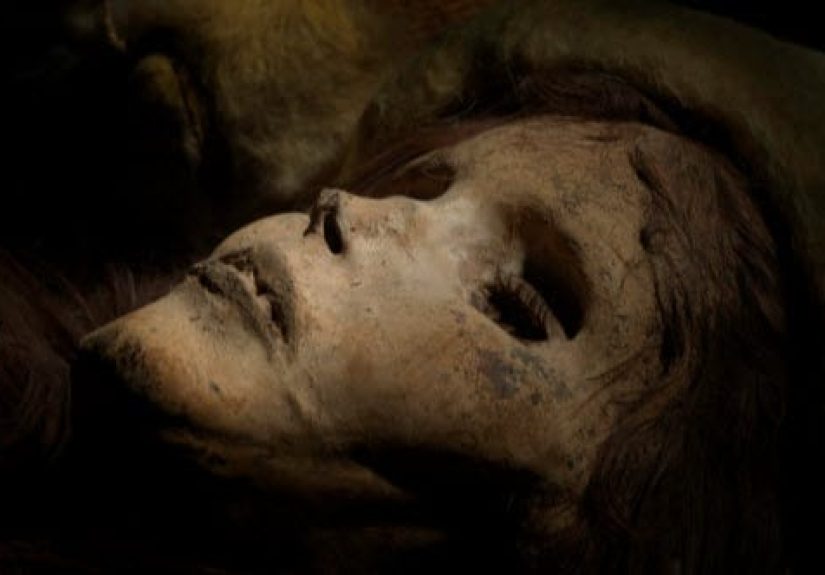
The Capuchin Catacombs of Palermo are not subtle. Instead of hidden burials, visitors encounter preserved bodies and skeletons displayed in corridors by category: men, women, children, clergy, professionals. It is part catacomb, part social archive, part uncanny reminder that even after death, humans remain obsessed with labels.
The buried secret here is not just the shock value. Researchers have used modern tools such as X-rays to learn more about some of the catacombs’ mummified children and to better understand health, preservation, and identity in Sicilian society. These catacombs show that burial sites can preserve more than bodies. They preserve status, class assumptions, family memory, and the strange human desire to remain recognizable long after breath has left the room.
10. Recoleta Cemetery, Buenos Aires, Argentina
Buried secret: Political fame can continue long after the funeral ends
Recoleta Cemetery is one of the most elegant cemetery landscapes in the world, with ornate tombs, narrow paths, and enough marble to make a palace feel underdressed. It is the resting place of many famous Argentines, but one grave towers above the rest in cultural power: Eva Perón’s. Her burial story involved secrecy, relocation, and years of political tension before her remains were finally placed in the Duarte family crypt.
That is Recoleta’s buried secret. It is not simply a beautiful cemetery for elites. It is a theater of national memory where politics, celebrity, grief, and myth keep mingling long after death. The tombs are architecturally impressive, but the real fascination comes from what they reveal about public devotion and the afterlife of reputation. Some people die once. Famous people, apparently, keep getting sequels.
Why These Cities of the Dead Still Matter
What ties these places together is not just mortality. It is the fact that every city of the dead tells the truth about the living. Paris exposes the consequences of urban overcrowding. Cairo reveals how burial spaces can also be neighborhoods. Najaf records devotion and conflict. Colma lays bare the economics of memory. New Orleans shows how culture and environment can shape burial design. Saqqara and Thebes demonstrate that ancient tombs were also political statements. Palermo and Recoleta prove that the dead can remain socially legible for centuries.
That is why the best stories about historic cemeteries, catacombs, and necropolises do not depend on cheap thrills. The deeper fascination comes from what these places preserve: fear of oblivion, hunger for prestige, reverence for ancestors, and the stubborn hope that someone, somewhere, will still speak our names.
What It Feels Like to Experience a City of the Dead
Standing inside a city of the dead is rarely as dramatic as movies promise. There is no constant thunder, no mysterious whisper conveniently timed for tourists, and, disappointingly, almost no one in a black cloak handing out philosophical advice. What you usually notice first is scale. A necropolis changes your sense of proportion. Row after row of tombs or shafts or stacked bones can make you feel very small, very temporary, and very aware that humanity has been rehearsing the problem of death for a very long time.
Then comes the surprise: these places often feel less frightening than intimate. In New Orleans, family tombs resemble tiny houses lined up on narrow streets. In Colma, landscaped cemeteries feel almost suburban, as if memory rented itself a quiet zip code. In Cairo’s City of the Dead, the emotional effect is even stranger because life keeps happening beside mausoleums. Laundry dries. Children move through lanes. Visitors arrive with food, prayers, and flowers. The lesson is clear: death is not always isolated from daily life. Sometimes it sits right in the neighborhood, refusing to stay abstract.
Ancient sites add another layer. At Saqqara or Thebes, the experience is not only emotional but intellectual. You start to see how much labor went into building eternity. Tombs are not random holes in the ground. They are design projects, belief systems, and status statements carved into stone. The corridors, painted walls, shafts, offerings, and burial chambers all reveal a civilization trying to negotiate with time itself. It is difficult not to feel respect for that level of ambition. Building a house is hard enough. Building one for the afterlife is overachiever behavior.
Places like the Paris Catacombs and Palermo’s Capuchin Catacombs create a different mood. They are more confrontational. Bones and preserved bodies strip away the decorative language of mourning and leave visitors face-to-face with the material fact of mortality. That can feel eerie, but it can also feel oddly clarifying. The dead are no longer an idea. They are present as evidence. And once that happens, people often become quieter, slower, and more observant. A city of the dead tends to edit the ego without asking permission.
There is also a powerful social experience in these places. You notice how differently cultures organize remembrance. Some emphasize anonymity, others lineage. Some build upward in white vaults, others downward in tunnels. Some treasure the bones of saints, rulers, or heroes; others create vast democratic seas of graves. In every case, the burial landscape reflects what the living considered sacred, practical, beautiful, or prestigious. The tomb becomes a cultural sentence written in stone.
That may be the greatest experience these places offer. They do not simply invite visitors to think about death. They invite people to think about what any society owes its dead, how memory should be protected, and what kind of traces we leave behind. A city of the dead is never just about endings. It is also about continuity. It asks whether the living are worthy caretakers of the stories buried below them. That question lingers long after the visit ends, and frankly, it follows you more effectively than any ghost ever could.