Table of Contents >> Show >> Hide
- What Happened: The Viral Video That Sparked the AI Crowd Backlash
- Why Viewers Thought the Crowd Was AI
- Did Will Smith Actually Fake a Crowd? The More Complicated (and More Likely) Explanation
- Why Crowd Shots Are a Nightmare for AI (and for Anyone Trying to Look Normal Online)
- Why This Hit Will Smith Harder Than It Might Hit Someone Else
- Will Smith’s Response: If You Can’t Beat the Meme, Adopt It
- Platforms Are (Finally) Trying to Label Synthetic MediaBut It’s Not Simple
- How to Tell If a Viral Crowd Clip Might Be AI (Without Becoming a Full-Time Conspiracy Hobbyist)
- What Artists and Brands Should Learn From This (Aka: The “Please Don’t AI My Face” Era)
- Conclusion: The Real Crowd vs. the Real Problem
- Experiences Related to the Will Smith AI Crowd Controversy (What It Feels Like When a Video Looks “Too AI”)
If you’ve spent more than eight minutes on social media lately, you already know the rules:
1) everything is a “moment,” 2) comments are a sport, and 3) if a crowd looks a little too perfect, the internet will
immediately yell, “AI!”sometimes correctly, sometimes… enthusiastically.
That’s exactly what happened when Will Smith posted a concert-style video that went viralnot because of a surprise duet, a stage fall,
or a wardrobe malfunction, but because viewers believed the cheering fans looked suspiciously synthetic. The result was a full-blown
mini-controversy: Was the crowd real? Was the video “enhanced”? Was it just compression, editing, or a generative AI tool turning real
photos into weird, wobbly “almost-people”?
Let’s break down what the video showed, why people were convinced something was off, what reporting and expert takes suggest likely happened,
and why this kind of “AI crowd” accusation is becoming the default reaction anytime a clip looks even slightly uncanny.
What Happened: The Viral Video That Sparked the AI Crowd Backlash
The controversy centers on a short concert montage posted to Will Smith’s social accounts in mid-August 2025. The clip features Smith onstage
performing his newer music and moving along the barricade, reaching out to fans. The post reads like a sincere thank-you to the people who showed
upbecause, in the best timeline, that’s what it is: an artist appreciating an audience.
But viewers immediately started pausing, zooming, and screenshotting the crowd shots. Instead of focusing on the performance, comment sections
became a game of “Spot the Glitch.” People pointed out odd-looking faces, unusual motion, and signs with text that appeared to shift or distort.
The loudest claim: the audience wasn’t just filtered or sharpenedthe audience was AI-generated.
That accusation spread fast because it hits a cultural nerve. In a world where AI can generate images, voices, and video that look increasingly real,
“Is this fake?” has become a reflex, not a question.
Why Viewers Thought the Crowd Was AI
If you’re wondering why this didn’t get brushed off as “bad compression,” it’s because the alleged tells looked like the classic “AI fingerprints”
people now recognize from generative images and video:
1) Faces That Look Too Smooth (or Too Strange)
Some audience close-ups looked glossy, blurred, or oddly proportionedlike a face was rendered from memory by someone who’s only heard humans described
on a podcast. When people say “uncanny valley,” this is what they mean: it’s not a monster, it’s not obviously fake, but it also doesn’t feel like
a normal camera caught a normal person having a normal night.
2) Hands, Fingers, and the “Why Is That A Foot?” Problem
Hands are still one of the easiest giveaways in AI visuals. In the viral discussion around Smith’s clip, commenters pointed out crowd members whose
hands didn’t quite behaveextra digits, blurred knuckles, or shapes that looked like a model “guessed” what a hand should be doing.
3) Text on Signs That Looks Like It’s Melting
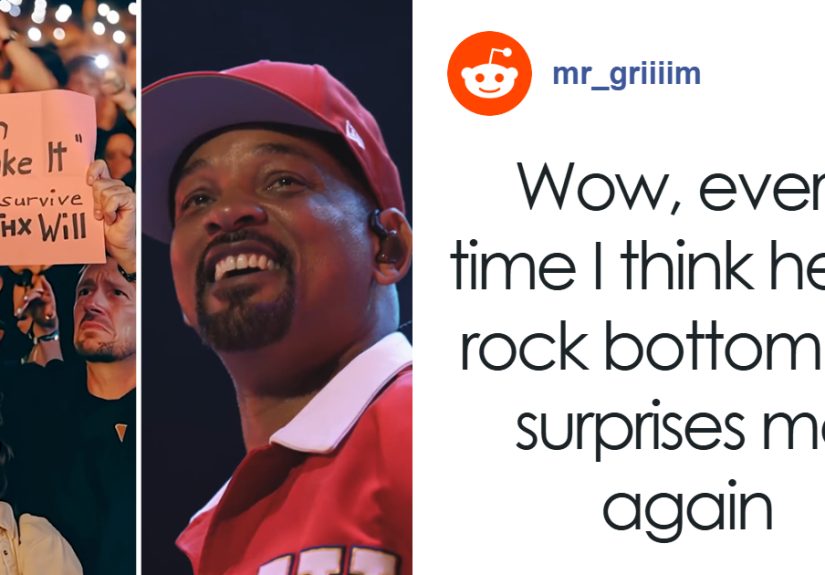
Text is another weak spot for generative AI. In the uproar, viewers highlighted fan signs that appeared to morph or glitch. One widely discussed example
involved a sign that looked like it changed mid-video, swapping letters and producing the kind of wrong-but-confident typography that screams
“machine-generated.”
4) “Too Emotional” Crowd Reactions
The montage emphasized fans reacting with big feelingscrying, cheering, holding signs about how the music helped them through difficult times.
Some viewers interpreted that intensity as staged, and then used the visual weirdness as “proof” the whole scene was fabricated.
Put all that together, and the internet’s conclusion was predictable: “He faked the crowd.”
But predictable doesn’t always mean correct.
Did Will Smith Actually Fake a Crowd? The More Complicated (and More Likely) Explanation
Here’s the twist: multiple reports and expert commentary suggest the situation may not be “AI invented a stadium full of fans.”
Instead, it looks more like real footage mixed with AI-processed crowd shotsor real photos converted into short, moving clips.
One expert described the montage as a kind of “reality sandwich”: authentic clips of Will Smith layered with AI-assisted crowd visuals in between.
In other words, the crowd may have existed, but the video of the crowd may have been generated or heavily altered from real images, producing
that eerie in-between look where the people are real but the pixels have been “helped” into something stranger.
That possibility matters, because “AI generated” can mean a lot of different things:
- AI cleanup (sharpening, denoising, color correction, upscaling)
- AI interpolation (creating in-between frames to smooth motion)
- AI animation (turning a still photo into a short moving clip)
- Full generation (creating a scene that never happened)
In this case, reporting around one of the most-discussed fan moments (a couple holding a heartfelt sign) indicated the fans were realand the sign was real
but the clip that drew attention may have been produced by using AI to convert a still image into motion. That can warp facial expressions and hands in ways
that look like “fake people,” even when the original photo was genuine.
So the accusation “he faked crowds” may be an oversimplification. A more precise framing is:
the montage may have used AI to transform real crowd material into something that looked synthetic.
That’s still a problem for trustjust a different kind of problem.
Why Crowd Shots Are a Nightmare for AI (and for Anyone Trying to Look Normal Online)
Crowd scenes are one of the hardest things for AI to handle convincingly, and it’s not even close. A single person speaking to camera is relatively straightforward:
a face, a background, consistent motion. A crowd is chaos with a headcount.
In a crowd, every person has unique features, different clothing textures, different movements, and often props like phones, hats, and signsespecially signs
(which add text, the sworn enemy of generative video). When an AI system tries to “extend” or animate a crowd shot, it may:
- smear fine details like eyes, fingers, and jewelry
- invent motion that wasn’t in the original image
- mutate text and logos into near-English gibberish
- average faces into a smooth, plasticky look
The irony is brutal: a tool used to make a montage smoother can accidentally make it look more fake, because the “AI touch” has its own recognizable style
like a digital fingerprint made of blur, symmetry, and mysterious extra knuckles.
Why This Hit Will Smith Harder Than It Might Hit Someone Else
If a random touring act posted a glitchy crowd montage, you might get a few jokes and move on. With Will Smith, the reaction was amplified for a few reasons:
1) Crowd Size is Social Proof
In pop culture, a big crowd doesn’t just mean ticket sales. It’s a visual scoreboard. People use it as a shortcut for relevanceespecially online,
where “popular” sometimes means “looked popular for three seconds in a vertical video.”
2) The Comeback Narrative
Smith has been publicly rebuilding and reshaping his image for years. When someone is already in “comeback mode,” audiences become extra sensitive to anything that feels
like image management. Even if a creative tool was used for a harmless montage, it can be interpreted as insecurity.
3) Will Smith Is Weirdly Central to AI Video Culture
There’s also a strange meta-layer: Will Smith has become a recurring reference point in AI video discussions because earlier AI clips featuring his likeness circulated widely
as examples of how uncanny (and then how improved) generative video could be. So when a “Will Smith + AI video” headline appears, people are already primed to believe it.
Will Smith’s Response: If You Can’t Beat the Meme, Adopt It
After the accusations spread, Smith didn’t just go silent and hope the internet developed a new obsession. He leaned into the absurdity.
Later in August 2025, he posted a follow-up clip that played the controversy for laughsthis time with an unmistakably artificial audience.
The message was clear: “Yes, I see you. And yes, I can make this even weirder.”
The episode also sparked a ripple of reactions from other artists and commenters, including playful mockery that framed the situation as a debate about authenticity:
real crowds versus “rendered” crowds, real hype versus algorithmic hype.
Humor can defuse tension, but it doesn’t answer the underlying question audiences increasingly care about:
What exactly was done to the video?
Platforms Are (Finally) Trying to Label Synthetic MediaBut It’s Not Simple
Part of why these controversies keep exploding is that labeling standards are still inconsistent. The tech exists. The policies exist.
The execution is… a work in progress.
YouTube’s “Altered or Synthetic” Disclosure
YouTube has rolled out disclosure requirements for creators when realistic content is meaningfully altered or synthetically generatedespecially when viewers could mistake it for reality.
That’s important because it sets a norm: if a video could mislead people about what happened, the audience deserves a heads-up.
Meta’s AI Labels on Instagram and Facebook
Meta has also moved toward labeling AI-generated or AI-altered media, relying on embedded indicators when available and expanding labeling efforts over time.
Again, great in theorybut detection and disclosure aren’t uniform, and many posts still travel faster than any label can.
The gap between “policy” and “what people actually see in their feed” is where misunderstandings breed. If a clip looks AI-ish and there’s no label,
viewers assume the worst: intentional deception.
How to Tell If a Viral Crowd Clip Might Be AI (Without Becoming a Full-Time Conspiracy Hobbyist)
You don’t need a film degree or a forensic lab to do a basic credibility check. Here’s a practical, non-paranoid approach:
1) Compare the Same Moment Across Platforms
If a clip appears on multiple platforms, compare them. Different sites compress video differently, and some formats (especially short-form vertical edits)
can introduce artifacts that look like AI.
2) Pause on Text and Hands
If signs or shirts contain text, pause and look closely. If letters morph, repeat strangely, or turn into nonsense, that’s a clue.
Same with hands: if fingers change shape between frames, something is off.
3) Look for “Copy-Paste People”
Sometimes AI crowd generation repeats faces, expressions, or identical movements. If the same “fan” seems to exist in three places at once,
you’re not watching an enthusiastic audienceyou’re watching a glitchy clone army.
4) Ask: What’s the Incentive?
This isn’t foolproof, but it’s grounding. Is the video selling tickets? Promoting a song? Cleaning up footage for a highlight reel?
The more marketing pressure exists, the more likely “enhancement” enters the chat.
What Artists and Brands Should Learn From This (Aka: The “Please Don’t AI My Face” Era)
Whether the crowd was fully fabricated or merely AI-processed, the PR lesson is the same: audiences are now trained to detect synthetic vibes,
and they don’t like being tested.
Transparency beats perfection
A slightly shaky clip with real people will outperform a “perfect” montage that triggers authenticity alarms. People forgive rough footage.
They don’t forgive feeling tricked.
If you use AI, label itbefore the internet labels you
Even if the tool was used for something basic (like turning photos into short motion clips), disclose it. Not as a confession, but as context.
“Highlights created from real fan photos using AI motion effects” is a lot less explosive than “caught faking crowds.”
Keep AI away from close-up humans unless you truly know what you’re doing
The closer the shot, the higher the stakes. A wide crowd shot might slide by. A close-up of a fan holding a heartfelt sign? That’s where
the uncanny valley turns into a comment-section avalanche.
Conclusion: The Real Crowd vs. the Real Problem
The internet called out Will Smith for allegedly faking crowds with AI because the visuals looked off in ways people now associate with generative media:
odd faces, weird hands, and glitchy text. But the more nuanced story is that reality and AI aren’t always opposites anymore. A crowd can be real, the emotions can be real,
and the final clip can still be AI-processed enough to make viewers doubt everything.
That’s where we are: in a time when “looks fake” spreads faster than “here’s what actually happened,” and even well-intended edits can backfire
if they cross the invisible line between polish and synthetic vibe.
If there’s a takeaway here, it’s not “never use AI.” It’s this: don’t let AI speak for your fans.
When real people show up for you, the safest flex is simply letting them look like real people.
Experiences Related to the Will Smith AI Crowd Controversy (What It Feels Like When a Video Looks “Too AI”)
Even if you’re not famous, you’ve probably had a tiny version of this experience: you post a video you think is totally normal, and the comments act like
you uploaded evidence from an alternate dimension. That’s what makes the Will Smith “AI crowd” moment so relatablebecause the argument wasn’t just
“is this edited?” It was “can we still trust our eyes?”
For fans, the experience can be strangely personal. Imagine going to a concert, holding up a sign you worked on, getting a great photo,
and then seeing yourself in a viral clip where your face looks… not like your face. You didn’t do anything wrong, but suddenly strangers are zooming in and debating whether
you’re a real human being. That’s not just awkwardit’s dehumanizing. It turns someone’s sincere moment (“thank you for the song that helped me through a hard time”)
into a meme about “AI eyes” and “melting fingers.” And once the internet decides something is fake, it can be weirdly resistant to updates, even when more context appears.
For creators and social media teams, the experience is a different kind of stress. You’re often trying to make content quickly:
convert horizontal footage into vertical, punch up a highlight reel, make a montage feel dynamic, keep the pace moving. AI tools promise shortcuts.
“Turn these photos into video.” “Sharpen this clip.” “Remove blur.” “Fix lighting.” It’s easy to click the buttonespecially when you’re juggling deadlines.
But the moment your audience sees something uncanny, the conversation stops being about the music and becomes about trust. And trust is harder to edit back in
than lighting.
For anyone watching, the experience is increasingly confusing. One day you’re learning that AI can fake anything. The next day you’re learning that
compression and enhancement can make real footage look AI. So you start second-guessing everything. You pause. You zoom. You compare. You check comments like they’re
eyewitness testimony. That behavior isn’t “paranoia”it’s adaptation. People are developing new habits for a new media reality, and those habits are still messy.
And then there’s the weirdest experience of all: watching someone get accused of faking something that might be real.
Even if AI was used only as a visual effect, the accusation can stick because it fits a story people already believe: celebrities curate everything, platforms reward hype,
and “bigger crowds” look better on the internet. That’s why the Will Smith clip became a flashpoint. It wasn’t just a videoit was a stress test for how we judge authenticity
in 2025.
The best practical lesson from these shared experiences is simple: when you use tools that can warp reality, you don’t just change pixelsyou change how people feel about
what they’re seeing. If you’re a creator, clarity is kindness. If you’re a viewer, curiosity is smart. And if you’re a celebrity posting crowd shots in the AI era,
remember: the internet now watches videos the way it used to watch magic tricksframe by frame, looking for the wires.