Table of Contents >> Show >> Hide
- First: What Exactly Are Zellige Tiles?
- So Why Are Zellige Tiles Taking Over Right Now?
- Where Zellige Looks Amazing (And Where It Might Annoy You)
- Zellige vs. “Zellige-Look” Tile: Which One Should You Choose?
- Design Tips: How to Make Zellige Feel Timeless, Not Trendy
- Installation Reality Check: What You Need to Know Before You Buy
- Maintenance: How to Keep Zellige Looking Gorgeous
- Cost and Value: Why It’s Worth It (When It’s Right)
- Experiences People Have After Living With Zellige (The Real Talk Section)
- Conclusion
If you’ve been scrolling design inspo lately and thought, “Why does every gorgeous kitchen look like it’s wearing jewelry?”
you’re not imagining things. That glossy, slightly wavy, imperfect-in-a-perfect-way tile you keep seeing is probably
zelligeand it’s having a very real moment.
Zellige tiles are showing up everywhere: backsplashes that glow like candlelight, showers that look like spa retreats,
fireplaces that suddenly have main-character energy. And the wild part? Zellige isn’t “new.” It’s actually an old-school
craft that modern interiors are rediscovering at exactly the right time.
Let’s break down what zellige is, why designers can’t quit it, where it works best, and what you should know before you
commit (because yesthese tiles have a personality).
First: What Exactly Are Zellige Tiles?
Zellige (pronounced “zell-ij”) is a traditional Moroccan tile made from clay that’s shaped, fired, and
glazedoften by hand. The defining feature is the look: slight variations in thickness, tone, edges, and surface texture
that create a shimmering, watercolor-like effect once installed.
In plain English: zellige tiles are not trying to be factory-perfect. They’re trying to be beautiful. And they succeed
without even using a filter.
The magic is in the imperfections
Unlike flat, uniform tiles, zellige reflects light unevenly. That means the wall changes throughout the day: brighter in
morning sun, moodier at night, and quietly dramatic under under-cabinet lighting. Even a “simple” white zellige backsplash
can look layered and alive.
So Why Are Zellige Tiles Taking Over Right Now?
Trends don’t explode for one reasonthey pile up like dishes after taco night. Zellige is the result of several design
forces colliding at once:
1) We’re tired of sterile, copy-paste interiors
For years, the “safe” choice was crisp, uniform tile with razor-straight grout lines. The problem? It can feel a little
like living inside a spreadsheet. Zellige is the antidote: handmade texture, soulful variation, and a look that feels
collected instead of mass-produced.
2) The “warmth comeback” is real
Interiors have shifted toward warmer neutrals, natural materials, and layered textures. Zellige plays perfectly with that
directionespecially in creamy whites, soft celadons, inky blues, and earthy clay-adjacent tones. It adds warmth without
adding clutter.
3) It’s the easiest way to make a space look custom
Designers love zellige because it reads “bespoke” instantly. Even in a small applicationlike a bar niche or a backsplash
behind the rangeit can make a standard remodel feel special. It’s basically the “tailored blazer” of tile.
4) Social media loves a tile that moves
Zellige photographs well because it catches highlights and shadows. It looks dimensional in still photos and even better
in video, where the gloss and variation shift as the camera moves. That “handmade shimmer” is the kind of detail your eye
noticeseven if you don’t know why you like it.
5) Subway tile fatigue (yes, it’s a thing)
Subway tile isn’t deadbut it’s no longer the only default. Zellige has become a fresh favorite because it keeps the
classic “tile backsplash” idea while adding texture, depth, and personality.
Where Zellige Looks Amazing (And Where It Might Annoy You)
Zellige can work in a lot of spaces, but it shines most in areas where you’ll actually see the light bounce and the
variation show off.
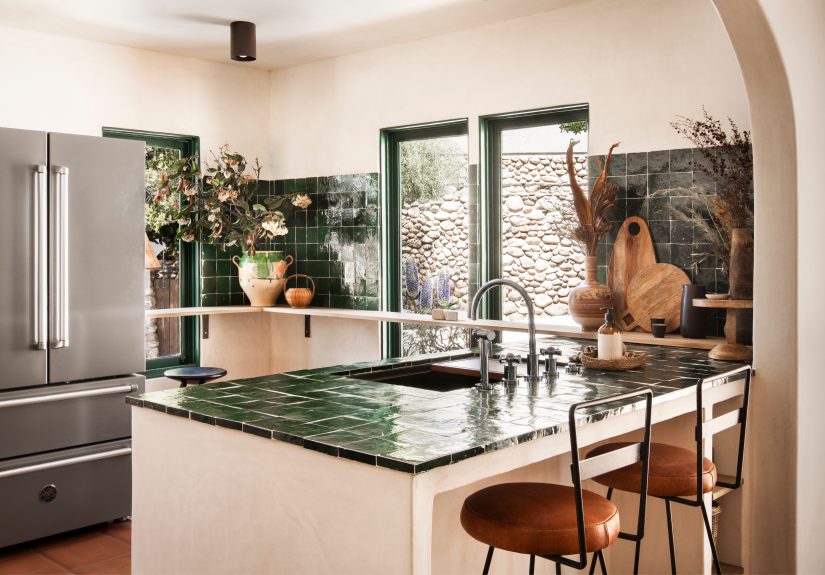
Kitchens: The backsplash that does the most (without trying too hard)
Zellige backsplashes are popular for good reason: the glossy glaze is visually rich, and the handmade irregularity makes
even a simple layout look elevated. You can go classic with a straight stack, or lean into movement with vertical
installation. Full-height backsplashes (counter to ceiling) look especially high-end with zellige because the tile becomes
a feature wallwithout screaming “FEATURE WALL!”
Bathrooms: Spa vibes on demand
Zellige is a favorite in showers, around vanities, and in niches. The tonal variation can make a shower feel softer and
more luxurious than flat ceramic. If you want your bathroom to feel like a boutique hotel, this is one of the fastest
routes.
Fireplaces: Texture makes it feel intentional
If a fireplace wall feels bland, zellige can add depth without needing a complicated pattern. Rich greens, blues, and
off-whites look especially good around fire because the gloss catches flicker and glow.
Mudrooms, laundry rooms, and “small but mighty” spaces
Zellige is also showing up in practical rooms where people still want personality. A tiny mudroom backsplash or a laundry
nook can feel designed instead of “leftover.”
Floors: Proceed with strategy
Traditional zellige is often used on walls, while a related style called bejmat (thicker, often more
floor-friendly pieces) is commonly used underfoot. For floorsespecially wet floorsslip resistance matters. Glazed
finishes can be slippery, so many designers prefer unglazed or more textured options for flooring, and they pay attention
to grout spacing and treatment in wet zones.
Zellige vs. “Zellige-Look” Tile: Which One Should You Choose?
Here’s where it gets practical. You’ll see both authentic zellige and tiles inspired by zellige. They can both look
beautiful, but they behave differently.
Authentic zellige (the handmade original)
- Pros: One-of-a-kind variation, artisan character, deep glaze, true handmade feel.
- Cons: Costs more, takes more skill to install, variations are not optional (they’re the point).
Zellige-look ceramic or porcelain (the easier-to-live-with cousin)
- Pros: More uniform sizing, easier installation, often more durable for heavy-use areas, usually less maintenance.
- Cons: Less depth and randomness than true zellige (some look a bit “printed” up close).
If you want the romance and artistry, go authentic. If you want a similar vibe with fewer surprises (and fewer installer
panic-sweats), a high-quality zellige-look tile can be a smart compromise.
Design Tips: How to Make Zellige Feel Timeless, Not Trendy
Pick a color you won’t hate in three years
Zellige comes in everything from creamy white to emerald green to moody black. If you’re worried about trend burnout,
go with classics: warm white, soft greige, sage, deep navy, or a muted sea-glass green. They still feel special, but they
play well with changing decor.
Let the tile be the texturekeep the rest calm
Because zellige has movement, you can keep surrounding finishes simple: natural wood, honed stone, brushed metal, or
matte paint. That balance is what makes the space feel expensive instead of busy.
Match grout for a seamless look
High-contrast grout can look graphic, but it can also compete with zellige’s variation. Many designers prefer grout that
blends closely with the tile, so the surface reads like a continuous shimmer instead of a grid.
Try unexpected placements
Zellige isn’t just for backsplashes. Consider:
- A zellige “frame” around a bathroom mirror
- A tiled arch niche (hello, Mediterranean energy)
- A bar backsplash with moody lighting
- A dramatic powder room that commits fully (tiny rooms love bold choices)
Installation Reality Check: What You Need to Know Before You Buy
Zellige’s beauty depends on installation. This is not the moment to hire someone who “mostly does paint” but “can totally
do tile too.” You want a tile setter who understands handmade material and won’t try to force it into factory rules.
Expect variationand plan for it
With handmade tile, installers often open multiple boxes and blend tiles to distribute color variation evenly. Some
layouts also benefit from dry-laying a section first, so you can see how the tones play together.
Grout lines: small, but not obsessive
Many zellige installations use narrow joints to highlight the tile face, but your installer should choose spacing that
fits the tile’s natural variation and the surface prep. The goal is a balanced wallnot a war against physics.
Edges and trims deserve attention
Zellige edges can be irregular, which is part of the charm. But it means finishing details matter: corners, end caps,
outlets, and transitions need a plan. Some designers use matching bullnose pieces (if available), while others choose a
clean metal trim that frames the tile like art.
Sealing: it depends
Here’s the honest answer: some glazed zellige installations may not require sealing as a final step, but sealing can be
recommended in certain situationslike tiles with visible surface crazing, unglazed terracotta versions, wet areas, or
when using contrasting grout (which can stain). Always follow the tile manufacturer’s guidance and your installer’s
experience for your specific product and location.
Maintenance: How to Keep Zellige Looking Gorgeous
Zellige is not a “high-maintenance diva,” but it does appreciate basic respect. Think of it like a nice leather jacket:
you don’t have to baby it, but you also don’t scrub it with a grill brush.
- Daily/weekly cleaning: wipe with a soft cloth and gentle cleaner (avoid harsh abrasives).
- Grout care: grout lines collect grime firstkeep them sealed if recommended and clean them gently.
- Kitchen reality: wipe splatters sooner rather than later (tomato sauce is charming in pasta, not in grout).
- Wet areas: good ventilation reduces soap buildup and keeps the surface fresh.
Cost and Value: Why It’s Worth It (When It’s Right)
Zellige usually costs more than standard ceramic tile because you’re paying for craftsmanship, glaze depth, and a product
that isn’t stamped out by the thousands. You may also pay more for installation because the tile takes time and skill.
But the payoff is big: you get a surface that looks custom, layered, and timeless. It’s one of those materials that can
make a basic renovation feel like a design moment.
Experiences People Have After Living With Zellige (The Real Talk Section)
If you ask homeowners and designers what it’s like to live with zellige, you’ll hear a surprisingly consistent theme:
they love the look, and they learn quickly that the “imperfections” are not a flaw to fixthey’re the feature to embrace.
The happiest zellige stories start with realistic expectations and end with a backsplash that feels like it belongs in a magazine.
One common experience is the “sample shock.” In a showroom, zellige can look subtleespecially in whites and pale colors.
But once installed across a larger surface, the movement shows up. People often say their tile looks “alive” when the sun
hits it, and many notice the surface changes throughout the day. Morning light can make a white zellige wall feel creamy
and bright, while evening lighting pulls out warmer undertones. That dynamic quality is exactly why it’s popular, but it
can surprise anyone expecting a flat, consistent color.
Another frequent lesson: installation makes or breaks the outcome. Designers often recommend hiring an
installer who has worked with handmade tiles before, because the approach is different. Instead of forcing every tile into
rigid alignment, experienced setters “read” the tileadjusting spacing, rotating pieces, and blending boxes so the overall
wall feels intentional. Homeowners who use a skilled installer tend to describe the finished surface as “artisanal” and
“high-end.” Those who don’t sometimes end up frustrated by uneven lines or messy grout that distracts from the tile’s
beauty.
People also learn that grout is a design decision, not an afterthought. Many report that grout matching
the tile color creates that soft, continuous “wash” effect, while high-contrast grout can make the wall feel busier than
expected. Several homeowners mention they originally wanted stark contrast for a bold look, but changed course after
seeing how much the tile itself already provides texture and movement. The takeaway: if you want the tile to glow, let it
glowdon’t trap it in a checkerboard.
In kitchens, real-life experience tends to be positive, with a small asterisk: cleaning is easy, but you do need
to wipe splatters. Zellige’s glossy face typically cleans up with gentle products, but the surface’s slight
undulation and the grout lines can hold onto grime if you ignore them for too long. Homeowners who love to cook often say
they keep a soft cloth handy and give the backsplash a quick wipe while the kettle boils. In other words: it’s not hard,
but it does reward basic routines.
In bathrooms, people often describe zellige as “spa-like,” especially in showers and around vanitiesyet they also learn
that moisture zones require smart planning. Good ventilation, appropriate waterproofing behind the tile, and following
manufacturer guidance on sealing (when needed) come up again and again as the difference between a gorgeous shower wall
and a future headache. Homeowners who did it right say the tile holds up beautifully and still looks rich years later.
Finally, a very human experience: once zellige is in, people stop worrying about “perfect.” They notice the tiny chips,
the soft edge variation, the glaze that catches light differently tile to tileand instead of seeing defects, they see
character. That’s the quiet power of zellige. It makes a space feel finished, warm, and personal. And in a world full of
identical everything, that’s exactly why it’s taking over interiors right now.
Conclusion
Zellige tiles are taking over because they deliver something modern interiors crave: warmth, craftsmanship, and a surface
that feels truly one-of-a-kind. They’re glossy without being flashy, timeless without being boring, and expressive without
needing complicated patterns. If you choose the right application, plan the installation well, and embrace the handmade
nature, zellige can be the kind of design decision you’ll love every time the light hits it.