Table of Contents >> Show >> Hide
- First, a quick definition: what counts as an open floor plan?
- Why open floor plans became popular (and why they’re still tempting)
- So why do designers hate open floor plans?
- 1) Privacy is basically on unpaid leave
- 2) Noise travels like it pays rent
- 3) Cooking smells and visual clutter spread everywhere
- 4) Creating zones is harder than it looks on Pinterest
- 5) Lighting an open concept space is a technical sport
- 6) One giant aesthetic can feel like a creative handcuff
- 7) “Open” often becomes “nowhere to hide anything”
- Why the backlash got louder after 2020
- What’s replacing the open floor plan: “broken concept” and defined gathering spaces
- When an open floor plan can still be the right choice
- How to fix an open floor plan without rebuilding your whole house
- If you’re renovating: smart alternatives to fully open
- Bottom line: designers don’t hate opennessthey hate chaos
- Experience Notes: Real-Life Moments That Explain the Open-Plan Backlash (Extra )
Open floor plans had a long, glorious reign. They promised sunshine, togetherness, and the kind of “effortless entertaining”
where you sauté garlic while your guests admire your throw pillows. But lately, a funny thing has happened: designersthe people
who can make a beige wall look emotionally availablehave been side-eyeing open concept layouts like a bad haircut in a high school yearbook.
This isn’t a “tear down every wall” manifesto. It’s more like a reality check: open floor plans can be beautiful, but they’re also
the architectural equivalent of turning your whole house into one group chat. Everyone hears everything. Everything is visible.
And the kitchen smell has opinions.
First, a quick definition: what counts as an open floor plan?
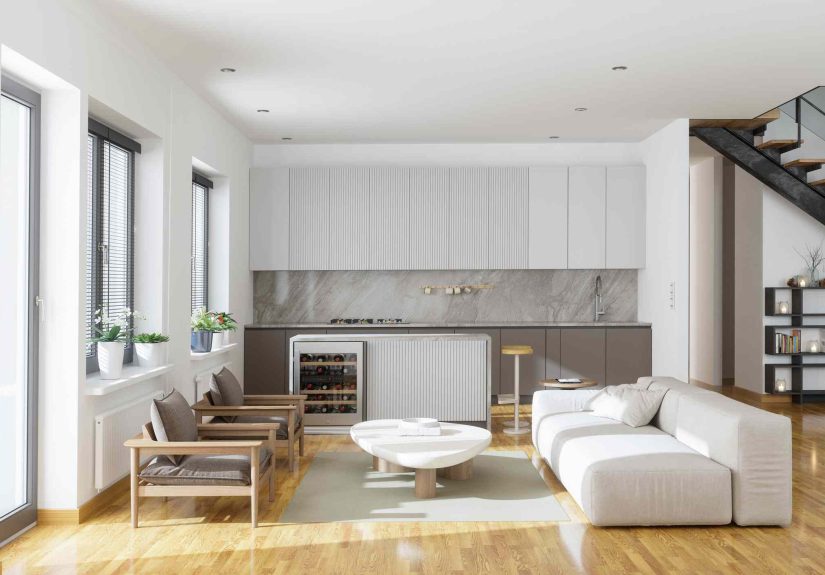
In most American homes, “open floor plan” usually means the kitchen, dining area, and living room share one big space with few
(or zero) full-height walls. You can see your sink from your sofa. You can also see your sink from your front door. That’s… a lot of intimacy.
Why open floor plans became popular (and why they’re still tempting)
Designers will admit it: open concept spaces have legitimate advantages. They improve sightlines, share natural light, and make
a home feel bigger and more social. Architectural Digest has noted that open plans rose as a response to older, more closed
prewar layoutsand those core benefits haven’t magically disappeared.
They work especially well when:
- You like cooking while talking to people (or supervising kids, pets, and the occasional wandering Roomba).
- You entertain often and want guests to circulate easily.
- Your home is smaller and you need every inch to feel airy.
- Your household has a similar schedule and similar noise tolerance (read: everyone’s either chill or everyone’s loud).
Elle Decor also points out that many clients are drawn to the “lifestyle” promisebeing together while doing different things
dinner prep, homework, TV, and snacks happening in one shared zone. That’s the dream.
So why do designers hate open floor plans?
“Hate” is a strong word. Designers don’t hate the concept of opennessthey hate the chaos that happens when openness is treated as a personality.
The complaints tend to cluster into a few big categories: privacy, noise, clutter, lighting, and the sheer difficulty of making a giant space feel
intentional instead of accidental.
1) Privacy is basically on unpaid leave
In a true open concept home, privacy doesn’t “decrease.” It packs a bag and moves to a studio apartment across town.
Designers interviewed by The Spruce have been blunt: without walls buffering sound and sightlines, everyday activities become disruptive
working from home, watching TV, even having a private conversation.
And modern life is not exactly quiet. If one person is on a video call, another is meal-prepping, and a third is practicing saxophone
(or just living loudly), an open layout turns the whole main floor into one shared soundstage.
2) Noise travels like it pays rent
Open floor plans don’t just “let sound flow.” They amplify it. Hard surfaces, high ceilings, and long sightlines can create echo,
making a home feel more like a bright, airy canyon. Architectural Digest has even connected overly open layouts with increased noise and
visual cluttertwo things that can heighten stress for some people.
Translation: your blender becomes everyone’s blender. Your dishwasher becomes a supporting actor in every conversation.
And the TV competes with the chopping board in a battle nobody wins.
3) Cooking smells and visual clutter spread everywhere
When the kitchen has no separation from the living area, the kitchen’s “vibes” become the living room’s vibes. That means:
lingering food smells (fish night is now a two-day event), steam, grease mist, and the visual reality of dishes and clutter.
Designers quoted in The Spruce call out how easily cooking smells and clutter spread without clear separationsmaking it harder to create
cozy, purpose-driven areas. And Elle Decor highlights a very honest truth: if you’re messy, open concept is basically an honesty policy you didn’t sign.
4) Creating zones is harder than it looks on Pinterest
An open plan isn’t automatically functional. You still need a “living room,” a “dining space,” and a “kitchen,” and they need to feel distinct.
Designers note that zoning requires extra strategyvisual boundaries, furniture placement, rugs, lighting, and circulation pathsotherwise the
space reads as one big in-between.
The Spruce also notes that furnishing can get tricky because there aren’t pre-defined walls; you often have to create “makeshift rooms” using
rugs, partitions, or furniture layouts. That’s doablebut it’s not effortless.
5) Lighting an open concept space is a technical sport
Lighting designers love control. Open floor plans are allergic to it. In a single, continuous room, you’re trying to balance task lighting
(kitchen), ambient lighting (living), and mood lighting (dining) without over-lighting one zone and under-lighting another.
Designers in The Spruce article specifically call out lighting challenges: fewer walls means fewer natural “breaks” to tailor lighting to each
function. One big space often ends up with one big lighting mistakelike a row of identical recessed lights that makes everything feel
like a very stylish office.
6) One giant aesthetic can feel like a creative handcuff
Separate rooms can carry different moods. In an open floor plan, everything has to “go together” at oncecolors, finishes, furniture style,
even the level of formality. Designers have pointed out that closed or semi-closed layouts let you experiment more room-to-room without
everything clashing in a single sightline.
7) “Open” often becomes “nowhere to hide anything”
Real life comes with mail piles, backpacks, pet toys, and the mysterious object your child insists is “very important” (it’s a pinecone).
Open concept homes can struggle with storage because there are fewer walls for cabinetry, shelving, or even a discreet landing zone.
That’s one reason “hidden function” features are getting lovelike sculleries or secondary prep spaces. Redfin’s roundup of recent design trends
notes growing interest in sculleries as a way to keep the main kitchen looking calm while the messy work happens out of sight.
Why the backlash got louder after 2020
Many homeowners didn’t truly “meet” their open floor plan until they had to live in it all day, every dayworking, schooling, resting, and
Zooming within the same shared zone. Veranda captured early designer predictions that quarantine-era living would push people to reconsider
fully open layouts and prioritize spaces that can close off.
You don’t need a global event to understand the shift, though. People want flexibility. They want a door they can close. They want a house
that supports multiple simultaneous activities without turning into a sound bath made of chaos.
What’s replacing the open floor plan: “broken concept” and defined gathering spaces
Designers aren’t necessarily going back to tiny, chopped-up rooms. Instead, many are embracing a middle ground: the “broken-concept” (or “broken plan”)
layout. House Beautiful describes this approach as openness with just enough separationthink partial walls, built-ins, level changes, archways, or glass
dividers that create distinct zones while keeping flow.
Better Homes & Gardens has also reported a return to more defined gathering spacesessentially a rise in “please let my living room feel like a living room”
energy. The vibe shift is real.
Even new builds are prioritizing practicality
Axios notes that formal dining rooms are disappearing in many new designs, often replaced by flex rooms that can act as an office, bedroom, or multipurpose space.
That doesn’t automatically mean “everything is open”; it means layouts are being edited for function, affordability, and how people actually live now.
When an open floor plan can still be the right choice
Designers don’t want you to feel like your home is “wrong.” They want the layout to match your life. An open floor plan can be great if you:
- Entertain often and want a social, connected main level.
- Have young kids and like keeping an eye on everyone (and everything).
- Prefer minimal stuff and can keep surfaces reasonably clear.
- Have good ventilation and a solid plan for sound-softening materials.
Zillow research has highlighted how open concept layouts have appealed strongly to millennial buyers, especially for casual entertaining and watching kids
while cooking. And the National Association of Home Builders still lists open floor plans as a common design choice for maximizing a sense of space and
interaction. In other words: open plan isn’t “dead.” It’s just no longer the default answer to every question.
How to fix an open floor plan without rebuilding your whole house
If you already have an open layout (or you’re eyeing one), you can make it work better by adding “soft boundaries” and function-first upgrades.
Here are designer-approved ways to keep the airiness while dialing down the chaos.
1) Create zones on purpose (not by accident)
- Rugs: Use area rugs to “claim” the living and dining zones.
- Furniture orientation: Float the sofa to face a focal point (fireplace, media wall) and define circulation behind it.
- Console tables and bookcases: Low or open shelving can separate spaces without blocking light.
2) Add partial separation (the “broken concept” toolkit)
Borrow from the broken-concept playbook: half-walls, built-ins, archways, or glass dividers that hint at separation without shutting everything down.
House Beautiful highlights exactly these moves as ways to keep a home feeling open while making each area feel contained and purposeful.
3) Treat sound like a design element
- Soft materials: Upholstery, curtains, and textured rugs help absorb sound.
- Wall treatments: Felt, cork, and other natural materials can reduce ambient noise while looking intentionalRedfin notes this as a recent trend for creating quiet zones.
- Bookshelves: They’re not just for novels you’ll finish “someday.” They also break up sound travel.
4) Upgrade ventilation (especially if the kitchen is wide open)
If the kitchen spills into the living area, prioritize a properly sized, effective range hood and good airflow. This doesn’t just reduce smells; it makes the
whole shared space more comfortable. (If you’re remodeling, this is also where a scullery or secondary prep space can save your sanity.)
5) Use layered lighting to give each zone a job
- Kitchen: Task lighting (under-cabinet, focused pendants) where you actually prep.
- Dining: A centered fixture or pendant that visually anchors the table.
- Living: Floor and table lamps to create “pools” of light instead of an evenly lit airport runway.
6) Consider a “level change” or architectural cue
You don’t need a full remodel to hint at separate rooms. Even small architectural cuesceiling beams, a change in ceiling height, or a step downcan define areas.
This Old House notes that sunken living rooms can define a separate zone within an open-concept layout, creating a cozy “conversation pit” feel while keeping openness.
If you’re renovating: smart alternatives to fully open
If you’re still in the planning stage, here are layout strategies designers often prefer over one giant space:
Semi-open kitchens
Keep visual connection but add a partial wall, cased opening, or pocket doors. You get flow without turning your sofa into front-row seating for dish duty.
Flex rooms that can actually close
Flex rooms are greatespecially when they have doors. Axios reports that many designs replace formal dining with flex spaces that can serve as an office or bedroom.
The key is making sure “flex” doesn’t mean “nowhere to focus.”
Sculleries or back kitchens
Let the show kitchen be calm and social while the messy work happens in the background. Redfin notes sculleries as a growing feature for keeping the main kitchen clear.
Bottom line: designers don’t hate opennessthey hate chaos
Open floor plans can be gorgeous. They can also be loud, visually busy, hard to light, and impossible to “turn off.” Designers are pushing back because people
are asking for homes that support real life: work calls, quiet time, kids, pets, hobbies, and the simple joy of not smelling last night’s salmon while watching TV.
The goal isn’t to bring back a maze of tiny rooms. It’s to bring back intention. A home should have flow and boundaries. Connection and comfort.
Openness and a place to hide the clutter when someone rings the doorbell.
Experience Notes: Real-Life Moments That Explain the Open-Plan Backlash (Extra )
Since I can’t claim a personal renovation saga (I’m a keyboard, not a homeowner), here’s a collection of very typical “open floor plan experiences”
designers hear about again and againcomposite scenarios that show why people fall out of love with fully open layouts.
The “My Office Is Also My Living Room” era
Picture a Monday morning: one person is on a video meeting at the dining table because it has the best light. Another person is making coffee, which feels harmless
until the grinder launches into liftoff. The dog starts barking at a delivery. Someone else opens the fridge (why is the fridge so loud?).
By 9:12 a.m., everyone has learned the same lesson: an open plan is amazing for togetherness and terrible for concentration.
The kitchen is the stage, and the audience is unavoidable
In an open concept home, cooking becomes a performance. The good news is you can chat while you sauté. The bad news is the living room gets the full sensory experience:
the chopping, the sizzling, the clanging pans, and the “I swear I cleaned that earlier” pile of dishes that is now visible from every angle.
People often say they feel like they can’t truly relax because the kitchen is always “on display,” even when dinner is over.
The never-ending smell timeline
Smells are sneaky. In a closed kitchen, you can contain them. In an open layout, smells become a house-wide newsletter. Frying bacon? Congrats, your throw blanket is now
bacon-adjacent. Pan-searing fish? Your curtains are now part of the maritime experience. Even pleasant smells can get exhausting when they linger in the same airspace
as the sofa, the rugs, and everything fabric.
The “why is it so loud?” surprise
Many homeowners don’t realize how much walls do for sound until they live without them. A teen watching TikTok, a dishwasher running, and a sports game on TV can turn
into an accidental surround-sound system. Then add high ceilings and hard floors, and suddenly the house feels echo-ylike it’s auditioning to be a modern art museum.
People describe feeling overstimulated, not because they hate their family, but because the layout doesn’t provide natural sound breaks.
The decorating paradox: everything must match, forever
With separate rooms, you can do “moody library” in one space and “bright coastal” in another, and no one gets hurt. In an open plan, every design decision sits
next to every other decision, all the time. That can make decorating feel oddly restrictive: you’re constantly trying to keep finishes coordinated and colors harmonious
from kitchen cabinets to living room textiles. Homeowners often say they feel boxed in by the need for one continuous style.
The emotional effect: clutter feels louder when it’s visible everywhere
This is a big one. In open concept homes, there’s less ability to “close a door” on the messliterally and mentally. A pile of mail, a science project, or yesterday’s
laundry basket can become a permanent part of the main room’s scenery. People often report that the visual noise makes them feel like they’re always behind, even when
life is normal. That’s why designers increasingly focus on hidden storage, zones, and semi-open transitions: not to make a house look fancier, but to make it feel calmer.
If any of these moments sound familiar, you don’t necessarily need a full remodel. You need boundariessoft ones, smart ones, intentional ones. Because the real reason
designers “hate” open floor plans isn’t the openness. It’s the way openness, without structure, can turn daily living into a 24/7 open mic night.