Table of Contents >> Show >> Hide
- Why Norovirus Is So Hard to Kill (and So Easy to Catch)
- What Actually Kills Norovirus (The Real MVPs)
- What Doesn’t Reliably Kill Norovirus (and Why That Matters)
- How to Clean Up Norovirus the Right Way (Step-by-Step, Real Life Edition)
- Food Safety: Killing Norovirus Isn’t Only About Surfaces
- Choosing a Norovirus Disinfectant Without Getting Tricked by Marketing
- Common Mistakes That Let Norovirus Survive
- How Long Should You Keep Cleaning After Someone Recovers?
- Experiences With Norovirus (Real-World Lessons People Learn the Hard Way)
- Conclusion
Norovirus is the uninvited guest who doesn’t just crash the partyhe licks the doorknobs, high-fives the light switches, and then leaves a “souvenir” in the bathroom. People call it the “stomach flu” (even though it’s not influenza), and it’s famous for spreading fast in homes, schools, restaurants, dorms, cruise ships, and anywhere humans gather to share snacks and bad decisions.
If you’re here because someone in your house got sick and now you’re staring at a bottle of bleach like it’s Excaliburgood news: norovirus can be killed. The trick is using the right weapons, the right way, for the right amount of time. Not all cleaners are created equal, and norovirus is picky.
Why Norovirus Is So Hard to Kill (and So Easy to Catch)
Norovirus is a non-enveloped virus. Translation: it doesn’t have the delicate outer “fatty” coating that many disinfectants can easily dissolve. That makes it tougher than plenty of other germs that collapse under basic cleaning products.
Also, norovirus has an annoyingly low infectious dosemeaning it can take only a tiny number of viral particles to make someone sick. Combine that with symptoms like vomiting and diarrhea (which can spread particles around an environment), and you’ve got a germ that’s basically a glitter bomb: invisible, persistent, and found in places you didn’t even know existed.
What Actually Kills Norovirus (The Real MVPs)
1) Chlorine Bleach (Sodium Hypochlorite): The Heavy Hitter
If norovirus were a movie villain, bleach is the hero who kicks down the doorloud, effective, and slightly terrifying if used wrong.
Public health guidance commonly recommends a chlorine bleach solution in the 1,000–5,000 ppm range for disinfecting contaminated surfaces after vomiting or diarrhea events. A practical rule of thumb you’ll often see for typical household bleach (check your label for strength) is:
- 1,000 ppm: about 5 tablespoons (1/3 cup) bleach per 1 gallon of water
- Up to 5,000 ppm for heavier contamination: up to 25 tablespoons (about 1 1/2 cups) bleach per 1 gallon of water
Contact time matters. Disinfectant isn’t a drive-by. Keep the surface visibly wet with the bleach solution for at least 5 minutes (or follow the disinfectant label instructions if you’re using a commercial product). If it dries too fast, re-wet ityes, it’s annoying, but so is norovirus.
Bleach safety, because your goal is “clean,” not “chemical warfare”:
- Never mix bleach with ammonia, vinegar, or other cleaners.
- Ventilate the area (open windows, run fans if appropriate).
- Wear disposable gloves if you can; wash hands afterward.
- Make fresh solution as neededdon’t keep mystery bleach water in a bucket for three weeks like it’s a sourdough starter.
2) EPA-Registered Disinfectants That List Norovirus on the Label
If bleach isn’t ideal for a surface (or you want a more convenient option), use an EPA-registered disinfectant proven effective against norovirus. The important part is not the brand name, the scent, or whether the bottle looks “spa-like.” The important part is:
- It is EPA-registered, and
- The label states it’s effective against norovirus (or “Norwalk-like virus”).
Many disinfectants work great on some germs and do absolutely nothing to norovirus. So treat the label like it’s the bouncer at the club: no mention of norovirus, no entry.
3) Heat: The “Can’t Live If You’re Cooked” Strategy
Heat can inactivate norovirus, which matters for items that are washable, steam-cleanable, or safe for high temperatures. Good uses of heat include:
- Laundry: Wash contaminated clothing/linens using detergent on the hottest setting the fabric allows, then dry on high heat.
- Dishwashers: Use the hottest water setting and a heated dry cycle when possible (follow manufacturer guidance).
- Steam cleaning: For carpets/upholstery where bleach would discolor, steam cleaning is often recommended after removing visible debris.
Heat isn’t always your first move (especially mid-cleanup), but it’s a strong finishing move for textiles and porous materials.
What Doesn’t Reliably Kill Norovirus (and Why That Matters)
Alcohol-Based Hand Sanitizer: Helpful, But Not the Norovirus Kryptonite
Alcohol-based hand sanitizer is great for many situations, but it does not work well against norovirus compared with soap and water. If you’ve been relying on sanitizer alone, norovirus has been laughingquietly, from your fingertips.
Soap and water is the gold standard because it physically removes germs from your hands. Wash thoroughly, scrub all surfaces (palms, backs, between fingers, under nails), and rinse well.
“Nice-Smelling” Cleaners That Aren’t Disinfectants
If your product is mainly a general cleaner (or something that makes your kitchen smell like “Mountain Rainforest Breeze”), it may remove grime but not actually disinfect. Cleaning is step one. Disinfection is step two. Norovirus demands both.
How to Clean Up Norovirus the Right Way (Step-by-Step, Real Life Edition)
Step 1: Suit Up (Lightly)
Wear disposable gloves if available. If there’s a risk of splashing, consider a mask and eye protectionespecially during vomit cleanup, when particles can spread more easily. Keep kids and pets away from the area until you’re done.
Step 2: Remove the “Bulk Material” First
Use paper towels or disposable cloths to remove visible vomit or stool. Place everything directly into a plastic bag, tie it off, and dispose of it in an outside trash bin if possible.
Key idea: Disinfectant works best on a surface that isn’t covered in… well, the reason you’re cleaning in the first place.
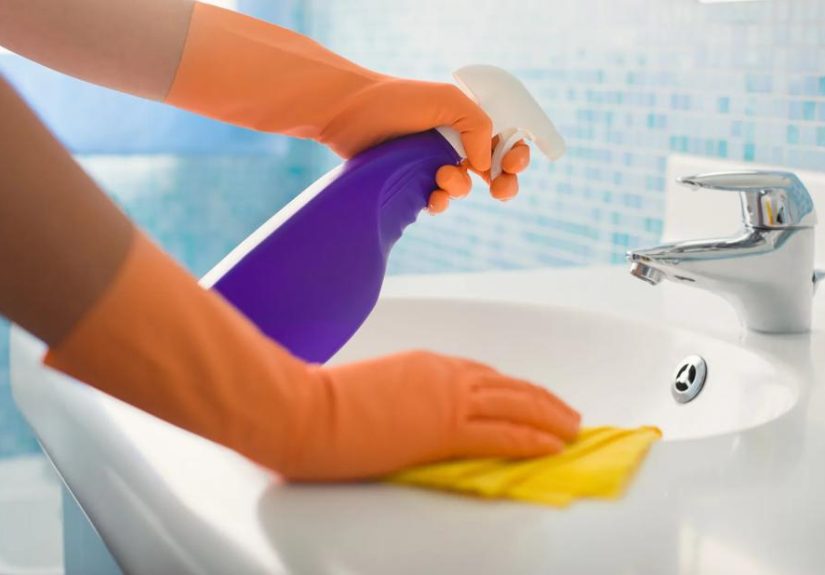
Step 3: Clean with Soap/Detergent, Then Disinfect
After removing visible mess, wash the area with detergent/soap and water. Then apply:
- Bleach solution (1,000–5,000 ppm) or
- EPA-registered disinfectant labeled for norovirus
Keep the surface wet for the recommended contact time (commonly at least 5 minutes for bleach solutions used for this purpose). Then rinse if it’s a food-contact surface, and let it air dry.
Step 4: Don’t Forget the High-Touch “Side Quests”
Norovirus loves surfaces everyone touches. Add these to your hit list:
- Bathroom faucets, toilet handles, flush levers
- Doorknobs, cabinet pulls, refrigerator handles
- Light switches, remote controls, phones (check device-safe disinfecting guidance)
- Sink edges, counters, and any “launch zone” around the bathroom
Step 5: Laundry Like You Mean It
Handle soiled items carefullydon’t shake them like you’re snapping a towel at summer camp. Wash separately if possible, use detergent, use bleach if the fabric allows, and dry on high heat.
Food Safety: Killing Norovirus Isn’t Only About Surfaces
Norovirus spreads through contaminated hands, surfaces, food, and water. So preventing the next round is partly about disinfecting your environmentand partly about not letting the germ “ride along” into the kitchen.
When Someone Is Sick
- No food handling while sick and for at least 48 hours after symptoms stop.
- Wash hands with soap and water often, especially after using the bathroom and before eating or preparing food.
- Clean and disinfect kitchen surfaces regularly, especially if the sick person has been in the kitchen.
Watch Outs: Shellfish and Produce
Norovirus outbreaks are often linked to contaminated food. Raw or undercooked shellfish can be risky, and produce can become contaminated if handled with unwashed hands. Washing produce and cooking foods properly mattersespecially during outbreak season.
Choosing a Norovirus Disinfectant Without Getting Tricked by Marketing
Here’s a simple decision filter that saves money and prevents heartbreak:
- Look for the claim: Does the label say effective against norovirus (or Norwalk-like virus)?
- Check the instructions: What’s the contact time? Some products require several minutes.
- Confirm it fits the surface: Food-contact surfaces may require a rinse step. Some materials can be damaged by strong disinfectants.
- Use it correctly: Enough product, full coverage, correct contact time, and clean hands after.
Common Mistakes That Let Norovirus Survive
“I wiped it once. It’s fine.”
A quick wipe with a random cleaner is how norovirus gets promoted, not fired. Disinfection needs the right product and the right time.
Not cleaning first
If there’s organic material on a surface, disinfectant may not penetrate well. Remove debris, clean with detergent, then disinfect.
Using sanitizer instead of washing hands
Sanitizer can be a helpful backup, but norovirus prevention leans heavily on soap-and-water handwashing.
Forgetting “secondary surfaces”
The bathroom gets attention. The hallway doorknob gets ignored. The virus does not respect your priorities.
How Long Should You Keep Cleaning After Someone Recovers?
People can continue shedding norovirus for a period after symptoms stop, and the virus can persist on surfaces if not disinfected properly. The practical takeaway is:
- Continue vigilant handwashing.
- Keep up bathroom disinfection, especially high-touch points.
- Be extra cautious with food prep for at least a couple of days after symptoms end (and follow the 48-hour rule for food handling).
If you’ve ever wondered why norovirus seems to “circle back” through a household, it’s often because someone was still contagious, surfaces weren’t disinfected with the right product/contact time, or handwashing got replaced by wishful thinking.
Experiences With Norovirus (Real-World Lessons People Learn the Hard Way)
Norovirus isn’t just a virusit’s a household event, like a surprise renovation, except the contractor is invisible and the budget is your dignity.
In families, it often starts with one person who insists it’s “just something I ate,” then spends 24–48 hours proving they ate the worst possible thing. The classic experience: everyone tries to be supportive, but the emotional arc quickly shifts from “poor you” to “nobody touch anything and wash your hands like you’re scrubbing in for surgery.” People usually remember the moment they realized how fast it spreads: a shared bathroom, a common towel, or a well-meaning caregiver who cleaned up and then touched a phone, a faucet, or the fridge handle. Two days laterplot twistsomeone else is sick.
In daycares and schools, norovirus teaches brutal math. One child gets sick, staff cleans, and by the next morning several families are reporting symptoms. Many caregivers say the biggest “aha” moment is that standard cleaning sprays don’t always cut it. They switch to either a bleach solution (mixed correctly) or a disinfectant that specifically lists norovirus, and they get much more serious about contact time. Another lesson: high-touch toys and shared surfaces matter. If you only disinfect the obvious mess zone and ignore the toy bin, norovirus gets to keep its summer home.
In restaurants and workplaces, the experience is mostly about policyand temptation. Food service managers talk about the pressure people feel to “push through” illness. But norovirus doesn’t care about your shift schedule. The best-run places enforce “stay home while sick and for at least 48 hours after symptoms stop,” then double down on handwashing, glove use when appropriate, and strict cleaning of food-contact surfaces. Many outbreaks become cautionary tales because one sick worker handled ready-to-eat foods, or because a bathroom wasn’t disinfected thoroughly enough during a busy rush.
For travelers (especially cruises), norovirus becomes a masterclass in personal boundaries. People learn to avoid buffet tongs handled by the entire ship, wash hands before meals (not just sanitize), and treat their cabin like a tiny germ laboratory. Some travelers even keep a “wipe down routine” for high-touch surfacesdoor handles, remotes, bathroom fixturesespecially if they hear there’s illness onboard. It’s not paranoia; it’s just learning that norovirus spreads efficiently in close quarters.
Across almost every story, the same three lessons show up:
- Soap-and-water handwashing beats sanitizer for norovirus.
- Bleach (1,000–5,000 ppm) or EPA-listed norovirus disinfectants are the reliable surface toolsused with proper contact time.
- “I cleaned” is not the same as “I disinfected.” Norovirus lives in that gap.
And if you want the most relatable norovirus experience of all: the moment you finish disinfecting everything, sit down, and realize you touched your phone with your cleaning gloves. Congratulationsyou’ve unlocked the bonus level. Go disinfect the phone (carefully, per device guidance), wash your hands again, and remind yourself: you’re not alone. Norovirus has humbled entire cruise ships.
Conclusion
Norovirus is stubborn, but it’s not immortal. The most reliable ways to kill it are chlorine bleach at the right concentration (1,000–5,000 ppm), EPA-registered disinfectants that list norovirus on the label, and heat for washable items and textiles. Pair that with soap-and-water handwashing, smart cleanup steps, and common-sense food safety rules (especially the “don’t handle food for 48 hours after symptoms stop” rule), and you can stop the cycle instead of starring in the sequel.