Table of Contents >> Show >> Hide
- A quick snapshot: the main bank types at a glance
- 1) Retail banks (a.k.a. consumer banks)
- 2) Commercial banks (business banking specialists)
- 3) Community banks (local relationship banking)
- 4) Regional banks (bigger footprint, still “not everywhere”)
- 5) National banks and “money-center” banks (the mega-menu institutions)
- 6) Online banks (branch-free, often fee-light)
- 7) Credit unions (not banks, but a major banking option)
- 8) Savings banks, thrifts, and savings & loan institutions (housing-focused roots)
- 9) Investment banks and broker-dealers (the capital markets operators)
- 10) Private banks and wealth management banks (high-touch, high-minimum)
- 11) CDFIs and mission-driven institutions (banking with a purpose)
- 12) The “bank for banks”: the Federal Reserve and central banking
- 13) Fintechs, neobanks, and third-party apps (bank-ish, but read the label)
- How to choose the right type of bank for you
- FAQ: common questions about different bank types
- Real-world experiences with different types of banks (500-word add-on)
- Conclusion
“Go to the bank” sounds like one simple erranduntil you realize bank can mean a neighborhood branch that knows your dog’s name,
a giant national institution with airports-in-disguise lobbies, a credit union that calls you a “member,” or an app that looks like a bank
but technically… isn’t one. Welcome to American banking, where the word bank is doing a lot of heavy lifting.
This guide breaks down the most common types of banks in the United States, what each one does best, how they make money,
and which kind fits different real-life needs (paychecks, mortgages, small-business cash flow, investing, and “help, I lost my debit card”).
We’ll keep it practical, specific, and only mildly sarcastic.
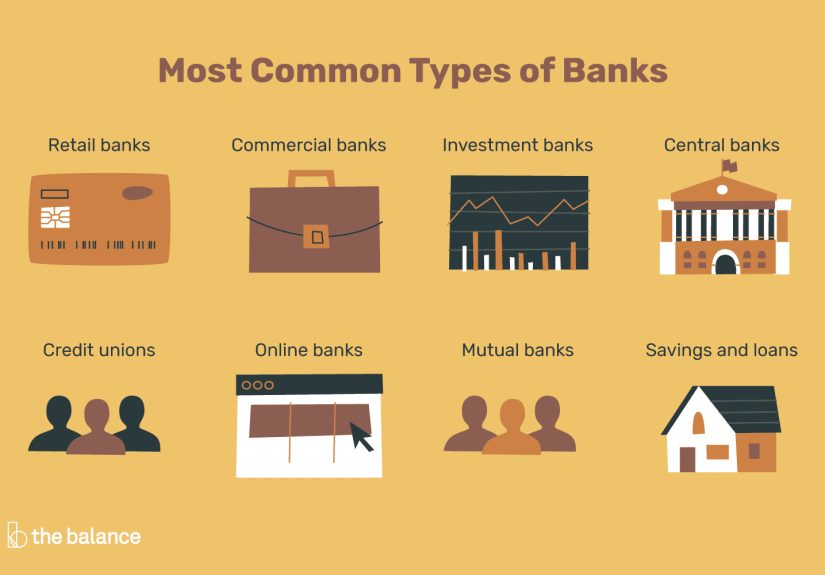
A quick snapshot: the main bank types at a glance
| Type | Best for | Common products | What to watch |
|---|---|---|---|
| Retail (consumer) bank | Everyday money needs | Checking, savings, cards, auto loans, mortgages | Fees, minimums, branch/ATM access |
| Commercial bank | Businesses and organizations | Business accounts, lines of credit, term loans, treasury services | Account requirements, underwriting, fees |
| Community / regional bank | Relationship-based banking | Local lending, small-business loans, mortgages | Smaller networks, fewer tech features sometimes |
| National / money-center bank | Big networks + full menu | Broad retail + business + wealth services | Service can feel “scale-first” |
| Online bank | Low fees, higher savings rates | Online checking, HYSA, CDs, mobile tools | Cash deposits, in-person help, ATM access |
| Credit union | Member-focused rates and service | Checking, savings, loans, credit cards | Membership rules, fewer branches/ATMs |
| Thrift / savings institution | Home lending focus | Mortgages, savings products, some checking | Less variety than full-service banks |
| Investment bank / broker-dealer | Raising capital, markets | Underwriting, M&A advice, trading, securities services | Not for everyday deposits |
| Private bank | High-net-worth clients | Wealth management, lending, trust planning | High minimums, complex fees |
| Mission-driven (CDFI) lender | Community development | Small-business lending, affordable housing finance | Availability varies by area |
| Fintech / “neobank” app | Budget tools, convenience | App-based accounts, cards, early pay, budgeting | Insurance depends on structure |
1) Retail banks (a.k.a. consumer banks)
Retail banks are the ones most people mean when they say “my bank.” They’re built for everyday life:
direct deposit, bill pay, debit cards, savings goals, and the occasional “please reverse that accidental subscription to
Premium Llama Meditation.”
What they offer
- Checking and savings accounts
- Certificates of deposit (CDs)
- Credit cards
- Personal loans, auto loans, mortgages
- Money movement tools (Zelle, wires, bill pay, ACH)
How they make money (in plain English)
Retail banks typically earn through interest (they lend out money and charge interest) and fees
(overdraft, out-of-network ATMs, monthly maintenancethough many accounts waive these with direct deposit or minimum balances).
They also earn interchange when you swipe a debit card.
Real-world example
If you want a checking account for paychecks, a savings account for emergencies, and the option to talk to a human in a building
when something goes sideways, a retail bank is a straightforward fit.
2) Commercial banks (business banking specialists)
A commercial bank focuses on businessesthink companies that need to pay employees, accept card payments,
borrow to buy equipment, or manage cash flow that looks like a roller coaster.
Common commercial bank services
- Business checking and savings
- Merchant services (card processing)
- Lines of credit and term loans
- Commercial real estate lending
- Treasury management (cash management, fraud controls, payroll services)
Why a business might choose one
Many small businesses don’t just need an account; they need a banking partner that can handle higher transaction volume,
provide credit when inventory spikes, and offer tools like positive pay (a fraud-prevention service) when checks are involved.
3) Community banks (local relationship banking)
Community banks are generally smaller, locally oriented institutions. The big idea: relationship banking.
Instead of “press 7 for existential dread,” you might get the same loan officer twice in a row. Wild.
What they do especially well
- Local mortgages and construction loans
- Small-business lending with local context
- More personalized service and decision-making
Trade-offs
You may see fewer branches outside your region and sometimes less cutting-edge tech than the biggest banks or top online banks.
But for many peopleespecially small-business owners and borrowers with a story behind the numbersthat trade can be worth it.
4) Regional banks (bigger footprint, still “not everywhere”)
Regional banks sit between community banks and national giants. They typically operate across several states
and offer broader product lines than a small community bankoften with stronger digital toolswhile still maintaining some regional focus.
Who they’re great for
If you travel or relocate within a region (say, the Southeast or the Midwest) and want both branches and modern mobile features,
a regional bank can hit the sweet spot.
5) National banks and “money-center” banks (the mega-menu institutions)
National banks and large, systemically important institutions (often called money-center banks)
typically offer the widest set of services: extensive branch/ATM networks, business banking, wealth management, and sometimes
investment-related offerings through affiliated entities.
Why people choose them
- Convenience: branches/ATMs in many locations
- Broad product range: from starter checking to complex business services
- Integrated tools: apps, rewards, account linking
Potential downsides
Scale can sometimes mean “you are customer #48,217,003.” Service quality varies by branch and by issue, and fee schedules can be more complex.
The best approach is to compare the specific account termsnot just the brand name.
6) Online banks (branch-free, often fee-light)
Online banks operate primarily (or entirely) through websites and apps. Without maintaining lots of branches,
many can offer lower fees and more competitive interest rates on savings.
Typical strengths
- Low or no monthly fees
- Competitive high-yield savings accounts
- Strong mobile features and alerts
Common pain points
- Cash deposits can be inconvenient or limited
- In-person support is minimal
- ATM access depends on partner networks
Online banks can be a great “primary bank” if your life is mostly digital and you rarely handle cash. They can also be an excellent
secondary bank just for savings, especially if your main bank’s savings rate is basically “a rounding error with confidence.”
7) Credit unions (not banks, but a major banking option)
Credit unions are financial cooperatives: member-owned, typically not-for-profit, and often known for competitive
loan rates and lower fees. Instead of customers, they have members.
Key differences from banks
- Ownership: Banks are generally for-profit; credit unions are member-owned and often not-for-profit.
- Membership: You may need to qualify (by location, employer, association, or family connection).
- Deposit insurance: Many credit unions are federally insured through a different system than banks.
Who might love a credit union
If you want a relationship-first approach, strong auto-loan rates, and you qualify for membership, credit unions can be a fantastic fit.
Just check ATM/branch access and digital features if those are must-haves for you.
8) Savings banks, thrifts, and savings & loan institutions (housing-focused roots)
Thrifts (including savings associations and savings & loan institutions) historically emphasized home lending and
savings products. Many still lean into mortgages and community housing finance, even though the lines have blurred over the years.
What makes them distinct
- A legacy focus on housing-related lending
- Traditional savings products and mortgages as core offerings
- Often smaller footprints than mega-banks
In practical terms: if you’re shopping for a mortgage and want a lender whose bread-and-butter is housing, a thrift institution can be worth
including in your comparison listalongside banks, credit unions, and mortgage lenders.
9) Investment banks and broker-dealers (the capital markets operators)
Investment banks help corporations, governments, and large organizations raise money and execute complex transactions.
They underwrite stocks and bonds, advise on mergers and acquisitions, and support trading and market-makingoften through entities registered
as broker-dealers.
What they’re not
Generally, investment banks are not where you keep your everyday checking account. They’re part of the financial system,
but they serve different needs than retail banking.
Everyday example
If a company “goes public” (an IPO) or issues bonds to raise funds, an investment bank typically helps structure and sell those securities.
That’s a very different job than helping you set up overdraft protection.
10) Private banks and wealth management banks (high-touch, high-minimum)
Private banking is designed for high-net-worth individuals and families who want a bundled set of services:
tailored investing, credit strategies, trust and estate planning coordination, and a dedicated relationship manager.
Common offerings
- Portfolio management and advisory services
- Customized lending (securities-backed lines, jumbo mortgages)
- Trust services and estate planning coordination
- Concierge-style service
The upside is convenience and specialized expertise. The downside is you’ll often see high minimum balances, layered fees, and products that
require careful comparison. (Translation: read the fine print like it’s a mystery novel and you’re trying to catch the plot twist.)
11) CDFIs and mission-driven institutions (banking with a purpose)
Some institutionsoften designated as Community Development Financial Institutions (CDFIs)focus on expanding access to credit
and financial services in underserved communities. They may be banks, credit unions, loan funds, or other financial entities with a community
development mission.
Why they matter
CDFIs can play a meaningful role in small-business lending, affordable housing, and community revitalization. If you’re a borrower who doesn’t fit
perfectly into a traditional underwriting boxor you want your deposits to support community lendingmission-driven institutions are worth exploring.
12) The “bank for banks”: the Federal Reserve and central banking
When people say “the central bank” in the U.S., they’re usually referring to the Federal Reserve System. The Fed influences
interest rates and financial conditions, supports payment systems, and helps maintain stability in the banking system. It’s not a place you open
a checking account, but it shapes the environment every other bank operates in.
13) Fintechs, neobanks, and third-party apps (bank-ish, but read the label)
Here’s where things get spicy. Many modern finance apps look and feel like banksdebit cards, “checking” features, early pay, budgeting,
sleek design. Some are actual banks. Others are nonbank fintech companies that partner with insured banks and offer
“banking services” through those partners.
Why this matters
Deposit insurance and consumer protections can depend on who is actually holding the funds and how the accounts are structured.
If your money is placed at an insured bank through a third party, coverage can sometimes “pass through” to youassuming requirements and recordkeeping
are correct. But if the nonbank company itself fails, deposit insurance typically does not protect you from that company’s bankruptcy process.
Smart questions to ask before you park real money in an app
- Is the company itself a bank, or is it partnering with a bank?
- Which bank holds the deposits, and is it insured?
- Is the account titled/recorded in a way that supports pass-through coverage?
- What happens if the app company has operational issues or goes bankrupt?
- Can you reach support quickly when something breaks?
Fintech tools can be excellent for budgeting and convenience. Just don’t confuse a beautiful interface with a bank charter.
Looks can be deceivinglike “healthy” chips that are still chips.
How to choose the right type of bank for you
Many people use more than one institution on purpose: one for everyday spending, one for high-yield savings, one for a mortgage,
and maybe a credit union for an auto loan. The goal isn’t loyalty; the goal is fit.
Five practical questions to guide your choice
- Do I need branches? If you deposit cash often or prefer in-person help, lean retail/community/regional.
- Is my priority saving growth? Online banks and credit unions may offer stronger rates on savings and CDs.
- Do I run a business? Look for commercial banking tools: treasury management, merchant services, credit lines.
- How fee-sensitive am I? Compare monthly fees, overdraft terms, and ATM chargesespecially if balances fluctuate.
- Do I need specialized services? For complex investing or estate planning, consider wealth management/private banking.
FAQ: common questions about different bank types
Are credit unions safer than banks?
Safety depends less on the label and more on whether the institution is properly insured and well managed.
Banks and credit unions generally have federal insurance systems that protect deposits up to coverage limits when the institution is insured.
Is an online bank a “real bank”?
Some online banks are fully chartered, insured banks with no branches. Others are fintech apps partnered with banks.
The difference matters for insurance and oversight, so it’s worth verifying the structure.
What’s the biggest difference between retail and commercial banking?
Retail banking is built for individuals and households; commercial banking is designed for business needs like cash management,
business credit, and higher transaction complexity.
Can one institution be multiple types at once?
Yes. Many large institutions provide retail and commercial services, plus wealth management. The categories describe primary focus areas,
not always separate companies.
Real-world experiences with different types of banks (500-word add-on)
Banking gets clearer when you picture real situations. Here are common experiences people have (composite examples) that show why “type of bank”
matters more than most of us realizeusually right after something goes wrong.
Experience #1: The first paycheck and the “fee surprise”
A lot of people open their first checking account at a big retail bank because it’s convenientmaybe it’s near school or work, or their parents
bank there. It works perfectly until the day direct deposit is late, the balance dips below a minimum, and a monthly fee shows up like an uninvited
guest who also eats your leftovers. That’s when online banks and credit unions start looking attractive: fewer maintenance fees, easier waivers,
and savings rates that don’t feel like they were calculated with a sleepy calculator.
Experience #2: Buying a car and discovering credit unions
People often meet credit unions for the first time at an auto loan desk. You apply at a dealership, then someone says,
“Have you checked your credit union rate?” Suddenly you’re learning what “member-owned” means and why some borrowers see strong loan terms there.
The flip side is access: the nearest branch might be farther away, and you may need to qualify for membership. But for many borrowers, the savings
on interest is big enough to make a short drive feel like a victory lap.
Experience #3: The small-business cash-flow roller coaster
Business owners often start with a personal bank account and then realizeusually around tax seasonthat mixing business and personal transactions is
a paperwork horror movie. A commercial bank (or a community bank with strong business services) can change the game: separate accounts, merchant services,
payroll support, and fraud tools. The “experience” here is less about fancy perks and more about not spending Sunday nights categorizing expenses
labeled “SQ*COFFEE” and hoping your accountant doesn’t cry.
Experience #4: Moving to a new state
Relocation is when regional and national banks flex their branch networks. If your bank only exists in one corner of the map, you may suddenly be
hunting for fee-free ATMs like it’s a scavenger hunt. This is also when people adopt a two-bank strategy: keep a national bank for access and a local
community bank or credit union for relationship lending and local service.
Experience #5: The “fintech app is great… until it isn’t” moment
Many people love fintech apps for budgeting, early pay features, and clean design. The experience is smoothright up until there’s a dispute,
an account lock, or a confusing delay. That’s when “Who actually holds my money?” stops being a nerdy question and becomes a real one. People who
use fintech apps successfully often do one simple thing: they keep only the money they need for weekly spending in the app, while storing emergency
savings in a clearly insured bank or credit union account with transparent support and documentation.
The big lesson from these experiences is that there’s no single “best” bank typethere’s the best bank type for what you’re doing next.
If you match the institution to the job (everyday spending, saving, borrowing, business operations, investing), banking becomes less stressful,
less expensive, anddare we sayalmost boring. And boring is underrated when it comes to your money.
Conclusion
The U.S. has a whole ecosystem of bank types: retail banks for daily life, commercial banks for business operations, community and regional banks for
relationship-based service, national banks for scale and convenience, online banks for fee-light digital banking, credit unions for member-driven value,
thrifts with housing-focused roots, investment banks for capital markets, and private banks for high-net-worth needs. Add fintech apps into the mix,
and the smartest move is simple: know what you’re using, what it’s best at, and how your money is protected.
If you take one thing away, let it be this: choosing a bank isn’t a personality test. It’s a tool choice. Pick the tool that fits the job,
and your future self will thank youpossibly with fewer fees and a nicer savings balance.