Table of Contents >> Show >> Hide
- Quick Answer: Is Vaseline Safe as a Sexual Lubricant?
- What Vaseline Is (and Why That Matters)
- Risk #1: Vaseline and Condoms Don’t Mix (Especially Latex)
- Risk #2: Higher Chances of Vaginal Imbalance and Infection
- Risk #3: Irritation and Micro-Drama (Yes, That’s a Medical Term… Almost)
- Risk #4: Cleanup, Stains, and the “Why Is This Still Here?” Problem
- When (If Ever) Is Vaseline “Okay” Down There?
- Safer Alternatives: What to Use Instead of Vaseline
- How to Choose a Body-Friendly Lube (Without Needing a Chemistry Degree)
- If Someone Already Used Vaseline as Lube, What Should They Do?
- Common Myths (and the Reality)
- So… Is Vaseline as Lube Safe?
- Real-World Experiences: What People Commonly Report (and What It Teaches Us)
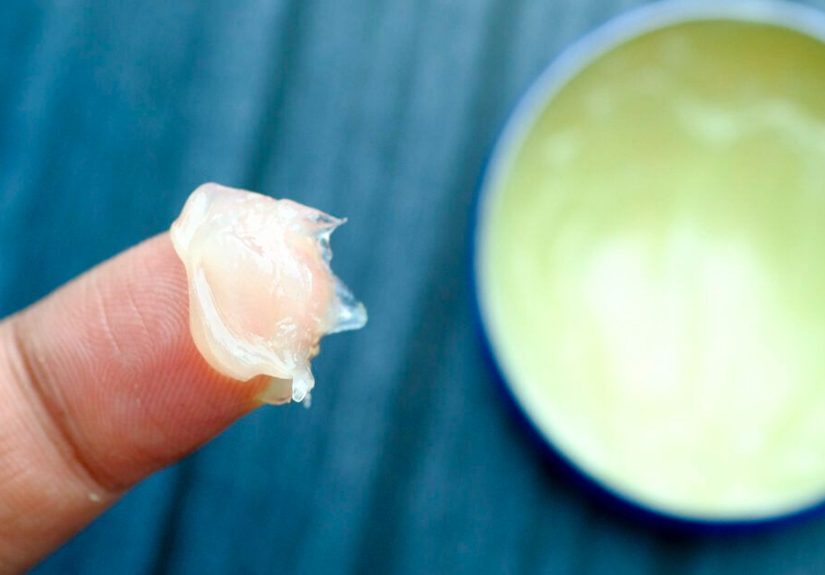
Vaseline® (petroleum jelly) is the Swiss Army knife of bathroom cabinets: it moisturizes, it protects, it helps
with chapped everything. So it’s not shocking that people sometimes wonder: Can I use Vaseline as lube?
The short version is: it’s usually a bad ideaespecially if you’re using condoms, or if you’re using it inside the vagina.
Think of petroleum jelly like a winter coat: great at sealing things in… and sometimes that’s exactly the problem.
Below, we’ll break down what “safe” really means here (hint: it’s not just “won’t immediately burst into flames”),
what the real risks are, and what to use insteadwithout turning this into a lecture. (Okay, maybe a tiny lecture.
The kind you actually remember.)
Quick Answer: Is Vaseline Safe as a Sexual Lubricant?
For most people, Vaseline is not recommended as a sexual lubricant. It can:
- Weaken latex condoms, increasing the chance of breakage.
- Raise infection risk when used intravaginally (inside the vagina), because it’s not water-soluble and can trap bacteria.
- Irritate sensitive tissue for some people.
- Create a cleanup situation that can only be described as “regrettably persistent.”
If you’re thinking, “But it’s gentle on skin!”true. It’s often safe on external skin for many people. The issue is
that the genitals (and anything internal) are more sensitive, more prone to imbalance, and more likely to react to
products that aren’t designed for that environment.
What Vaseline Is (and Why That Matters)
Vaseline is a petroleum-based occlusive. Translation: it forms a barrier that locks in moisture by blocking water
loss. That’s why it works so well for dry, cracked skin.
But as a lubricant, that “barrier superpower” comes with trade-offs:
- It doesn’t dissolve in water, so it can linger.
- It can hold onto bacteria, sweat, and bodily fluids against delicate tissue.
- It can interact badly with latex, which is a huge deal if pregnancy or STI prevention matters.
Risk #1: Vaseline and Condoms Don’t Mix (Especially Latex)
This is the biggest, most clear-cut safety issue. Many condoms are made of latex. Oil-based products
(including petroleum jelly) can weaken latex, making condoms more likely to tear or break.
Why does that matter?
A weakened condom can mean less protection against sexually transmitted infections (STIs) and pregnancy. If a condom
breaks, you may need emergency contraception and/or STI testing depending on the situationand it’s always better
to avoid that stress in the first place.
What if the condom isn’t latex?
Some condoms are made from synthetic materials (like polyurethane). Guidance commonly notes that oil-based lubricants
are primarily a problem for latex, but it’s still smartest to follow the condom package instructions and use a
lubricant that’s clearly labeled condom-compatible.
Bottom line: If condoms are involved, skip Vaseline.
Risk #2: Higher Chances of Vaginal Imbalance and Infection
The vagina is not a blank, empty space waiting to be “freshened.” It’s a carefully balanced ecosystem with a
particular pH and a community of helpful bacteria that protect against infection.
When petroleum jelly is used inside the vagina, research has linked it with a higher likelihood of
bacterial vaginosis (BV), a common imbalance that can cause discharge and odor (and sometimes no
symptoms at all). In one study of women in the U.S., intravaginal petroleum jelly use was associated with a higher
risk of testing positive for BV.
Why would petroleum jelly increase risk?
- It’s hard to wash out, so it may stay in place longer than water-based products.
- It can trap irritants and bacteria close to tissue.
- It may disrupt the vaginal environment, nudging things toward imbalance.
Important note: not everyone who uses petroleum jelly will get BV or yeast infections. But when safer, purpose-built
alternatives exist, choosing the lower-risk option is usually the smarter move.
Risk #3: Irritation and Micro-Drama (Yes, That’s a Medical Term… Almost)
Petroleum jelly is generally well-tolerated on external skin, but genital tissue can be more reactive. Some people
report burning, irritation, or discomfortespecially if there’s already dryness, friction, or sensitivity going on.
Irritation matters because irritated tissue is more vulnerable. Even mild inflammation can make sex uncomfortable
and can increase the chance of small tearsexactly what lubricant is supposed to help prevent.
Risk #4: Cleanup, Stains, and the “Why Is This Still Here?” Problem
Water-based lubes rinse away easily. Vaseline does not. It can:
- Stick around on skin and in hair
- Transfer to sheets and underwear
- Make post-sex cleanup more complicated than it needs to be
None of these are “medical emergencies,” but they’re part of real-world safety and comfort. If a product causes
recurring irritation because it’s difficult to remove, that’s a practical problem worth avoiding.
When (If Ever) Is Vaseline “Okay” Down There?
People use petroleum jelly externally for skin protection (for example, to reduce chafing). For some individuals,
a tiny amount on external skin only may be tolerated. But using it as a sexual lubricant
is where the risks riseparticularly with condoms and with anything internal.
If you’re dealing with dryness, itching, burning, frequent infections, or pain, it’s worth talking to a clinician.
Persistent symptoms can have lots of causes (hormonal changes, medications, skin conditions, infections), and the
safest solution depends on the “why.”
Safer Alternatives: What to Use Instead of Vaseline
If you want something that actually behaves like a lubricantand plays nicely with condomslook for products labeled
personal lubricant. These are formulated for sensitive tissue and typically come in three main types:
1) Water-based lubricants
- Pros: Condom-safe for latex, easy cleanup, widely available, usually gentle.
- Cons: May need reapplication; some formulas can feel sticky over time.
If you’re not sure where to start, water-based is usually the safest “default.”
2) Silicone-based lubricants
- Pros: Longer-lasting, very slippery, generally condom-safe for latex.
- Cons: Harder to wash off than water-based; may not be ideal for everyone’s sensitivity.
Silicone can be a good option for people who find water-based lubes dry out too fast.
3) Oil-based lubricants
- Pros: Long-lasting, very slick.
- Cons: Not safe with latex condoms; may raise irritation/infection risk for some people; messy cleanup.
If condoms are in the picture and they’re latex (often the case), oil-based lubes are generally a “no.”
How to Choose a Body-Friendly Lube (Without Needing a Chemistry Degree)
Here’s a quick checklist that works for most people:
- If using latex condoms: Choose water-based or silicone-based lube.
- If you’re prone to irritation: Pick fragrance-free, dye-free products.
- If you’re prone to yeast infections: Be cautious with products that contain ingredients that may irritate you personally.
- If dryness is frequent: Consider a vaginal moisturizer for regular use (different from lubricant).
If Someone Already Used Vaseline as Lube, What Should They Do?
First: don’t panic. One-time use doesn’t guarantee a problem. But you can lower risk by doing the following:
- Gently clean the external area with warm water. Avoid harsh soaps or scrubbing.
- Watch for symptoms over the next several days: unusual discharge, odor, itching, burning, or pain.
- If a latex condom was used, be aware the condom may have been weakened. If pregnancy or STI exposure is a concern, consider talking to a healthcare provider about next steps (like emergency contraception or testing).
- Seek medical advice if symptoms develop or if you get recurrent infections.
The goal here isn’t shame. It’s risk reduction. Lots of people improvise with what’s in the housethen learn later
why that wasn’t the best idea. Welcome to being human.
Common Myths (and the Reality)
Myth: “Vaseline is gentle, so it must be safe internally.”
Reality: A product can be gentle on external skin and still be a poor choice internallyespecially if it traps
bacteria and alters the environment.
Myth: “If I’m not using condoms, it’s fine.”
Reality: You remove the latex issue, but infection/irritation risk can still be a concern. There are better options.
Myth: “Natural = safe.”
Reality: “Natural” doesn’t automatically mean body-compatible, condom-safe, or low-irritation. The label isn’t a
guaranteehow the product behaves matters more.
So… Is Vaseline as Lube Safe?
In most cases, noVaseline is not a safe or smart lubricant choice, especially:
- if you’re using latex condoms
- if you’re applying it inside the vagina
- if you’re prone to BV, yeast infections, or irritation
If you need lubrication, using a real personal lubricant (water-based or silicone-based) is typically safer, more
comfortable, and dramatically less likely to ruin your sheets.
Real-World Experiences: What People Commonly Report (and What It Teaches Us)
Let’s talk about the part people rarely include in a “Is this safe?” question: what it’s actually like in real life.
Because a lot of health decisions aren’t made in a labthey’re made at 11:47 p.m. with whatever is within arm’s reach.
Experience #1: “It was convenient… until it wasn’t.”
A common story goes like this: someone runs out of lubricant, spots Vaseline in the cabinet, and thinks, “It’s slippery,
it’s skin-safe, problem solved.” Initially, it may feel like a quick fix. But later, they notice that it doesn’t rinse
away easily. That lingering residue can lead to more friction the next time (because it’s unevenly distributed), or it
can cause irritation simply because the area never feels fully “clean.” The takeaway: convenience is real, but cleanup
and comfort later are part of safety too.
Experience #2: “We used a condom… and it didn’t go as planned.”
Another frequent report is condom troubleslipping, tearing, or breakingafter using oil-based products. People often
don’t connect the dots until they learn that petroleum jelly can weaken latex. That’s when the anxiety hits: “Do we need
emergency contraception?” “Should we get tested?” “How soon?” The takeaway: when protection matters, using a condom-compatible
lubricant is a low-effort way to avoid a high-stress aftermath.
Experience #3: “I got irritation and thought something was ‘wrong with me.’”
Some people report burning or itching afterward and assume it means they’re “sensitive” or “broken.” In reality, it can
simply be that the product wasn’t designed for that tissue, and it hung around longer than expected. This is especially
true if there was already dryness, hormonal change, or a history of irritation. The takeaway: discomfort isn’t a character
flaw; it’s information. Switching to a gentler, purpose-made lubricant often fixes the problem.
Experience #4: “It seemed to trigger infections.”
People who are prone to BV or yeast infections sometimes notice a pattern: petroleum jelly use, then symptoms days later.
Not everyone experiences this, but it’s common enough that clinicians and reputable health resources routinely advise
against using petroleum jelly internally. The takeaway: if you’re infection-prone, using products that wash away easily
(like water-based lubricants) is often a safer bet.
Experience #5: “I wanted a ‘natural’ option and didn’t trust store products.”
Some people reach for Vaseline because they’re trying to avoid fragrances, flavors, dyes, or unfamiliar ingredients in
commercial lubes. That’s understandable. But petroleum jelly isn’t necessarily “cleaner” in the ways that matter for
genital health, because its texture and staying power can create different problems. The takeaway: if you want simpler,
look for lubes specifically marketed for sensitive skinfragrance-free, dye-free, and labeled condom-saferather than
improvising with products meant for elbows and lips.
Experience #6: “Once I switched to real lube, everything got easier.”
Many people describe a surprisingly dramatic difference after switching to a water-based or silicone-based personal
lubricant: less friction, less irritation, fewer “mystery” symptoms, and a lot less cleanup. The takeaway: you don’t have
to power through discomfort. The right product can make things safer and more comfortable without turning your bathroom
into a chemistry experiment.
Real-life experiences don’t replace medical guidance, but they do highlight a pattern: petroleum jelly is great at what
it’s designed to do (seal and protect skin) and not great at what lubricants are designed to do (reduce friction safely
in sensitive areas, rinse clean, and stay compatible with protection).