Table of Contents >> Show >> Hide
- Why Personal Keys Make Such Great Shadowbox Art
- What You Need Before You Start
- How To Design a Shadowbox That Feels Personal, Not Random
- Step-by-Step: Using Personal Keys To Make Shadowbox Art
- Creative Ideas for Key Shadowbox Themes
- How To Protect the Materials Inside Your Shadowbox
- Mistakes To Avoid
- Why This DIY Project Works So Well as Home Décor
- Experiences People Often Have When Making Key Shadowbox Art
- Final Thoughts
There are craft projects, and then there are memory projects. Using personal keys to make shadowbox art lands firmly in the second camp. It is part DIY wall décor, part storytelling, and part “wow, I cannot believe this tiny piece of metal just made me emotional.” A key may look ordinary at first glance, but it can represent a first home, a childhood bedroom, a grandparent’s house, a first apartment, an old office, or a door that opened during a major life chapter. That is exactly why key shadowbox art feels so powerful. It turns an object you could easily toss in a drawer into a meaningful keepsake display you actually want to look at every day.
Shadowboxes are especially good for this kind of project because they are designed to display objects with depth. Unlike a standard frame, a shadowbox gives your items room to breathe. That means your personal keys can sit alongside photos, handwritten notes, tiny labels, maps, dried flowers, ticket stubs, house numbers, or other small memorabilia without looking like they were flattened in a crafting accident. The result is layered, textured, and deeply personal.
If you have been wondering how to use sentimental keys in a creative way, this project is a smart one. It is approachable for beginners, flexible enough for experienced crafters, and sentimental without being syrupy. In other words, it has heart, but it still looks stylish on a wall. That is a pretty good deal for a few old keys and a free afternoon.
Why Personal Keys Make Such Great Shadowbox Art
Personal keys are tiny objects with oversized emotional weight. They often survive long after the places they belonged to have changed, been sold, renovated, or disappeared from your daily life. A key from your childhood home can become a symbol of family history. A key from your first apartment can represent independence, ramen noodles, and that one smoke detector that chirped for six months straight. A key from a grandparent’s house can hold an entire world of smells, voices, recipes, and routines.
That emotional connection makes keys ideal for shadowbox art. They are small, sculptural, and instantly recognizable. They also play nicely with other memory objects. A key can be mounted over a map, paired with a snapshot, placed beside a date tag, or grouped with a short quote. If you have several keys, you can build a timeline of places that mattered. If you only have one, you can make it the star of the show. Either way, the project tells a story without shouting.
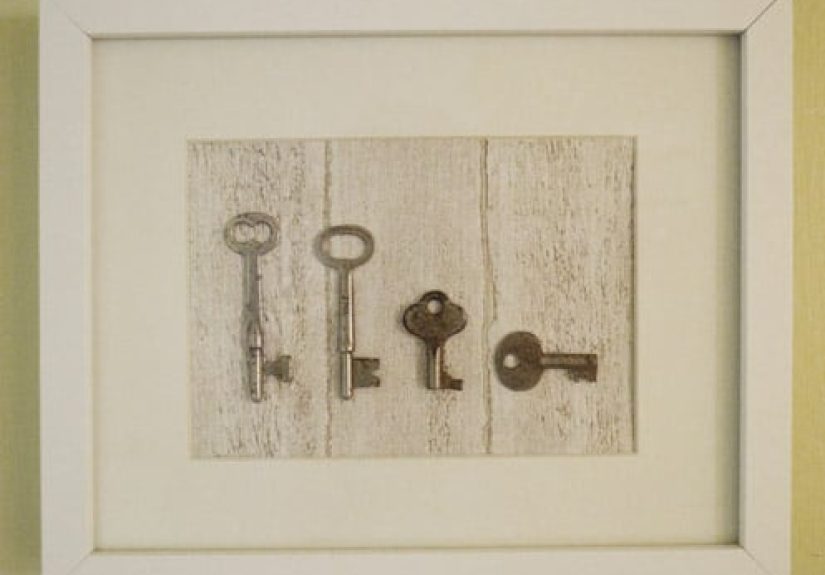
There is also a strong design angle here. Old keys bring patina, shape, and texture. Modern keys add a clean, graphic look. Brass, steel, worn edges, stamped numbers, tiny scratches, and unusual silhouettes all add visual interest. In short, keys are doing a lot of heavy lifting for such tiny overachievers.
What You Need Before You Start
One of the best things about this DIY shadowbox project is that the supply list can stay simple. You do not need a workshop, a dramatic crafting montage, or a reality-show host yelling about transformation. You just need a plan.
Basic Supplies
- A shadowbox frame with enough depth for your key or keys
- Acid-free backing paper, mat board, or cardstock
- Your personal key or keys
- Small archival-safe adhesive dots, mounting corners, pins, or tiny hooks
- A printed map, photo, handwritten note, label, or decorative background
- Scissors or craft knife
- Ruler and pencil
- Soft cloth for gently cleaning the key or frame surface
- Optional embellishments such as dried flowers, house numbers, tags, or vinyl lettering
If your key has a special location attached to it, one of the most effective design ideas is using a map as the background. For example, you can place a house key over the area where the home or apartment is located. That instantly turns the piece from “nice craft” into “tiny memory museum.”
How To Design a Shadowbox That Feels Personal, Not Random
The difference between clutter and art usually comes down to editing. A shadowbox should feel intentional. You are not trying to empty a junk drawer into a frame and call it emotional. You are trying to tell one clear story.
Choose One Story First
Before arranging anything, decide what your shadowbox is really about. Is it about a first home? A family house? A relationship milestone? A move across the country? A loved one you want to honor? When you know the story, it becomes much easier to choose the right supporting items.
Build Around a Strong Background
The background is not filler. It sets the mood. A vintage-style map works beautifully for house keys. A black-and-white family photo adds warmth. A scan of a handwritten recipe or letter brings intimacy. Linen, scrapbook paper, book pages, wallpaper scraps, and painted cardstock can all work too. The key is choosing something that supports the memory instead of competing with it.
Limit the Extras
One key plus two or three supporting items often looks better than one key plus every meaningful object you have owned since 1998. Give the key room to stand out. Negative space is your friend. It makes the whole piece look more polished and less like your wall got ambushed by sentimentality.
Add Labels Sparingly
A small typed label can elevate the entire piece. Think: “First Apartment, Chicago, 2014” or “Grandma Mae’s House”. Short is better. You want the words to guide the viewer, not hijack the artwork.
Step-by-Step: Using Personal Keys To Make Shadowbox Art
- Pick your shadowbox frame. Choose a frame deep enough that the key will not press against the glass or acrylic. A little breathing room matters.
- Gather your memory pieces. Select the key, a background, and a few related items. Keep the group small and meaningful.
- Test the layout before attaching anything. Place everything on the backing board and move it around until the arrangement feels balanced. Take a quick photo so you remember your layout.
- Trim and secure the background. Cut your map, photo, paper, or fabric to fit the backing neatly.
- Mount the key carefully. Use a method that supports the key without smearing glue everywhere like a craft emergency. Tiny hooks, pins, or archival-safe mounting methods are usually better than drowning the object in adhesive.
- Add supporting elements. Include a date tag, short label, mini photo, pressed flower, or other small detail if it strengthens the story.
- Check depth and spacing. Close the frame temporarily to make sure nothing touches the glazing.
- Seal and display. Once everything is secure, close the shadowbox and hang it in a stable indoor area away from heavy moisture and direct sun.
That is the technical process, but the emotional process is usually something like this: “Oh, this is cute.” Then, “Wait, why am I suddenly remembering the sound of that old screen door?” That is when you know the project is working.
Creative Ideas for Key Shadowbox Themes
Childhood Home Shadowbox
Use the house key, a small street map, a tiny print of the home, and a simple label with the address or years lived there.
First Apartment Memory Box
Pair the key with a lease date, a snapshot, a subway card, or a little note about that chapter of life. This version works especially well for urban moves and early-adult milestones.
Wedding or New-Home Gift
Frame the couple’s first shared house key with a photo, move-in date, and a line such as “The Door We Opened Together.” Yes, it is sentimental. No, that is not a crime.
Family Heirloom Display
If you inherited old keys from a parent or grandparent, use antique-style paper, a family name, and a copied recipe, note, or portrait. The effect can be elegant and deeply personal.
Multiple Homes Timeline
If you have several keys, arrange them chronologically with dates and locations. This is a great way to tell the story of major moves, career changes, or family growth.
How To Protect the Materials Inside Your Shadowbox
If your project includes sentimental objects, the goal is not just to make it look pretty now. You also want it to age well. That means thinking like a crafter and a caretaker.
Start with archival-friendly materials when possible. Acid-free, lignin-free papers and backing boards are a much safer choice than cheap cardboard or mystery paper from the bottom of a craft bin. If your shadowbox includes photos, letters, or printed maps, this matters even more. UV-filtering glazing is also worth considering, especially if the piece will hang in a room with daylight.
Another big rule: do not let the object press directly against the front glazing. Keys may be sturdy, but paper backgrounds, labels, and photos are more vulnerable. A deeper frame or spacers help keep everything from being squished together like a memory sandwich.
Where you hang the piece matters too. Avoid attics, basements, steamy bathrooms, and walls with strong direct sun. A stable indoor space is much better for mixed-material keepsakes. If you ever need to clean the display, go gently. Dust the outside with a soft cloth and skip harsh cleaners near the art itself.
If a key is especially old, rare, or tied to a family heirloom collection, it is smart to keep the mounting method as reversible as possible. In plain English: do not permanently glue precious history into a box if you can avoid it.
Mistakes To Avoid
- Using too many objects: More stuff does not automatically equal more meaning.
- Choosing a frame that is too shallow: If the key kisses the glass, the frame is too shallow.
- Using poor-quality backing: Cheap materials can yellow, warp, or damage paper keepsakes over time.
- Skipping the test layout: Always arrange first and attach later.
- Hanging it in direct sun: Light can fade paper and photographs faster than you think.
- Making it too decorative for the story: If the embellishments overpower the memory, the key loses its voice.
Why This DIY Project Works So Well as Home Décor
Shadowbox art made from personal keys checks a rare set of boxes. It is decorative, yes, but it is also intimate. It does not feel mass-produced because it cannot be. No store can sell your exact memory. That makes the finished piece more meaningful than generic wall art and often more beautiful too.
It also works with many decorating styles. A black frame with a map background can look modern and minimal. A distressed wood shadowbox with antique keys can lean farmhouse or vintage. A linen-backed display with simple labels can feel quiet and gallery-inspired. You get the emotional value of a keepsake and the visual payoff of thoughtful design. Not bad for something that used to live in a bowl by the front door.
Experiences People Often Have When Making Key Shadowbox Art
One of the most interesting things about using personal keys to make shadowbox art is that the project rarely stays “just a craft.” People often begin because they want to organize old keepsakes or make something pretty for a wall. Then the memories start showing up. A key from an old apartment might remind someone of their first job, their broke-but-happy era, the neighborhood coffee shop they practically funded, or the way the hallway smelled after it rained. A key from a childhood home can bring back entire scenes in seconds: screen doors slamming, dogs barking, summer dinners, holiday chaos, and that one kitchen drawer everyone in the house pretended was organized.
That emotional shift is part of what makes the experience so satisfying. The project invites you to slow down and ask, “Why did I keep this?” Sometimes the answer is practical. More often, it is personal. The key is not important because of what it unlocks now. It is important because of what it unlocked then. That small realization can make the crafting process surprisingly reflective.
Many people also find that key shadowbox art becomes a conversation starter once it is displayed. Guests notice it because it looks different from ordinary framed art. Then they ask about it. Suddenly, you are telling the story of your first apartment, your grandparents’ house, or the little bungalow where your family spent every Thanksgiving. That is a wonderful thing about memory-based art: it does not just preserve a story, it helps retell it.
There is also a quiet comfort in giving scattered objects a proper home. Keys tend to drift into drawers, tins, catchalls, and old jars where they become visual background noise. Turning them into shadowbox art changes their status. Instead of clutter, they become curated keepsakes. Instead of forgotten metal bits, they become part of your home’s visual identity. It feels less like storing the past and more like honoring it.
For some people, this project is joyful. For others, it can be emotional in a heavier way, especially if the key belonged to someone who has passed away or to a place they can no longer return to. In those cases, the act of arranging the piece can feel almost ceremonial. Choosing the background, writing the label, and placing the key in the frame can become a way to process memory through making. That is part of why these shadowboxes often end up being cherished for years. They are not only about décor. They are about attachment, identity, and the places that helped shape a life.
And honestly, there is something wonderfully human about all of this. We take a tiny old key, a frame, a bit of paper, and a few scraps of memory, and somehow end up with art that feels bigger than the materials used to make it. That is the magic of the project. It is simple, personal, and deeply real.
Final Thoughts
Using personal keys to make shadowbox art is one of those rare DIY ideas that feels equally meaningful and stylish. It gives forgotten objects a second life, helps preserve stories connected to homes and milestones, and creates wall art that no one else can duplicate. With a thoughtful layout, quality materials, and a little restraint, you can turn a humble key into a beautiful memory piece that feels both polished and personal.
If you have old keys tucked away somewhere, this is your sign to rescue them from the drawer and let them do something more interesting than jingle sadly beside expired coupons. A well-made shadowbox can turn those keys into keepsake art that tells a story every time you pass it.