Table of Contents >> Show >> Hide
- What “Minimal Space, Maximum Storage” Really Means
- Trend #1: The “Edit First” Rule (Because Storage Can’t Outrun Stuff)
- Trend #2: Micro-Zoning (Tiny Homes, Big Systems)
- Trend #3: Vertical Thinking (Walls Are Storage, Too)
- Trend #4: Hidden Storage (Because Not Everything Needs to Be on Display)
- Trend #5: Modular Systems (Storage That Changes With You)
- Room-by-Room: Small-Space Storage Moves That Actually Work
- The “Don’t Buy More Bins” Trend (Yes, It’s a Trend Now)
- Maintenance: How People Keep Small Spaces Organized Long-Term
- Experiences From Real Homes: Minimal Space, Maximum Storage in Action (500+ Words)
- SEO Tags
Small homes are having a momentand not just because rent is doing what rent does. The bigger shift is cultural:
we’re tired of living inside our stuff. We want rooms that feel calm, look intentional, and function like they’ve
got a tiny assistant following us around, putting things back where they belong.
That’s where the “minimal space, maximum storage” trend comes in. It’s not about owning nothing and staring
at a single, meaningful spoon. It’s about making every inch work harderso your home feels bigger, your mornings
feel smoother, and you’re not performing an Olympic event every time you look for the scissors.
What “Minimal Space, Maximum Storage” Really Means
This trend is a blend of two goals that can feel like enemies: you want more storage, but you also want
less visual clutter. The solution isn’t “buy more bins” (we’ll get to that). It’s designing a system where:
- Daily-use items are easy to reach (no digging, no avalanches).
- Occasional items have a home that’s out of the way but not forgotten forever.
- Surfaces stay mostly clear, so the room feels openeven if it’s compact.
- Storage looks intentional, not like a cardboard-box tribute to chaos.
In other words: your space can be small, but it shouldn’t feel like it’s constantly yelling, “We’re full!”
Trend #1: The “Edit First” Rule (Because Storage Can’t Outrun Stuff)
If small-space organizing had a secret handshake, this would be it: declutter before you organize.
Storage is not a magic trick; it’s a container. If you keep everything, you’ll just create a very tidy version of
overwhelmed.
A practical edit that doesn’t ruin your weekend
- Start with one micro-zone: one drawer, one shelf, one basketnot the entire kitchen.
- Use the “Would I buy this again today?” test for random extras and duplicates.
- Rotate seasonally: if it’s not in season, it doesn’t need prime real estate.
- Set a capacity limit: the bin/drawer/shelf is the boundary. When it’s full, something exits.
This isn’t about being ruthless. It’s about being realistic. Your home has square footage. Your stuff should respect it.
Trend #2: Micro-Zoning (Tiny Homes, Big Systems)
Big houses get rooms for everything: office, gym, craft room, mudroom, pantry. Small homes? One room might be all of that,
plus a place to sleep and pretend you don’t eat dinner on the couch.
Micro-zoning is the trend of dividing a small space into clear “activity zones”even if those zones are
just corners, shelves, or a rolling cart. When each zone has a purpose, clutter stops wandering around like it pays rent.
Micro-zoning examples that work
- Entry “drop zone”: a tray + hooks + a small bin for mail (so your counter doesn’t become a paper museum).
- Work zone: laptop, charger, notebook, and pens live togetherideally in one portable container.
- Cooking zone: the tools you use daily stay close to the stove; everything else gets demoted.
- Care zone: skincare, meds, hair tools grouped by routine, not by where you last set them down.
The trend is less “put things away” and more “put things where you use them.”
Trend #3: Vertical Thinking (Walls Are Storage, Too)
In a small home, floor space is precious. Vertical space is often free real estatequietly waiting for you to stop
treating walls like they’re just for art and accidental scuffs.
High-impact vertical upgrades
- Pegboards and rail systems: flexible storage for tools, craft supplies, kitchen accessories, and daily essentials.
- Floating shelves: great for books, baskets, and frequently used items (just don’t turn them into a dust collection exhibit).
- Over-the-door organizers: not glamorous, but wildly effective for shoes, cleaning supplies, pantry items, and bathroom extras.
- Wall hooks: the underrated heroes of small-space livingbags, hats, keys, even foldable chairs.
Pro tip: if you want a room to feel calmer, keep vertical storage visually consistentmatching baskets,
uniform containers, or a single color family. Your eyes relax when they see fewer “different things.”
Trend #4: Hidden Storage (Because Not Everything Needs to Be on Display)
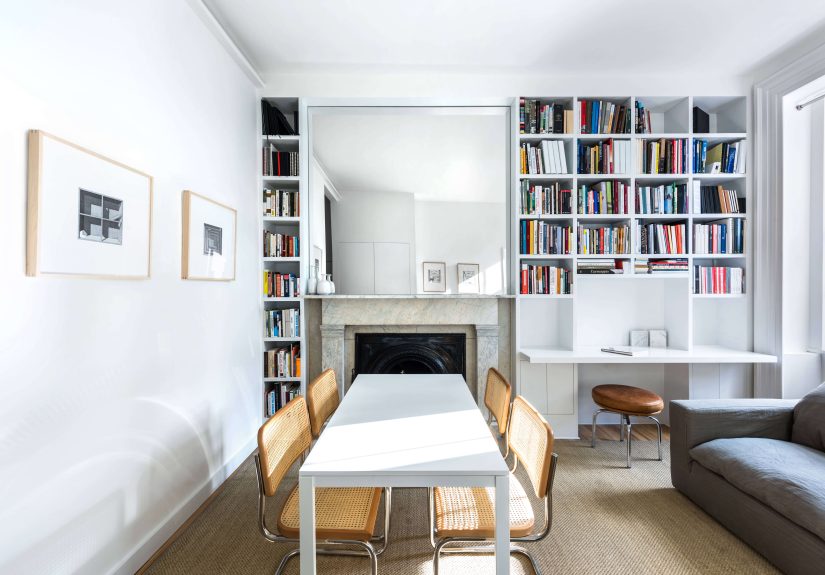
Minimal-space living gets dramatically easier when furniture pulls double duty. Hidden storage is trending because it
reduces visual clutter without forcing you to become a minimalist monk.
Furniture that earns its keep
- Storage ottomans: blankets, games, chargers, kid stuffgone in seconds.
- Lift-top coffee tables: stash remotes and laptop gear; also, your “I’ll fold this later” pile.
- Beds with drawers or under-bed bins: perfect for off-season clothing and extra linens.
- Benches with compartments: especially helpful in entryways or at the foot of the bed.
The goal isn’t to hide clutter forever. It’s to store the right things invisibly so your daily environment feels
lighter and more intentional.
Trend #5: Modular Systems (Storage That Changes With You)
One reason small spaces get messy is that life changes faster than your storage does. Modular systems are trending because
they’re adjustable. That matters when your “guest room” is actually your workout area, office, and coat closet.
Where modular shines
- Closets: adjustable shelves, hanging bars, and drawers let you reconfigure as your wardrobe shifts.
- Laundry zones: wall-mounted rails, hooks, and narrow carts can turn a tiny nook into a real system.
- Pantries: stackable bins and turntables make deep shelves usable (and reduce the “lost pasta” phenomenon).
- Living rooms: cube storage can be a divider, a media unit, or a “hide it all” walldepending on life stage.
If you’ve ever moved one shelf and felt like you unlocked a new level in a video game, congratulations:
you’re the target audience for modular storage.
Room-by-Room: Small-Space Storage Moves That Actually Work
Entryway: Build a “Landing Strip”
Most small homes don’t have mudrooms. That doesn’t mean you’re doomed to a shoe pile that slowly evolves into a mountain.
Create a landing strip: hooks for bags, a tray for keys, and one container for mail. The trick is one-step containment:
if it’s hard to put away, it won’t happen.
Closet: Double Your Hanging Space
Small closets are famous for one thing: wasted vertical space. Add a second hanging rod (or a hanging extender) so shirts
can live above pants/skirts. Use the top shelf for labeled, uniform bins (not “random stacks that fall when you blink”).
And if your closet floor is a graveyard of shoes, use a rack or clear boxes and stop letting footwear free-range.
Kitchen: Make Cabinets Work Like Drawers
Deep cabinets are basically storage caves. Make them functional with:
- Turntables for oils, sauces, and spices (so nothing gets exiled to the back).
- Shelf risers to create levels for dishes and pantry goods.
- Door-mounted organizers for lids, wraps, or cleaning supplies.
- Vertical file organizers for cutting boards and baking sheets.
And yes, decanting pantry items into clear containers is trending for a reason: it boosts visibility, simplifies
restocking, and makes your shelf space feel less chaotic. Just don’t decant everything on day one unless you enjoy
turning your kitchen into a packaging museum.
Bathroom: Go Slim, Not Bulky
Small bathrooms don’t need huge storagethey need targeted storage. Slim shelves, over-the-toilet units,
adhesive caddies, and drawer dividers keep categories separate. If your vanity looks like a skincare reunion, try
grouping by routine: morning, night, hair, first aid. The fewer things you touch to get what you need, the tidier it stays.
Bedroom: Keep the Calm (Store the Rest)
A small bedroom feels bigger when surfaces are quieter. Swap bulky lamps for wall sconces where possible. Use under-bed
storage for off-season clothing and extra linens. Consider a tall dresser (vertical footprint) instead of a wide one.
And if your “chair” is actually a clothing storage device, give those clothes a real homeyour chair deserves a retirement plan.
Living Room: Contain the Categories
Living rooms become clutter magnets because they host everything: tech, hobbies, mail, kids’ stuff, blankets. Fix it by
creating containers for categoriesone bin for cables, one basket for throws, one lidded box for “random but important.”
If your categories don’t have a container, they’ll become a pile. Piles are the natural predator of calm.
The “Don’t Buy More Bins” Trend (Yes, It’s a Trend Now)
Here’s the most modern organizing move of all: pause before purchasing containers. The new mindset is
“edit first, measure second, buy last.” Otherwise, bins become clutter with handles.
A smarter way to shop for storage
- Measure the space (height, width, depth). Guessing is how you end up with “almost perfect” bins in a pile.
- Choose a container style per zone (clear, woven, lidded, open). Consistency = visual calm.
- Pick the smallest container that fits the category. Oversized bins invite overstuffing.
- Label the category, not the fantasy. “Cables & chargers” beats “misc.” every time.
Storage should support your life, not create new homework.
Maintenance: How People Keep Small Spaces Organized Long-Term
The secret to “always organized” homes isn’t superhuman discipline. It’s a system that’s easier than not doing it.
These maintenance habits are trending because they’re realistic:
1) The 5-minute reset
Pick one daily reset time (after dinner or before bed). Put strays back into their zones. Five minutes prevents five
hours of weekend panic-cleaning.
2) The weekly “surface sweep”
Countertops, nightstands, coffee tables, and entryway areas get a weekly sweep. If something keeps landing there,
that’s data: it needs a real home.
3) The monthly mini-edit
Check one category per month: pantry snacks, toiletries, kid art, shoes, cables. When your space is small, small edits
make a huge difference.
Experiences From Real Homes: Minimal Space, Maximum Storage in Action (500+ Words)
If you’ve ever tried to “get organized” in a small space, you already know the emotional arc: hope, ambition,
a brief moment of glory, and thenmysteriouslyyour countertop fills up again like it’s being paid per object.
What’s helped many small-space dwellers isn’t a perfect system. It’s a system that forgives real life.
One common experience: the “bin binge.” People move into a smaller place, panic a little (understandable), and buy a
trunk full of containers. For a week, it feels amazing. Everything has a bin. Everything stacks. Everything looks like
a catalog. Then the bins start turning into hiding places. A bin labeled “misc.” becomes a black hole. A bin for cables
becomes a nest of cables plus three unknown chargers and a headphone adapter from 2012. The lesson most people learn is
simple: containers don’t create claritycategories do. Once you name the category and decide what actually belongs in it,
even a shoebox can be a great organizer. Without that step, the fanciest bin is just a polite pile.
Another real-world pattern is what organizers sometimes call “clutter migration.” In a small home, clutter doesn’t
disappear; it relocates. You clear the kitchen counter, and suddenly the dining table becomes the new mail station.
You clean the entryway, and shoes wander into the living room like they’re exploring their freedom. The fix isn’t more
rules; it’s adding a micro-zone in the exact spot the clutter keeps showing up. If mail lives on the table, that’s not a
moral failingthat’s a design problem. Add a tray, a file sorter, or a small wall pocket right there. When the solution
is located where the problem occurs, you stop fighting your habits and start supporting them.
People also discover that small-space success depends on reducing “friction.” If putting something away takes three steps
(open closet, move three things, find a shelf, stack it carefully), it won’t happen consistentlyespecially during busy
weeks. What works better is one-step storage: hooks by the door for bags, an open basket for throws, a dedicated bin for
charging cables, a lidded box for remotes. This is why over-the-door organizers and wall hooks feel so life-changing:
they reduce friction. You don’t need motivation; you need fewer steps.
A surprisingly powerful experience is the shift from “organizing by item type” to “organizing by routine.” Instead of one
basket for “hair stuff,” people create a small container for “morning ready,” another for “night routine,” and a third for
“once-a-week extras.” In kitchens, it looks like storing coffee and breakfast supplies together rather than spreading them
across cabinets. In closets, it’s grouping outfits or work essentials so getting dressed isn’t a scavenger hunt. When
storage follows your routines, your home starts working with youand the tidy feeling lasts longer.
Finally, many small-space households find that “maximum storage” doesn’t mean cramming every gap full. It means deciding
what the space is for. A living room might need open floor area for kids to play, or a calm corner for reading,
or a dining table that doubles as a desk. Once that purpose is clear, storage becomes supportive instead of dominant.
The most successful small spaces often have a little “breathing room” built inan empty shelf, a not-too-full basket,
a drawer that isn’t packed to the ceiling. That breathing room is what lets the system handle real life: the random gift,
the extra groceries, the week you didn’t have time to reset. It’s not wasted space. It’s your home’s shock absorber.
Minimal space, maximum storage works best when it’s less about perfection and more about momentum: small edits, smart zones,
vertical wins, and storage that’s easy enough to use on your most tired Tuesday. Because if a system only works when you’re
energetic, well-rested, and living in a montage… it’s not a system. It’s a fairytale.